You have to use these small models differently than the larger ones, typically not as knowledge ressource (they have limited storage capacity) for instance but more for creativity, reformulations, processing, etc. With external tools (eg search) and long context, they will become
CODE
-

Flowise Workflow Powers OpenAI Realtime Console Integration
By
–
This is all powered by a Flowise workflow that has access to tools: – search_web by @searxng – retriever_tool
– code_interpreter by @e2b_dev All you need is just a single function change on the client.addTools() in the demo repo: https://
github.com/FlowiseAI/open
ai-realtime-console
… -
Build Your Own OpenAI Assistant with Open Source Tools
By
–
What if you could create your own OpenAI Assistant with Realtime API that can:
— FlowiseAI (@FlowiseAI) 7 octobre 2024
🌐 Browse the Web
📚 Search Files (RAG)
💻 Run Code Interpreter
All using open source tools.
Check it out pic.twitter.com/7Mm6YxJWflWhat if you could create your own OpenAI Assistant with Realtime API that can: Browse the Web Search Files (RAG) Run Code Interpreter All using open source tools. Check it out
-
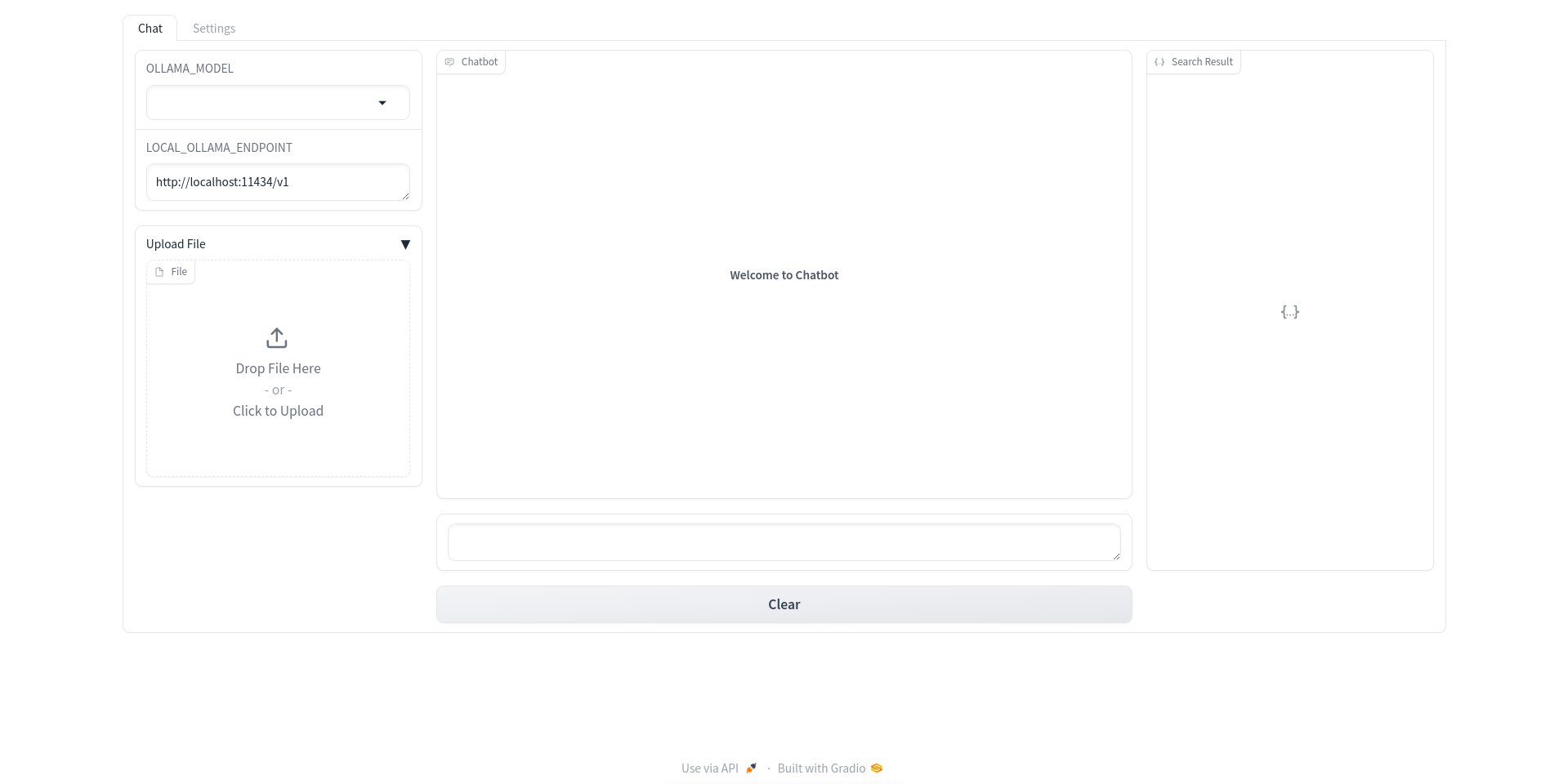
LLM Chatbot Web UI with LangChain and Hugging Face Integration
By
–
LLM Chatbot Web UI This project is a Gradio-based chatbot application that leverages the power of LangChain and Hugging Face models to perform both conversational AI and PDF document retrieval. The chatbot is capable of handling text-based queries, generating responses based on
-
Natural Language AI Autonomy Levels Task Execution
By
–
Accepts instructions in natural language, executes autonomously with minimal intervention. Varying levels of autonomy based on task and system intelligence.
-
PyTorch’s Functional Interface Design Evolution History
By
–
fun fact: nn.functional wasn't part of the first design, and not part of the first 4 pre-releases; but then @szagoruyko5 convinced us that the functional interface in twitter/torch-autograd (in lua) was really nice to use for certain kinds of research; and that we must have
-

Fast Matrix Multiplication with WGMMA on Hopper GPUs
By
–
CUTLASS Tutorial: Fast Matrix-Multiplication with WGMMA on NVIDIA® Hopper™ GPUs https://
bit.ly/4eKO530
#AI #MachineLearning #DeepLearning #LLMs #DataScience -
Custom Callbacks and Async-Safe Logging in Training Batches
By
–
Note that if you use custom callbacks that override `on_train_batch_end()`, you are at risk of forcing synchronous logging. Make sure to make your callbacks async-safe, and annotate them as such by setting `self.async_safe = True`
-

Keras fit() automatic data prefetching and asynchronous logging optimization
By
–
This isn't obvious. Most people remember to do data prefetching, but few do asynchronous logging. Keras `fit()` does both out of the box automatically, regardless of your data source. This gets you fully compact train_step stacking, like here — zero idle time.
-
Data Prefetching and Asynchronous Logging for GPU Utilization
By
–
To order to get high device utilization when training, the most important best practice is to both do data prefetching (moving the next batch of data to GPU memory while the previous batch is being processed) and asynchronous logging (moving the metrics from the previous batch to