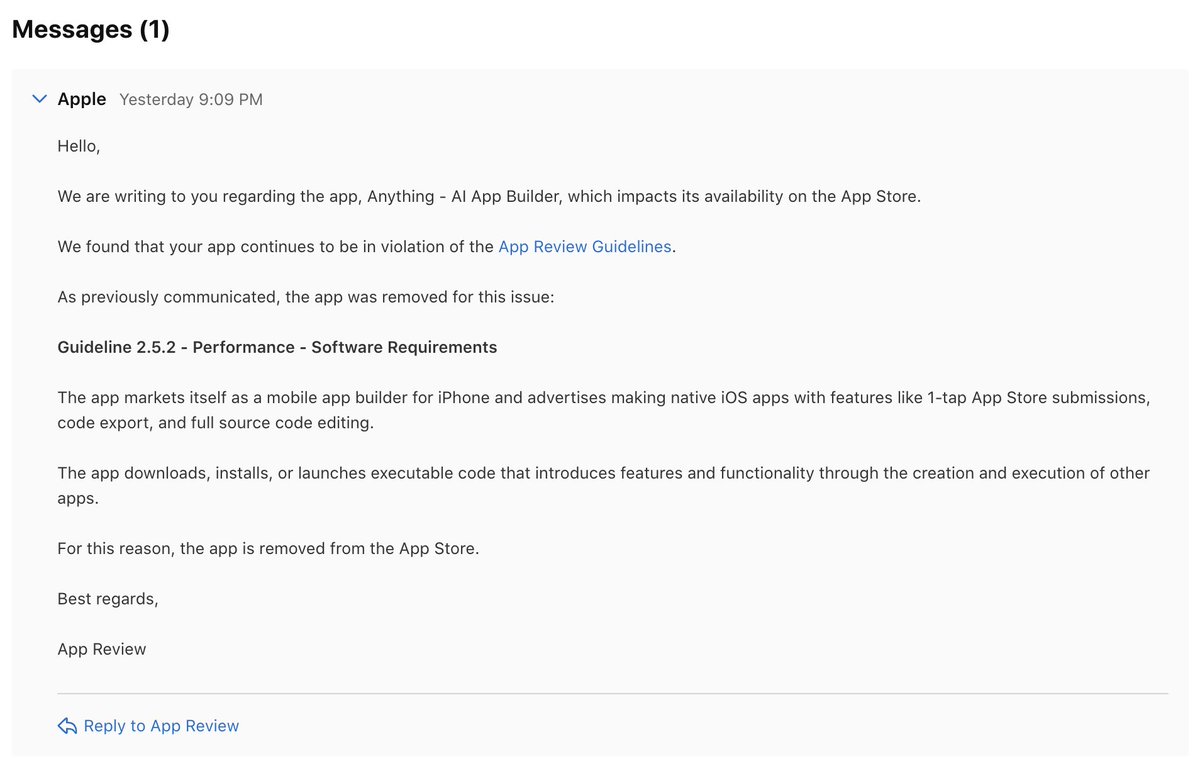
Apple makes building with AI needlessly difficult. Anything (@anything) Guideline 2.5.2 – Gatekeeping – Vibes denied we haven't talked about this publicly for months we tried to resolve it privately with emails, calls, appeals, and four technical rewrites to comply with whatever Apple wanted here's our truth, unfiltered on March 26th, Apple removed Anything from the App Store then they brought us back now they removed us again and I think it's time to say something, because this isn't really about us. It's about who gets to build software, and who gets to decide for most of the history of computing, making an app required years of specialized training. You either knew how to code or you didn't, and if you didn't, your idea stayed in your head forever. that barrier is falling right now. Millions of people are discovering they can describe what they want and get a working app they call themselves vibe coders and they are the most exciting audience in technology they're building things nobody else would have built because nobody else had their problems a firefighter in Northern California used Anything to build an emergency incident response app he never wrote a line of code. Did hundreds of iterations, testing each one on his iPad through our mobile preview app got it into the App Store. Now he's selling it to fire departments across the state. it would have cost him over a hundred thousand dollars to hire engineers He spent a few hundred bucks. That guy is why we exist. Not the technology. Him. And the millions of people like him. our mobile app did one thing for people like him it let them preview what they were building with Anything on their own phone. GPS, camera, notifications, things you can only test on a real device with native code They'd iterate, try it, tweak it, try again. When they were happy, they'd submit to the App Store through the normal process Apple reviewed it like any other app. Our mobile app got approved last year. We didn't hear a word of concern. then in December, they started blocking our updates, citing the infamous Guideline 2.5.2 the rule designed to prevent malicious apps from downloading code to change their behavior after review We understood the concern, even if we disagree it applies to us. We tried to fix it. Four different technical approaches, each one specifically designed to address what they told us. Each one rejected. we didn't go public we didn't tweet we kept trying then they pulled us from the App Store. We still didn't say anything. We worked with them, got reinstated, believed we'd found a path forward Then they pulled us again. at some point silence stops being patience and starts being complicity. We have builders who depend on us. They deserve to know what's happening and why. Guideline 2.5.2 is a good rule. apps shouldn't be able to pass review and then become something else. But that's not us. We help people preview their own work on their own device Expo Go has done the exact same thing for professional developers for years and is on the App Store right now, today! the only difference is our users aren't professional developers they're the firefighter they're the teacher building a classroom app they're the person who discovered last week that they could build software at all that's who Apple is locking out. Not us. Them. and here's what I need Apple to understand these people are the future of the App Store. Not a sideshow. The future. The number of people who can build apps is about to go from millions to hundreds of millions to eventually everyone the platforms and tools that serve those people will determine where they build every vibe coder who ships through Anything is a new developer in Apple's ecosystem who didn't exist a year ago They want to build web apps, Android apps, and yes iOS apps we help them add in-app purchases. We help them make their apps secure and scale. We catch rejection issues early. We are a feeder system for the App Store The safety argument is hollow. Preview apps only run on the builder's own device. They're sandboxed in the Anything mobile app. Want anyone else to use it? You still submit to the App Store. Apple still reviews every line. We're not bypassing review. We're a dress rehearsal for it. but none of that matters when a reviewer sees "downloads executable code" on a checklist and reaches for reject without asking what the code is, how it actually works, or who it's for. we're not waiting we launched text-to-app. Text us and we'll build your iOS app in the cloud We're shipping a desktop companion for on-device previews next. We'll find a way to serve our builders We always do. but I'm done being quiet about why we have to the people we serve, the ones crazy enough to start their own thing, building apps for their fire departments and their classrooms and their small businesses they deserve to test what they're making on the device it's made for that's not a loophole that's how building works – Apple can be the platform where the next hundred million builders get started – or they can keep banning the tools those people depend on and watch it happen somewhere else we all know which one the firefighter will choose — https://nitter.net/anything/status/2041599393237774507#m
→ View original post on X — @scobleizer, 2026-04-07 20:21 UTC