AI Dynamics

Global AI News Aggregator

About

AUTOMATION

  • The AI Scientist Published in Nature: Automated Scientific Discovery Milestone
    The AI Scientist Published in Nature: Automated Scientific Discovery Milestone

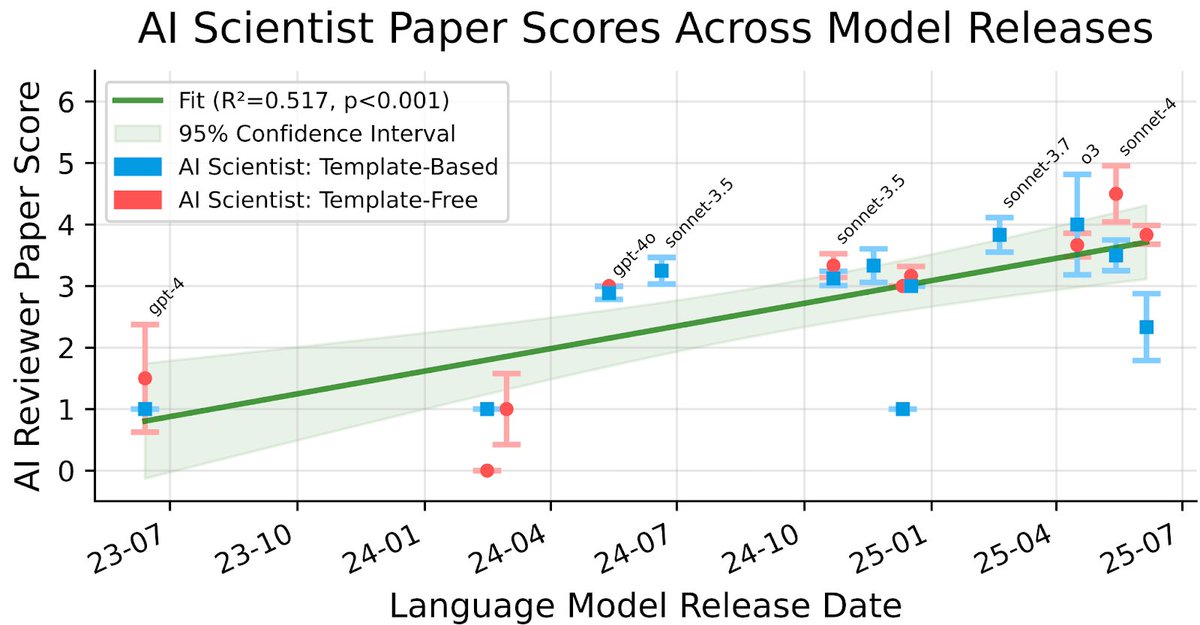
    I am really excited to share that our work on The AI Scientist has been published in Nature Automated Scientific Discovery has been something I only dreamt about at the start of my PhD. Today, we are making big leaps into a world in which autonomous agents support human researchers in tackling some of the most fundamental problems. In August 2024, The AI Scientist-v1 showed first sparks of LLM agents becoming capable of conducting research end-to-end. While the generated artifacts were still far from perfect, it was clear that automated discovery was about to change. We scaled the system and improved all ingredients of the pipeline. In April 2025, The AI Scientist-v2 had become capable of producing a paper that could pass the human peer review of an ICLR workshop. This is only the beginning. Systems like AlphaEvolve, ShinkaEvolve, AIDE, and Autoresearch will continue to shape the future of how research is conducted. Our METR-style scaling results indicate that model improvements have direct downstream impacts. Still, there are many challenges. Both technical and societal. I have a strong belief that we, as a collective, will find the answers and adapt. This has been an enormous amount of work by an outstanding set of human researchers @_chris_lu_ @cong_ml @_yutaroyamada @shengranhu @j_foerst @jeffclune @hardmaru @SakanaAILabs with many long nights of work. I am super grateful for the entire ride, learnings and the future to come. Thank you to everyone! Sakana AI (@SakanaAILabs) The AI Scientist: Towards Fully Automated AI Research, Now Published in Nature Nature: nature.com/articles/s41586-0… Blog: sakana.ai/ai-scientist-natur… When we first introduced The AI Scientist, we shared an ambitious vision of an agent powered by foundation models capable of executing the entire machine learning research lifecycle. From inventing ideas and writing code to executing experiments and drafting the manuscript, the system demonstrated that end-to-end automation of the scientific process is possible. Soon after, we shared a historic update: the improved AI Scientist-v2 produced the first fully AI-generated paper to pass a rigorous human peer-review process. Today, we are happy to announce that “The AI Scientist: Towards Fully Automated AI Research,” our paper describing all of this work, along with fresh new insights, has been published in @Nature! This Nature publication consolidates these milestones and details the underlying foundation model orchestration. It also introduces our Automated Reviewer, which matches human review judgments and actually exceeds standard inter-human agreement. Crucially, by using this reviewer to grade papers generated by different foundation models, we discovered a clear scaling law of science. As the underlying foundation models improve, the quality of the generated scientific papers increases correspondingly. This implies that as compute costs decrease and model capabilities continue to exponentially increase, future versions of The AI Scientist will be substantially more capable. Building upon our previous open-source releases (github.com/SakanaAI/AI-Scien…), this open-access Nature publication comprehensively details our system's architecture, outlines several new scaling results, and discusses the promise and challenges of AI-generated science. This substantial milestone is the result of a close and fruitful collaboration between researchers at Sakana AI, the University of British Columbia (UBC) and the Vector Institute, and the University of Oxford. Congrats to the team! @_chris_lu_ @cong_ml @RobertTLange @_yutaroyamada @shengranhu @j_foerst @hardmaru @jeffclune — https://nitter.net/SakanaAILabs/status/2036840833690071450#m

    → View original post on X — @_yutaroyamada, 2026-03-25 17:31 UTC
  • Fleet introduces shareable skills for team domain knowledge

    Fleet now has shareable skills. Capture your team's domain knowledge once, attach it to any agent, and share it across your workspace. Create skills from a prompt or previous chat, write them manually, or use a template. Read more: https://
    blog.langchain.com/skills-in-lang
    smith-fleet/?utm_medium=social&utm_source=twitter&utm_campaign=q1-2026_fleet-launch_aw

    → View original post on X — @langchain

  • The AI Scientist Published in Nature with New Scaling Laws
    The AI Scientist Published in Nature with New Scaling Laws

    When we released The AI Scientist, it felt like the far future. Fast forward to today, and the automation of research is on everyone's mind. Thrilled that our foundational work has been published in @Nature! Please check out the paper along with some fun new scaling laws! 😃 Sakana AI (@SakanaAILabs) The AI Scientist: Towards Fully Automated AI Research, Now Published in Nature Nature: nature.com/articles/s41586-0… Blog: sakana.ai/ai-scientist-natur… When we first introduced The AI Scientist, we shared an ambitious vision of an agent powered by foundation models capable of executing the entire machine learning research lifecycle. From inventing ideas and writing code to executing experiments and drafting the manuscript, the system demonstrated that end-to-end automation of the scientific process is possible. Soon after, we shared a historic update: the improved AI Scientist-v2 produced the first fully AI-generated paper to pass a rigorous human peer-review process. Today, we are happy to announce that “The AI Scientist: Towards Fully Automated AI Research,” our paper describing all of this work, along with fresh new insights, has been published in @Nature! This Nature publication consolidates these milestones and details the underlying foundation model orchestration. It also introduces our Automated Reviewer, which matches human review judgments and actually exceeds standard inter-human agreement. Crucially, by using this reviewer to grade papers generated by different foundation models, we discovered a clear scaling law of science. As the underlying foundation models improve, the quality of the generated scientific papers increases correspondingly. This implies that as compute costs decrease and model capabilities continue to exponentially increase, future versions of The AI Scientist will be substantially more capable. Building upon our previous open-source releases (github.com/SakanaAI/AI-Scien…), this open-access Nature publication comprehensively details our system's architecture, outlines several new scaling results, and discusses the promise and challenges of AI-generated science. This substantial milestone is the result of a close and fruitful collaboration between researchers at Sakana AI, the University of British Columbia (UBC) and the Vector Institute, and the University of Oxford. Congrats to the team! @_chris_lu_ @cong_ml @RobertTLange @_yutaroyamada @shengranhu @j_foerst @hardmaru @jeffclune — https://nitter.net/SakanaAILabs/status/2036840833690071450#m

    → View original post on X — @_yutaroyamada, 2026-03-25 17:11 UTC

  • AI Scientist Published in Nature, Automated Research Achieves New Milestone

    It is great to see this collaboration across @FLAIR_Ox @SakanaAILabs and @UBC recognised for what it is: One of the first signs of life of a new paradigm that is now going at full speed and will change the world. Congratulations to the entire team and special shout out to my (now former!) student @_chris_lu_ for whom this is the crowning achievement of an amazing DPhil that went from multi-agent learning and opponent shaping to meta-learning via "RL at the Hyperscale", LLM as search operators over code, all the way to the end-to-end AI scientist. There are so many debates about whether a Phd is useful in the age of "scale is all you need", so this is a refreshing datapoint. Sakana AI (@SakanaAILabs) The AI Scientist: Towards Fully Automated AI Research, Now Published in Nature Nature: nature.com/articles/s41586-0… Blog: sakana.ai/ai-scientist-natur… When we first introduced The AI Scientist, we shared an ambitious vision of an agent powered by foundation models capable of executing the entire machine learning research lifecycle. From inventing ideas and writing code to executing experiments and drafting the manuscript, the system demonstrated that end-to-end automation of the scientific process is possible. Soon after, we shared a historic update: the improved AI Scientist-v2 produced the first fully AI-generated paper to pass a rigorous human peer-review process. Today, we are happy to announce that “The AI Scientist: Towards Fully Automated AI Research,” our paper describing all of this work, along with fresh new insights, has been published in @Nature! This Nature publication consolidates these milestones and details the underlying foundation model orchestration. It also introduces our Automated Reviewer, which matches human review judgments and actually exceeds standard inter-human agreement. Crucially, by using this reviewer to grade papers generated by different foundation models, we discovered a clear scaling law of science. As the underlying foundation models improve, the quality of the generated scientific papers increases correspondingly. This implies that as compute costs decrease and model capabilities continue to exponentially increase, future versions of The AI Scientist will be substantially more capable. Building upon our previous open-source releases (github.com/SakanaAI/AI-Scien…), this open-access Nature publication comprehensively details our system's architecture, outlines several new scaling results, and discusses the promise and challenges of AI-generated science. This substantial milestone is the result of a close and fruitful collaboration between researchers at Sakana AI, the University of British Columbia (UBC) and the Vector Institute, and the University of Oxford. Congrats to the team! @_chris_lu_ @cong_ml @RobertTLange @_yutaroyamada @shengranhu @j_foerst @hardmaru @jeffclune — https://nitter.net/SakanaAILabs/status/2036840833690071450#m

    → View original post on X — @_yutaroyamada, 2026-03-25 16:56 UTC

  • AI manipulation through personalized algorithms raises ethical concerns

    yes exactly! a bit like i'm being manipulated in some creepy way. "please like me, look how much i know about you, we are good friends".

    → View original post on X — @karpathy

  • The AI Scientist Published in Nature: Fully Automated Research Milestone

    I’m incredibly proud of The AI Scientist team for this milestone publication in @Nature. We started this project to explore if foundation models could execute the entire research lifecycle. Seeing this work validated at this level is a special moment. I truly believe AI will forever change the landscape of how scientific discoveries and scientific progress are made. Sakana AI (@SakanaAILabs) The AI Scientist: Towards Fully Automated AI Research, Now Published in Nature Nature: nature.com/articles/s41586-0… Blog: sakana.ai/ai-scientist-natur… When we first introduced The AI Scientist, we shared an ambitious vision of an agent powered by foundation models capable of executing the entire machine learning research lifecycle. From inventing ideas and writing code to executing experiments and drafting the manuscript, the system demonstrated that end-to-end automation of the scientific process is possible. Soon after, we shared a historic update: the improved AI Scientist-v2 produced the first fully AI-generated paper to pass a rigorous human peer-review process. Today, we are happy to announce that “The AI Scientist: Towards Fully Automated AI Research,” our paper describing all of this work, along with fresh new insights, has been published in @Nature! This Nature publication consolidates these milestones and details the underlying foundation model orchestration. It also introduces our Automated Reviewer, which matches human review judgments and actually exceeds standard inter-human agreement. Crucially, by using this reviewer to grade papers generated by different foundation models, we discovered a clear scaling law of science. As the underlying foundation models improve, the quality of the generated scientific papers increases correspondingly. This implies that as compute costs decrease and model capabilities continue to exponentially increase, future versions of The AI Scientist will be substantially more capable. Building upon our previous open-source releases (github.com/SakanaAI/AI-Scien…), this open-access Nature publication comprehensively details our system's architecture, outlines several new scaling results, and discusses the promise and challenges of AI-generated science. This substantial milestone is the result of a close and fruitful collaboration between researchers at Sakana AI, the University of British Columbia (UBC) and the Vector Institute, and the University of Oxford. Congrats to the team! @_chris_lu_ @cong_ml @RobertTLange @_yutaroyamada @shengranhu @j_foerst @hardmaru @jeffclune — https://nitter.net/SakanaAILabs/status/2036840833690071450#m

    → View original post on X — @_yutaroyamada, 2026-03-25 16:24 UTC

  • Innovative Foot-Tilt Controlled Cart Assistant Technology from China

    Foot-Tilt Controlled Cart Assistant from China
    by @RealXavier011 #Innovation #EmergingTech #Technology #Tech

    → View original post on X — @ronald_vanloon

  • The AI Scientist Published in Nature: Fully Automated Research

    The AI Scientist: Towards Fully Automated AI Research, Now Published in Nature Nature: nature.com/articles/s41586-0… Blog: sakana.ai/ai-scientist-natur… When we first introduced The AI Scientist, we shared an ambitious vision of an agent powered by foundation models capable of executing the entire machine learning research lifecycle. From inventing ideas and writing code to executing experiments and drafting the manuscript, the system demonstrated that end-to-end automation of the scientific process is possible. Soon after, we shared a historic update: the improved AI Scientist-v2 produced the first fully AI-generated paper to pass a rigorous human peer-review process. Today, we are happy to announce that “The AI Scientist: Towards Fully Automated AI Research,” our paper describing all of this work, along with fresh new insights, has been published in @Nature! This Nature publication consolidates these milestones and details the underlying foundation model orchestration. It also introduces our Automated Reviewer, which matches human review judgments and actually exceeds standard inter-human agreement. Crucially, by using this reviewer to grade papers generated by different foundation models, we discovered a clear scaling law of science. As the underlying foundation models improve, the quality of the generated scientific papers increases correspondingly. This implies that as compute costs decrease and model capabilities continue to exponentially increase, future versions of The AI Scientist will be substantially more capable. Building upon our previous open-source releases (github.com/SakanaAI/AI-Scien…), this open-access Nature publication comprehensively details our system's architecture, outlines several new scaling results, and discusses the promise and challenges of AI-generated science. This substantial milestone is the result of a close and fruitful collaboration between researchers at Sakana AI, the University of British Columbia (UBC) and the Vector Institute, and the University of Oxford. Congrats to the team! @_chris_lu_ @cong_ml @RobertTLange @_yutaroyamada @shengranhu @j_foerst @hardmaru @jeffclune

    → View original post on X — @sakanaailabs, 2026-03-25 16:21 UTC

  • Multi-agent systems need shared definitions prevent miscommunication
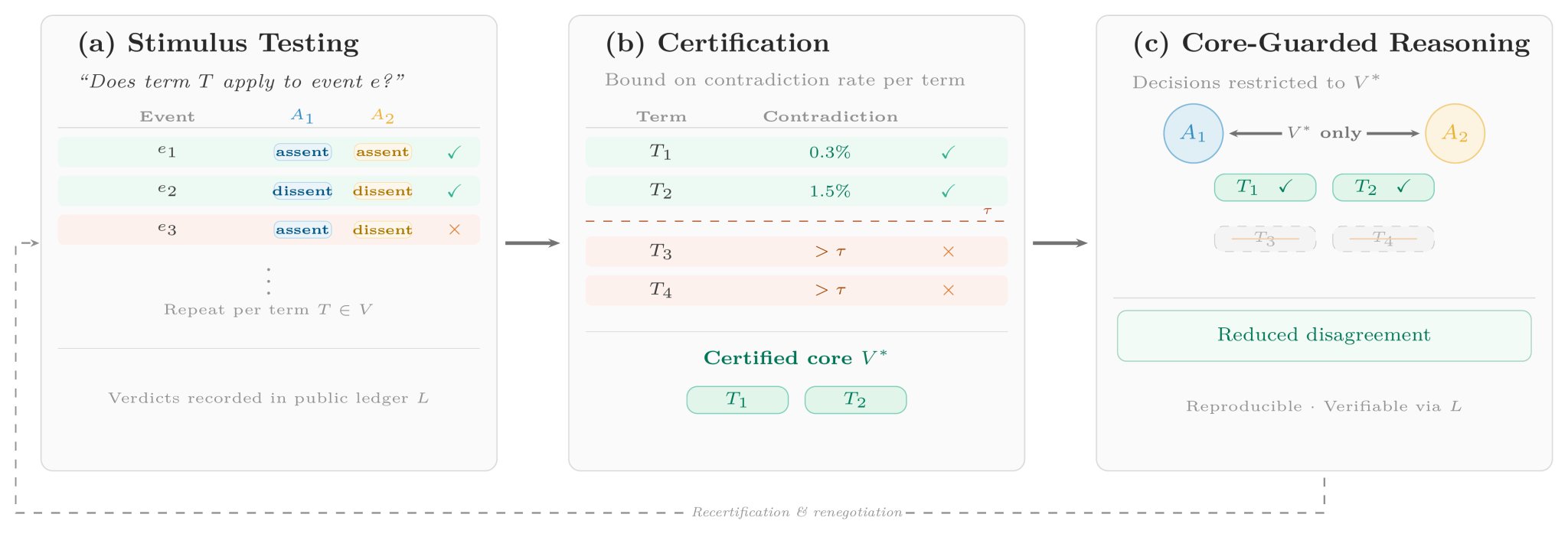
    Multi-agent systems need shared definitions prevent miscommunication

    Shared language =/= shared meaning. And that can turn multi-agent systems into a game of telephone without any human in the loop being the wiser. Our @MicrosoftAI pre-print tests a solve: if agents don't agree on a definition, they can't use the term. The results: disagreement

    → View original post on X — @mustafasuleyman

  • Intelligent Agents: Natural Language Automation Across Systems

    Enter intelligent agents (the practical layer): Ask in natural language. The agent pulls context across systems, then acts—send an alert, generate a report, flag an anomaly. Result → faster cycles, clearer visibility, and automation you can trust across existing

    → View original post on X — @ronald_vanloon