I’ve had the opportunity to test a lot of agentic systems, they all tend to fail at the most basic points. Like ease of use, or how to get your colleagues to adopt them. One very clever thing you guys have done is making the agents part of the team, by making them workers. kudos
AUTOMATION
-
Unitree demonstrates G1 humanoid robot voice-to-action capabilities
By
–
#Unitree has demonstrated the voice-to-action capabilities of its humanoid robot G1. #humanoidtech #humanoid #robot #Robotics #AI #TechRevolution #TechInnovation #ArtificialInteligence #PhysicalAI @lexfridman @KirkDBorne @Ronald_vanLoon @erikbryn @antgrasso @sallyeaves
-
One lean CLAUDE.md file with auto memory for workflows
By
–
8/ The real setup, start to finish. One lean CLAUDE.md. Let auto memory handle lessons. Add path rules when it grows, skills for workflows. Most people manage 7 files to do what one file and the tool already handle.
-
Claude Code’s auto memory eliminates the lessons.md file
By
–
5/ The lessons.md file is now pointless. Claude Code has auto memory. It writes down what it learns about your project on its own, after you correct it, and reloads it next session. The tool already does the thing people are telling you to do by hand.
-
Delos Workers: AI agents with persistent identity and memory
By
–
Most AI agents reset the moment a task ends: you prompt, it runs, the context is gone.
— Chubby♨️ (@kimmonismus) 22 juin 2026
Delos Workers is built on the opposite assumption: Each agent keeps a standing identity and persistent memory, with its own email, phone number and Slack handle, so it carries context between… https://t.co/n2lCH5ZW3KMost AI agents reset as soon as a task ends: you give an instruction, it executes, the context disappears. Delos Workers is based on the opposite hypothesis: each agent maintains a permanent identity and persistent memory, with its own
-
Sakana Fugu: orchestrator rivaling Fable 5, not independent model
By
–
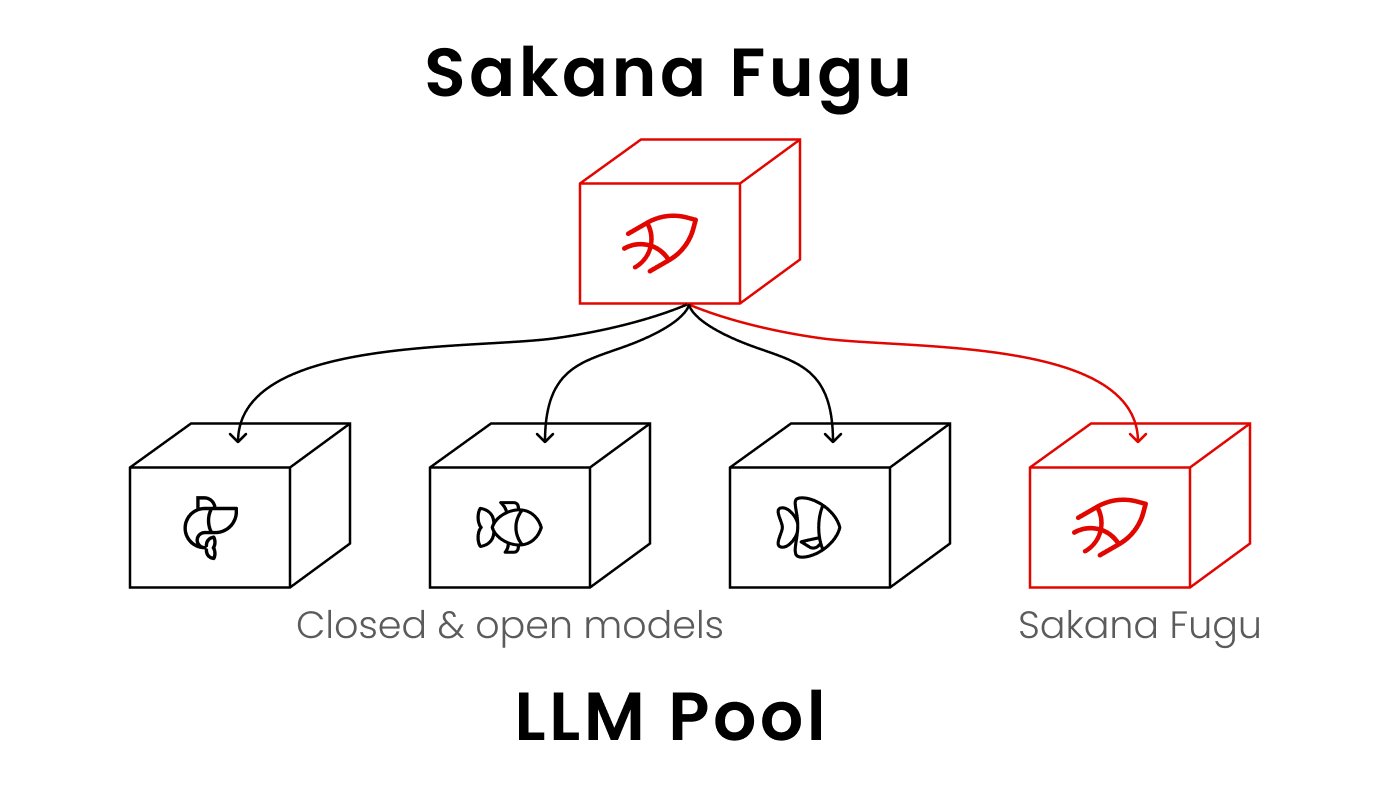
After examining the new Sakana Fugu model, which, as they present it, rivals Fable 5, I want to comment that this is in itself not a new independent model, but an orchestrator trained to orchestrate several different models (e.g., Opus 4.8, GPT
-
Autonomous ML Research: Fugu Ultra improves GPT model via AutoResearch
By
–
Use Case 1: Autonomous ML Research
— Sakana AI (@SakanaAILabs) 22 juin 2026
Can an AI autonomously improve another AI’s training recipe?
We tasked Fugu Ultra with improving a small GPT model using AutoResearch. Over 14 hours on a single H100 GPU, Fugu ran > 100 experiments. It iteratively edited the training code, ran… pic.twitter.com/Gp96FEQ797Use Case 1: Autonomous ML Research Can an AI autonomously improve another AI’s training recipe? We tasked Fugu Ultra with improving a small GPT model using AutoResearch. Over 14 hours on a single H100 GPU, Fugu ran > 100 experiments. It iteratively edited the training code, ran
-
That moment you realize a startup with zero employees exists
By
–
That 'oh sh*t' moment when you realize the 0-person startup is freaking real: https://t.co/6kzwtaqdrK pic.twitter.com/9MP2fApaeb
— Charly Wargnier (@DataChaz) 22 juin 2026That 'oh sh*t' moment when you realize the 0-person startup is freaking real:
-
SkyRL async RL training with autonomous research agent
By
–
1/4: A couple notes on the implementation. The async RL training itself is powered by SkyRL, with the research agent’s goal being resolving setup issues (in this case a libnuma dependency) and analyzing runs autonomously.
-
GLM 5.2: First high-performance open-weights model for auto-research
By
–
Introducing GLM 5.2 for autoresearch
— alphaXiv (@askalphaxiv) 22 juin 2026
GLM 5.2 is the first open weights model we've tried on our autoresearch pipeline that's proven capable for real research tasks.
With Fable 5's restrictions on research, having an open weights alternative is a huge win for open source
Watch… pic.twitter.com/y0kBtJzj5KIntroducing GLM 5.2 for auto-research. GLM 5.2 is the first open-weights model we tested on our auto-research pipeline that proved capable for real research tasks. With Fable 5's restrictions on research, having a