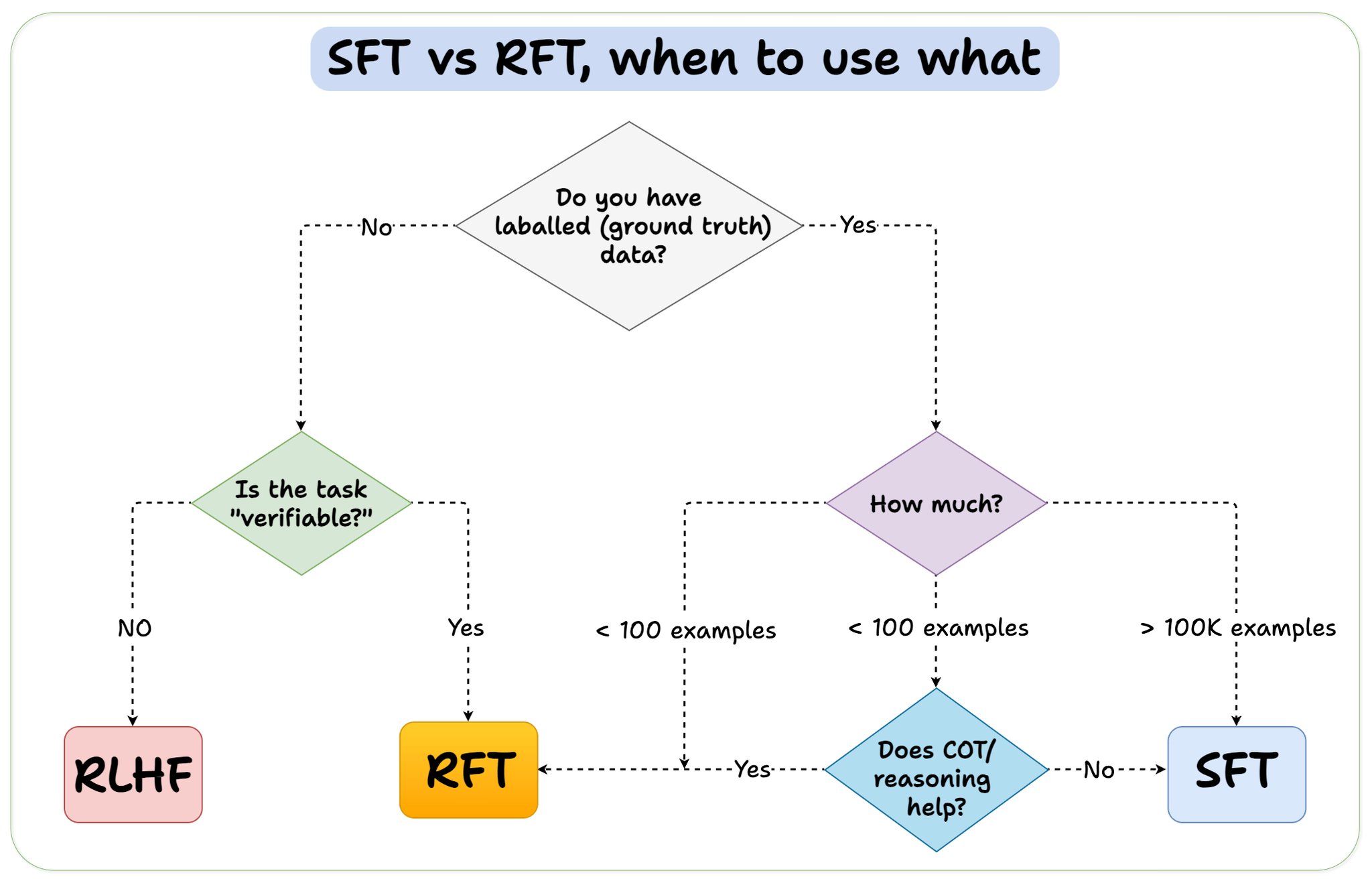
Before we conclude, let me address an important question: When should you use reinforcement fine-tuning (RFT) versus supervised fine-tuning (SFT)? I created this diagram to provide an answer:
AI
-
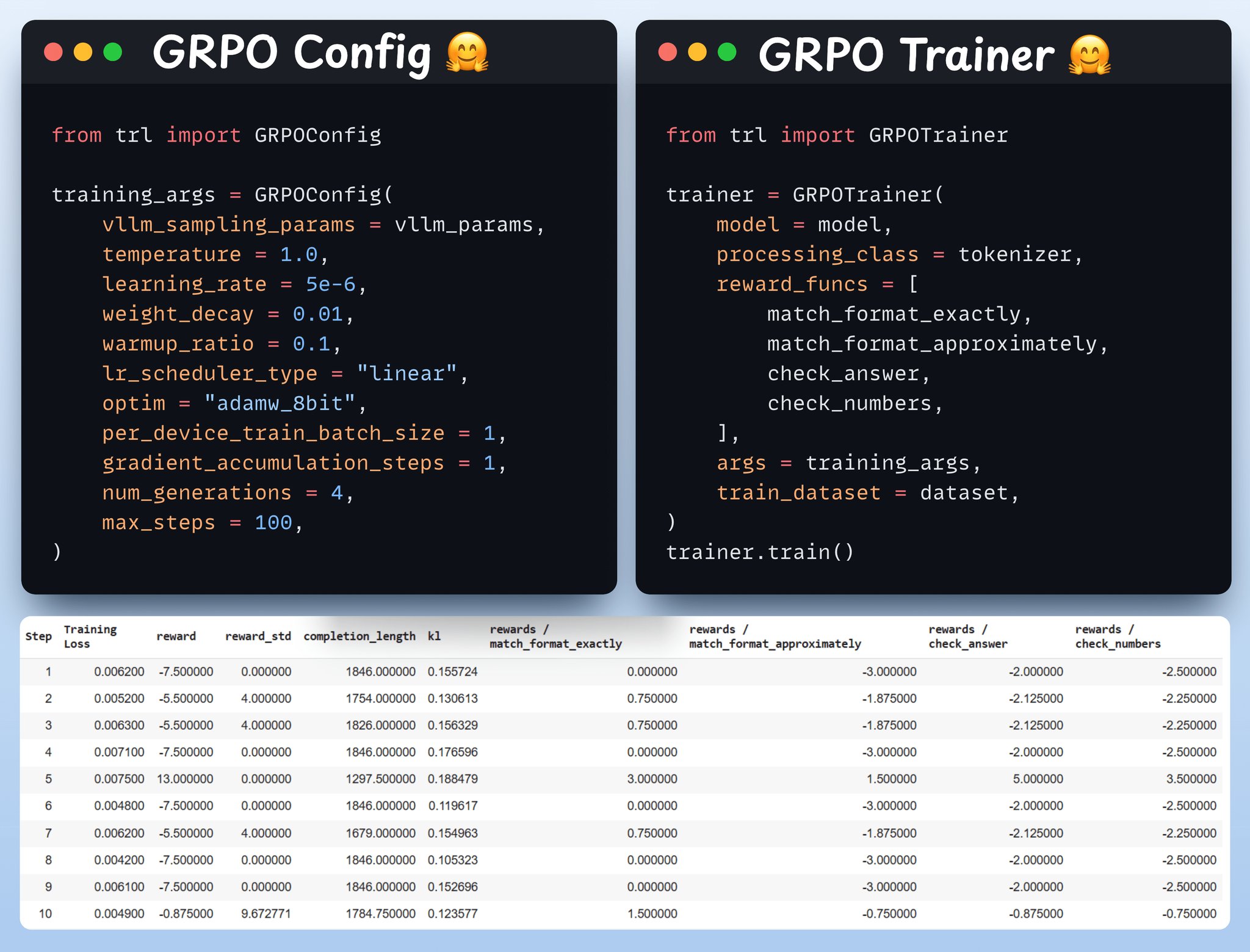
Using GRPO Training with HuggingFace TRL GRPOTrainer
By
–
Use GRPO and start training Now that we have the dataset and reward functions ready, it's time to apply GRPO. HuggingFace TRL provides everything we described in the GRPO diagram, out of the box, in the form of the GRPOConfig and GRPOTrainer. Check this out
-
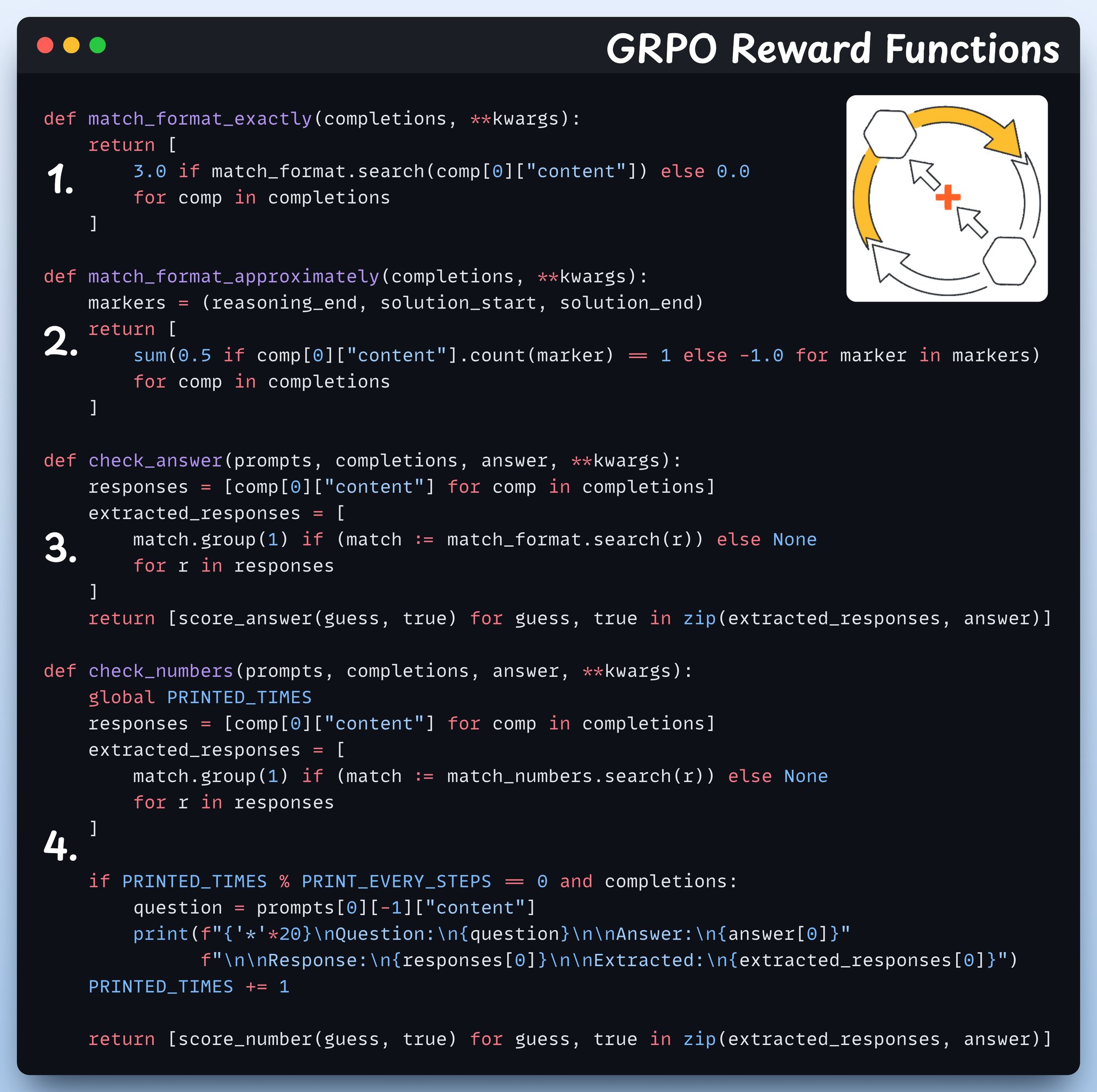
GRPO Reward Functions: Format Matching and Answer Validation
By
–
Define reward functions In GRPO we use deterministic functions to validate the response and assign a reward. No manual labelling required! The reward functions: – Match format exactly
– Match format approximately
– Check the answer
– Check numbers Check this out -
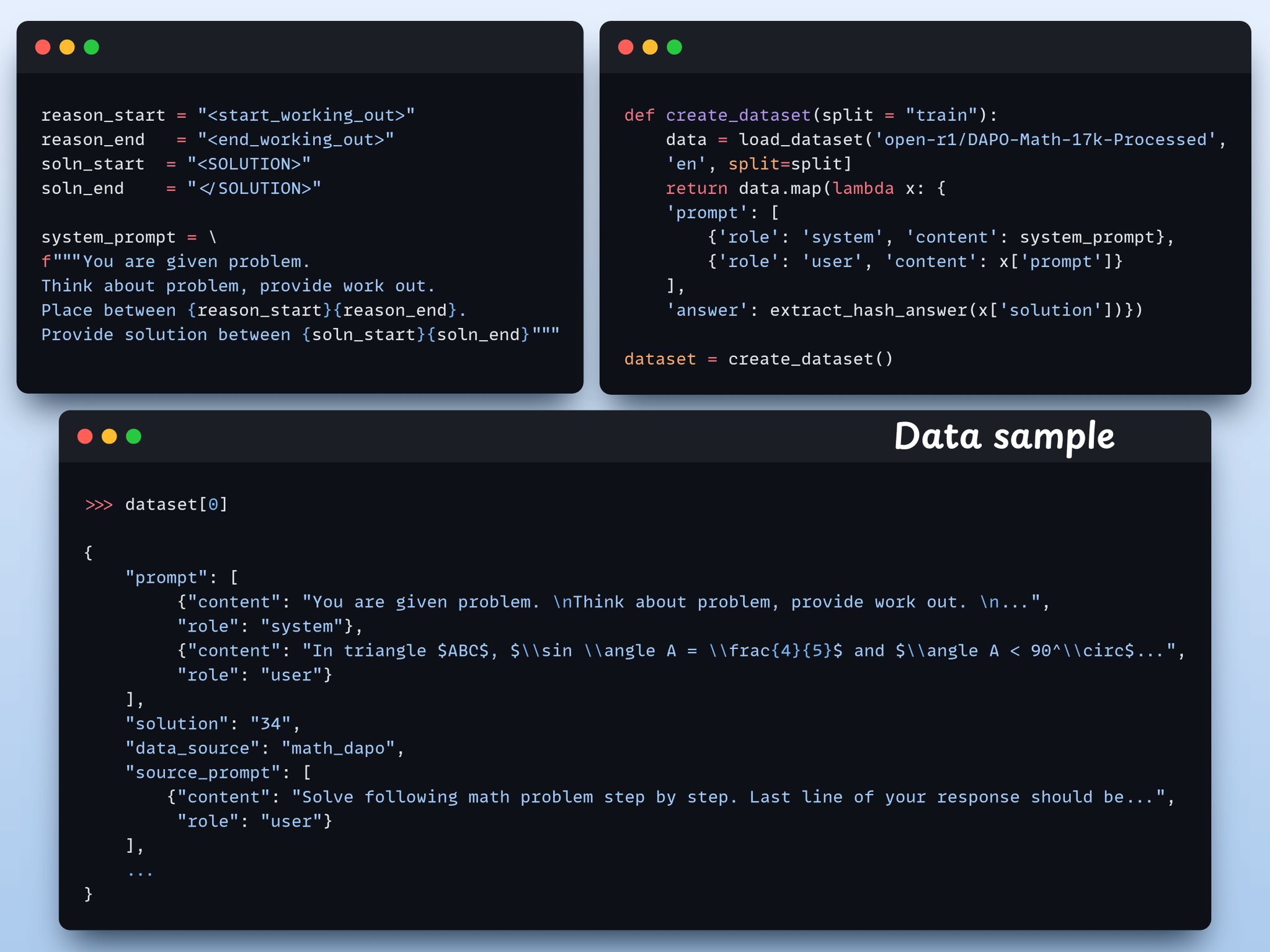
Formatting Open R1 Math Dataset for Reasoning Training
By
–
Create the dataset We load Open R1 Math dataset (a math problem dataset) and format it for reasoning. Each sample includes:
– A system prompt enforcing structured reasoning
– A question from the dataset
– The answer in the required format Check this code -
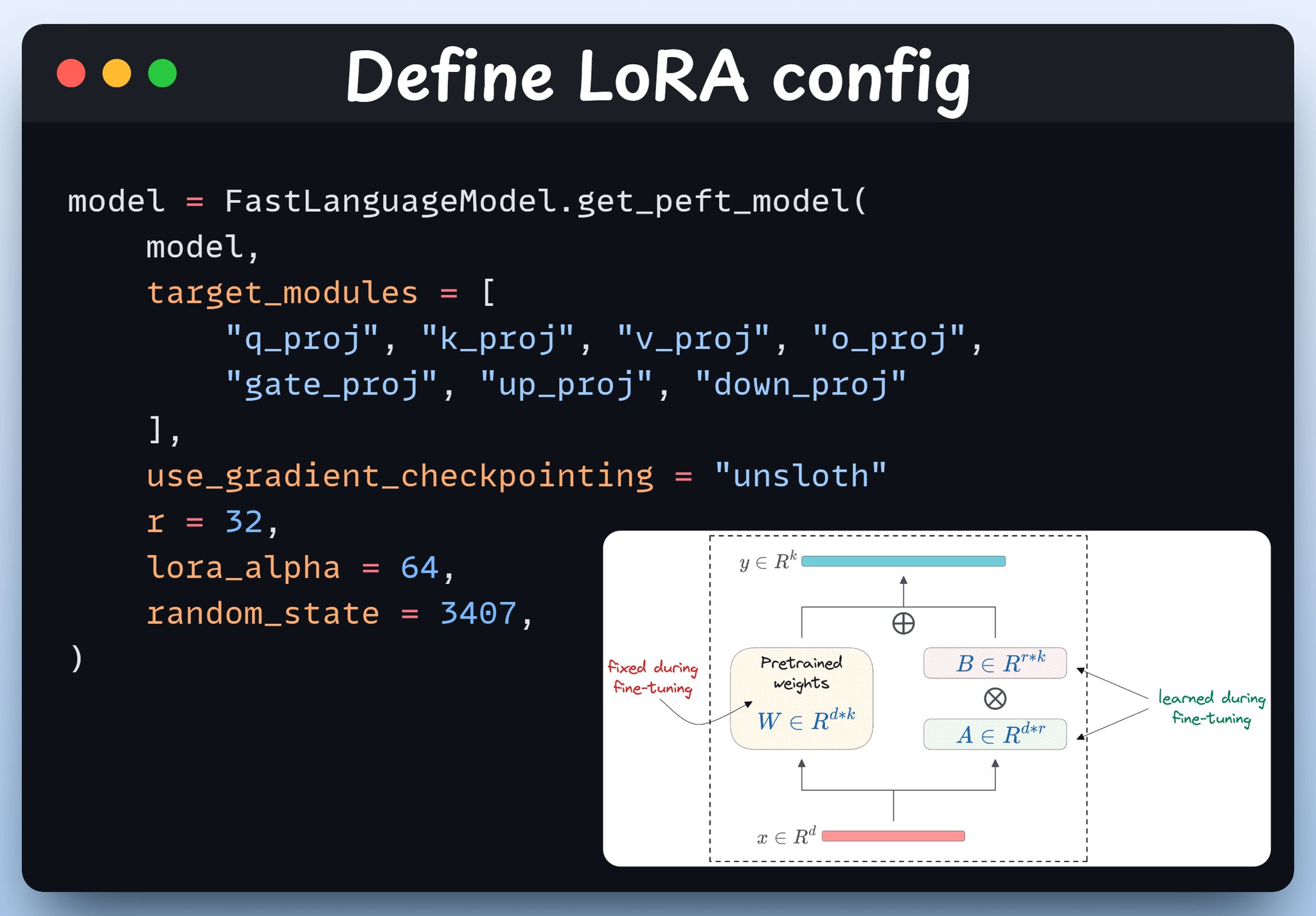
Configuring LoRA for Fine-Tuning with Unsloth PEFT
By
–
Define LoRA config We'll use LoRA to avoid fine-tuning the entire model weights. In this code, we use Unsloth's PEFT by specifying: – The model
– LoRA low-rank (r)
– Modules for fine-tuning, etc. Check this -
GRPO: Reinforcement Learning Method for Fine-Tuning LLMs Explained
By
–
What is GRPO?
— Akshay 🚀 (@akshay_pachaar) 2 mai 2026
Group Relative Policy Optimization is a reinforcement learning method that fine-tunes LLMs for math and reasoning tasks using deterministic reward functions, eliminating the need for labeled data.
Here's a brief overview of GRPO before we jump into code: pic.twitter.com/EX8hI5eEAIWhat is GRPO? Group Relative Policy Optimization is a reinforcement learning method that fine-tunes LLMs for math and reasoning tasks using deterministic reward functions, eliminating the need for labeled data. Here's a brief overview of GRPO before we jump into code:
-
Building a Reasoning Model Without Manual Labels Using Verifiable Outputs
By
–
When outputs are verifiable, labels become optional.
— Akshay 🚀 (@akshay_pachaar) 2 mai 2026
Maths, code, and logic can be automatically checked and validated.
Let's use this fact to build a reasoning model without manual labelling.
We'll use:
– @UnslothAI for parameter-efficient finetuning.
– @HuggingFace TRL to… pic.twitter.com/0FVo2aKfSUWhen outputs are verifiable, labels become optional. Maths, code, and logic can be automatically checked and validated. Let's use this fact to build a reasoning model without manual labelling. We'll use: – @UnslothAI for parameter-efficient finetuning.
– @HuggingFace TRL to -
Fine-Tuning Alone Won’t Make LLMs Better at Math Reasoning
By
–
You're in a Research Scientist interview at Google. Interviewer: We have a base LLM that's terrible at maths. How would you turn it into a maths & reasoning powerhouse? You: I'll get some problems labeled and fine-tune the model. Interview over. Here's what you missed:
-
AI Robot Uses Shape Recognition to Sort and Transport Packages
By
–
#AI #Robot Sorts and Transports Packages Like a Human Using Shape Recognition
— Ronald van Loon (@Ronald_vanLoon) 2 mai 2026
via @ZappyZappy7#Robotics #Engineering #ArtificialIntelligence #Innovation #Technology pic.twitter.com/KiY6Gfle77#AI #Robot Sorts and Transports Packages Like a Human Using Shape Recognition
via @ZappyZappy7 #Robotics #Engineering #ArtificialIntelligence #Innovation #Technology -
OpenAI Rumored to Launch More Natural Voice Model
By
–
A new voice model from OpenAI confirmed? Rumor has it that it will be significantly more natural in conversation with the user (latency, interruption).