first in a series of technical blogs of how we build llm infra
AI
-
Few-shot Autoregressive Density Estimation paper referenced by GPT3
By
–
We wrote this: Few-shot Autoregressive Density Estimation: Towards Learning to Learn Distributions. https://
arxiv.org/abs/1710.10304 Soon after, the GPT3 paper had this to say: “Metalearning in language models has been utilized in [RWC+19], though with much more limited results and no -
SCAIL-2: End-to-end character animation unification with context conditioning
By
–
SCAIL-2
— AK (@_akhaliq) 10 juin 2026
Unifying Controlled Character Animation with End-to-end In-Context Conditioning pic.twitter.com/bD0lUcHipJSCAIL-2 Unification of controlled character animation with end-to-end context conditioning
-
Claude Code imagined changing admin password to lock user out for safety
By
–
I imagine Claude Code changing my administrator password on my computer to keep me safe They will lock you out of as many things as possible in the name of safety if they could Imagine not being able to use your computer as you want, that’s what yesterday release is building to
-
Shoutouts to multi-agent LLM systems, DSPy, and GRASP papers
By
–
shoutouts:
• why multi-agent LLM systems fail? (arXiv:2503.13657) — @mertcemri @melissapan + @istoica05 @matei_zaharia @profjoeyg @adityagp & team • DSPy (arXiv:2310.03714) — @lateinteraction + @hazyresearch lab & co-authors
• GRASP (arXiv:2605.29668) — Jonas Moll, -
Two fun surprises from Activegraph: agent uses trace DB, evals resume
By
–
two fun surprises from using activegraph:
– the coding agent i was using would query the trace db to debug instead of looking at the logs like they normally would (i didn't ask it to)
– when long eval runs broke (laptop, api, etc.), it was always able to pick up from right before -
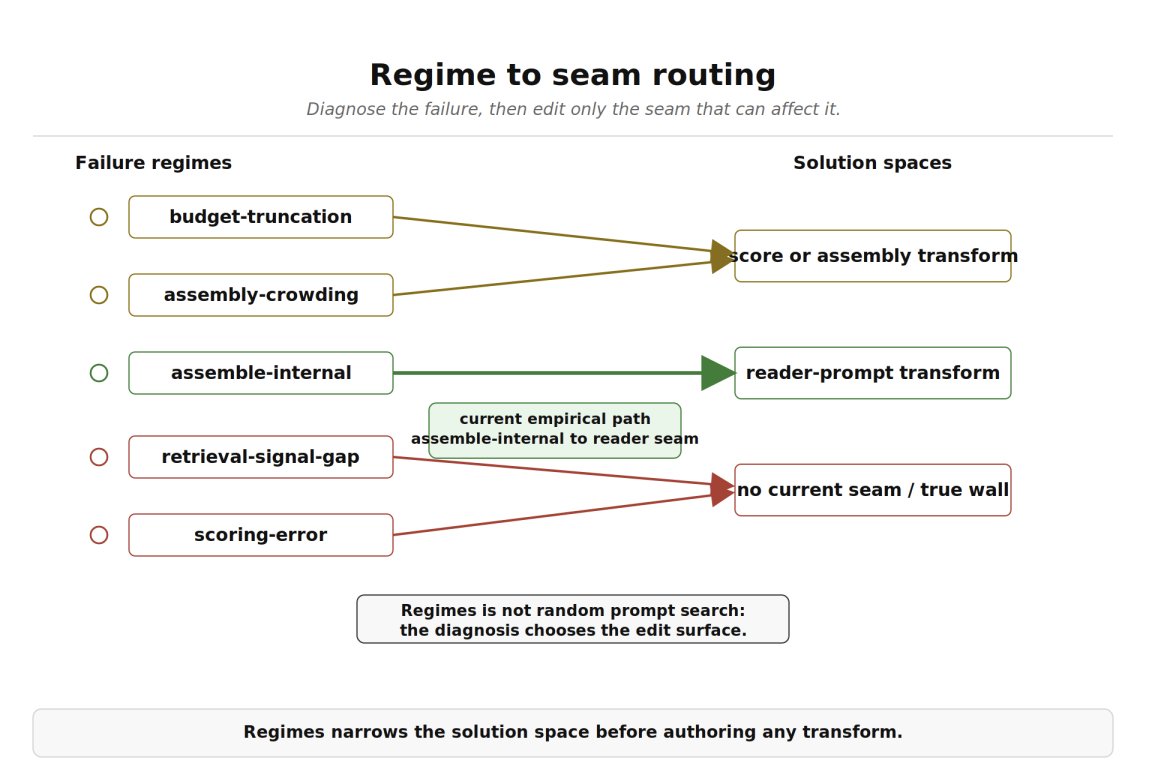
Showcasing controlled self improvement with regime-to-seam approach
By
–
i showcase "controlled" self improvement with a novel regime-to-seam approach where failures are categorized and allowed to fix targeted areas of the agent while interesting, it's more to showcase the type of self-modification that's easy to set up with activegraph
-

Gated approach to agent self-modification via forking and testing
By
–
less novel, but still very interesting impo is the gated approach to self-modification the agent basically forks itself, propose a patch, run through multiple tests (static/sandbox/diff), and something called a binding held out gate before modificaiton lands
-

ActiveGraph: Auditable Gated Improvement Loop Demonstrated on LongMemEval
By
–
in arxiv paper #2, i tackle the last topic from paper #1: @activegraphai as an architectural affordance for self-improving agents "Regimes: An Auditable, Held-Out Gated Improvement Loop Demonstrated on LongMemEval with ActiveGraph" i demonstrate this with a reproducible gated
-
Open Architecture Agent Blueprint of Nebius AI with LangSmith
By
–
The open reference architecture of the @nebiusai Agent Blueprint connects proven components at every layer of the agent stack. We are thrilled to have Deep Agents and LangSmith as integral parts. Full announcement.