use codex locally on the codebase, will give you better results.
AI
-
New Architecture Eliminates Manufacturing Integration Challenges
By
–
This architecture eliminates the traditional point-to-point integration nightmare that has plagued manufacturing for decades.
-
Anthropic Accidentally Exposes Claude Source Code
By
–
Earthquake for Claude. Anthropic just inadvertently handed over the manufacturing blueprint of its AI to all its competitors. A simple file forgotten in an update. In the AI war, battles are sometimes lost over human error. coinacademy.fr/actu/anthropi… [Translated from EN to English]
→ View original post on X — @alex_tsico, 2026-03-31 20:13 UTC
-
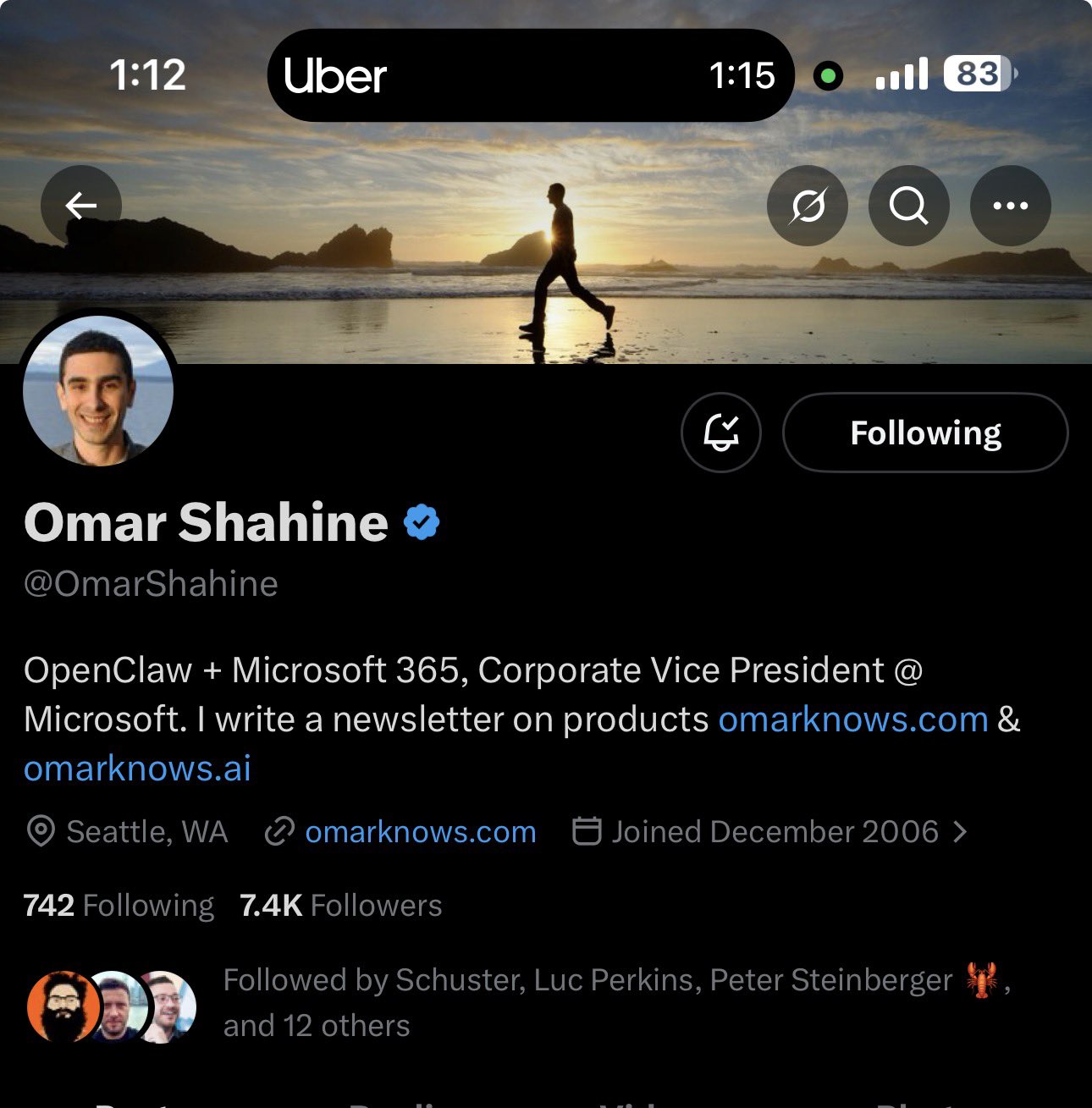
Microsoft Appoints a CVP Dedicated to OpenClaw
By
–
wow. @Microsoft just appointed a CVP whose entire job is OpenClaw.
-
Hugging Face Infrastructure Team Handles Massive Download Scale
By
–
makes me think… the Hugging Face infra team is one of the best in the world right now. The scale is now truly insane, randoms are spamming 1T×10 downloads all day lol
-
UNS: Centralized Event-Driven Enterprise Data Architecture
By
–
UNS acts as a centralized, event-driven data structure that becomes the single source of truth for the entire enterprise.
-

GAAMA: Graph-Augmented Memory for Long-Term Agent Learning
By
–
// Graph Augmented Associative Memory for Agents // Long-term memory for agents is still an unsolved problem. Flat RAG loses structural relationships, and knowledge graphs miss conversational associations. New research proposes combining both through a hierarchical approach. GAAMA is a graph-augmented associative memory that constructs a concept-mediated hierarchical knowledge graph through episode preservation, LLM-based fact extraction, and higher-order reflection synthesis. It uses four node types connected by five edge types, with retrieval combining semantic search and graph-traversal ranking. On the LoCoMo-10 benchmark, GAAMA achieves 78.9% mean reward, outperforming HippoRAG and tuned RAG baselines. Multi-session agents need memory that captures both facts and their relationships across conversations. GAAMA demonstrates that graph-augmented retrieval consistently beats semantic-only methods, and that higher-order reflections, not just raw fact storage, are key to reliable recall. Paper: arxiv.org/abs/2603.27910 Learn to build effective AI agents in our academy: academy.dair.ai/
-
CoLLAs 2026 Call for Papers: Continual Learning Conference Romania
By
–
Continual learning is the future of AI and @CoLLAs_Conf is the best venue to publish your state-of-the-art research in designing adaptive machine learning systems! Abstract deadline in 10 days and the conference is in Romania this year! CoLLAs 2026 (@CoLLAs_Conf) ⏰ The CoLLAs abstract deadline is only 10 days away! We invite researchers to explore all facets of ML adaptation, from incorporating new capabilities during continuous training to efficiently removing outdated or harmful data. – 𝗔𝗯𝘀𝘁𝗿𝗮𝗰𝘁 𝗗𝗲𝗮𝗱𝗹𝗶𝗻𝗲: April 10, 2026 – 𝗦𝘂𝗯𝗺𝗶𝘀𝘀𝗶𝗼𝗻 𝗗𝗲𝗮𝗱𝗹𝗶𝗻𝗲: April 15, 2026 – 𝗖𝗼𝗻𝗳𝗲𝗿𝗲𝗻𝗰𝗲 𝗗𝗮𝘁𝗲𝘀: Sep 14–17, 2026 📚 Accepted papers will be published in the Proceedings of Machine Learning Research (PMLR). 🔗 𝗙𝗼𝗿 𝗳𝘂𝗹𝗹 𝗱𝗲𝘁𝗮𝗶𝗹𝘀 𝗼𝗻 𝘁𝗵𝗲 𝗖𝗮𝗹𝗹 𝗳𝗼𝗿 𝗣𝗮𝗽𝗲𝗿𝘀: lifelong-ml.cc/Conferences/2… — https://nitter.net/CoLLAs_Conf/status/2039054100126368012#m
→ View original post on X — @hugo_larochelle, 2026-03-31 20:04 UTC
-
Fewer Projects More People Better Quality Focus
By
–
We need fewer projects, more people. We need better projects, better quality people.
-
Unified Namespace and MQTT Protocol Scale Digital Tool Integration
By
–
The Unified Namespace architecture reduces integration costs and lets teams scale new digital tools in hours instead of weeks.
— Lucian Fogoros (@fogoros) 31 mars 2026
MQTT protocol allows every device to publish data with full context. Applications subscribe without disrupting production networks. pic.twitter.com/tcfyWoqUDzThe Unified Namespace architecture reduces integration costs and lets teams scale new digital tools in hours instead of weeks.
MQTT protocol allows every device to publish data with full context. Applications subscribe without disrupting production networks.