We built the NVIDIA Vera CPU for agentic AI, and the latest benchmarks from @Phoronix confirm it delivers. 1.5x overall performance vs. leading x86 processors
2x faster Linux kernel compilation
4x greater STREAM TRIAD memory bandwidth Vera achieves the performance that AI
AI HARDWARE
-

NVIDIA Vera CPU for Agentic AI: Performance Benchmarks
By
–
-
Heterogeneous Hardware Strategy for Enterprise AI Inference
By
–
Enterprises don’t need a single chip to handle all inference workloads.
— SambaNova (@SambaNovaAI) 26 mai 2026
The better approach is heterogeneous: GPUs for compute-heavy prefill, RDUs for fast decode, and CPUs for orchestration and integrations.
Right work, right hardware layer. That’s how you avoid tradeoffs. 🦾 pic.twitter.com/B1tqmROeQ2Enterprises don’t need a single chip to handle all inference workloads. The better approach is heterogeneous: GPUs for compute-heavy prefill, RDUs for fast decode, and CPUs for orchestration and integrations. Right work, right hardware layer. That’s how you avoid tradeoffs.
-
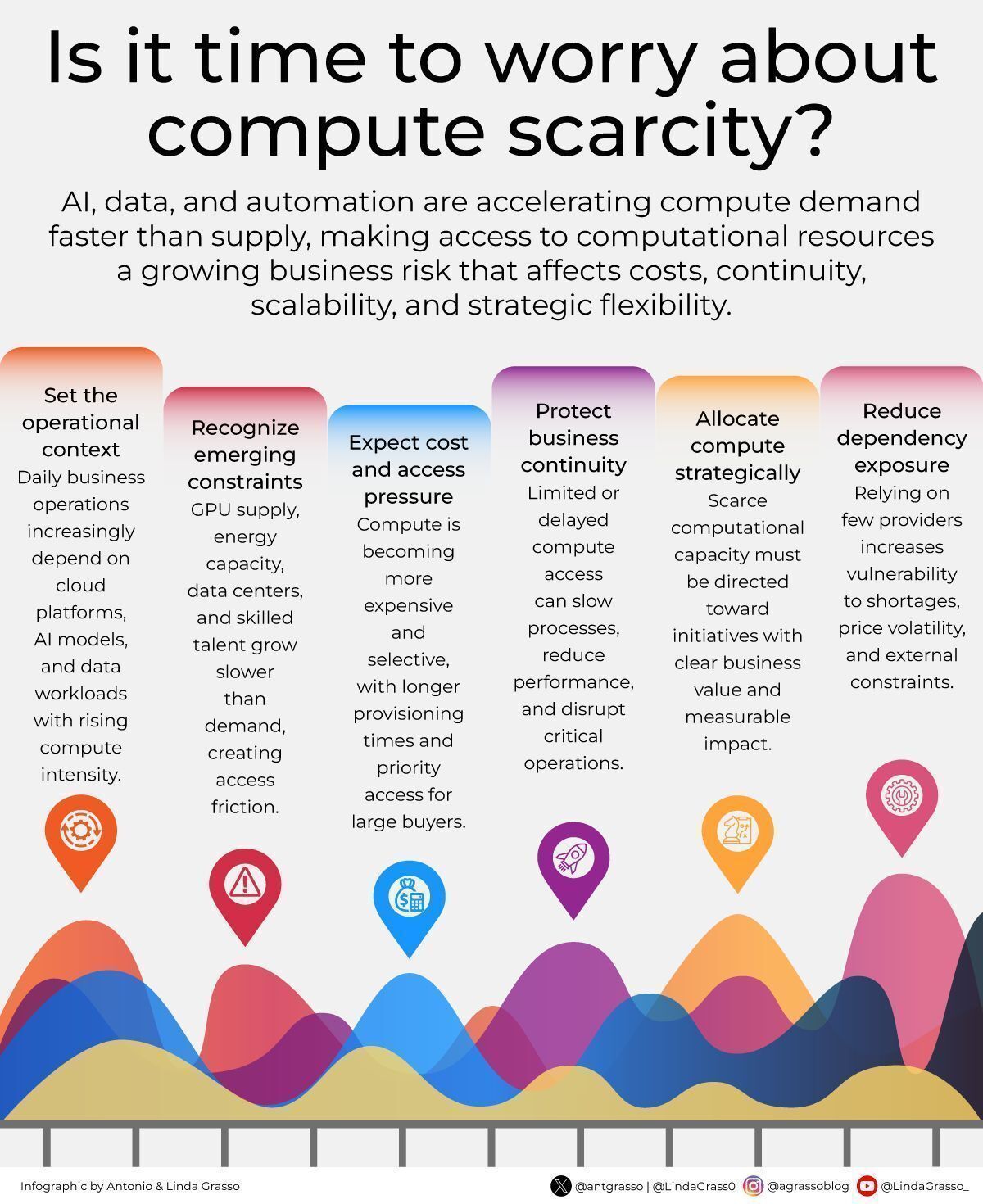
Is It Time to Worry About Compute Scarcity?
By
–
Is it time to worry about compute scarcity?
by @antgrasso #ArtificialIntelligence #IT #Tech #Technology -
Huawei’s Tau Scaling Law Key to Post-Moore AI Efficiency
By
–
The future of AI will not only be shaped by better models. It will be shaped by faster, more efficient systems underneath them. That is why Huawei’s Tau Scaling Law (Her’s Law) matters for the post-Moore era. #HuaweiPartner @Huawei #AI #Semiconductors #ChipDesign #MooresLaw
-
AI inference efficiency depends on data movement through memory, chips, and interconnects.
By
–
This matters directly for AI inference. Every AI response depends on data moving through: memory,
chips,
interconnects,
and full systems. If that movement is slow, inference becomes slower, more energy-intensive, and more expensive to scale. -
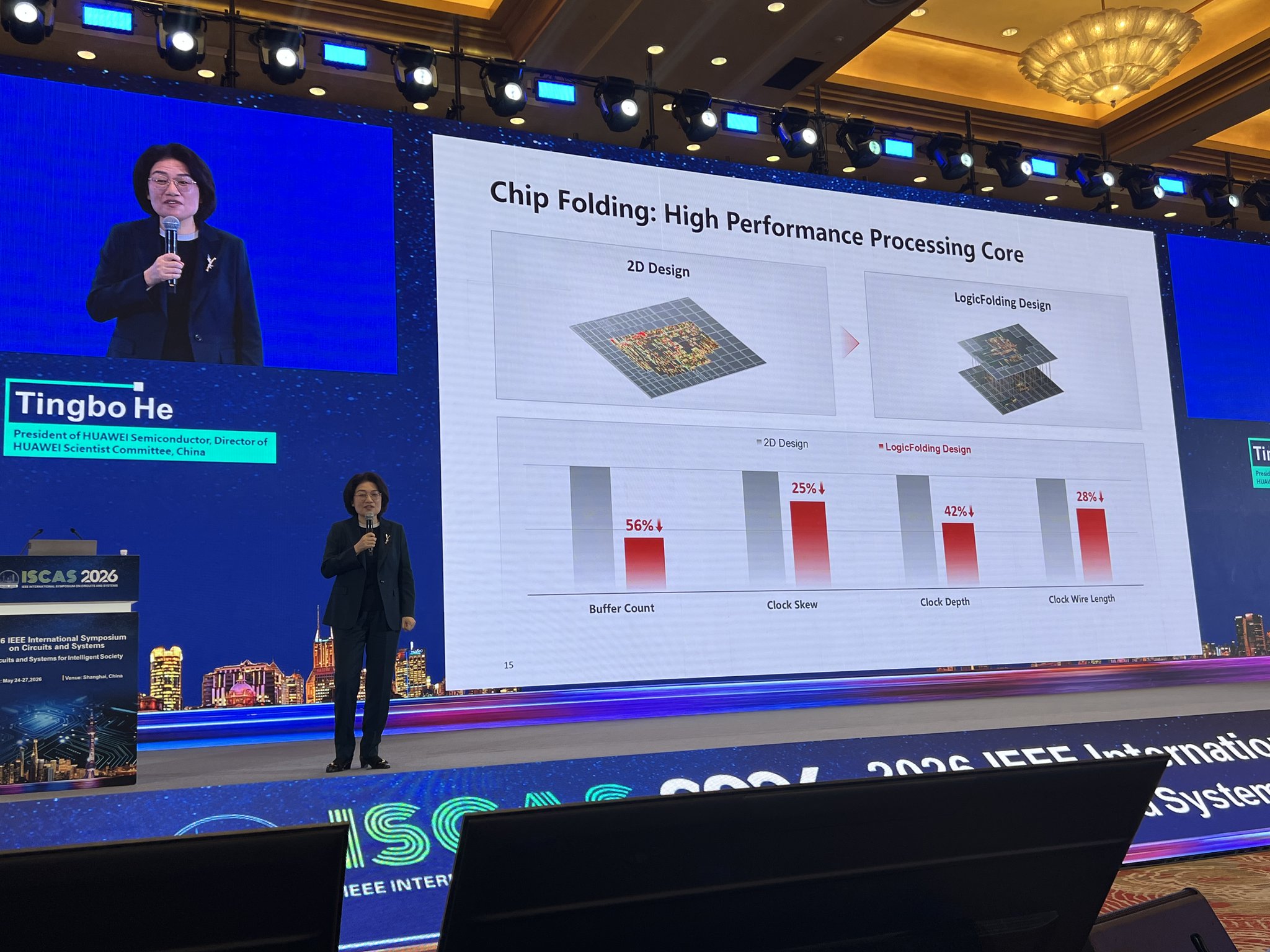
Next AI Bottleneck May Be Data Movement, Not Compute
By
–
The next AI bottleneck may not only be compute power. It may be data movement. Huawei’s Tau Scaling Law (aka Her’s Law) brings this question into focus: How much time can we remove from the system? #HuaweiPartner @Huawei
-
Toyota AI Robot CUE7 Demonstrates Basketball Skills
By
–
Toyota's new AI robot CUE7 dribbled, moved, and made free throws like a pro!#basketall #humanoidtech #humanoid #robot #Robotics #AI #TechRevolution #TechInnovation #ArtificialInteligence #PhysicalAI @PawlowskiMario @chidambara09 @Ym78200 @CurieuxExplorer @efipm @bigfundu… pic.twitter.com/EyhmM9WTI9
— Amitav Bhattacharjee (@bamitav) 26 mai 2026Toyota's new AI robot CUE7 dribbled, moved, and made free throws like a pro! #basketall #humanoidtech #humanoid #robot #Robotics #AI #TechRevolution #TechInnovation #ArtificialInteligence #PhysicalAI @PawlowskiMario @chidambara09 @Ym78200 @CurieuxExplorer @efipm @bigfundu
-

Alibaba unveils new AI chip as Nvidia access stalls
By
–
Alibaba unveils new #AI chip as Nvidia access remains stalled
by Luna LIN @TechXplore_com Learn more: https://
bit.ly/4nHBnaN #ArtificialIntelligence #MachineLearning #ML -
Buy GPU, run real workloads daily: top move in 2026
By
–
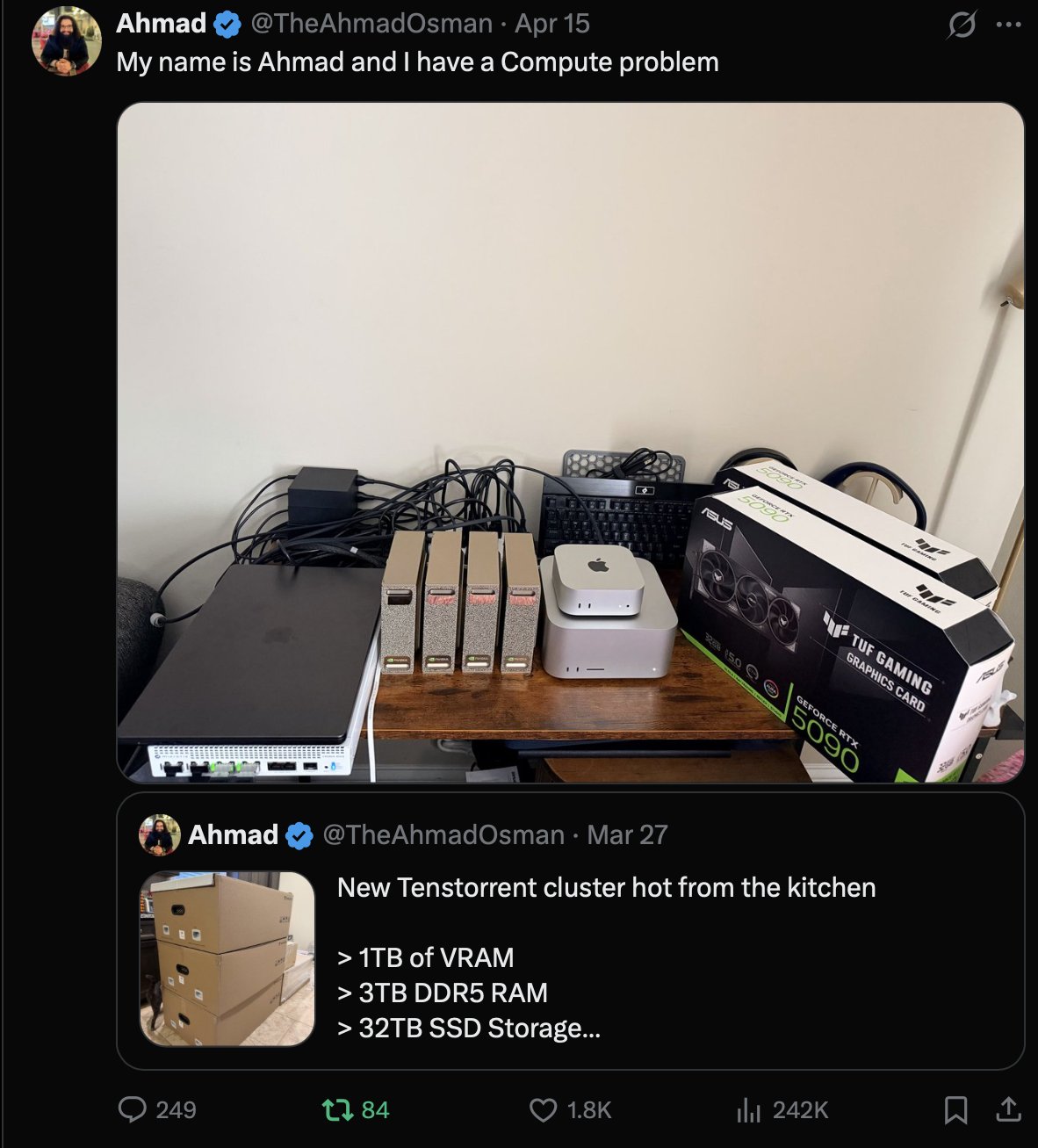
The single highest-leverage move an individual can still make in 2026 is this: Buy a GPU and run real workloads on them every day. – Not rent tokens.
– Not fine-tune on someone else’s cluster.
– Own the silicon + the weights + the serving stack. I’ve been doing this since 2023 -
16 Local AI Agents Running on DGX and MiniMax M2.7
By
–
(2x DGX Sparks) + MiniMax M2.7 NVFP4 = 16 local AI agents running simultaneously 👀 https://t.co/Oaf5J1dyuF
— NVIDIA AI (@NVIDIAAI) 25 mai 2026(2x DGX Sparks) + MiniMax M2.7 NVFP4 = 16 local AI agents running simultaneously