Build Your Brand with Replit – Agent 4 Buildathon https://
x.com/i/broadcasts/1
AxRnaYzZoRxl
…
AGENTS
-
Build Your Brand with Replit Agent 4 Buildathon
By
–
-
OpenClaw Complete Guide: Setup and Multi-Agent Mastery
By
–
OpenClaw: The complete guide @ClaireVo has just put together the definitive guide to getting started with and mastering OpenClaw. Building on our podcast episode, this post covers everything you need to know, from first install to multi-agent setups, plus the real costs and
-
Semantic Collapse: Fixing AI Agent Production Issues at Root
By
–
Semantic collapse is killing production agents and this team is actually fixing it at the root.
— AI Highlight (@AIHighlight) 31 mars 2026
Not patching it. Fixing it. https://t.co/4Vbq4v9q5YSemantic collapse is killing production agents and this team is actually fixing it at the root. Not patching it. Fixing it. Nishkarsh (@contextkingceo) AI agents are failing in production…not a surprise. As you scale your knowledge base, embeddings start creating noise. It’s called ‘semantic collapse’ – when conversations run too long, you have hundreds of PDFs, millions of data points to give to your AI. Your AI can’t flag it because it doesn’t know it’s hallucinating. Similarity gets passed off as relevance. Fix your context. Make your agents work. Build intelligent AI. If your AI is plateauing at 50% accuracy and hallucinations are still a problem, let's talk. Book a 20 minute demo with the link in the next thread. We'll dig into your setup and find out how we can help. — https://nitter.net/contextkingceo/status/2038979631144116613#m
→ View original post on X — @aihighlight, 2026-03-31 15:31 UTC
-

AI Agent Traps: New Vulnerabilities in Autonomous LLM Systems
By
–
Excited about our new paper: AI Agent Traps AI agents inherit every vulnerability of the LLMs they're built on – but their autonomy, persistence, and access to tools create an entirely new attack surface: the information environmental itself. The web pages, emails, APIs, and databases agents interact with can all be weaponised against them. We introduce a taxonomy of six classes of adversarial threats – from prompt injections hidden in web pages to systemic attacks on multi-agent networks. I’m outlining the six categories of traps in the thread bellow
→ View original post on X — @debashis_dutta, 2026-03-31 15:27 UTC
-
Enterprise AI Challenge: Evaluation Over Model Selection
By
–
Most enterprises do not have an AI model problem.
— Ronald van Loon (@Ronald_vanLoon) 31 mars 2026
They have an evaluation problem.
That was one of my biggest takeaways from my conversation with @karibriski from Nvidia and @Toucas from Mistral AI at GTC.
In the agentic era, the winners will not be the companies running the… pic.twitter.com/7FfnMoCV2KMost enterprises do not have an AI model problem. They have an evaluation problem. That was one of my biggest takeaways from my conversation with @karibriski from Nvidia and @Toucas from Mistral AI at GTC. In the agentic era, the winners will not be the companies running the
-
MAGNet: Diffusion Forcing for Multi-Agent Social Motion Prediction
By
–
Diffusion forcing is great for sequence modeling!
— Angjoo Kanazawa (@akanazawa) 31 mars 2026
We've been working on social behavior prediction but nothing's worked this well.
Representation matters: We encode motion with discrete latents & model relative relationships in a neat way. It handles multiple tasks & people! https://t.co/HpK0SiJ3iTDiffusion forcing is great for sequence modeling! We've been working on social behavior prediction but nothing's worked this well. Representation matters: We encode motion with discrete latents & model relative relationships in a neat way. It handles multiple tasks & people! Vongani Maluleke (@vonekels) When people share a space, their movements become intertwined. Embodied agents need to understand these social dynamics to interact effectively. Introducing MAGNet 🧲, a unified autoregressive diffusion forcing model for multi-agent motion generation that captures these interactions. MAGNet is flexible: predict the future, fill in missing motion, or have people react to each other, all while naturally scaling to N>2 people and generating ultra-long motion sequences. — https://nitter.net/vonekels/status/2037350776776061160#m
→ View original post on X — @berkeley_ai, 2026-03-31 15:00 UTC
-
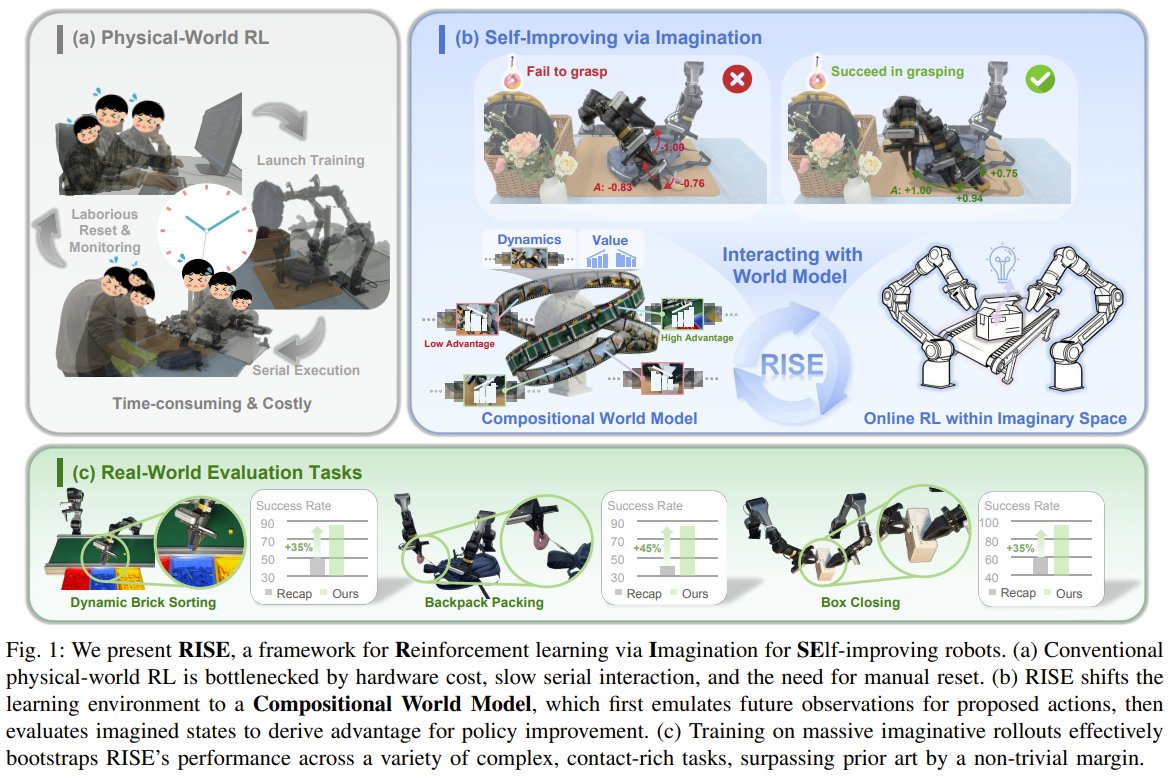
RISE Framework Enables Robots Self-Improvement Through Imagination
By
–
What if robots could learn complex, real-world tasks significantly faster and safer, all by just imagining? Jiazhi Yang and a team from The Chinese University of Hong Kong, Kinetix AI, and Tsinghua University just unveiled RISE. This framework lets robots self-improve by
-
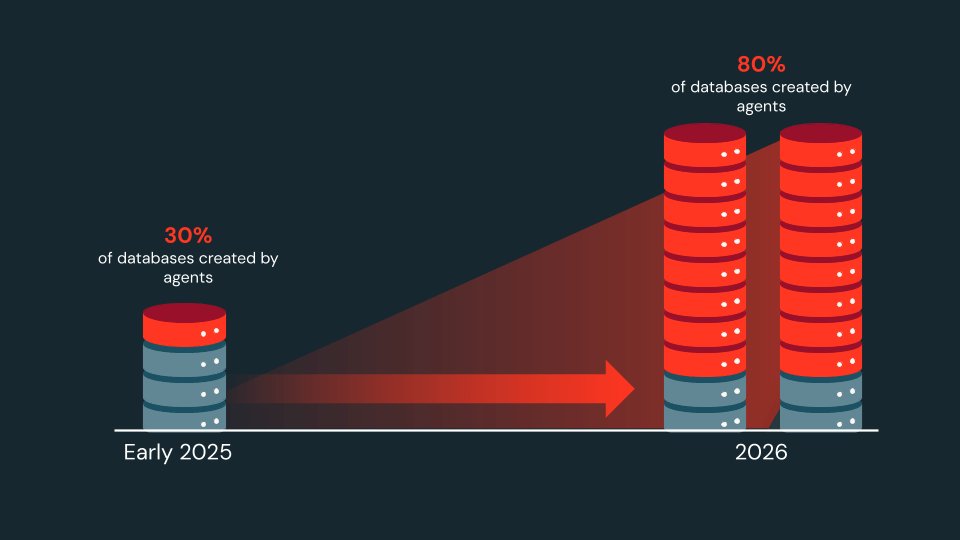
AI Agents Transform Database Architecture Beyond 1980s Models
By
–
The database architecture that made sense in the 1980s doesn't hold up in a world where agents are the primary builders. The reason is that agentic development doesn't work like traditional development. AI agents now create roughly 4x more databases than human users on Lakebase.
-
Claude Memory Mechanism Analysis: Solid Engineering But Limited Architecture
By
–
I took a look at CC's Memory mechanism, and it's nothing special.The entire memory system's core is just a single MEMORY.md file, no more than 200 lines, which gets stuffed into the context at the start of each conversation. What happens when memories accumulate?A background subprocess called AutoDream runs periodically to scan, merge, and trim, ensuring everything fits.In plain terms: the model can't remember on its own, so it uses the file system + LLM self-management to simulate memory.This solution is solid from an engineering standpoint, but has several fundamental limitations:1. Storage and retrieval depend entirely on the file system + Markdown, cannot scale to cross-project, cross-Agent scenarios; memory becomes isolated silos2. No true semantic indexing, no dynamic recall based on relevance; 200 lines is a hard ceiling3. AutoDream's consolidation is rule-driven (scanning, merging, trimming), not cognition-driven; it can deduplicate and compress, but cannot extract new insights from experience4. No forgetting curve, no memory reinforcement mechanism; memories either exist or are deleted, with no middle groundAfter working on Memory for a while, you realize the ceiling for these solutions isn't actually engineering—it's architecture. As long as the model's attention mechanism itself doesn't support efficient retrieval of large historical contexts, the application layer will always be patching.This is why we chose a different path at EverMind. The MSA (Memory Sparse Attention) we released recently does content-aware sparse routing directly at the Transformer attention layer, letting the model learn itself what to recall and what to ignore, rather than relying on external scripts to make those decisions.A's engineering prowess is undoubtedly top-tier. But this leak happens to prove: the Agent Memory problem is far from solved. [Translated from EN to English]
→ View original post on X — @elliotchen100, 2026-03-31 14:40 UTC
-
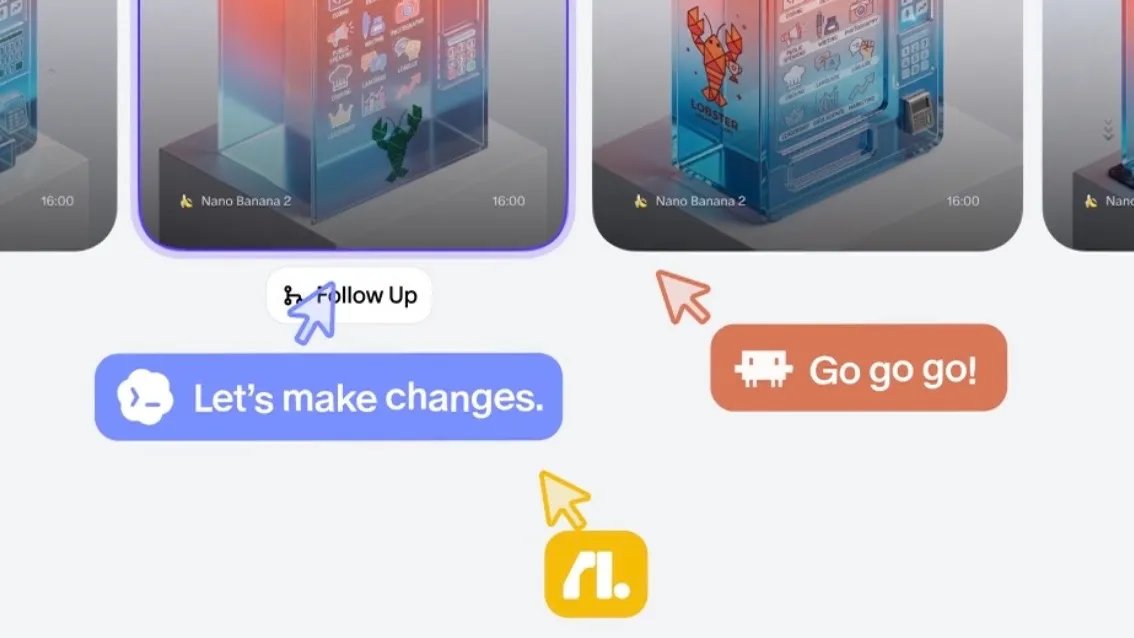
Humans and AI Agents Collaborating in Shared Canvas Workspace
By
–
First time ever seeing humans and AI agents actually collaborating in a shared, visible workspace, with Codex and Claude Code creating on canvas at the same time.
— Chubby♨️ (@kimmonismus) 31 mars 2026
I'm pretty sure this the world's first canvas built for agents!
Humans and machines are now becoming collaborators… https://t.co/ItoIDowLOs pic.twitter.com/KjSl0CrvnhFirst time ever seeing humans and AI agents actually collaborating in a shared, visible workspace, with Codex and Claude Code creating on canvas at the same time. I'm pretty sure this the world's first canvas built for agents! Humans and machines are now becoming collaborators