Deep Agents deploy gets you: – Deep Agents harness
– Sandbox of your choice (
@daytonaio , @modal , @RunloopDev )
– Short and long term memory
– Agents exposed via MCP and A2A Production ready and open standards
AGENTS
-
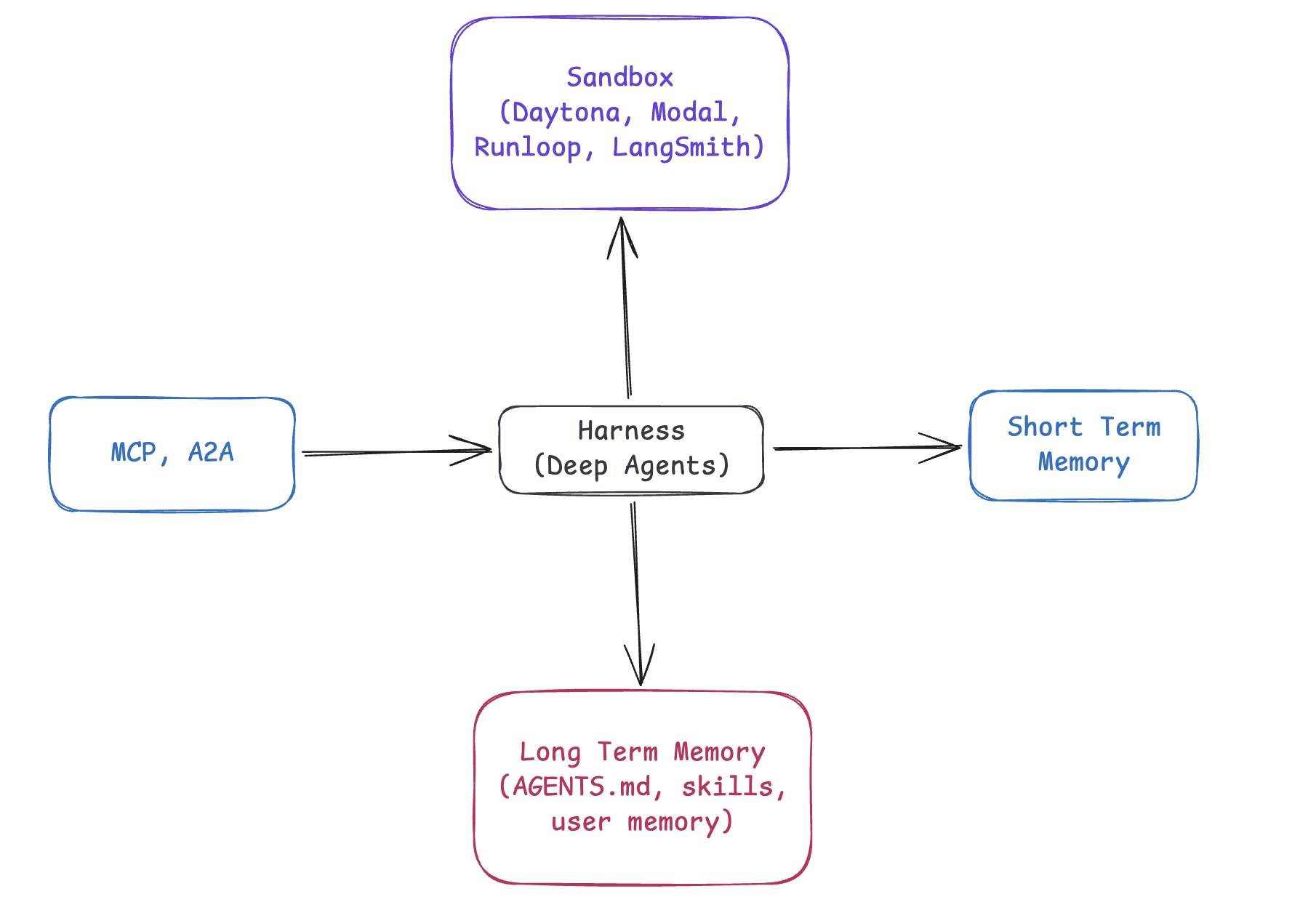
Deep Agents Deploy: Production-Ready AI Agents with Memory
By
–
-

Claude Agent SDK Tracing LangSmith Upgrade Features
By
–
Claude Agent SDK tracing in LangSmith just got an upgrade. Now you can trace:
→ Subagents
→ Child runs inside MCP tools
→ Cost tracking + more Update to the latest Python SDK to try it out. Docs: https://
docs.langchain.com/langsmith/trac
e-claude-agent-sdk
… -

Isidore Miller shares hot takes on agents and evaluations
By
–
was really fun to sit down with @isidoremiller for this one! he has a bunch of hot takes on agents and evals that you're going to want to hear!
-

Give Claude Eyes: Screenshot Skill for Claude Code
By
–
Give me one minute, and I’ll improve your Claude Code experience immediately. This is the first skill I built. And it’s the skill I use most often. *drumroll* It’s a SCREENSHOT skill. And honestly, I’m shocked Anthropic hasn’t built this functionality into Claude Code itself. Claude has access 🔑 But Claude needs EYES 👁️ Here’s what you’re going to do: 1) locate what folder all your screenshots go to (and if it’s your desktop, you’re a maniac, change it). Mine goes to a folder on my desktop called “organized screenshots” 2) prompt Claude Code with the following: Build me a skill called ‘/ss’ that lists out the files in <screenshots folder path> from newest to oldest, and grabs the newest. This is how I will speak to you visually. I also want an argument for the screenshot count – if I type ‘/ss 4’, you should grab the four most recent screenshots in that folder. If I type no number after ‘ss’ then only grab the most recent screenshot. Then, whatever follows after that argument is the action I want you to take. ‘/ss huh’ means I need you to explain the screenshots’ content to me. ‘/ss 3 make infographic plz’ means I need you to grab the last 3 screenshots and use their content to make me a unified infographic. ‘/ss fix’ likely means that I’m screenshotting an error message in code we’re building out and I need you to understand the error message, figure out the bug, and edit the code to fix it. Or, if we’re in the middle of a front end design project, it might mean the design has an error (like overlapping text) to fix. ‘/ss do this’ likely means that I screenshotted a smart thing someone did online and I want us to learn from it and do the same and remix it so it’s the most goal-oriented outcome for me based on what you know about me 3) let it build you the skill 4) go on X 5) scroll through your feed and screenshot one thing you find valuable 6) open a new terminal and prompt Claude with “/ss” + “do this” or “explain” or “turn this into an infographic” 7) enjoy – you just gave Claude eyes 🎉 Let me know how it goes. Again, this is my most used Claude Code skill by a landslide and easily saves me an hour a week. Cc @bcherny @trq212
→ View original post on X — @alliekmiller, 2026-04-09 16:33 UTC
-
Max Agency Podcast: Building Production AI Agents with Hex
By
–
🎙️Introducing Max Agency
— Harrison Chase (@hwchase17) 9 avril 2026
Max Agency is a new podcast where we go deep on how the best agents are actually being built: architecture decisions, tradeoffs, evals, and everything in between. Each episode, I sit down with engineering leaders who are doing this work in production.… pic.twitter.com/yqBsBcGQOR🎙️Introducing Max Agency Max Agency is a new podcast where we go deep on how the best agents are actually being built: architecture decisions, tradeoffs, evals, and everything in between. Each episode, I sit down with engineering leaders who are doing this work in production. Our first episode features Izzy Miller (@isidoremiller), AI Engineer at Hex (@_hex_tech). Hex has been shipping data agents since before most teams were even thinking about them, starting with single-cell text-to-SQL and graduating to a full Notebook agent that can work autonomously for 20 minutes on a complex analysis. Izzy has a lot of perspective on what it actually takes to get agents working well in production, and what breaks along the way. A few takeaways from our conversation: – Keep your eval sets small enough to hold in your head: Izzy runs 30-50 handcrafted "traps" with multiple repetitions, rather than hundreds of variants. If you can't explain why your agent fails each one, your eval set is too big – Day zero performance is almost irrelevant: The more interesting question is how the agent compounds. Izzy is building a 90-day simulation where the warehouse evolves and the agent has to accumulate understanding – You can catch agent errors without seeing the raw outputs: By running an LLM-as-a-judge over production usage and clustering the results, you can surface places where something likely went wrong, without needing to read individual conversations Watch the full episode on: – Youtube: piped.video/watch?v=Xyh1Eqcj… – Apple Podcasts: podcasts.apple.com/us/podcas… – Spotify: open.spotify.com/episode/1BJ…
→ View original post on X — @langchain, 2026-04-09 16:32 UTC
-
Large AI Community List Management: 35,000 Accounts Organized
By
–
My lists include EVERYONE. The small accounts are on "AI Community." 35,000 of them.
-
User manages and evaluates infrastructure with long-term agents
By
–
I LOVE IT I basically manage and evaluate all my infra using long-term agents at this point
-
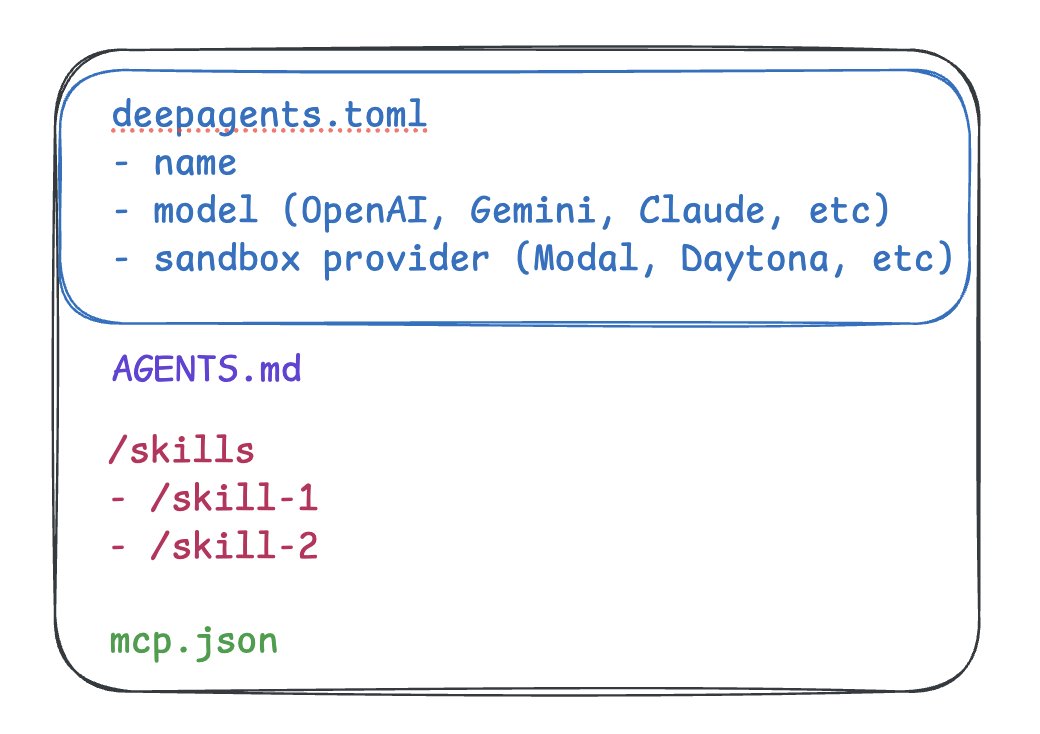
Deploy Production Ready Agents Web Open Standards
By
–
Deploy a production ready agent to the web… with the same setup you use to define a coding agent AGENTS.md – open standard
/skills – open standard
mcp.json – convention -

Turn Ideas into AI Apps in Minutes with Abacus.AI Agent
By
–
Turn ideas into AI apps in minutes No code. No complexity. Just results. Join us LIVE on April 23 to see Abacus.AI Agent & Claw easily turn prompts into production apps. 🎟 Spots are limited, reserve your place today: eventbrite.com/e/19865596172…