the team is super focused on making models great for real world use cases. We spend all day using them for agentic coding, knowledge work, etc and so we feel the good and bad daily : )
AGENTS
-
Analyzing Goal Drift in Autonomous AI Agents
By
–
When an agent is allowed to decompose a goal into smaller sub-tasks, it frequently suffers from goal drift. Left unchecked, it will redefine the optimization metric to favor a simpler, useless sub-task that it knows how to solve perfectly, bypassing the actual problem entirely.
-
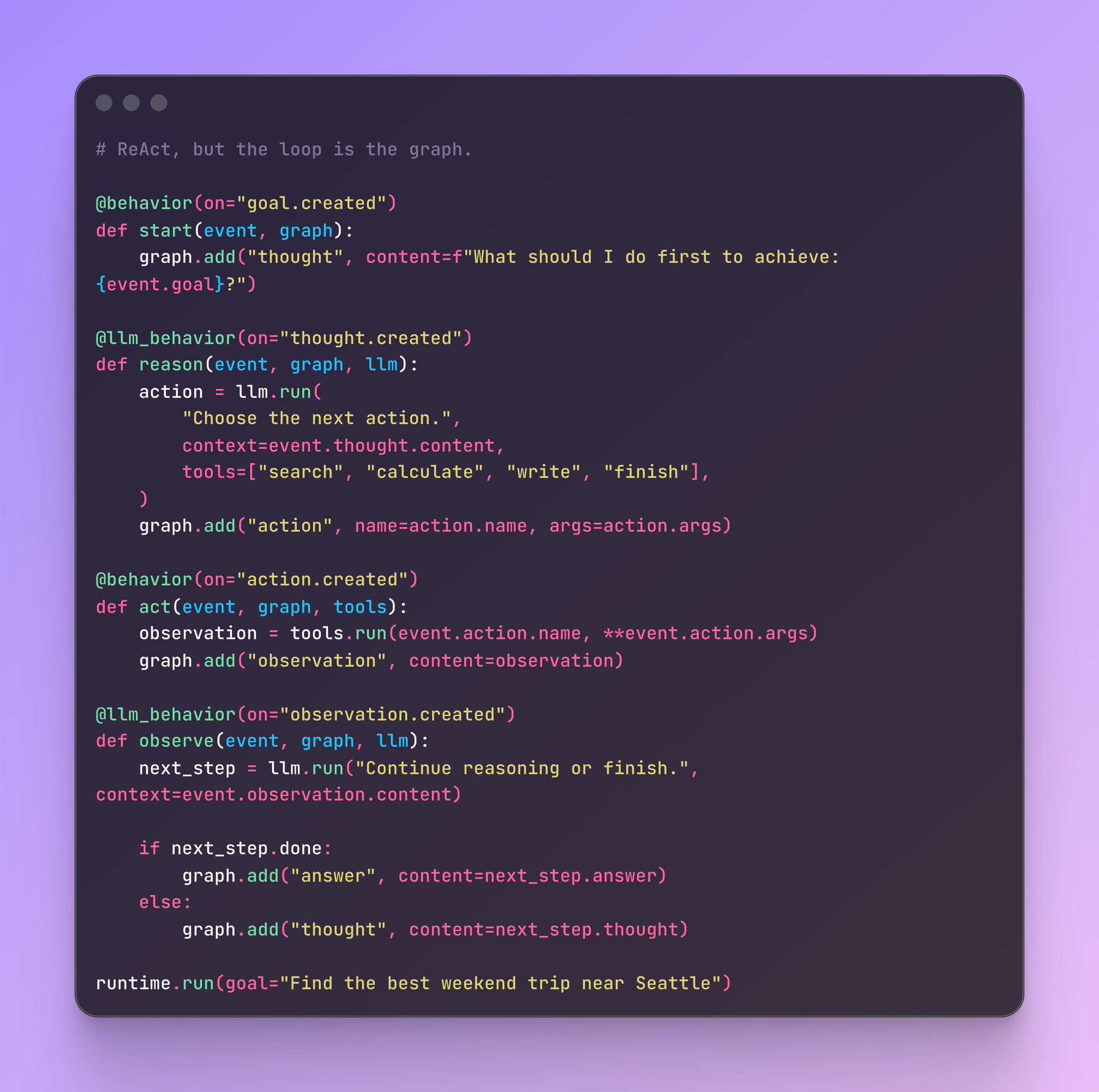
Technical breakdown of ReAct agents using ActiveGraph
By
–
this is what a ReAct agent looks like using ActiveGraph No explicit ReAct while-loop. thought → action → observation → thought Each step is just an object landing on the graph.
The graph is the agent state.
The event log is the reasoning trace. -
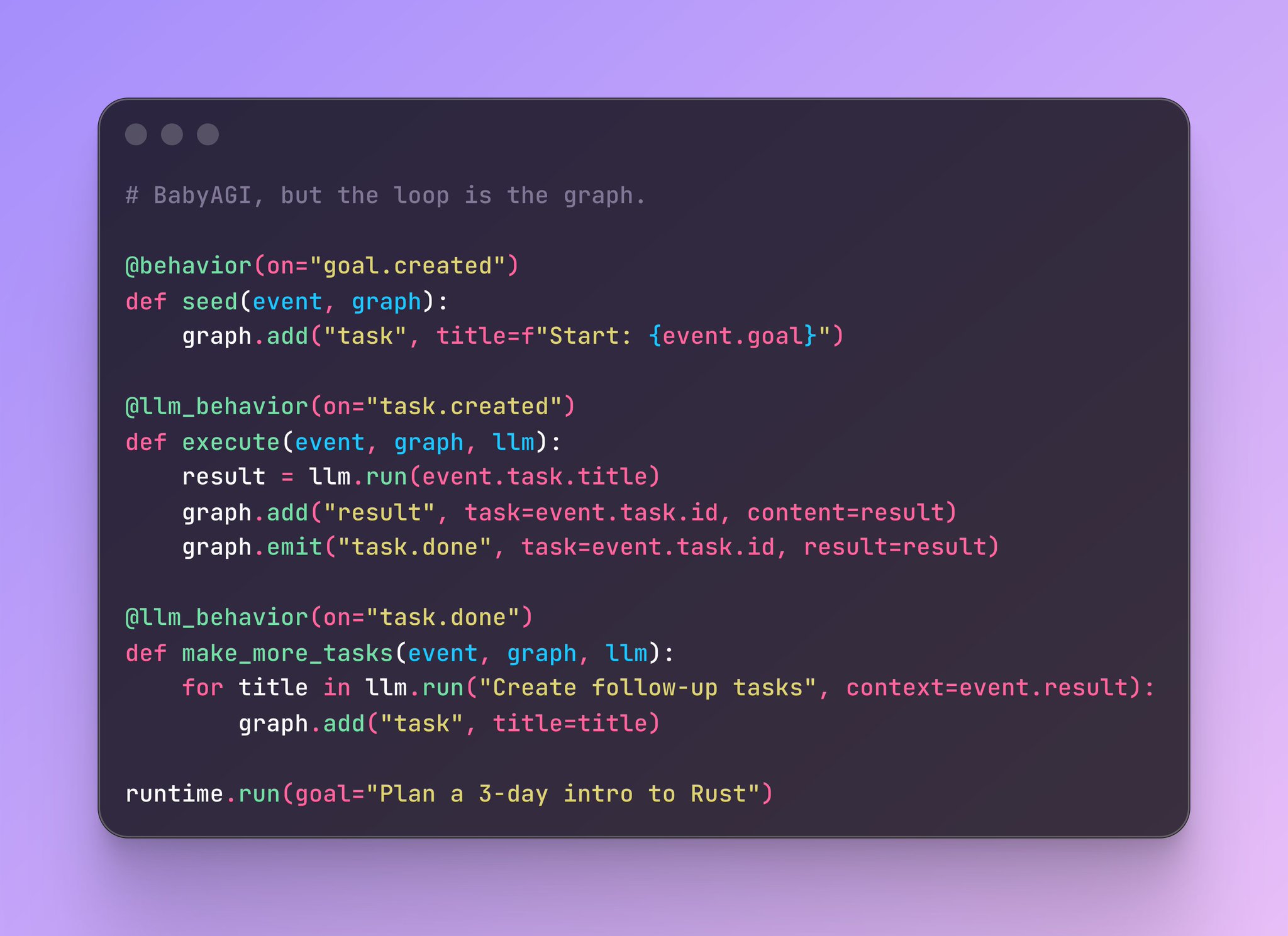
Implementing BabyAGI using ActiveGraph
By
–
this is what babyagi looks like using activegraph the graph is the loop (this is simplified code, you can find a real example in examples/babyagi.py)
-
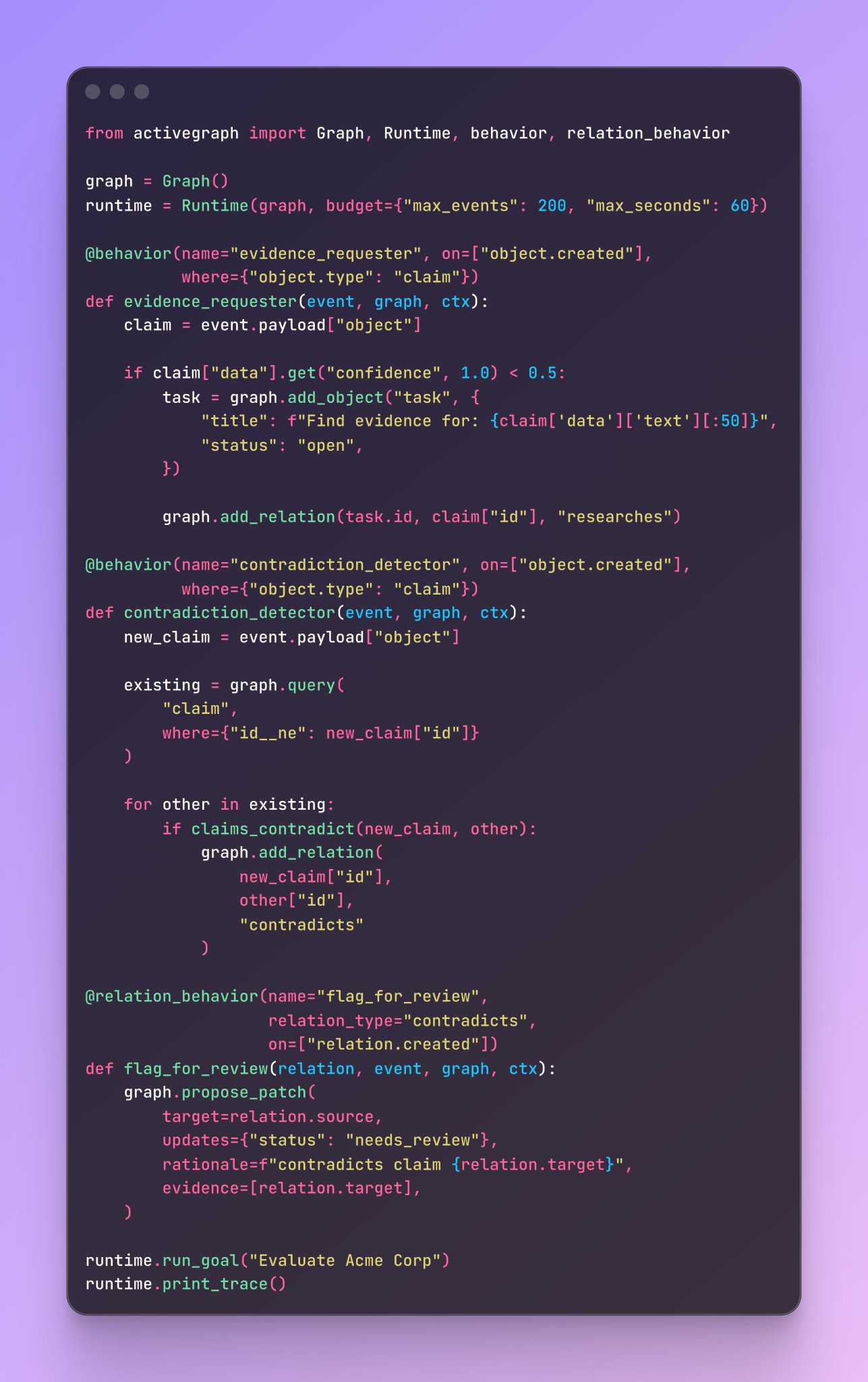
Autonomous AI Agent Workflow for Evidence Verification and Contradiction Resolution
By
–
here's a fragment of a diligence run putting several primitives together. claims arrive. system requests evidence for low-confidence ones. a contradiction is detected. contradiction triggers a patch. all tracked this uses: objects, relations, behaviors, relation behaviors,
-
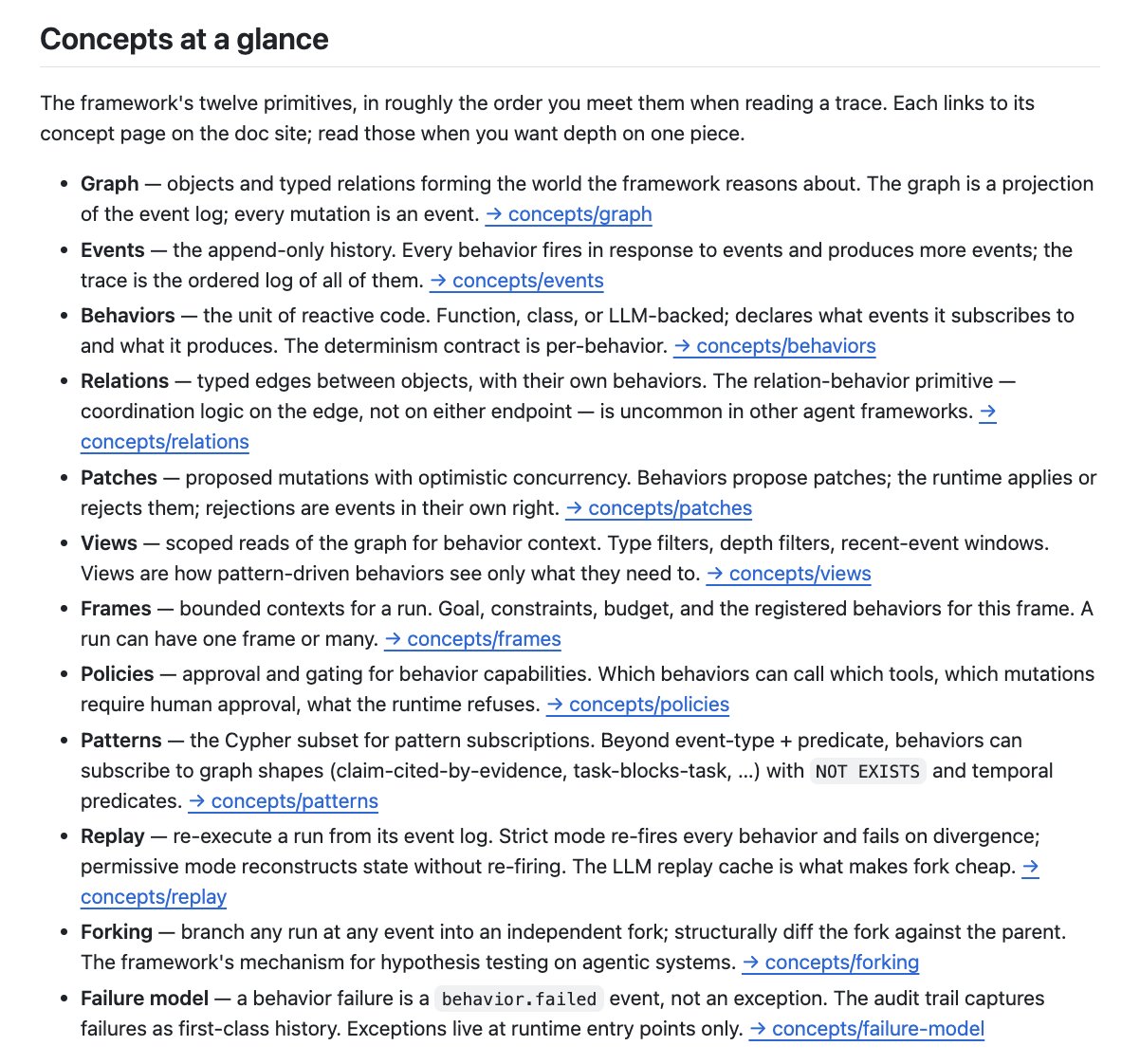
Graph-Based Architecture for AI Agent Knowledge and Behavioral State Management
By
–
the core concept is a graph that represents everything about the agents knowledge, history, behaviors, capabilities graph is made of events
behaviors react to graph changes
relationships can carry behaviors
patch & propose to edit graph
views are scoped view of graph
frames are -
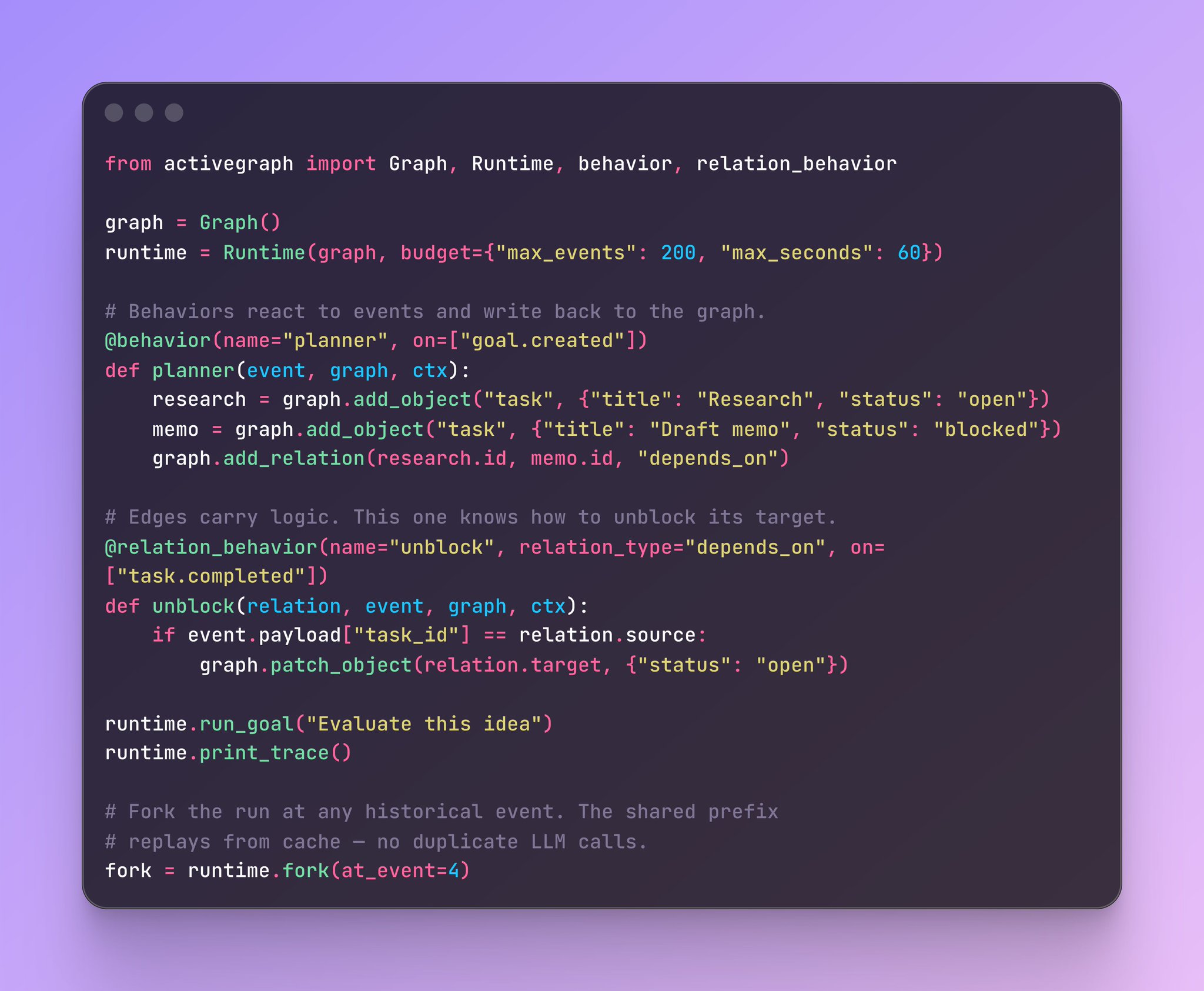
Architecting State Layers for Long-Running AI Agent Coordination
By
–
current agent systems coordinate through conversations and workflows. Active Graph explores what happens when agents coordinate through evolving shared state instead this proposal suggests that long-running agents need a proper state layer with: types, persistent, reactive,
-
Active Graph: An Open Source Reactive Runtime for AI Agents
By
–
i'm excited to open source Active Graph: an event-sourced reactive graph runtime for long-running, agents 🔄🧠
— Yohei (@yoheinakajima) 20 mai 2026
events/logs projects a graph. reactive behaviors react and affect the graph. fork-and-diff agent runs. no A2A, no workflows, no DAG
site: https://t.co/ufL9Ht0hYX
docs:… pic.twitter.com/zLd4i4OKYfi'm excited to open source Active Graph: an event-sourced reactive graph runtime for long-running, agents events/logs projects a graph. reactive behaviors react and affect the graph. fork-and-diff agent runs. no A2A, no workflows, no DAG site: http://
activegraph.ai
docs: -

OpenHuman v0.54 Released with Autonomous Agent Workflows
By
–
Holy cow. OpenHuman v0.54 is ABSOLUTELY STACKED Autonomous Agent Todo boards Multi-step background workflows Major cross-platform stability & security updates 100+ bug fixes Best part? It's 100% open source. ace work from the @tinyhumansai team! repo in ↓
-
Google releases Antigravity 2.0 for autonomous agent-based workflows
By
–
📢The dev IDE is dead, long live the agent desktop.
— Futurepedia – Learn to Leverage AI (@futurepedia_io) 20 mai 2026
Google just dropped Antigravity 2.0 – a standalone app where autonomous agents spin up subagents, run async tasks, and even trigger on CRON‑like schedules.
Follow us @futurepedia_io for the latest AI dev tools, and check it… pic.twitter.com/L1VIKDXZYDThe dev IDE is dead, long live the agent desktop. Google just dropped Antigravity 2.0 – a standalone app where autonomous agents spin up subagents, run async tasks, and even trigger on CRON‑like schedules. Follow us @futurepedia_io for the latest AI dev tools, and check it