Efficient Cross-Domain Offline Reinforcement Learning with Dynamics- and Value-Aligned Data Filtering Paper: https://
arxiv.org/pdf/2512.02435
Code: https://
github.com/zq2r/DVDF.git Our report: https://
mp.weixin.qq.com/s/ztE8GofcssuI
1PdkHx_kLg
… #PapersAccepted by Jiqizhixin
AGENTS
-
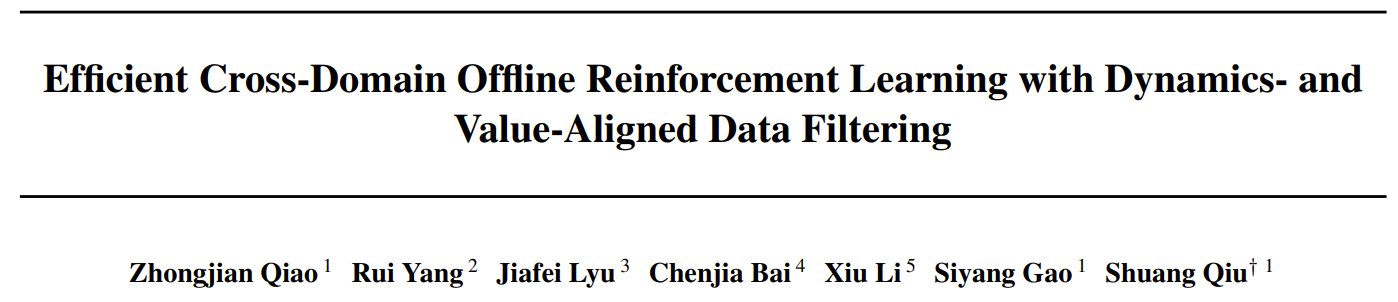
Efficient Cross-Domain Offline Reinforcement Learning with Data Filtering
By
–
-
AI Agents Learning Across Different Environments
By
–
How can AI agents learn effectively when their training data comes from environments vastly different from where they'll operate? Researchers from City University of Hong Kong, UIUC, Tencent, and Tsinghua University present DVDF, a new method for cross-domain offline
-
DeepMind Hires Philosopher to Explore AI Consciousness
By
–
Henry Shevlin – a philosopher of mind and AI ethics from Cambridge, just got hired as an in-house philosopher at Google DeepMind. He'll be focusing on machine consciousness, human-AI interaction, and the ethical governance of increasingly autonomous systems. What's significant here: DeepMind is treating philosophy as a discipline on par with computer science and neuroscience, embedding it directly into core research rather than just keeping ethicists as external advisors. The labs are starting to think about the consciousness, agency, and moral reasoning question. Whereas, I am working at the applied human level – what happens when a mid-level manager doesn't trust the AI their company just deployed, or when a team's workflows break because no one designed the adoption path. That's not the philosophy angle but rather organisational and psychological infrastructure. Both matter. [Translated from EN to English]
→ View original post on X — @scobleizer, 2026-04-14 07:04 UTC
-
AI Agent Deployers: The New Essential Enterprise Role
By
–
this is a very very good write up not enough time being spent right now thinking clearly like this about AI outside of R&D I think this post nails it. start with the job-to-be-done, rethink the factory, and empower super operators Aaron Levie (@levie) The more enterprises I talk to about AI agent transformation, the more it’s clear that there is going to be a new type of role in most enterprises going forward. The job is to be the agent deployer and manager in teams. Here’s the rough JD: This person will need to figure out what are the highest leverage set of workflows on a team are (either existing or new ones) where agents can actually drive significantly more value for the team and company. In general, it’s going to be in areas where if you threw compute (in the form of agents) at a task you could either execute it 100X faster or do it 100X more times than before. Examples would be processing orders of magnitude more leads to hand them off to reps with extra customer signal, automating a contracting review and intake process, streamlining a client onboarding process to reduce as many straps as possible, setting up knowledge bases than the whole company taps into, and so on. This person’s job is to figure out what the future state workflow needs to look like to drive this new form of automation, and how to connect up the various existing or new systems in such a way that this can be fulfilled. The gnarly part of the work is mapping structured and unstructured data flows, figuring out the ideal workflow, getting the agent the context it needs to do the work properly, figuring out where the human interfaces with the agent and at what steps, manages evals and reviews after any major model or data change, and runs and manages the agents on an ongoing basis tracking KPIs, and so on. The person must be good at mapping the process and understanding where the value could be unlocked and be relatively technical, and has full autonomy to connect up business systems and drive automation. This means they’re comfortable with skills, MCP, CLIs, and so on, and the company believes it’s safe for them to do so. But also great operationally and at business. It may be an existing person repositioned, or a totally net new person in the company. There will likely need to be one or more of these people on every team, so it’s not a centralized role per se. It may rile up into IT or an AI team, or live in the function and just have checkpoints with a central function. This would also be a fantastic job for next gen hires who are leaning into AI, and are technical, to be able to go into. And for anyone concerned about engineers in the future, this will be an obvious area for these skills as well. — https://nitter.net/levie/status/2043883641366032638#m
→ View original post on X — @scobleizer, 2026-04-14 07:02 UTC
-
Multi-stage verification gates ensure AI output quality
By
–
The staged approach works because each stage is a quality gate. You're not trusting the output, you're verifying it at multiple checkpoints before it goes anywhere.
-
AI Agents Require Infrastructure and Security Strategy Overhaul
By
–
Your AI Strategy Needs A Rebuild Before Agents Break It #AI agents are moving from pilot projects into real business roles, but many companies are discovering that their #cloud #infrastructure, #security models, and #workflows were built for people, not #autonomous systems.
-

GPT with LangGraph: Multi-Agent Systems and Advanced AI Applications
By
–


GPT with LangGraph! #BigData #Analytics #DataScience #AI #MachineLearning #NLProc #IoT #IIoT #PyTorch #Python #RStats #TensorFlow #Java #JavaScript #ReactJS #GoLang #CloudComputing #Serverless #DataScientist #Linux #Programming #Coding #100DaysofCode The rapid advancement of large model technology is leading to an increasing application of agent technology across various fields and industries significantly transforming how people work and live. In complex and dynamic environments, multi-agent systems are able to tackle intricate tasks that would be challenging for a single agent, thanks to their collaborative and division-of-labor approaches. The following stack of research papers and hands on tutorials highlight the integrated use of GPT with LangGraph and CrewAI. LangGraph enhances information transmission efficiency through its graph-based structure, while CrewAI boosts team collaboration and system performance via intelligent task allocation and resource management. The key areas of this research include: The design of agent architectures based on LangGraph for precise control . The enhancement of agent capabilities through CrewAI to tackle a range of tasks. The goal of this study is to explore the combined potential of GPT and LangGraph and CrewAI in multi-agent systems, offering fresh insights for the ongoing evolution of agent technology and fostering innovation in the application of large model intelligent agents. References Duan, Z., & Wang, J. (2024, November 27). Exploration of LLM multi-agent application implementation based on LangGraph+CrewAI. arXiv. Retrieved March 9, 2025, from arxiv.org/abs/2411.18241 Horsey, J. (2025, March 9). Build a powerful Python chatbot in minutes with LangGraph. Geeky Gadgets. Retrieved March 9, 2025, from geeky-gadgets.com/build-a-po… Ong, R. (2024, July 10). GPT-4o and LangGraph tutorial: Build a TNT-LLM application. DataCamp. Retrieved March 9, 2025, from datacamp.com/tutorial/gpt-4o… Sivan, V. (2024). Building AI agent systems with LangGraph. Medium. Retrieved March 9, 2025, from medium.com/pythoneers/buildi… Wang, J., & Duan, Z. (2024, December 2). Intelligent Spark agents: A modular LangGraph framework for scalable, visualized, and enhanced big data machine learning workflows. arXiv. Retrieved March 9, 2025, from arxiv.org/abs/2412.01490
→ View original post on X — @gp_pulipaka, 2026-04-14 04:57 UTC
-

Manus: Gen AI Agent for Big Data Analytics and Machine Learning
By
–
Manus: Gen AI Agent! #BigData #Analytics #DataScience #AI #MachineLearning #NLProc #IoT #IIoT #PyTorch #Python #RStats #TensorFlow #Java #JavaScript #ReactJS #GoLang #CloudComputing #Serverless #DataScientist #Linux #Programming #Coding #100DaysofCode https://
geni.us/Manus-AI-Agent -

Enterprise Search: Deploying NVIDIA AI-Q for Secure Production
By
–
Moving enterprise search from a prototype to a secure, full-scale production environment is a complex hurdle. 🔍 There is a great step-by-step blueprint available for deploying the open-source NVIDIA AI-Q template to build scalable, "agentic" search stacks integrating private data. Read the Blog: developer.nvidia.com/blog/ho… #EnterpriseAI #LangChain @nvidia
→ View original post on X — @haroldsinnott, 2026-04-14 04:00 UTC
-

Multiagent Learning Algorithms with Large Language Models
By
–


Multiagent Learning Algorithms with Large Language Model! #BigData #Analytics #DataScience #AI #MachineLearning #NLProc #LLM #IoT #IIoT #PyTorch #Python #RStats #TensorFlow #Java #JavaScript #ReactJS #GoLang #CloudComputing #Serverless #DataScientist #Linux #Programming #Coding #100DaysofCode geni.us/MultiAgent-LLM
→ View original post on X — @gp_pulipaka, 2026-04-14 04:00 UTC