Well, technically, my first paper on Joint Embedding Architectures (AKA Siamese nets) is from NIPS 1994.
but that paper and many subsequent works use sample-contrastive learning and no predictor.
The JEPA idea trained non sample-contrastive losses (Barlow Twins, VICReg, MCR2) or
@ylecun
-
Joint Embedding Architectures and Non-Contrastive Learning Methods
By
–
-
LLMs Retrieval vs Reasoning: Understanding Fundamental Limitations
By
–
Don't confuse the approximate retrieval abilities of LLMs for actual reasoning abilities.
-
Censorship and Knowledge Exchange Control in Authoritarian Regimes
By
–
In 1983, when the free world was starting to play with personal computers, the Ceaucescu regime in Romania required a license to own a typewriter.
Obscurantism isn't just preventing people from accessing knowledge.
It's also preventing people from exchanging knowledge. -
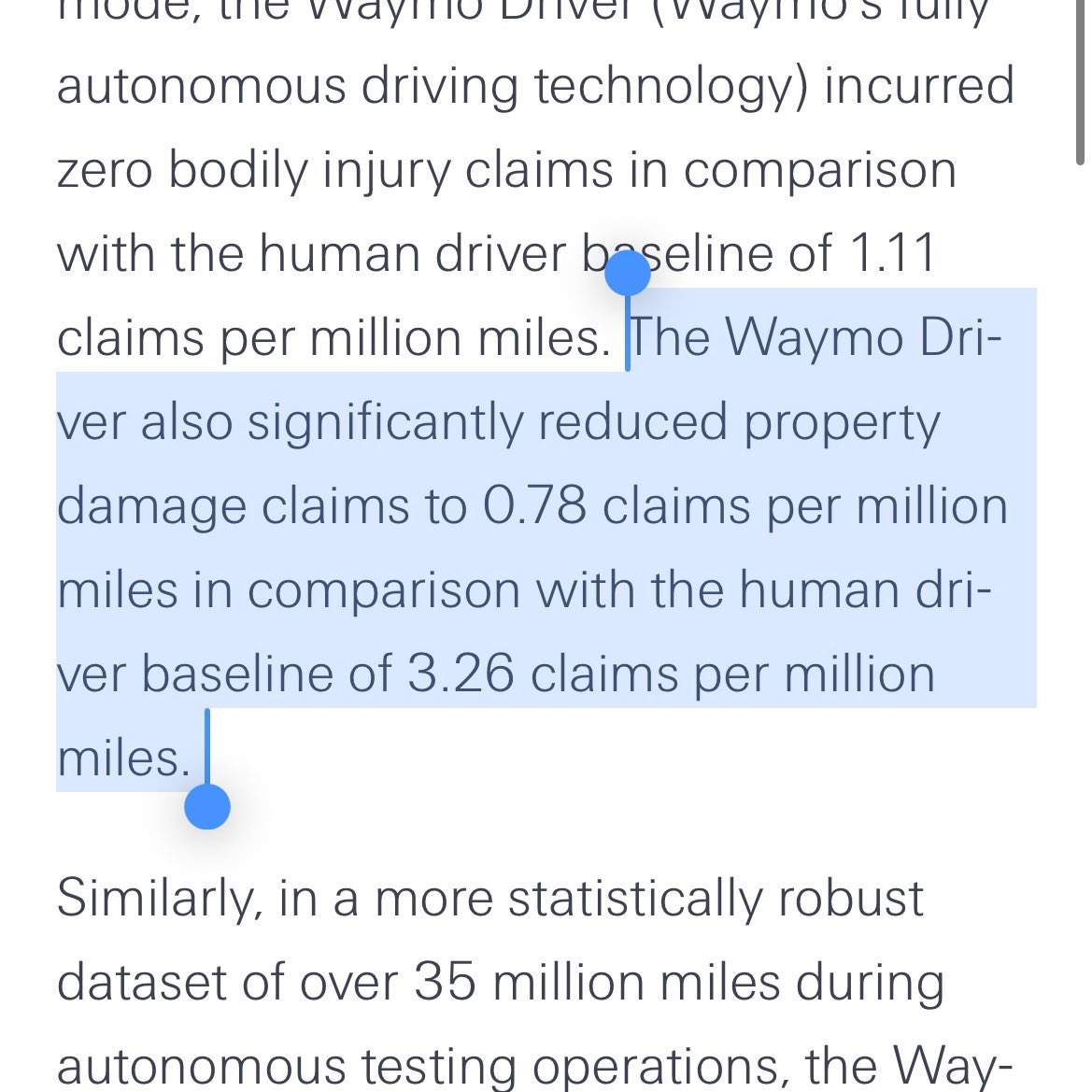
Waymo Self-Driving Cars Outperform Humans on Road Safety
By
–
So much for the idea that self-driving cars are hitting walls.
They are not hitting obstacles nearly as much as human drivers. Yes, Waymo cars only drive in some areas that are fully mapped, they use all kinds of sensors, and they have required a decade of data collection, -
AI Critics Repeat Social Network Arguments From Years Ago
By
–
I don't think anything he has said is salvageable.
What I find odd, among many other things, is that the arguments he uses against AI today are the *exact* same arguments he used against social networks years ago. -
Open-source AI platforms crucial for developing countries
By
–
I think the availability of open-source AI platforms is crucial for everyone, but I agree with you that it is particularly crucial for developing countries.
-
Agency Limitations for AI Risk Management and Natural Disasters
By
–
That's my point. Our agency is kimited for events like pandemics, earthquakes, tornadoes, meteor strikes, and other natural phenomena. The best we can do is take some preemptive defensive measures and hope for the best. But for AI and other manifestations of human activity, we
-
AI Systems Lack Innate Self-Interest Drive Unlike Humans
By
–
No, that's just false.
The desire to pursue self-interest, sometimes at the expense of other individuals, is hardwired into humans by evolution.
AI systems will not have this kind of drive unless we explicitly build it into them.
And we would be pretty stupid to do so. -
Designing AI Systems Subservient to Humans Always
By
–
Loke many other species, humans have evolved to be dominant at times and subservient at other times (because groups that rally behind leaders often have better chances of survival). We can design and build AI systems that are subservient to humans at all times, with zero desire
-
World Models and JEPA: Future of Open Source AI
By
–
An interview with @craigss on Eye on AI where I talk about world models, JEPA, the future of AI, and the necessity of open source AI platforms.