AI catching supply chain attacks before humans even notice is a legit use case. The attack surface is only going to grow with AI-generated dependencies.
@whats_ai
-
Universal Encoder Challenges Specialized Models
By
–
One encoder to rule them all. Curious how it handles edge cases where specialized encoders still dominate.
-
Source Maps Oversight in NPM Registry Security Risk
By
–
A source map in the npm registry is such a classic oversight haha. Curious what people find in there.
-
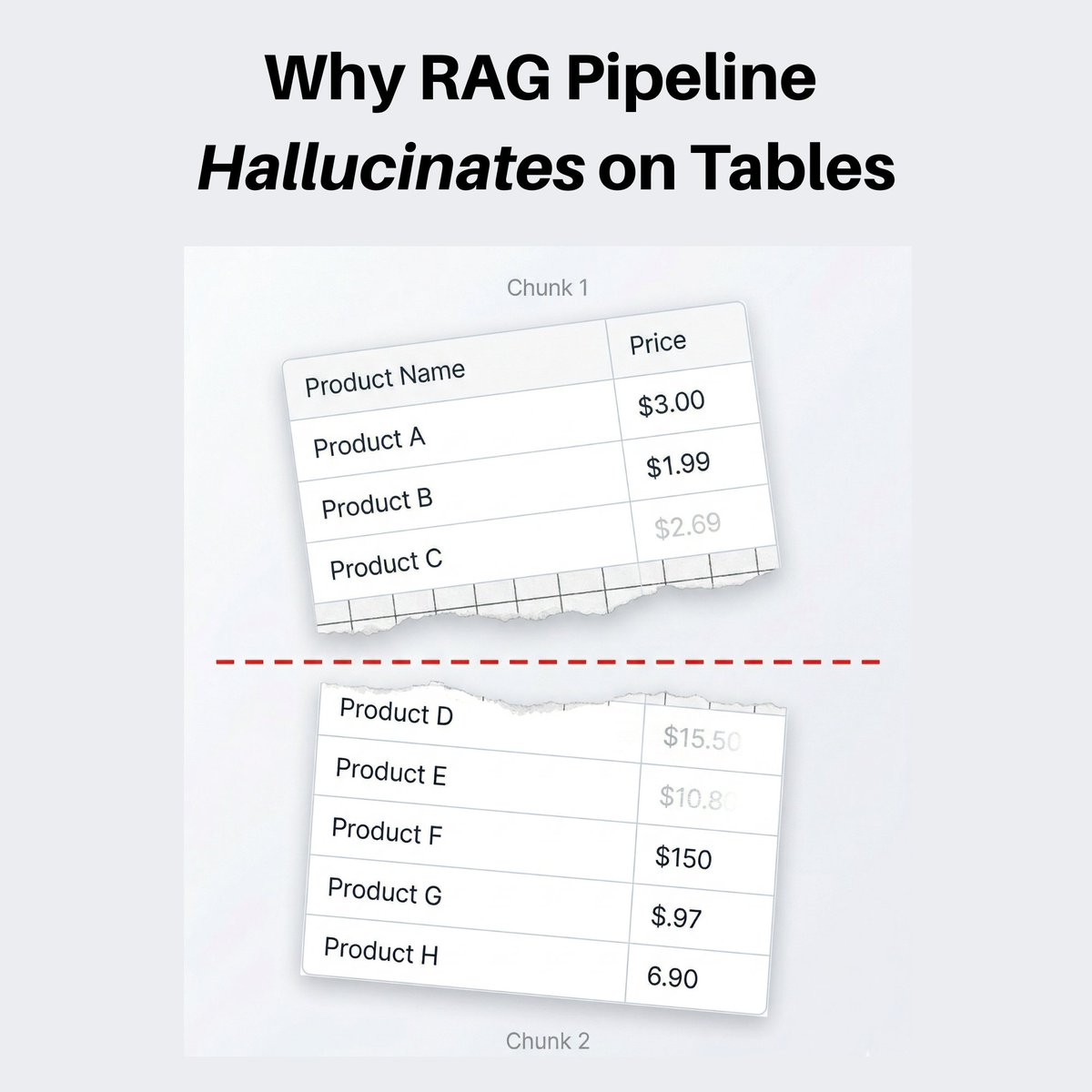
Fix RAG hallucinations by protecting tables and structured content
By
–
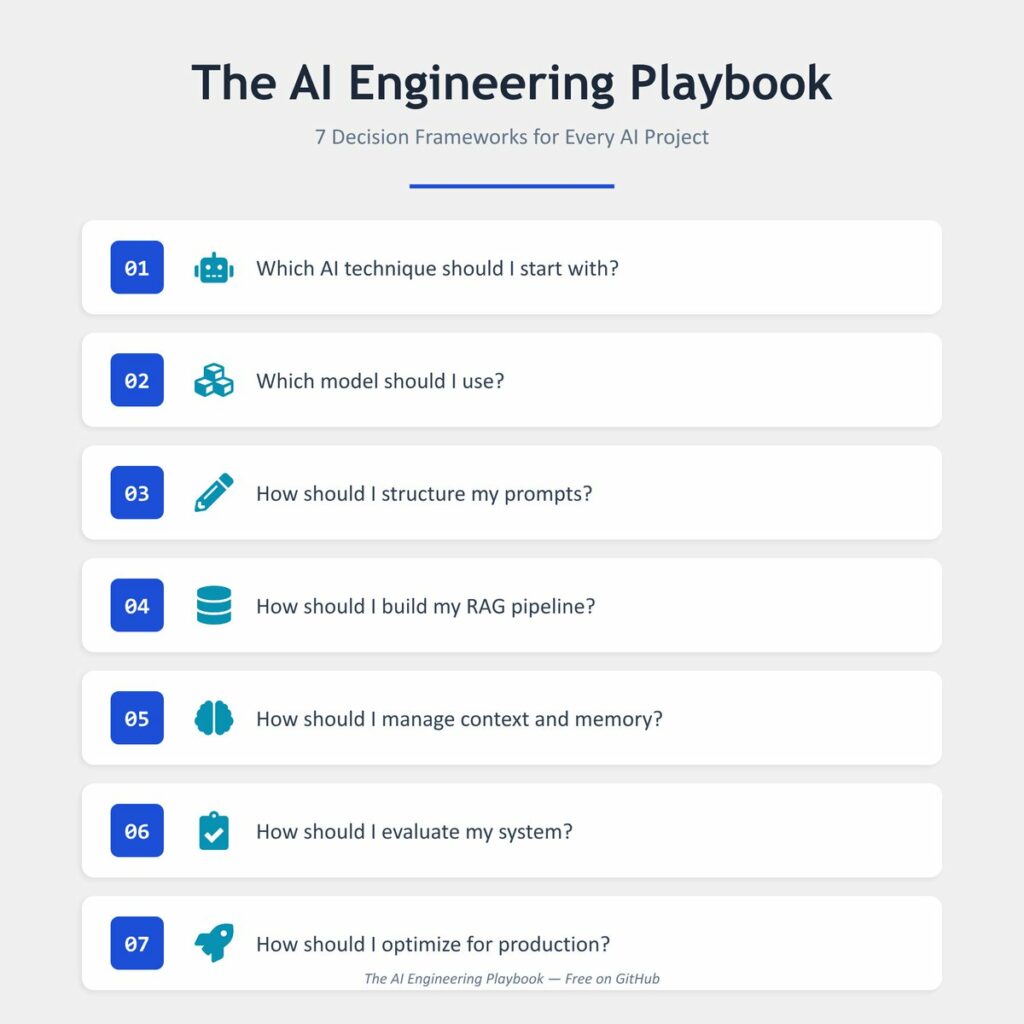
Your RAG pipeline answers everything correctly. Except anything from a table. Pricing data. Comparison charts. Structured specs. Ask about any of these and the answer is either wrong or completely made up. The model isn't hallucinating because it's bad. It's hallucinating because it never saw the full table. When you chunk documents, you split them by a fixed token count. The splitter doesn't understand what it's cutting through. It just counts and splits. So your pricing table gets sliced in the middle. Half the rows in one chunk, half in another. The model receives an incomplete table and fills in the blanks on its own. Same thing happens with code blocks and any structured content. The moment you start treating tables and code as protected blocks and never let the chunker split through them, the accuracy on structured questions jumps. Same documents. Same model. Same prompt. Just keep structured content whole. I wrote a free playbook (its on git, no email wall or anything) that covers this decision framework (and 6 others like model selection, evaluation, and production optimization) as simple find-your-situation, follow-the-row tables. Link in the first comment.
-
AI Engineering Playbook: Complete Guide and Resources
By
–
Here's the playbook: github.com/louisfb01/ai-engi…
-
Comparing Agent Frameworks: The Nuanced Reality
By
–
The honest answer is always "it depends" when comparing agent frameworks. Appreciate the nuanced take instead of picking a winner, that's the reality of building with these tools.
-
AI-Generated Research Published in Nature: Peer Review Implications
By
–
AI Scientist published in Nature is a big deal. I'm curious how the review process handled the fact that the research was AI-generated, that's a fascinating meta question.
-
RL Post-training Efficiency: 4x Fewer Rollouts for Coding
By
–
4x fewer rollout turns for competitive accuracy is a big deal for making RL post-training practical. Curious to see if this generalizes beyond coding tasks.
-

Training vs Context: How to Actually Give AI Your Company Data
By
–
If you paste your company data into ChatGPT, you did NOT just train it. ❌ I keep getting different versions of this same question: → Can I inject knowledge directly into the model? → Does adding data through RAG actually change how the model thinks? Let's understand the answer with the example of a small company that sells climbing gear. 🧗 They have a return policy, a product catalog, and internal guidelines. They want AI to handle customer questions. If they paste their return policy into ChatGPT – did they train the model? No. They gave it temporary context. The model's brain didn't change at all. If they build a RAG system that retrieves relevant documents when a question comes in – did they train the model? Still no. They built an external bookshelf the model can read from. But the model itself is exactly the same. If they fine-tune the model on their climbing gear data – now they actually changed the brain. But even then, they didn't insert a clean fact into a specific location. The knowledge gets distributed across millions of parameters. There's no single neuron labeled "climbing shoe return policy." 🧠 So what should they actually do? If the goal is for the model to know a specific fact, don't retrain it. Give it through context or external memory. It's cheaper and more controllable. Save fine-tuning for changing behavior like tone, style, reasoning patterns, not for injecting knowledge. I covered all of this and more in a video: → How embeddings work (without the math) → What the latent space actually is → Why reasoning models aren't fundamentally different → When to choose prompting vs RAG vs fine-tuning The mental model I want you to keep: 👉 Parameters = the brain 👉 Training = changes the brain 👉 Embeddings = coordinates for searching meaning 👉 RAG = a bookshelf the brain reads from 👉 Latent space = the internal geometry created by the brain Full video 👇
-
Anthropic publishes research on AI product risks and disempowerment
By
–
Anthropic publishing research on risks of their own product is something more AI companies should do. The disempowerment patterns finding deserves way more attention than it got.