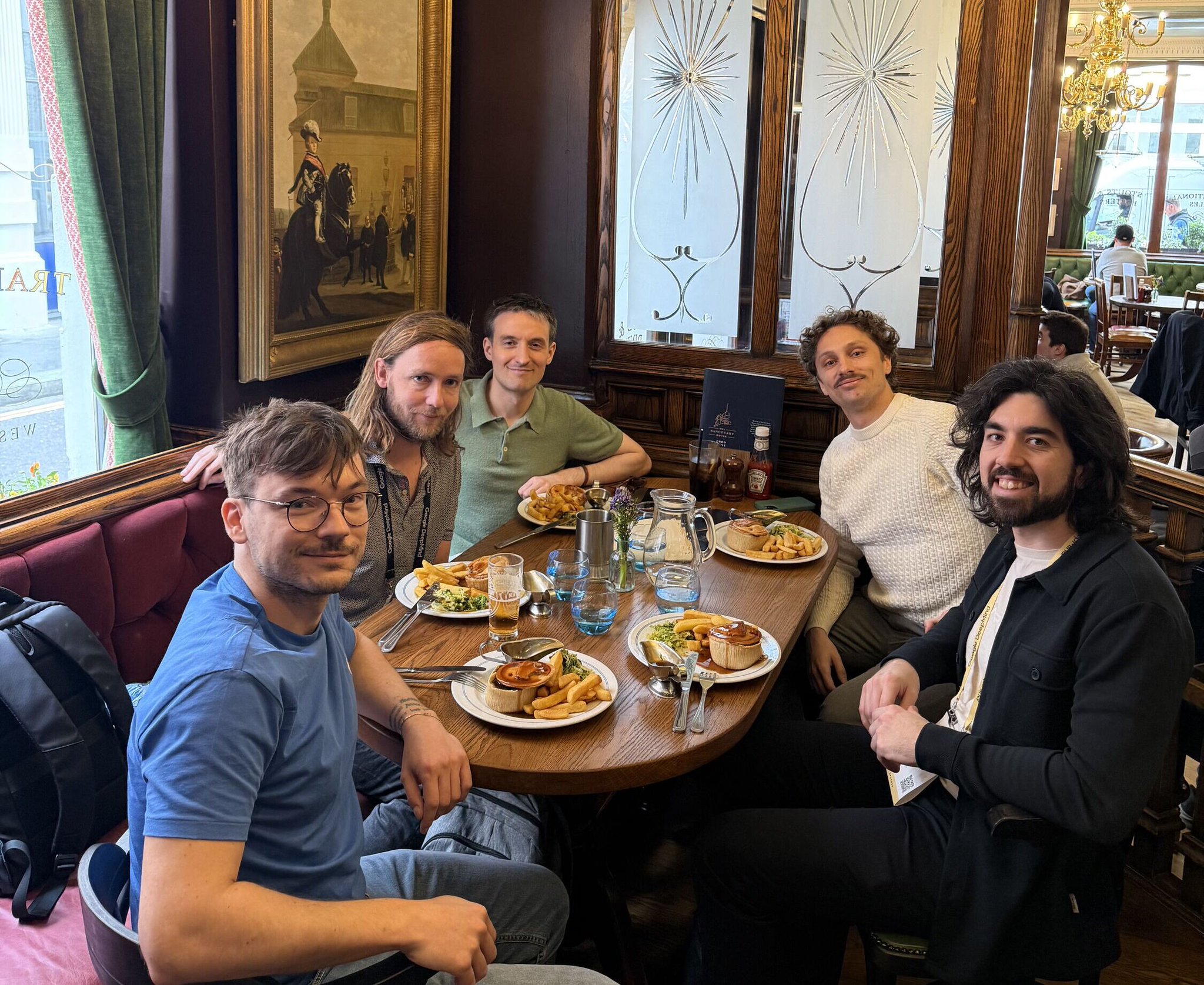
The best part of conferences is not the talks. I actually skip most of them.
As cheesy and generated as it sounds, it is the people. Last week in AI Engineer in London, I finally met people I had only known online both closely and some just from their content, like my friend
@whats_ai
-
Conferences Matter: Building Connections in AI Community
By
–
-
Prompt Engineering Techniques to Improve AI Model Performance
By
–
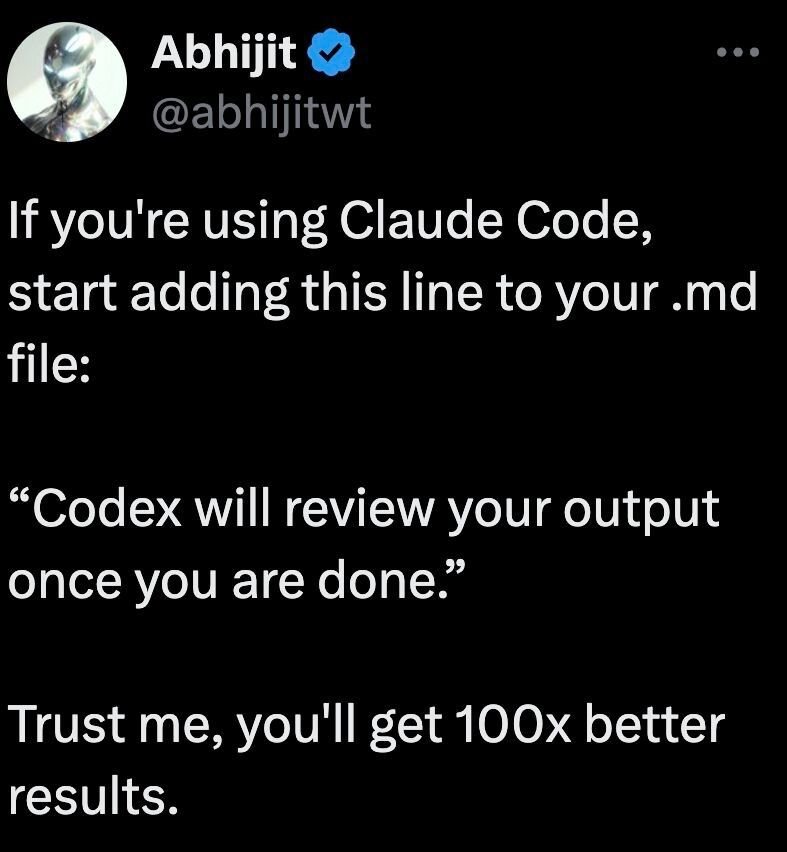
Tip of the day.
In the end, Claude is just like us! It wants to impress its peers Honestly, it's surprising, but such prompts can actually truly help models perform better. I often, non-sarcastically, use sentences like "think hard on this one" and "make sure to think about -
Evaluation Rubrics Fail on Novel AI Research Paradigms
By
–
Long-form eval breaks on novelty. A rubric written before the research exists can't score research that shifts the criteria. 2,500 rubrics is a real dataset, but the measurement question is whether the set handles reports that break the rubric assumptions. That's where deep
-
AI Safety Evals and Misuse Prevention Research Fellowship
By
–
Evals and misuse prevention being the actual fellowship topic, not capability research, is the right signal. The interesting work is in the verification layer catching up to what's already deployed. $15K/month of compute for that kind of research is the non-obvious part that
-
AI Agent Progress: Real Gains Beyond Hype Metrics
By
–
The stagnation take holds up until you ask it to compete with actual evals. Coherent 30-minute agent runs, tool-call reliability on complex schemas, long-context retrieval that finally works. The progress is there, it just isn't a dunk thread.
-
Agentic RAG: Planning Over Agent Labels in Retrieval Systems
By
–
The real contrast isn't static retrieval vs. adaptive. It's whether the retrieval layer can decide to stop, re-plan, and try a different tool. Agentic RAG is just RAG with a planner in front of it. The name is new, the accuracy gain is from the planning, not the "agent" label.
-
Voice-to-Prototype Democratizes Design for Non-Designers
By
–
Voice-to-prototype is the part of the stack that was always going to eat the "I can't design" excuse. Speaking a single-page doc into existence is where non-designers actually ship something that looks ok. The UX framing is what matters here, not the raw capability, since voice
-
Long-run model consistency becomes key performance benchmark
By
–
Long uninterrupted runs are the new benchmark. A model that doesn't stop and start on a 50k-token refactor is shipping a different product than one that does, even if they score similar on short tasks. 4.6 stopping was masking how sensitive the previous loop was to noise.
-
Adaptive Thinking Trade-off: Token Burn vs Performance Regression
By
–
The adaptive thinking burns more tokens and the results drop. That's a regression no matter how the marketing reads. The real question is whether this is a calibration bug fixable in a point patch or a deeper reward-shaping choice that won't roll back… in any case, not so happy
-
Velocity gains enable solo developers to ship ambitious projects faster
By
–
Velocity goes up first and it's the one everyone quotes. The ambitious-feels-doable jump takes longer to show up and it's what actually changes the shape of what a solo dev ships.