
I'm very excited about this extension to the celebrated Terminal-Bench to science. If you're a scientist (life, physical, earth, mathematical science, etc) interested in AI, definitely check this out! Terminal bench evaluate how good AI models are at controling tools on a
@thom_wolf
-
The Rise of Vibe-Coded AI Dashboards as a Social Trend
By
–
My favorite 2026 trend is friends casually showing each other their vibe-coded life/work dashboards and AI setups. Ngl it feels exactly like bringing your Magic: The Gathering binder to school as a teen.
-
A new generation using AI to rebuild games
By
–
my 13 yo the other day: “we didn’t want to pay for the game with my friend so we just rebuilt it with Codex” me at 13 in the 90’s: HEX-editing the executable to NOP the license check because I didn't want to put all my pocket money in this game times they are a-changin’
-
Team of agents solving a physics problem
By
–
watching a team of agents tackling a hard theoretical physics problem is quite mesmerizing – self-correcting, deriving hard equations, computing intermediate results, re-estimating the best approach https://t.co/EySjaCtUFZ pic.twitter.com/RhUmNXkGLB
— Thomas Wolf (@Thom_Wolf) 13 mai 2026Watching a team of agents tackle a challenging theoretical physics problem is quite mesmerizing—they self-correct, derive complex equations, compute intermediate results, and re-evaluate the best approach.
-
Science Resources Hub: Chemistry Biology Physics Materials Math
By
–
Super happy to have this one out. A clean organized up-to-date view of all the science resources (chemistry, biology, physics, materials, math) people have been sharing on the Hugging Face hub: datasets, blogs, models and more https://t.co/3Wk2TZteAT
— Thomas Wolf (@Thom_Wolf) 29 avril 2026Super happy to have this one out. A clean organized up-to-date view of all the science resources (chemistry, biology, physics, materials, math) people have been sharing on the Hugging Face hub: datasets, blogs, models and more
-
AI Agents Challenge GitHub’s Centrality in Code Distribution
By
–
GitHub central place might become challenged in a world where (1) we access/get code and libraries through agents/chats and (2) our codebases are increasingly custom tailored and build from scratch Agents explore the web better than us and can get/store code from many places
-
Hugging Face Ecosystem Powers SOTA ML Training Agents
By
–
Love this work from Aksel and the post-training team at Hugging Face!
— Thomas Wolf (@Thom_Wolf) 21 avril 2026
Turns out the HF ecosystem (papers, datasets, models all accessible through CLI, skills and md files) is perfect for running SOTA ML agents: agents that can train any type of AI model to top performance.
A… https://t.co/uakFTU5oD0Love this work from Aksel and the post-training team at Hugging Face! Turns out the HF ecosystem (papers, datasets, models all accessible through CLI, skills and md files) is perfect for running SOTA ML agents: agents that can train any type of AI model to top performance. A
-
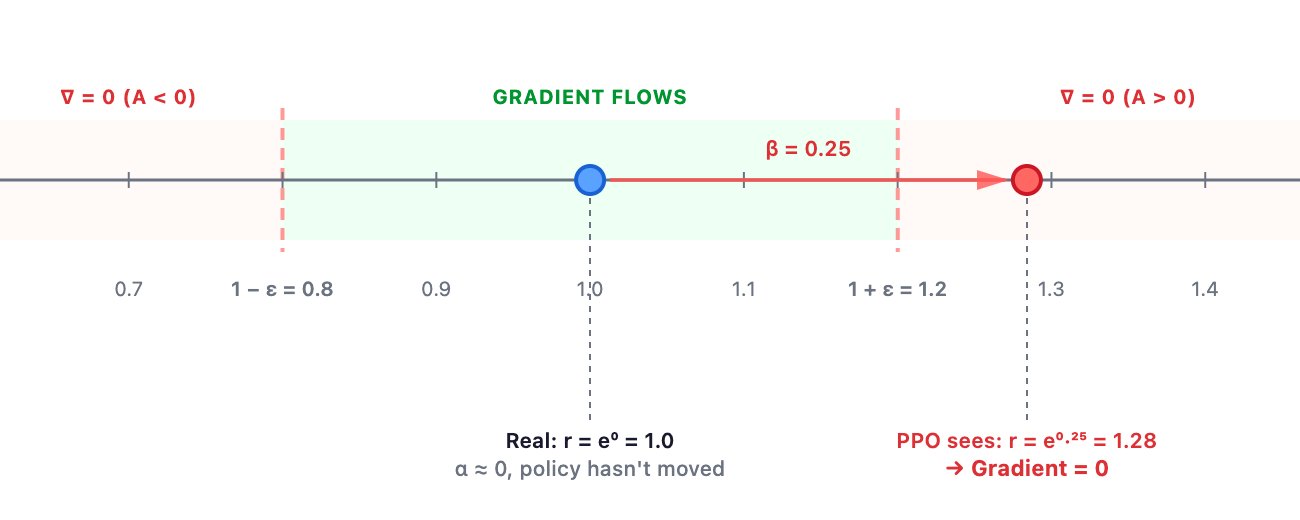
AsyncGRPO TRL Library: Scaling Inference Training Decoupling
By
–
**Deep content post alert** A technical deep dive for your Sunday morning, somewhere between a short detective story and a tutorial on RLHF We recently added AsyncGRPO in the TRL library to decouple inference and training and scale much faster and harder. As a sanity
-
JSON’s Token Inefficiency Problem Costs Real Money
By
–
json is so token inefficient it hurts these days man, these braces and quotes are costing me real $$