Breakthroughs in computer science can have unintended consequences. What if students had to consider social outcomes proactively? Enter embedded ethics curricula. @stanfordethics
@stanfordhai
-

AI applications in education benefits risks explored at summit
By
–
Top AI stories of 2023: AI+Education Summit explored benefits and risks of AI applications for human learning. @StanfordEd https://
stanford.io/3tnfdTF -

Stanford HAI experts share 2024 AI predictions and insights
By
–
What to expect in AI in 2024? @StanfordHAI experts, including @DigEconLab director @erikbryn
, share their insights: https://
stanford.io/3tgY5yV -
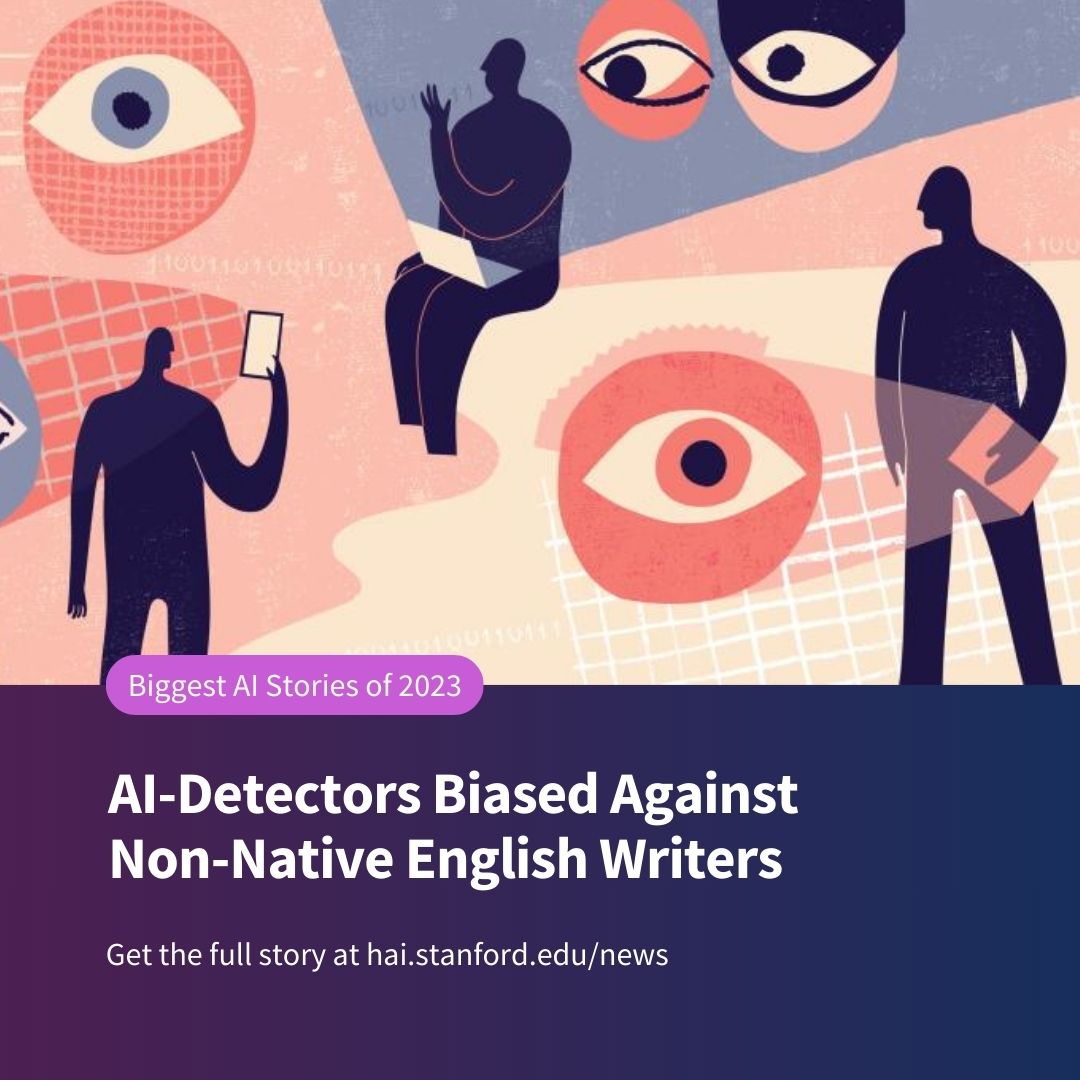
AI Detectors Flawed: Misclassifying Non-Native English Writers
By
–
Top AI stories of 2023: New research found most AI detectors are flawed: They misclassify essays from non-native English writers as AI-generated. https://
stanford.io/3GQ5uIv -
Fair Use and AI: Courts Define New Legal Precedents
By
–
How should we interpret “fair use” protections of words and images in the AI era? Lawsuits are requiring courts to set new precedents:
-
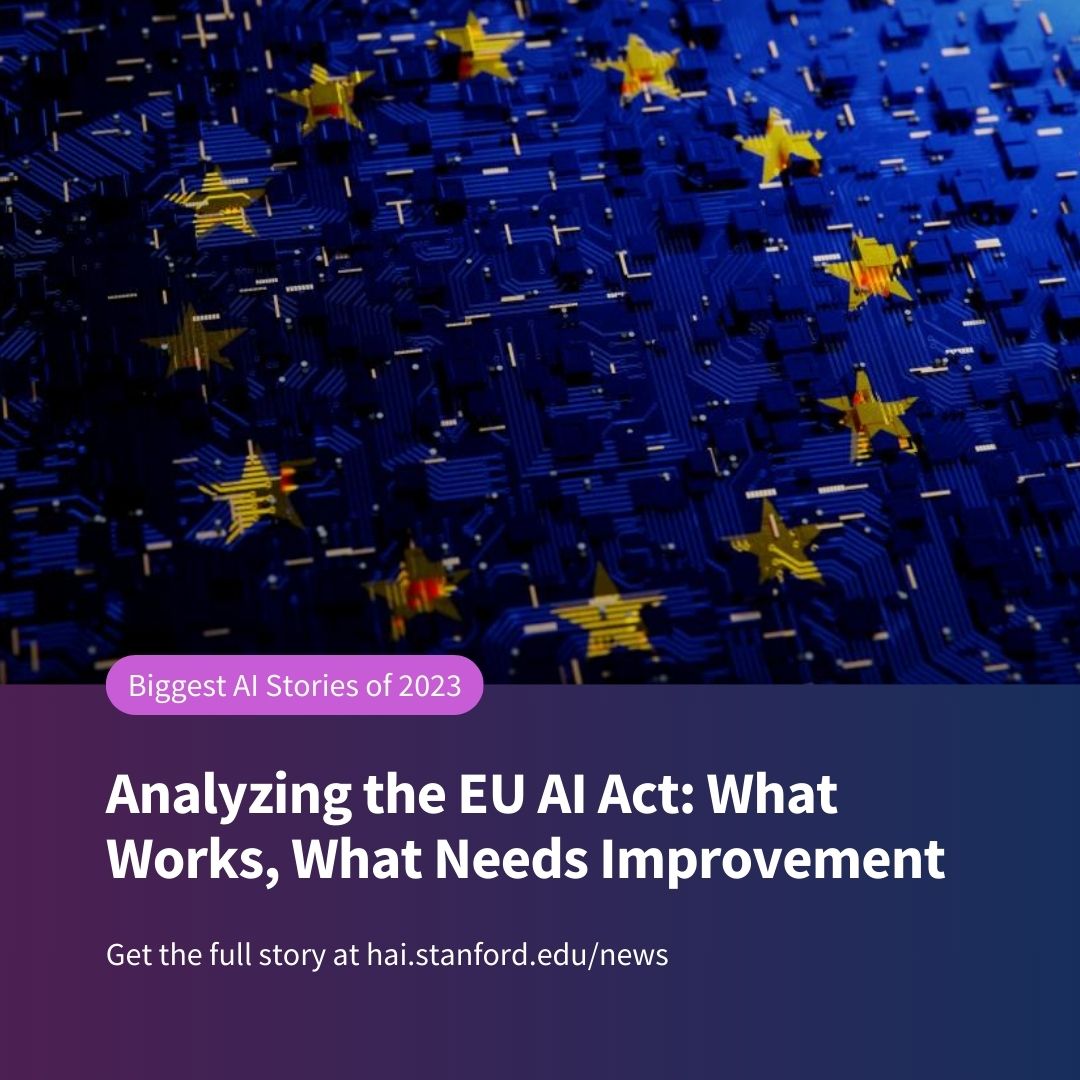
EU AI Act: Key negotiations and US implications analysis
By
–
Top AI stories of 2023: Politicians and technologists analyzed the major areas of negotiation in the EU AI Act, and how it could impact the U.S. https://
stanford.io/4asr2IU -
Stanford AI Leaders Forecast Top 2024 Artificial Intelligence Stories
By
–
AI forecasts for 2024: @StanfordHAI
’s leading minds predict the biggest stories for next year in artificial intelligence. @erikbryn @landay @Rbaltman @drfeifei @gewang @kingjen -
Stanford Researcher Proposes Ethical Framework for Autonomous Vehicles
By
–
Driverless cars faced major setbacks in 2023. The co-director of the Center for Automotive Research @Stanford has an idea for designing more ethical self-driving vehicles.
-
Simplifying AI Explanations Reduces Human Over-Reliance
By
–
Humans tend to over-rely on AI-recommended decisions—even when they’re wrong. A team of scholars found that simplifying AI explanations can help.
-
Dendrites Enable Energy-Efficient Computer Chip Innovation
By
–
A bioengineering professor is studying dendrites as a novel—and more energy-efficient—way to look at computer chips. Learn more about this research supported by the Hoffman-Yee grant: