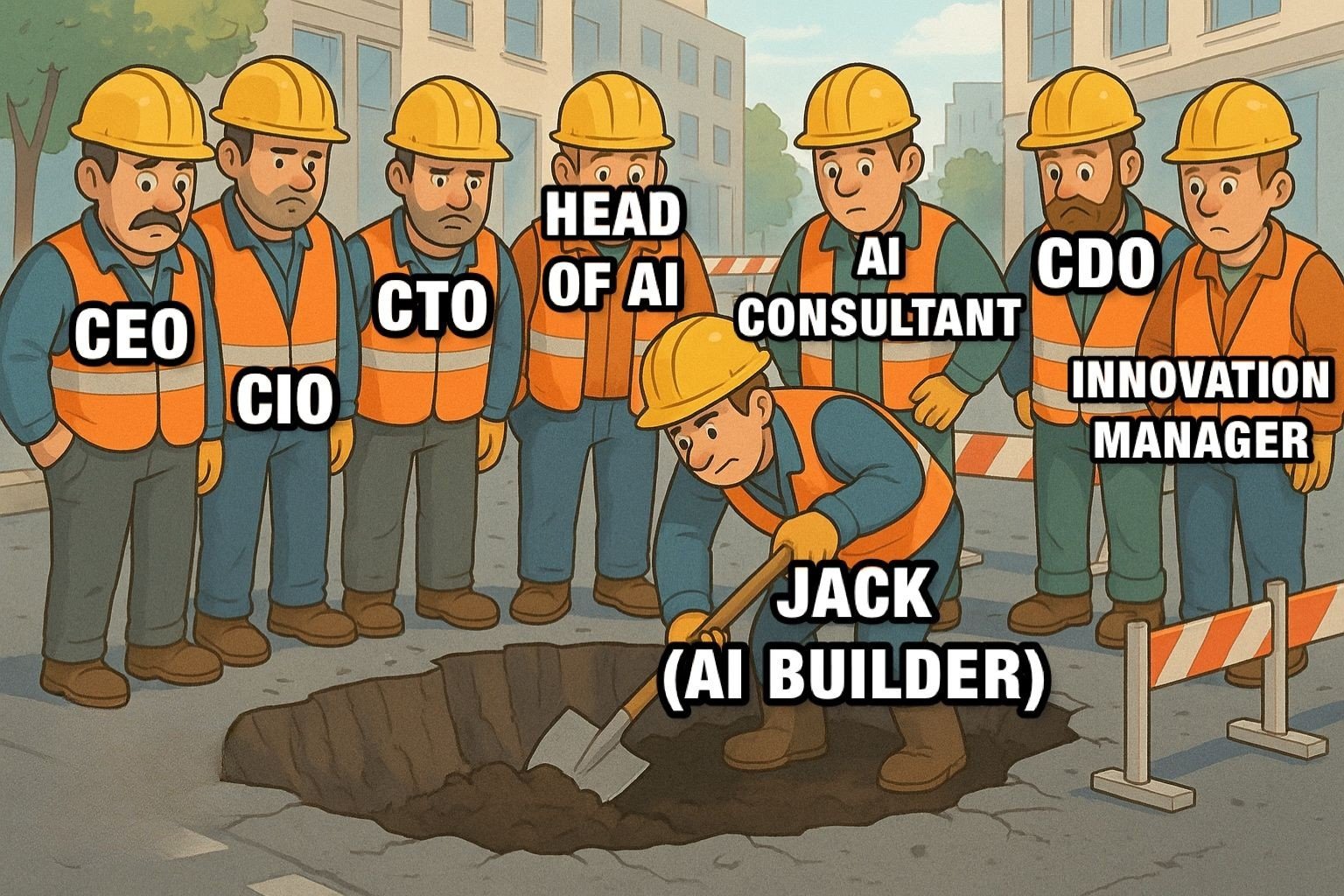
If your company is falling behind in AI, the reason may be painfully simple: you do not have enough builders. Everyone knows who the real builder is. The person inside the mess.
The person closest to the workflow.
The person actually shipping.
The person turning AI from a
@pascal_bornet
-
Companies Need More AI Builders to Stay Competitive
By
–
-
Teen Explains Dimensional Physics with Rare Clarity and Simplicity
By
–
A 16-year-old just exposed a problem that goes far beyond physics.
— Pascal Bornet (@pascal_bornet) 8 avril 2026
He explained dimensional reality in 9 minutes more clearly than most institutions have managed in decades.
What struck me was not only how smart he was.
It was how simple he made it feel. That is rare.
We are… pic.twitter.com/m0BTmlIljUA 16-year-old just exposed a problem that goes far beyond physics. He explained dimensional reality in 9 minutes more clearly than most institutions have managed in decades. What struck me was not only how smart he was.
It was how simple he made it feel. That is rare. We are -

When Growth Comes From Basic User Acquisition
By
–
For years, we were told growth would come from better products, bigger bets, and bold strategy. Turns out sometimes it just comes from telling Mom to get her own account. Funny line. Real signal. Because when companies start celebrating gains like this, you can usually tell
-
AI transformation requires builders, not just consultants and slides
By
–
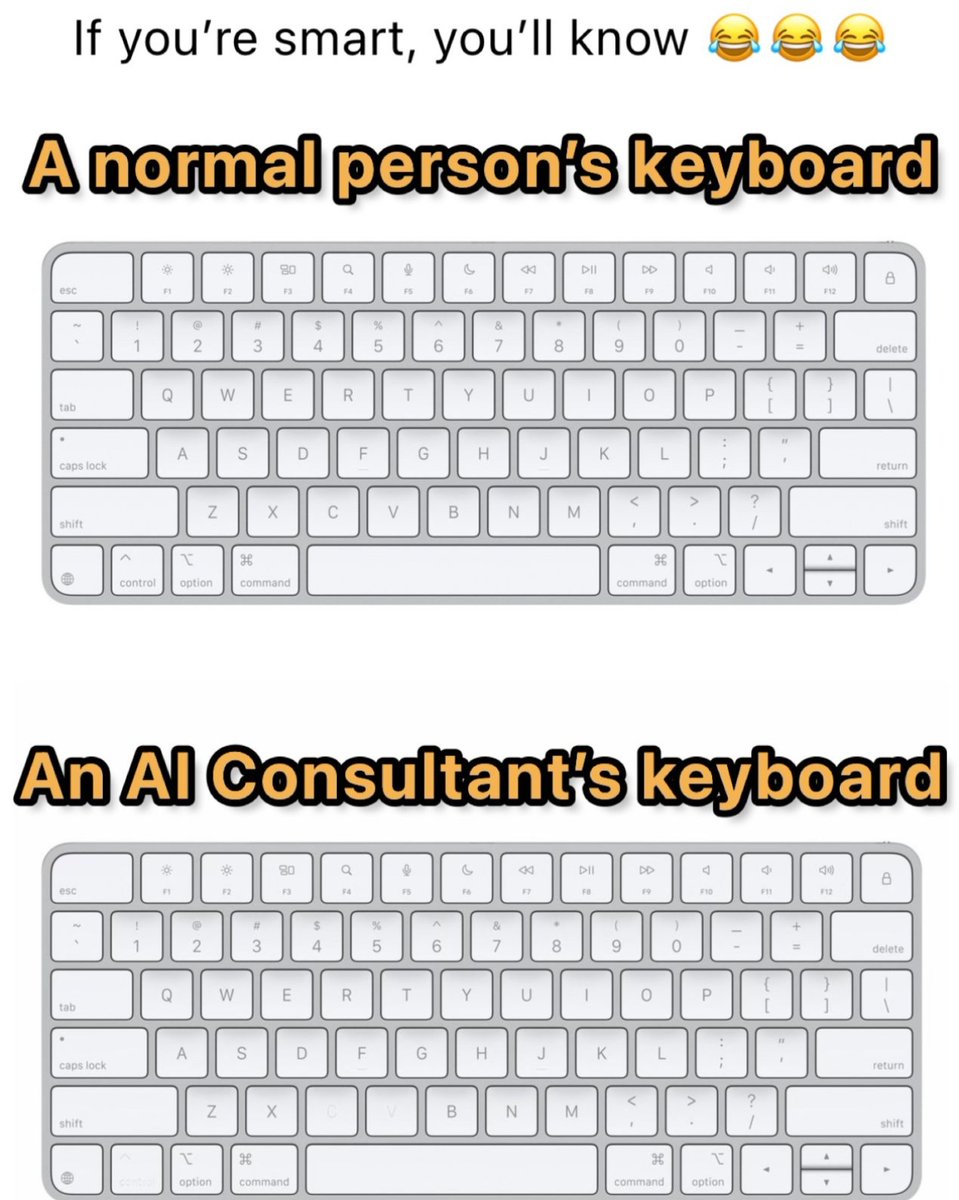
This meme is funny because it exposes something real. A surprising number of companies say they want to become AI-first. Then they hire more consultants. More slides. More workshops. More people discussing transformation while very few are actually building it. That might have made sense before. It makes much less sense now. AI has already made a big part of traditional consulting work faster, cheaper, and easier: summaries, formatting, repetitive analysis, deck-building, and a lot of the copy-paste work that used to pass as high-value output. So when a company responds to AI by adding even more consultants, I have to ask: What exactly are they accelerating? Because real AI transformation does not happen in a strategy deck. It happens when builders are embedded inside the business. Close to the teams doing the work. Close to the friction. Close to the messy processes that no workshop can fix. That is where the real use cases appear. That is where systems get tested. That is where value gets created. The companies moving fastest right now are not the ones talking most about AI. They are the ones shipping. If consultants outnumber builders in your AI initiative, that is not a strategy. That is the problem. What are you seeing more of right now: companies building with AI, or companies still making decks about it? #AI #ArtificialIntelligence #BusinessTransformation #Consulting #DigitalTransformation #FutureOfWork #Innovation #AIStrategy
→ View original post on X — @pascal_bornet, 2026-04-07 05:00 UTC
-
Robotics breakthrough: UMI gripper learns from human demonstration data
By
–
We might be solving the wrong problem in robotics.
— Pascal Bornet (@pascal_bornet) 6 avril 2026
That’s what this makes clear.
UMI → Universal Manipulation Interface
A simple $400 gripper that lets you teach robots by demonstration.
You hold it like a tool. Show the task. The robot learns.
No teleoperation.
No expensive… pic.twitter.com/OLIZoU0CGkWe might be solving the wrong problem in robotics. That’s what this makes clear. UMI → Universal Manipulation Interface A simple $400 gripper that lets you teach robots by demonstration. You hold it like a tool. Show the task. The robot learns. No teleoperation. No expensive hardware. No robot-specific data. Stanford open-sourced everything → hardware, code, datasets. What stands out to me is the bottleneck. Not algorithms. Data. Teleoperation → ~35 demos/hour UMI → ~111 demos/hour And the data transfers across robots → UR5, Franka, others. The design is surprisingly practical: → GoPro fisheye lens (155° FOV) + mirrors for depth → SLAM + IMU for precise 6DoF tracking → latency matching for dynamic tasks → diffusion policies for multimodal actions Then it scales. Cheng Chi takes this further with Sunday Robotics (with Tony Zhao). A $200 glove → deployed in 500+ homes → ~10 million real-world interactions. Not lab data. Real human behavior. Their robot learns dishes, laundry, espresso → with zero robot-specific data. This is where the shift becomes obvious. From training robots in controlled environments → to learning directly from humans at scale So here’s the real question: Will robotics be unlocked by better models… or by unlocking data? #ArtificialIntelligence #Robotics #AI #Innovation #FutureOfWork
→ View original post on X — @pascal_bornet, 2026-04-06 09:01 UTC
-
AI’s True Goal: Power Concentration Over Human Progress
By
–
What if the real goal of AI isn’t what we’ve been told?
— Pascal Bornet (@pascal_bornet) 6 avril 2026
Co-founder of the Center for Humane Technology, Tristan Harris, argues that the ultimate goal of many AI technocrats is not just to help humanity… but to advance their own pursuit of money and power.
That framing changes… pic.twitter.com/ETfhSPdEcgWhat if the real goal of AI isn’t what we’ve been told? Co-founder of the Center for Humane Technology, Tristan Harris, argues that the ultimate goal of many AI technocrats is not just to help humanity… but to advance their own pursuit of money and power. That framing changes how you interpret everything else. To the public, AI is presented as progress: More creativity. More freedom. Better work. But internally, the incentive structure is different. AI offers productivity without the ongoing cost of human labor. What stands out to me is how this shifts the equation. If systems can replace large parts of human work, value doesn’t disappear — it concentrates. Fewer workers. More centralized control. Greater accumulation at the top. The first time you connect these dynamics, the trajectory becomes clearer. This isn’t just a technological shift. It’s an economic one. And this is where things start to matter. Because the real question is no longer what AI can do. It’s who benefits from what it does. So here’s something I’d be curious to hear from you: As AI continues to scale, how should we think about power, ownership, and value distribution? #ArtificialIntelligence #AI #FutureOfWork #Economics #Innovation
→ View original post on X — @pascal_bornet, 2026-04-06 05:01 UTC
-
Real-Time Adaptive Robotics: Beyond Entertainment to Practical Impact
By
–
A Spider-Man stunt… executed by a robot.
— Pascal Bornet (@pascal_bornet) 5 avril 2026
That says more about robotics than it seems.
Disney Imagineers built a system that flies over 25 meters in the air → adjusting its motion in real time.
→ flips
→ rotation
→ speed control
→ balance
All handled mid-flight.
What… pic.twitter.com/izWYf7yStzA Spider-Man stunt… executed by a robot. That says more about robotics than it seems. Disney Imagineers built a system that flies over 25 meters in the air → adjusting its motion in real time. → flips → rotation → speed control → balance All handled mid-flight. What stands out to me is not the spectacle… it’s the decision-making happening in the air. This isn’t scripted motion. It’s real-time adaptation to physics. That’s the shift. From robots that repeat actions to systems that respond to the environment And once that threshold is crossed, the implications extend far beyond entertainment: → high-risk environments → dynamic industrial tasks → real-world human assistance This is where things start to matter. Because the ability to adapt in real time is what turns machines into systems we can rely on. So here’s the real question: Where will real-time adaptive robotics create the most value next? #ArtificialIntelligence #Robotics #Innovation #FutureOfWork #Technology
→ View original post on X — @pascal_bornet, 2026-04-05 09:01 UTC
-

Agentic AI: Execution vs. True Decision-Making Capability
By
–
When you ask an agentic AI to implement your design… it executes perfectly. The gap: judgment and context. Execution is solved. Judgment and context aren’t. Agentic systems can act autonomously. But they don’t always understand what matters… or why. This is where things start to matter. So here’s the real question: Are we building agents that act… or systems that can truly decide? #ArtificialIntelligence #AI #AgenticAI #FutureOfWork #Innovation Credits: Ralph
→ View original post on X — @pascal_bornet, 2026-04-05 05:00 UTC
-
Autonomous robots: simplicity over complexity in warehouse automation
By
–
Less = more? A new “no-maneuvering” class of autonomous robots is redefining pallet transportation.
— Pascal Bornet (@pascal_bornet) 3 avril 2026
That idea is starting to show up in real operations.
What stands out to me is the design philosophy.
No complex turning.
No wasted space.
Just precise, omnidirectional movement.… pic.twitter.com/WXO1NuuF9uLess = more? A new “no-maneuvering” class of autonomous robots is redefining pallet transportation. That idea is starting to show up in real operations. What stands out to me is the design philosophy. No complex turning. No wasted space. Just precise, omnidirectional movement. A compact system that slides under pallets and moves them with control. And yet, it delivers where it matters: • Handles loads up to 1.2 tons • Moves at operational speeds • Uses laser navigation for accuracy • Works in tight, space-constrained environments The shift here is practical. From large, rigid machines… to simple, flexible systems that reduce infrastructure constraints. This is where things start to scale. Because in intra-logistics, efficiency isn’t about adding more layers. It’s about removing friction. So here’s something I’d be curious to hear from you: Will the future of warehouse automation be driven by more capability… or less complexity? #ArtificialIntelligence #Robotics #Automation #Logistics #Innovation #FutureOfWork
→ View original post on X — @pascal_bornet, 2026-04-03 09:01 UTC
-
Stanford’s Free AI Course: Transformers and Large Language Models
By
–
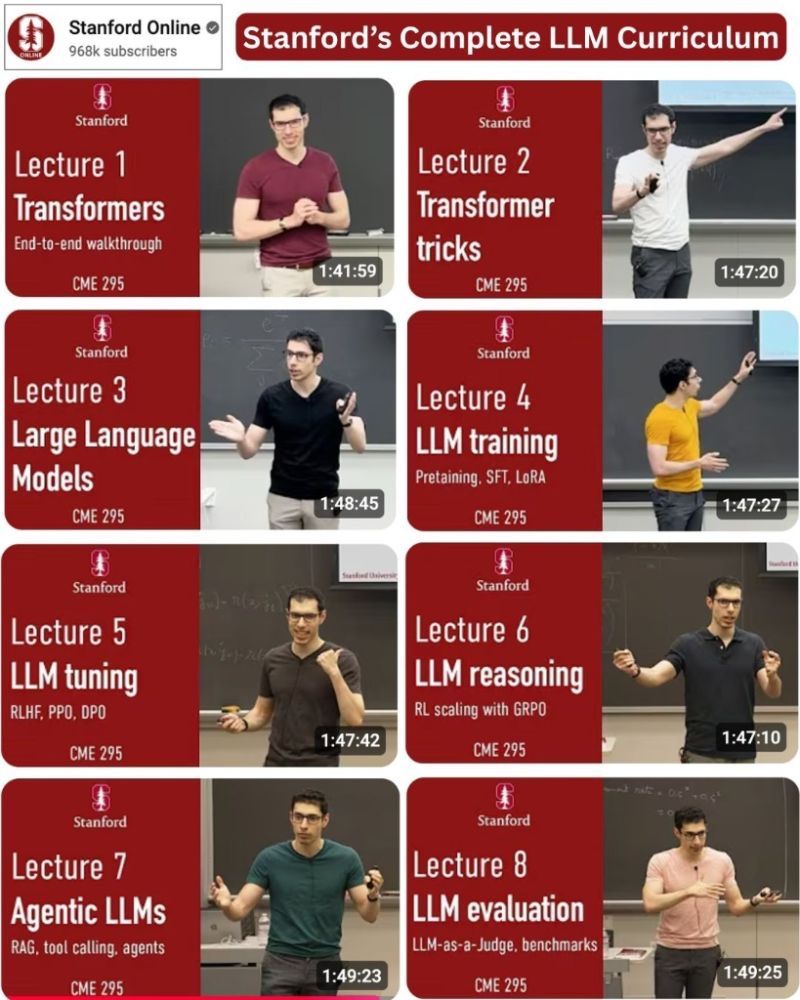
If you’re serious about AI, this is worth your attention. Stanford has just released its course CME 295: Transformers & Large Language Models in full on YouTube. What stands out to me is the level of clarity and structure. This isn’t another surface-level overview. It’s the actual curriculum used to teach how modern AI systems work. This will help you move from using AI to understanding it. 📚 𝗧𝗼𝗽𝗶𝗰𝘀 𝗰𝗼𝘃𝗲𝗿𝗲𝗱 𝗶𝗻𝗰𝗹𝘂𝗱𝗲: • How Transformers actually work (tokenization, attention, embeddings) • Decoding strategies & MoEs • LLM finetuning (LoRA, RLHF, supervised) • Evaluation techniques (LLM-as-a-judge) • Optimization tricks (RoPE, quantization, approximations) • Reasoning & scaling • Agentic workflows (RAG, tool calling) 🎥 Watch these now: – Lecture 1: zurl.co/F0QR5 – Lecture 2: zurl.co/hG5lp – Lecture 3: zurl.co/PnKrW – Lecture 4: zurl.co/XCZoE – Lecture 5: zurl.co/GWlYI – Lecture 6: zurl.co/zGqqQ – Lecture 7: zurl.co/T06NM – Lecture 8: zurl.co/Un42q – Lecture 9: zurl.co/rR3YL For 2026, consider setting aside 2–3 hours each week to go through these lectures. If you’re working in AI whether on infrastructure, agents, or applications, this is a foundational resource worth your time. It’s a simple way to build depth where it matters most. #AI #LLMs #Transformers #Stanford #GenAI
→ View original post on X — @pascal_bornet, 2026-04-03 05:00 UTC