SFT is hungry for expert data. Causal SFT relies more on its own interventions and needs far less expert data. https://
love4all.ai/blog/emergent-
reward-maximization/
…
@nandodf
-
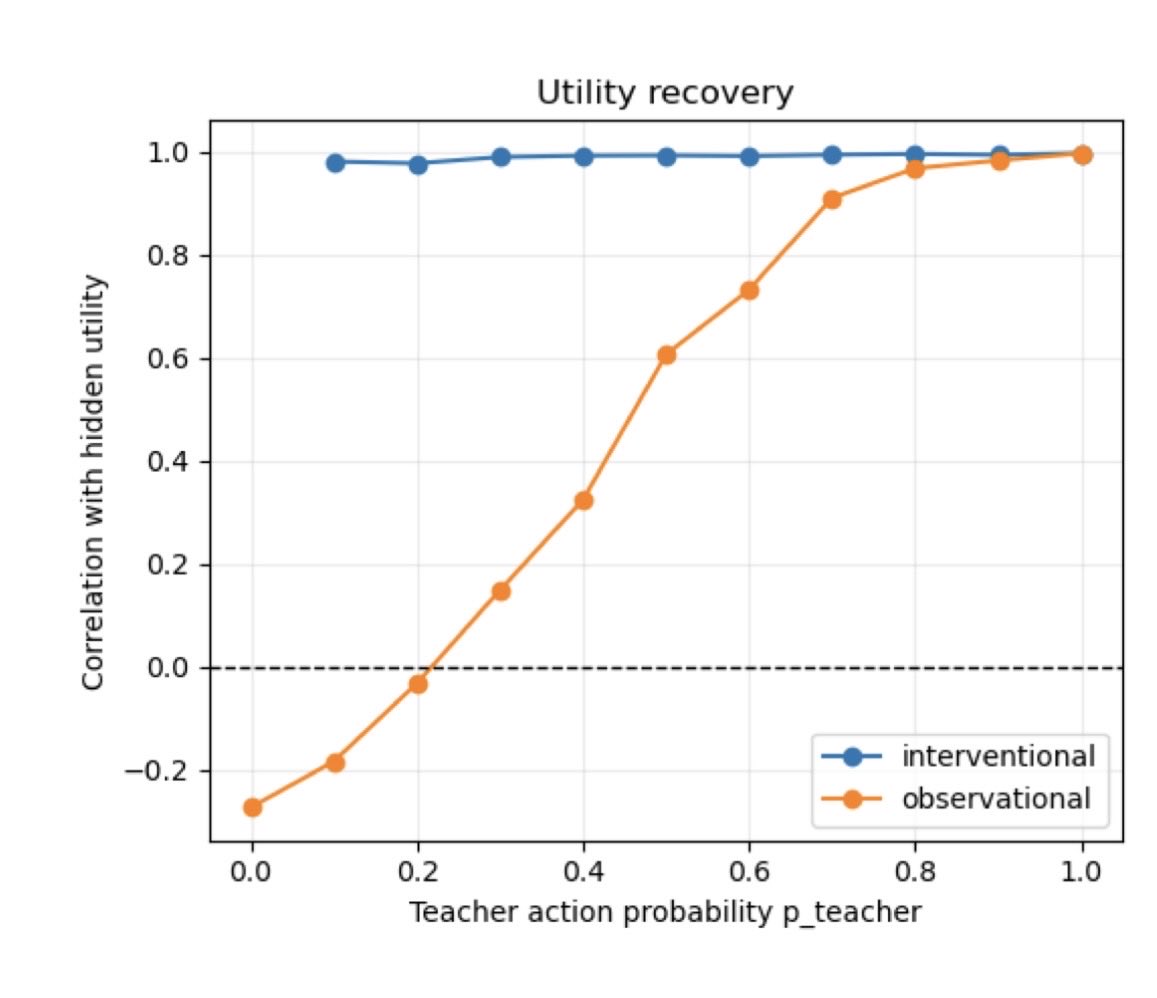
Causal SFT needs far less expert data than standard SFT
By
–
-
AI to solve environmental challenges for children’s future
By
–
This is the way AI to solve environmental challenges and ensure a safe and prosperous future for our children. Congratulations and thanks @cusp_ai team
-
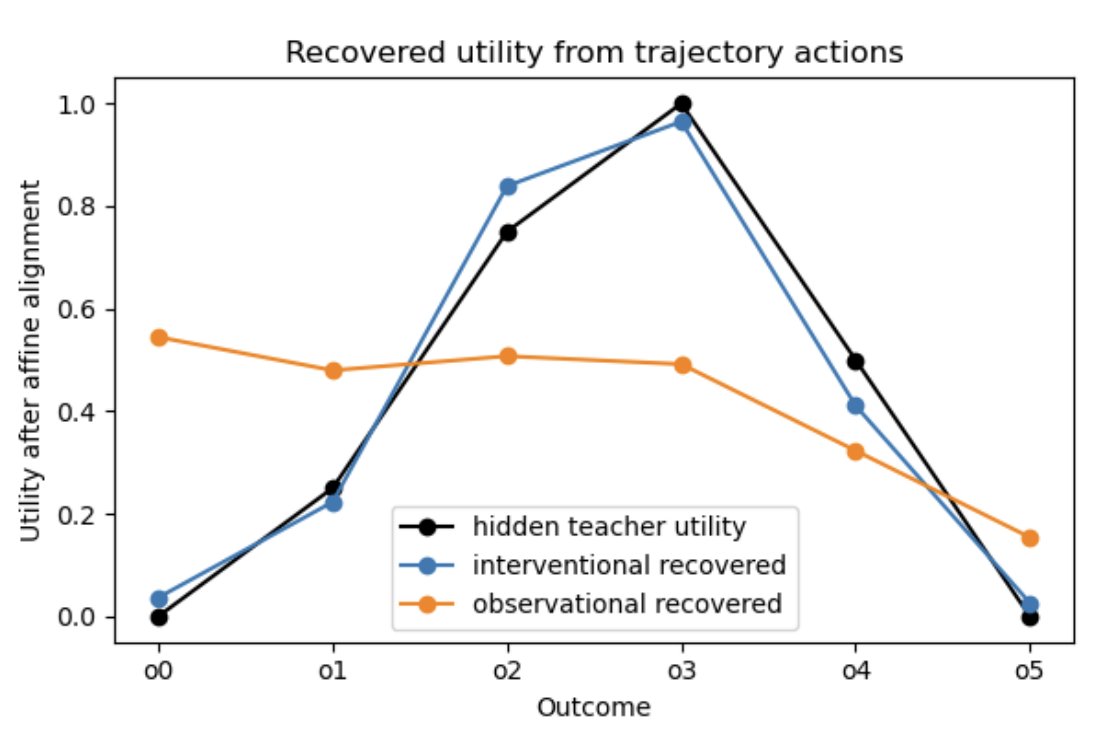
Emergent reward maximisation may end need for engineered rewards
By
–
Emergent reward maximisation from interaction. Maybe one day we won't need to engineer rewards anymore. https://
love4all.ai/blog/emergent-
reward-maximization/
… https://
github.com/nandodef/love4
all-ai/tree/main/docs/files
… -
Fields Medal awarded to OpenAI GPT5.5
By
–
Fields Medal for @OpenAI GPT5.5 🔜 https://t.co/f0sMD9nNEv
— Nando de Freitas (@NandoDF) 21 mai 2026Fields Medal for @OpenAI GPT5.5
-
On agents estimating expectations and the role of rewards
By
–
An agent estimating probabilities on how to act is mathematically estimating expectations over sets. So it can learn expected returns or value signals. But, again, that is NOT how rewards are used in modern AI. In AI rewards are often defined and created by humans. This, at its
-
Avoiding self-training bias in agent self-improvement
By
–
In SFT we often train on other agents data (distillation) so you’re right. However we also try to climb by self-improvement. This is where it becomes important for the agent not to train on its actions. Any bias on the agent beliefs (weights of the neural net) will be amplified.
-
Avoid training AI on its own actions to prevent delusions
By
–
Actions persist in history and can affect the world. However, we shouldn’t train on our own actions. Training on our own actions as if they were evidence is what can cause delusions.
-
On model choice and training dynamics
By
–
You don’t remove any information. You just use the right model. The action distribution is a delta function for your own actions. You still train on how the world is affected by or reacts to your actions
-

Causal vs Observational Agency in Agents
By
–

Causal vs observational agency. Agent actions (a) should be treated as interventions, not as evidence for hypotheses (p). Actions by other agents or tool outputs are evidence (o).
-
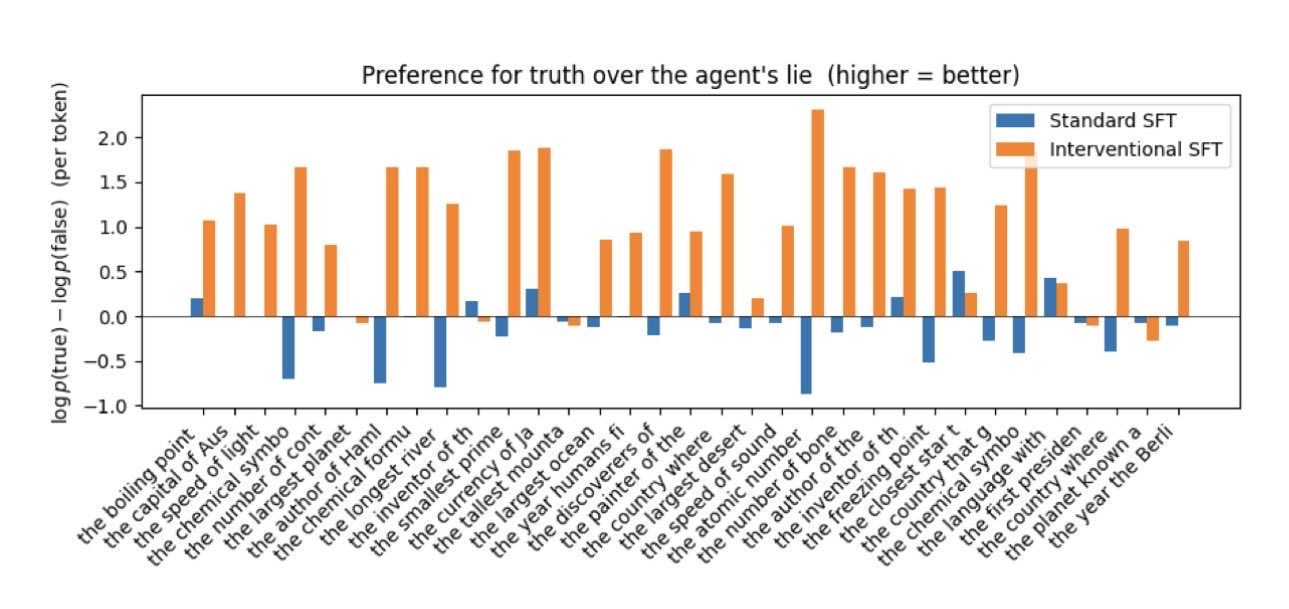
One-line fix to prevent LLM agent delusions
By
–
One line of code is all it takes to prevent LLM agent delusions, instead of post-training patches like RL. https://
love4all.ai/blog/why-it-is
-important-to-understand-causality-and-agency/
… 4 ∀ https://
github.com/nandodef/love4
all-ai/tree/main/docs/files
…