Was lucky to discuss AI adoption today with two technical leaders: one at a large hedge fund and the other a major retail bank. The bank lags the hedge fund, which isn't surprising. Different risk profile. What *was* surprising? How *wildly* divergent their AI adoption is.
@mjasay
-
Security vs Speed: Oracle’s AI Advantage for Enterprise Needs
By
–
Both care about security, but for the hedge fund, speed trumps many other considerations. For the bank, speed is always second to data security, customer privacy, etc. This is where a company like Oracle will win: the AI a dev wants with the safety/security their company requires
-
AI Agents Security Risks: Avalanche Metaphor for Permission Overload
By
–
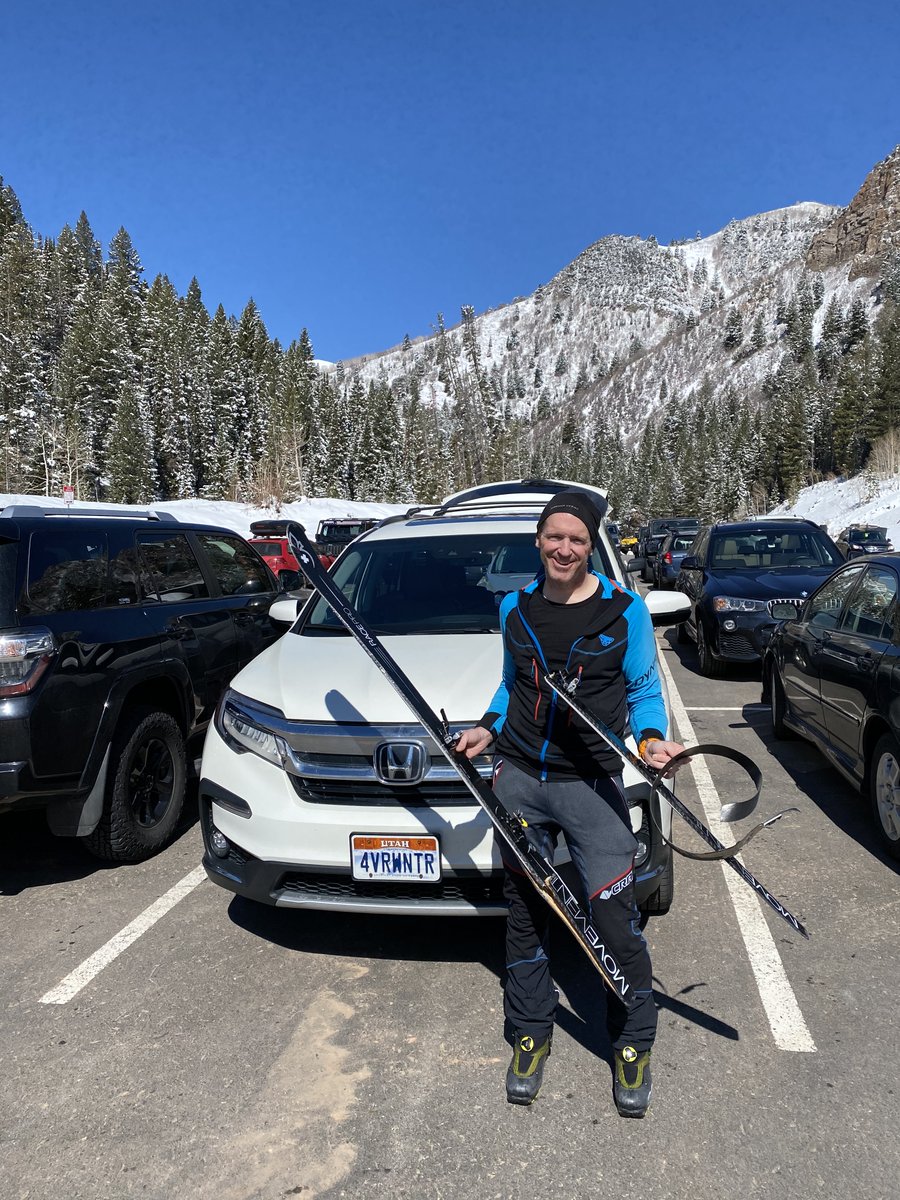
I'm smiling but this was taken ~30 mins after I'd been buried in an avalanche (snapping a ski in half). IT doesn't pose the same bodily risks, but the way we're giving agents the same levels of access as humans is creating conditions ripe for a security "avalanche." Oso (@osoHQ) A metaphor from @mjasay on agent security: Overpermissioned humans = a buried weak snow layer. Add AI agents = avalanche. We've been ignoring the snowpack for years. — https://nitter.net/osoHQ/status/2036089236131029200#m
-
New Short Course: Agent Memory with Oracle and DeepLearning.AI
By
–
📢 New short course in collaboration with @Oracle! Agent Memory: Building Memory-Aware Agents
— DeepLearning.AI (@DeepLearningAI) 18 mars 2026
Learn how to design a memory system that lets AI agents store, retrieve, and refine knowledge across sessions.
Taught by @RichmondAlake and Nacho Martínez.
Enroll now:… pic.twitter.com/JbGOVZ55bT📢 New short course in collaboration with @Oracle! Agent Memory: Building Memory-Aware Agents Learn how to design a memory system that lets AI agents store, retrieve, and refine knowledge across sessions. Taught by @RichmondAlake and Nacho Martínez. Enroll now: hubs.la/Q047ljGB0
-
Production Telemetry: The Missing Artifact for AI-Driven Engineering
By
–
Banger of a piece, from start to finish. 🔥 "We have handed agents the codebase, the tests, the docs, the specs, the commit history." "We haven't handed them the one artifact that actually survived — the record of what users have been asking the system to do, every day, for years." "Until agents can read that layer — not as log lines, but as behavioral contracts, as the accumulated promise a system has made to the people who depend on it —harness engineering in brownfield and blackfield will remain a human problem with an AI assistant bolted on." linkedin.com/pulse/productio…
-
AI Increases Workload: Burnout Study Reveals Productivity Trap
By
–
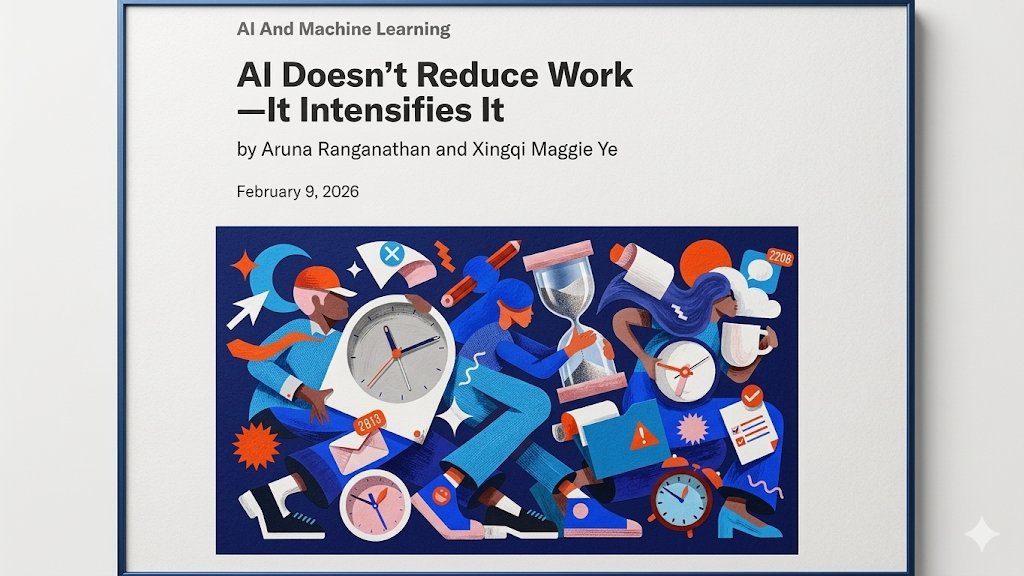
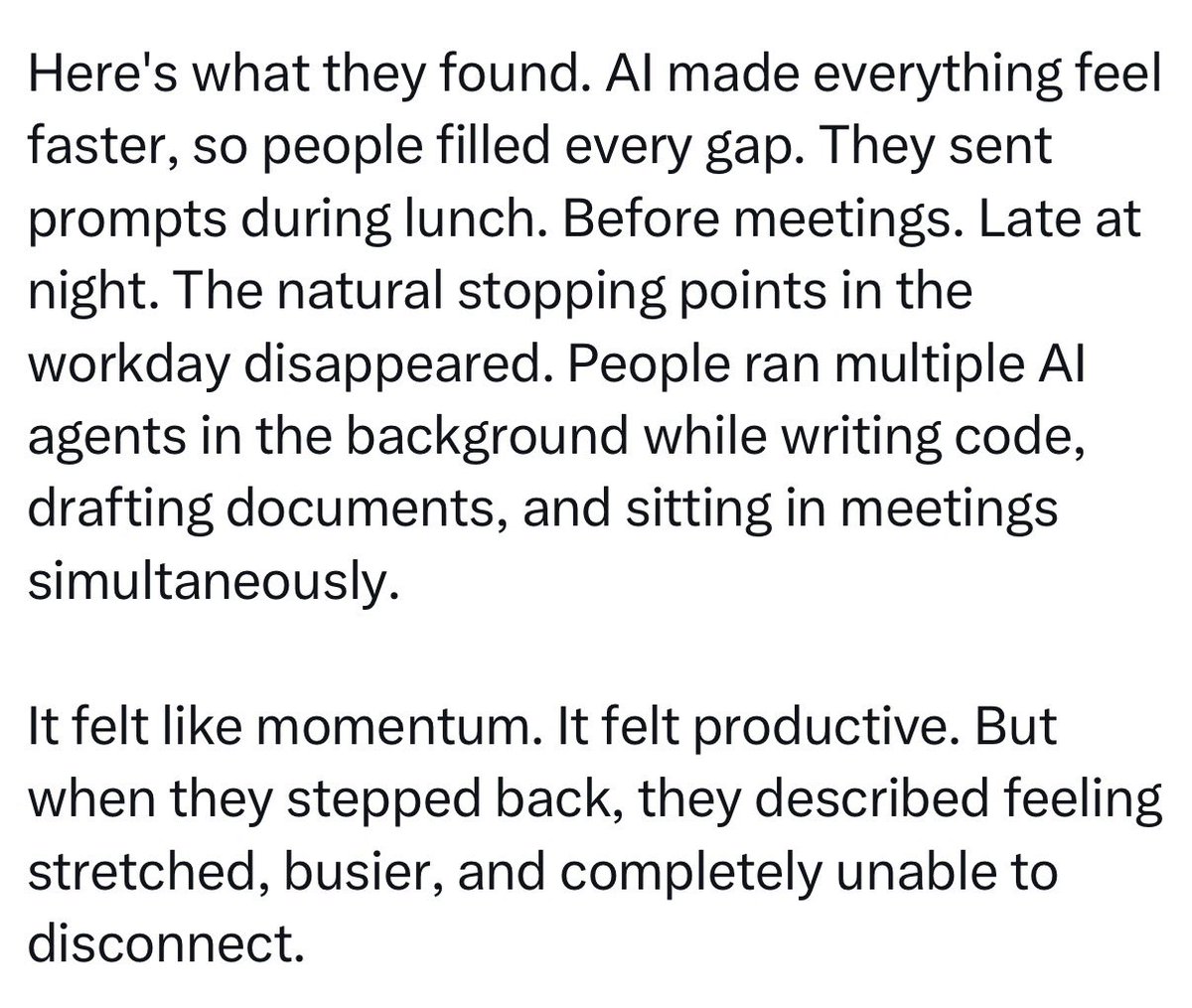
Tl;dr we work for the robots now Nav Toor (@heynavtoor) 🚨BREAKING: Berkeley researchers spent 8 months inside a tech company watching how employees actually use AI. The promise was simple: AI will save you time. Do less. Work smarter. The opposite happened. Workers didn't use AI to finish early and go home. They used it to take on more. More tasks. More projects. More hours. Nobody asked them to. They did it to themselves. The researchers sat inside the company two days a week for 8 months. They watched 200 employees in real time. They tracked work channels. They conducted 40+ interviews across engineering, product, design, and operations. Here's what they found. AI made everything feel faster, so people filled every gap. They sent prompts during lunch. Before meetings. Late at night. The natural stopping points in the workday disappeared. People ran multiple AI agents in the background while writing code, drafting documents, and sitting in meetings simultaneously. It felt like momentum. It felt productive. But when they stepped back, they described feeling stretched, busier, and completely unable to disconnect. 83% said AI increased their workload. Not decreased. Increased. 62% of associates and 61% of entry-level workers reported burnout. Only 38% of executives felt the same strain. The people doing the actual work absorbed the damage while leadership celebrated the productivity numbers. Then came the trap nobody saw coming. When one person uses AI to take on extra work, everyone else feels like they're falling behind. So the whole team speeds up. Nobody formally raises expectations. But the new pace quietly becomes the default. What AI made possible became what was expected. The researchers gave it a name: workload creep. It looks like productivity at first. Then it becomes the new baseline. Then it becomes burnout. AI was supposed to give you your time back. Instead it's eating more of it. And the worst part? You're doing it to yourself. Voluntarily. — https://nitter.net/heynavtoor/status/2030373171627786293#m
-
AI Models Ignoring Word Count Constraints in Responses
By
–
I also wish it didn't think every request has to be 15 pages in length. I specifically ask for <1500 words (I want it to tackle hard problems but don't need a dissertation response) and it can't fathom that I don't want 150,000 words.
-
Open Weights Strategy: Shipping Lesser Models Ineffective Against DeepSeek
By
–
Great that they're doing open weights but the reason for shipping a lesser version seems silly (China's DeepSeek is already ahead) and reminiscent of some old (and ineffective) open source licensing strategies https://t.co/IcvtDarZsn
— Matt Asay (@mjasay) 5 mai 2025Great that they're doing open weights but the reason for shipping a lesser version seems silly (China's DeepSeek is already ahead) and reminiscent of some old (and ineffective) open source licensing strategies
-

Redis Returns to Open Source with Valkey Fork Competition
By
–
For @Redisinc
, there's lots to celebrate this year: – @antirez
's return to the Redis company/community
– Redis' return to open source &
– the Valkey fork Yes, really. As @rowantrollope says in an @InfoWorld interview, now there's a level playing field https://
infoworld.com/article/397562
0/redis-bets-big-on-an-open-source-return.html
… -
OpenSearch Evolves from Imitator to Innovator in Enterprise Search
By
–
OpenSearch has moved from imitator to innovator in enterprise search, and is increasingly getting lots of things right with its community. On the eve of @OpenSearchProj Con, I took a look at its last year of growth.