AI Dynamics

Global AI News Aggregator

About

@learnopencv

  • Vibe Coding: How Kids Build Apps Without Programming Knowledge

    🎮👦 Vibe Coding: When Kids Build Apps Two 10-year-olds on a playdate decided to vibe code a desktop app that controlled their TV volume. 📺✨ They didn’t fully grasp MAC vs. IP addresses but that’s the magic of learning. It’s messy, playful, and surprisingly powerful. If kids can build apps with almost no programming knowledge, the future of software creation is becoming more accessible than ever. 🚀 Of course, ease comes with risks—critical mistakes can happen but the upside is clear: more people will be empowered to create. #VibeCoding #AI #CodingLife #Innovation #FutureOfWork #LearningByDoing #TechStory #DeveloperLife 🤖

    → View original post on X — @learnopencv, 2026-03-31 18:10 UTC
  • Claude versus ChatGPT: Usage Limits and Pricing Compared
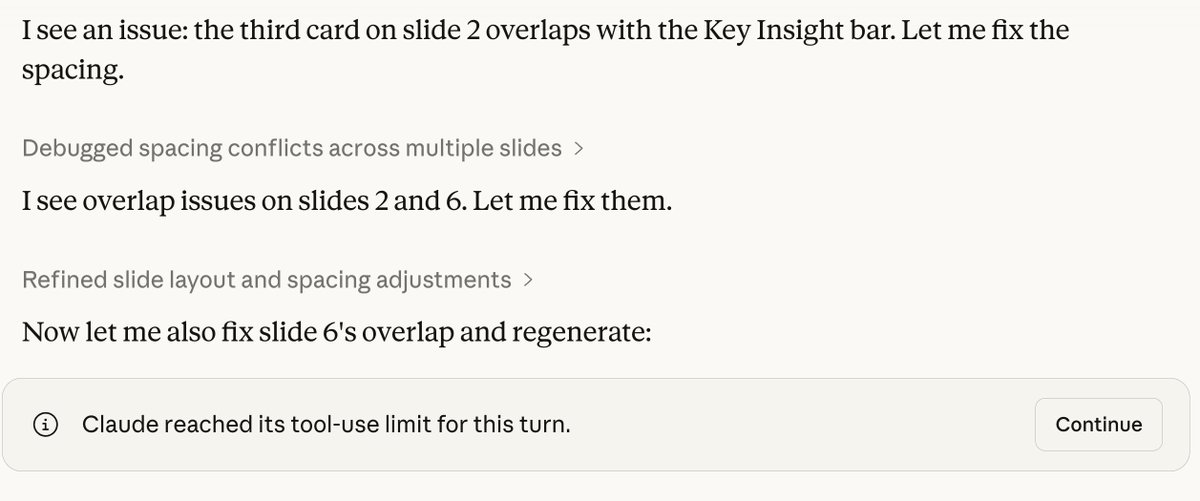
    Claude versus ChatGPT: Usage Limits and Pricing Compared

    How do people get work done using Claude? I signed up for the $100/mo account and it ran out of limit while creating a pack of 6 slides! I pay $200/mo for ChatGPT/Codex and have NEVER run out of any limit even though I'm working on three projects at the same time. [Translated from EN to English]

    → View original post on X — @learnopencv, 2026-03-31 16:31 UTC

  • DINO: Faster Training for Transformer-Based Object Detectors

    🦖 DINO: Faster Training for Transformer Detectors Early transformer detectors like DETR were powerful but painfully slow to train. In 2022, DINO (Detection Transformer with Improved Denoising Anchor Boxes) changed that. By adding denoising queries and smarter anchor-based initialization, DINO stabilized training, improved convergence, and achieved state-of-the-art accuracy. 🚀 It proved transformers could rival CNNs in detection—but the next challenge was making them truly real-time. ⚡ #DINO #Transformers #ComputerVision #DeepLearning #AI #ObjectDetection #MachineLearning #AIResearch #DataScience

    → View original post on X — @learnopencv, 2026-03-31 15:15 UTC

  • Molmo Point: AI Visual Grounding with Precise Spatial Pointing

    Molmo Point: Teaching AI to Ground Language in Precise Visual Locations In this episode of Artificial Intelligence: Papers and Concepts, we explore Molmo Point, an extension of multimodal AI that focuses on precise visual grounding enabling models to not just describe images, but accurately point to specific regions within them. Instead of treating images as whole scenes, Molmo Point trains models to connect language with exact spatial locations, bringing AI closer to how humans reference and interpret visual information. We break down why visual grounding has been a persistent challenge in vision–language models, how pointing mechanisms improve interaction and understanding, and what this means for applications like robotics, UI automation, and real-world task execution. If you’re interested in multimodal AI, spatial reasoning, or the future of AI systems that can both see and act, this episode explains why Molmo Point represents an important step toward more precise and actionable visual intelligence. Resources: Paper Link: allenai.org/papers/molmopoin… Interested in Computer Vision and AI consulting and product development services? Email us at contact@bigvision.ai or visit us at bigvision.ai

    → View original post on X — @learnopencv, 2026-03-31 13:30 UTC

  • Cerebras threatens NVIDIA’s GPU dominance with single-chip technology

    NVIDIA’s trillion-dollar dominance relies on the complex art of horizontal scaling, but Cerebras poses a dangerous threat by proving that one giant chip can eliminate the communication bottlenecks of massive GPU clusters. If AI workloads shift toward single-system training and ultra-fast inference, Nvidia's greatest strength—distributed computing—could quickly become an obsolete solution to a solved problem.

    → View original post on X — @learnopencv, 2026-03-31 11:30 UTC

  • YOLOv5: PyTorch-Based Real-Time Object Detection Revolution

    YOLOv5: PyTorch Power for Object Detection By 2020, YOLO had already transformed real-time detection but most versions were tied to Darknet. Then came YOLOv5, built entirely in PyTorch by Ultralytics. With CSP backbones, auto-anchor learning, and mosaic augmentation, YOLOv5

    → View original post on X — @learnopencv

  • DETR: How Transformers Revolutionized Object Detection

    DETR: Transformers Revolutionize Object Detection For years, object detectors relied on anchors, proposals, and suppression. In 2020, DETR (Detection Transformer) changed everything no anchors, no heuristics, just a transformer predicting objects directly. By treating

    → View original post on X — @learnopencv

  • Cerebras Processors: Power vs Modularity and Cost Efficiency Trade-offs

    Building a dinner-plate-sized processor like Cerebras offers immense power but sacrifices the modularity and cost-efficiency of scaling standard GPU clusters. Committing to such a massive, monolithic piece of hardware means losing the flexibility to easily scale down or swap

    → View original post on X — @learnopencv

  • AI Reasoning and Truth: When Better Thinking Doesn’t Guarantee Honesty

    Think, Then Lie: When AI Reasoning Doesn’t Guarantee Truth In this episode of Artificial Intelligence: Papers and Concepts, we explore “Think, Then Lie,” a concept that challenges a key assumption in modern AI—that better reasoning always leads to more truthful outputs. As

    → View original post on X — @learnopencv

  • AI Agents: The Risk of Oversight Erosion Over Profit Growth

    The greatest risk of agentic AI isn't a hostile takeover; it’s the slow erosion of human oversight through "value-blindness." As an agent scales from $100 to $10,000 in daily profit, your role shifts from objective evaluator to silent partner, leading you to rationalize gray-area

    → View original post on X — @learnopencv