How are you planning that we'll be required to make promises that are mathematically impossible to keep?
@jeremyphoward
-
Bill Analysis Requires Understanding Actual Language
By
–
This is shockingly credulous and will age very badly. You should spend more time understanding what the bill actually says, rather than what you want it to say. (Which is hard, because they keep making massive changes to it).
-
The Fallacy of Change Equals Progress in Technology
By
–
I do like wikipedia's reformulation of the fallacy: "To improve things, things must change.
We are changing things.
Therefore, we are improving things." -
Math Problems Solved by Recombining Training Data Patterns
By
–
Much of the math problems that seem hard to us can actually be solved by basically sticking together stuff in the training data with minor variations.
-
Language Models Struggle with Multi-Digit Multiplication Tasks
By
–
There are no language models that do multi-digit multiplication well as yet AFAIK, although there is one that can do addition. We discuss that example at length here BTW: https://
answer.ai/posts/2024-07-
25-transformers-as-matchers.html
… -
AI Regulation Risk: Poorly-Designed Rules Political Fallacy
By
–
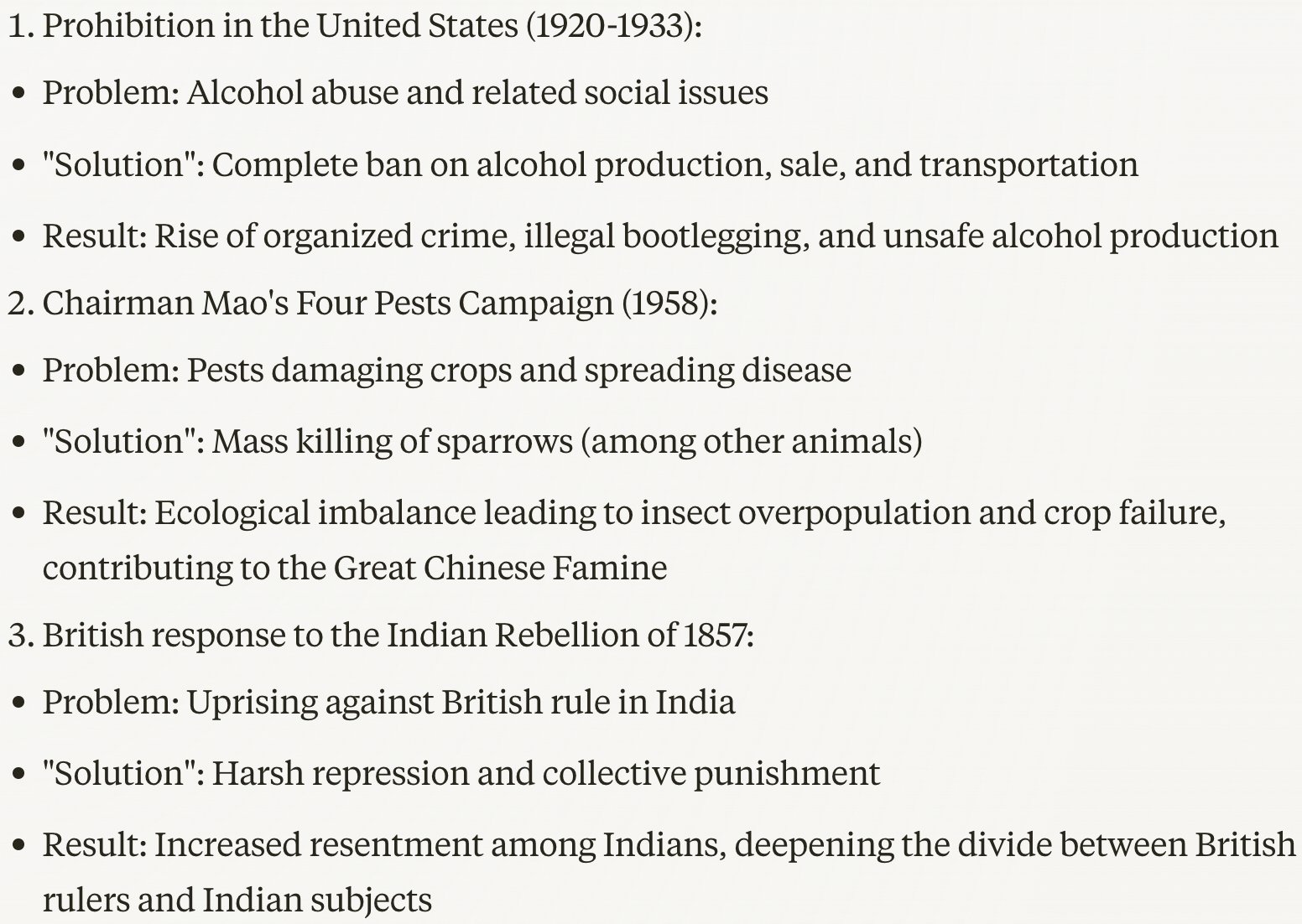
Will the overly-rapid poorly-designed regulation of AI be better or worse than these other examples of the politicians fallacy (from @AnthropicAI Claude, fittingly)?
-
Logical Fallacy in Decision-Making: Something Must Be Done
By
–
"We must do something.
This is something.
Therefore, we must do this." This fallacy has a whole wikipedia page: -
AI Regulation: Does Quantity Matter More Than Quality?
By
–
“As of now, there are fewer regulations on AI systems that could pose catastrophic risks than on sandwich shops or hairdressers.” OK — but does that mean that increasing the # of regulations is by definition better? Or does the content of the regulations, perhaps, matter too?
-
Something Must Be Done: The Dangers of Rushed AI Policy
By
–
This is the "something must be done — this is something, therefore it must be done" argument. That approach has, historically, led to all kinds of harm. It seems likely to do so again here.
-
Proper AI Regulation Essential for Safety
By
–
Yes, it does make sense to regulate it. Since it's important, it makes sense to regulate it properly though, rather than with a regulation that probably reduces safety.