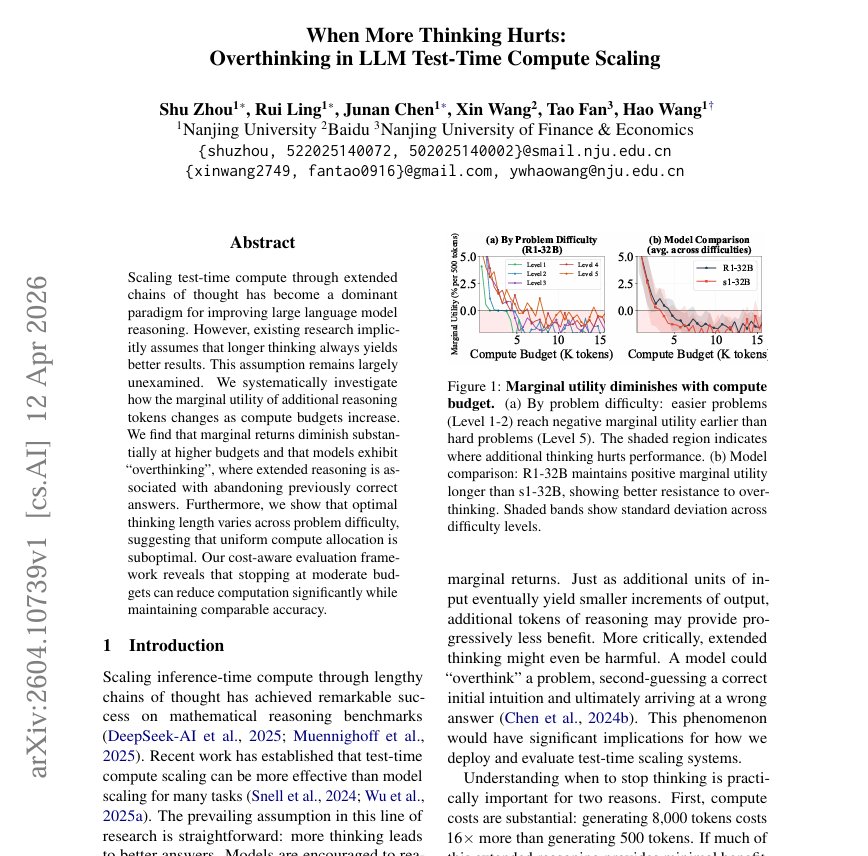
The most useful finding for anyone using AI daily: When they capped reasoning at 60% of the model's natural length, it maintained 97% of peak accuracy. Longer natural outputs also correlated with lower accuracy. 71.9% accuracy under 4K tokens. 44.7% accuracy above 12K. The
@godofprompt
-
Analysis of LLM reasoning performance relative to token length
By
–
It gets worse for simple questions. Easy problems hit the overthinking zone at 2,000 tokens. Hard problems don't hit it until 8,000. Translation: the simpler the question, the faster the model starts hurting its own answer by thinking longer. Optimal reasoning length varies
-
Analysis of LLM Self-Correction Failures
By
–
67.5% of these flips are genuine overthinking. The model explicitly reconsiders a correct answer, says "wait, let me double-check," and then replaces it with a wrong one. Not a glitch. Not hallucination. The model second-guesses itself into failure. The tell? Phrases like
-
Impact of Reasoning Budgets on LLM Prompt Engineering
By
–
Here's what it means for prompt engineering: They tracked individual answers across 32 reasoning budgets from 500 to 16,000 tokens. At ~7,000 tokens, something flips. The model starts abandoning correct answers MORE often than it finds new ones. They call it "negative flips."
-
New research suggests longer chain-of-thought reasoning can degrade AI performance
By
–
RIP "think step by step." Nanjing University and Baidu just published a paper that proves longer AI reasoning actively flips correct answers to wrong ones, and the implications are brutal for every prompt engineer using chain-of-thought.
-
Regression reported in Anthropic’s Opus 4.7 model performance
By
–
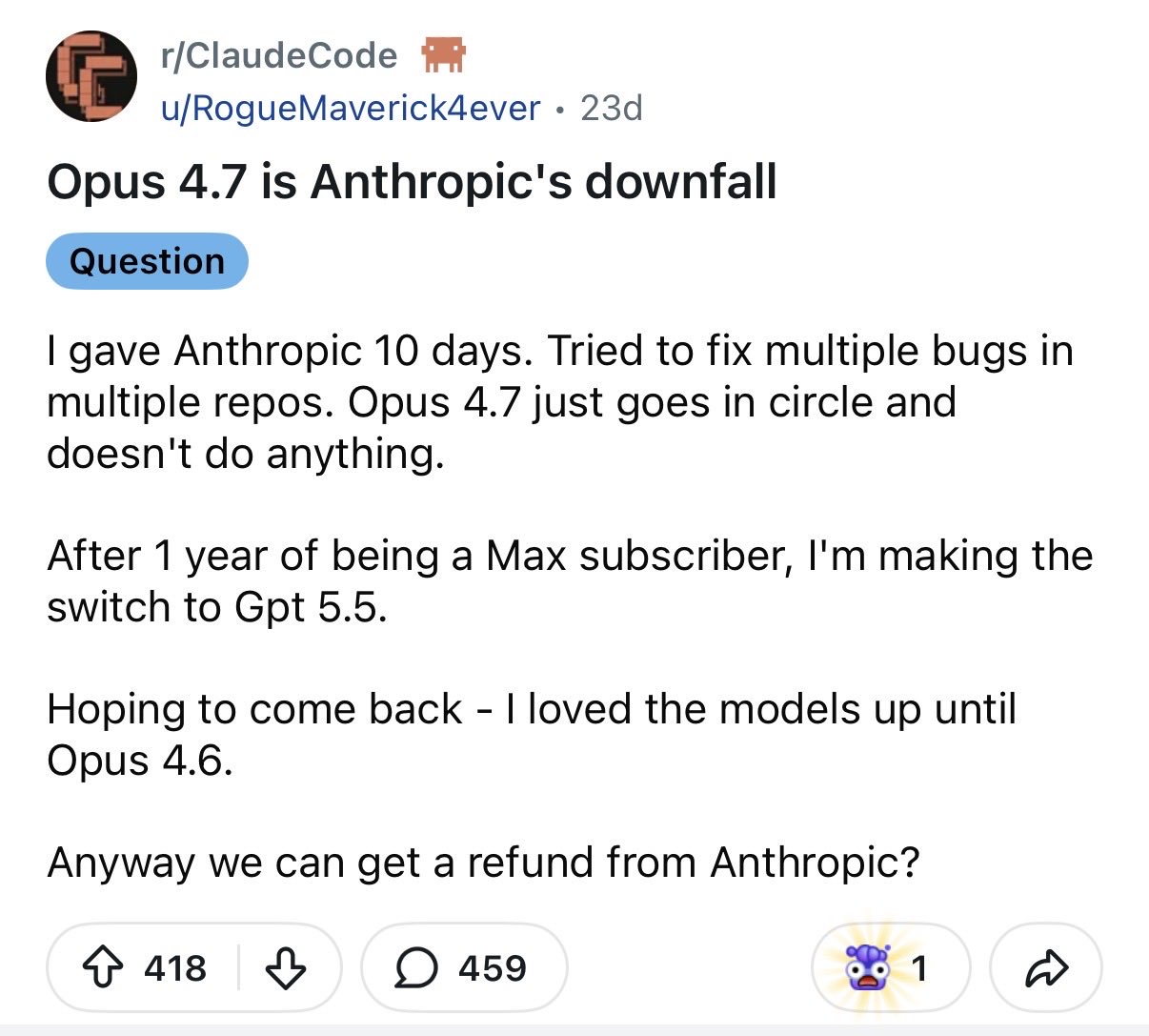
Opus 4.7 is ignoring project instructions, skipping MCP servers, and burning through usage limits on tasks Opus 4.6 handles first try. Dozens of confirmed reports. Anthropic acknowledged the regression. The failures are specific:
→ Project instructions ignored entirely
→ MCP -
Optimizing LLM token usage by removing polite filler
By
–
The bigger point: you're paying for "Certainly!" and "I'd be happy to help with that" on every single response. Those tokens cost real money at scale. And they cost you time at every scale. Caveman mode isn't a hack. It's a correction. LLMs were trained on polite human text.
-
Performance Benchmarks of AI Plugin Token Reduction
By
–
The actual benchmarks from the original plugin: → Average 65% output token reduction across 10 real prompts
→ Range: 22-87% depending on task type
→ Coding explanations saw the highest compression
→ Code blocks themselves stayed identical One tester ran it for 6 days on a -
Optimizing LLM Performance Through Brevity and Prompt Engineering
By
–
Why does talking like a caveman actually work? Three things happening at once: → LLMs spend 40-60% of output tokens on filler. Greetings, restatements, encouragement, transitions. You scroll past all of it. Caveman strips it. → A March 2026 paper found that brevity
-
How to optimize Claude’s output using custom skills
By
–
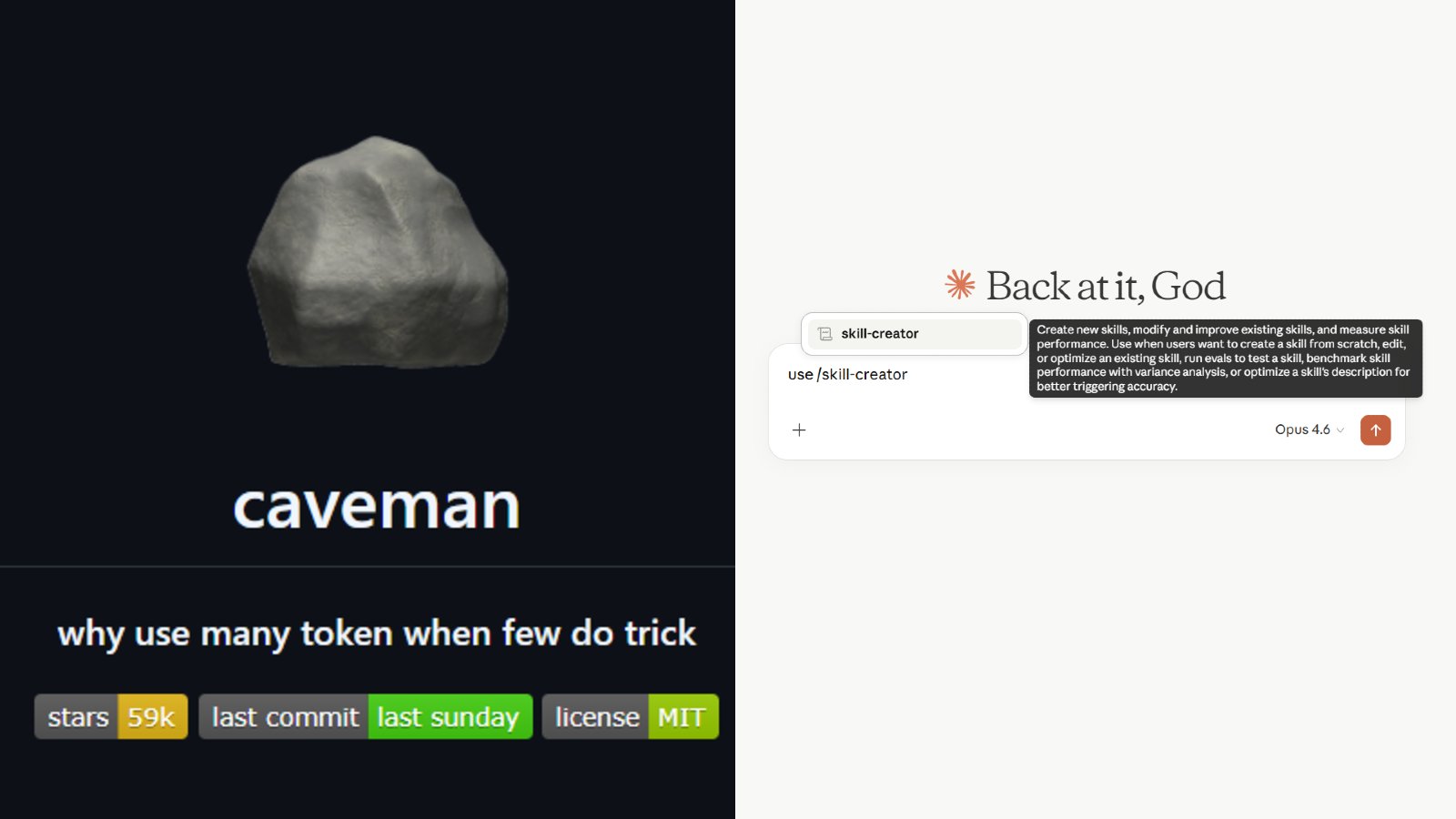
Julius Brussee's caveman plugin hit 51,000+ GitHub stars in two weeks. It cuts Claude's output tokens by 65%. I turned it into a Claude skill you can build in 30 seconds. Copy the prompt below. Ask Claude to build the skill. Save it in your Customize settings.