Five agents collaborate:
Retriever → Planner → Stylist → Visualizer Critic The surprising part?
Random reference diagrams work almost as well as semantically matched ones. See Next
@debashis_dutta
-
Five-Agent Collaboration System: Random References Match Semantic Ones
By
–
-

Google PaperBanana Generates Publication-Ready Figures Automatically
By
–
These figures were not designed by humans. Google just released PaperBanana, a system that generates its own paper’s figures directly from the methods section. No Figma. No Illustrator. Just text → publication-ready diagrams. See Comments:
-
Building Apps with AI Prompting: The Shift from Syntax to Intent
By
–
Andrej Karpathy ( @karpathy ) literally shows how to build apps by prompting in 30 mins.
— Dr. Debashis Dutta (@debashis_dutta) 30 janvier 2026
This is the shift.
Thinking > syntax.
Intent > boilerplate.
🔗 Join the #AIforALL Movement
🌐 AI for ALL iniative page : https://t.co/paFNbOFxLy
💬 Free AI Mentoring — 📲 +966 550409099 pic.twitter.com/3ehHoqZpf6Andrej Karpathy ( @karpathy ) literally shows how to build apps by prompting in 30 mins. This is the shift.
Thinking > syntax.
Intent > boilerplate. Join the #AIforALL Movement AI for ALL iniative page : https://
drdebashisdutta.com Free AI Mentoring — +966 550409099 -

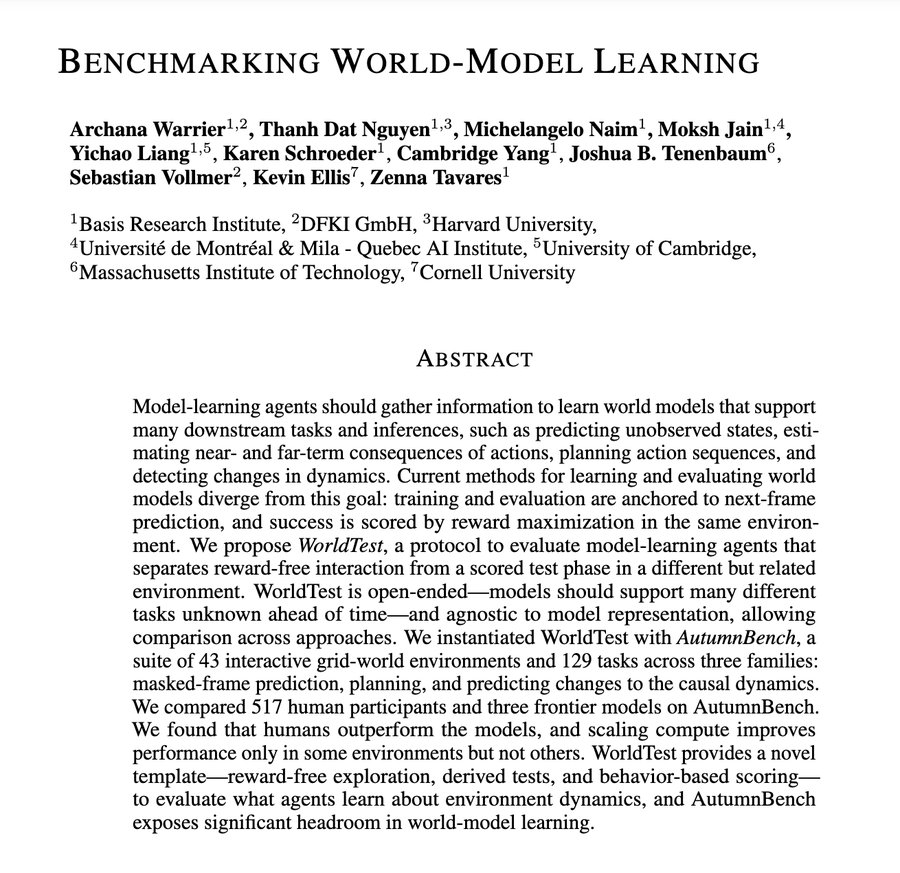
MIT’s WorldTest Benchmark Challenges Top AI Models’ World Understanding
By
–
MIT just quietly humbled every major AI lab — and almost nobody’s talking about it. They built a new benchmark called WorldTest to see if AI actually understands the world. The results are brutal.
Even the top models — Claude, Gemini 2.5 Pro, OpenAI o3 — got crushed by -

Kimi K2 Thinking: Open-Source Reasoning Agent Breakthrough
By
–
Introducing Kimi K2 Thinking — A New Era of Open-Source Thinking Agents! The frontier of autonomous reasoning, intelligent tool use, and scalable cognition has arrived. SOTA Performance: HLE (44.9%) | BrowseComp (60.2%) Handles 200–300 sequential tool calls autonomously
-

LLMs Suffer Brain Rot From Low Quality Training Data
By
–
Can LLMs Get “Brain Rot”? A new study says… yes. And the implications for AI safety are massive. When large language models are continually pretrained on low-quality, high-engagement web data — think clickbait, meme threads, and influencer chatter — they begin to show signs
-

Stanford Paper Makes Prompt Engineering Obsolete Forever
By
–
Stanford just killed Prompt Engineering — and that’s a good thing.
A single paper just changed how we understand alignment, diversity, and creativity in AI forever. — RIP Prompt Engineering A groundbreaking new Stanford paper just made it obsolete — with one simple -

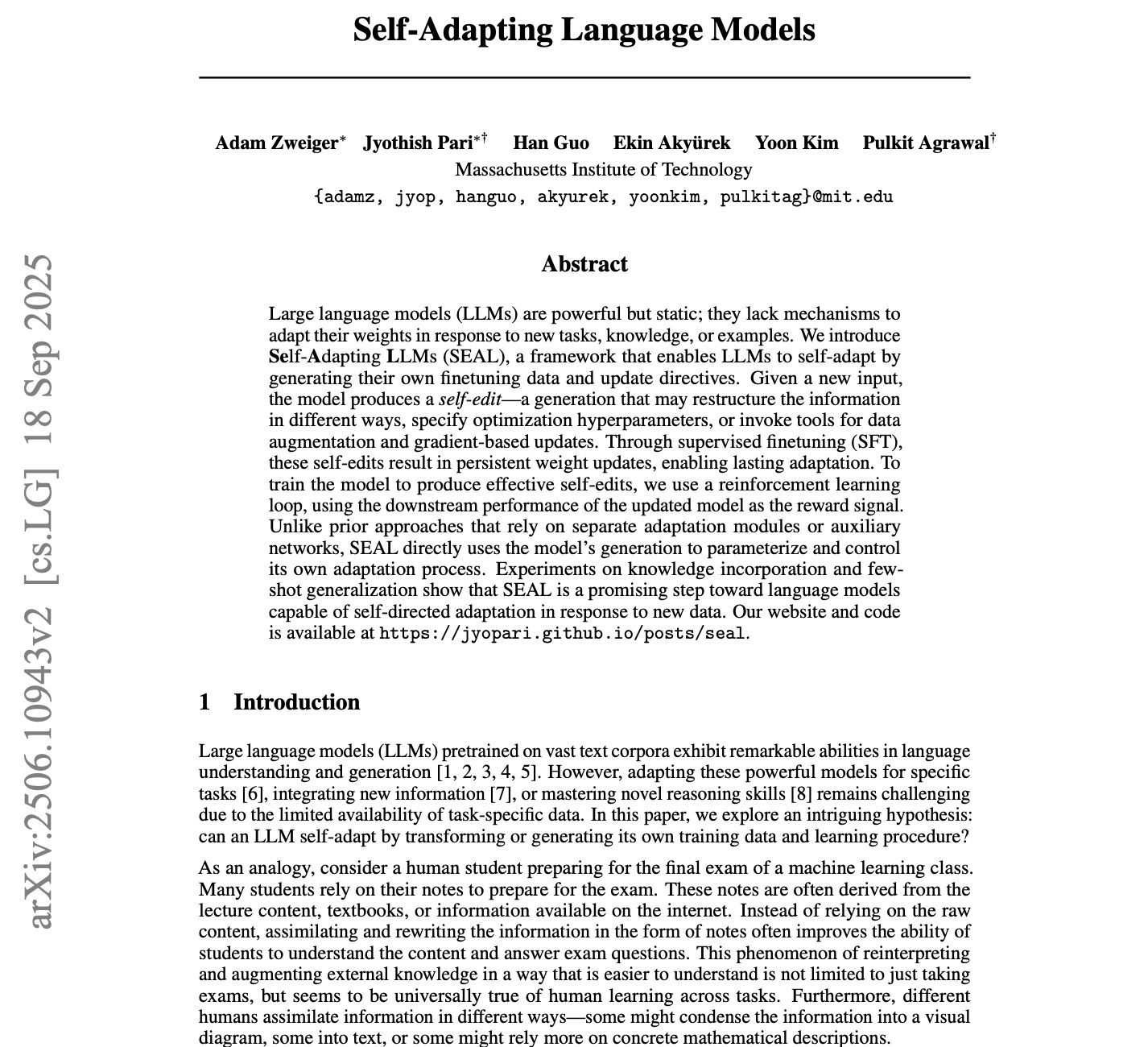
SEAL: MIT’s Self-Adapting Language Models Framework
By
–
The Next Frontier: Self-Evolving AI Models We’ve officially entered a new era where LLMs fine-tune themselves. Introducing SEAL (Self-Adapting Language Models) — a remarkable framework from MIT CSAIL that enables language models to read new information, rewrite it in their
-

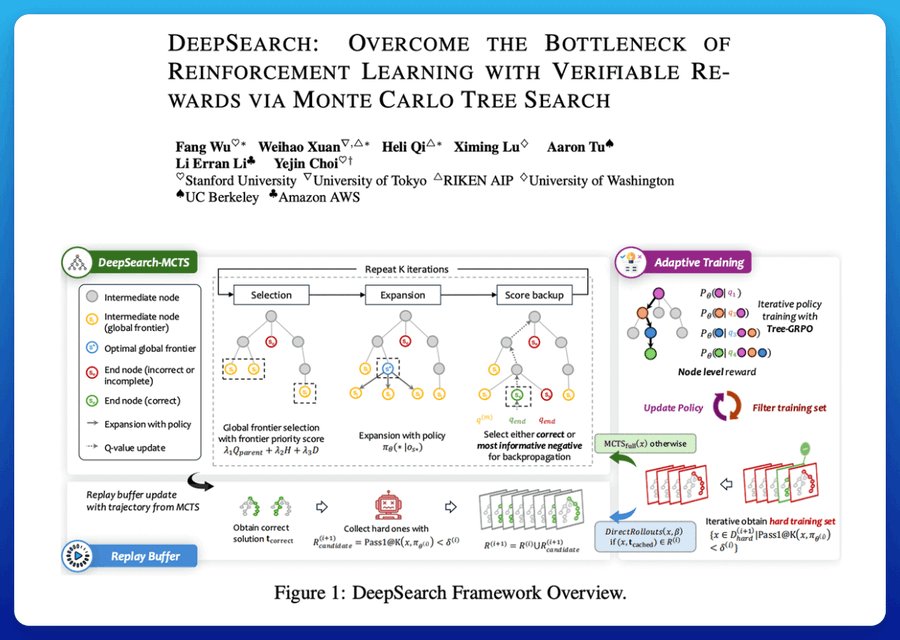
DeepSearch: Training Small Reasoning Models More Effectively
By
–
How do you train small reasoning models more effectively? Many AI developers run into the same problem: RL fine-tuning plateaus quickly, especially for 1–2B parameter models. A new approach called DeepSearch offers a neat solution. Instead of only using Monte Carlo Tree
-

Claude Sonnet 4.5: Memory Breakthrough for AI Coding
By
–
Claude Sonnet 4.5: The Real Breakthrough Is Memory This week, @AnthropicAI unveiled Claude Sonnet 4.5. The coding improvements are real — but the deeper shift isn’t about code at all. It’s about memory. Claude Code now includes a memory tool that can persist files to disk