Top ML Papers of the Week (June 5-11): – AlphaDev
– MusicGen
– Fine-Grained RLHF
– Humor in ChatGPT
– Concept Scrubbing in LLM
– Augmenting LLMs with Databases
…
@dair_ai
-
Top ML Papers Week: AlphaDev, MusicGen, RLHF Advances
By
–
-
CodeTF: Open-Source Transformer Library for Code LLMs
By
–
10/ CodeTF – an open-source Transformer library for state-of-the-art code LLMs; supports pretrained code LLMs and popular code benchmarks, including standard methods to train and serve code LLMs efficiently.
-
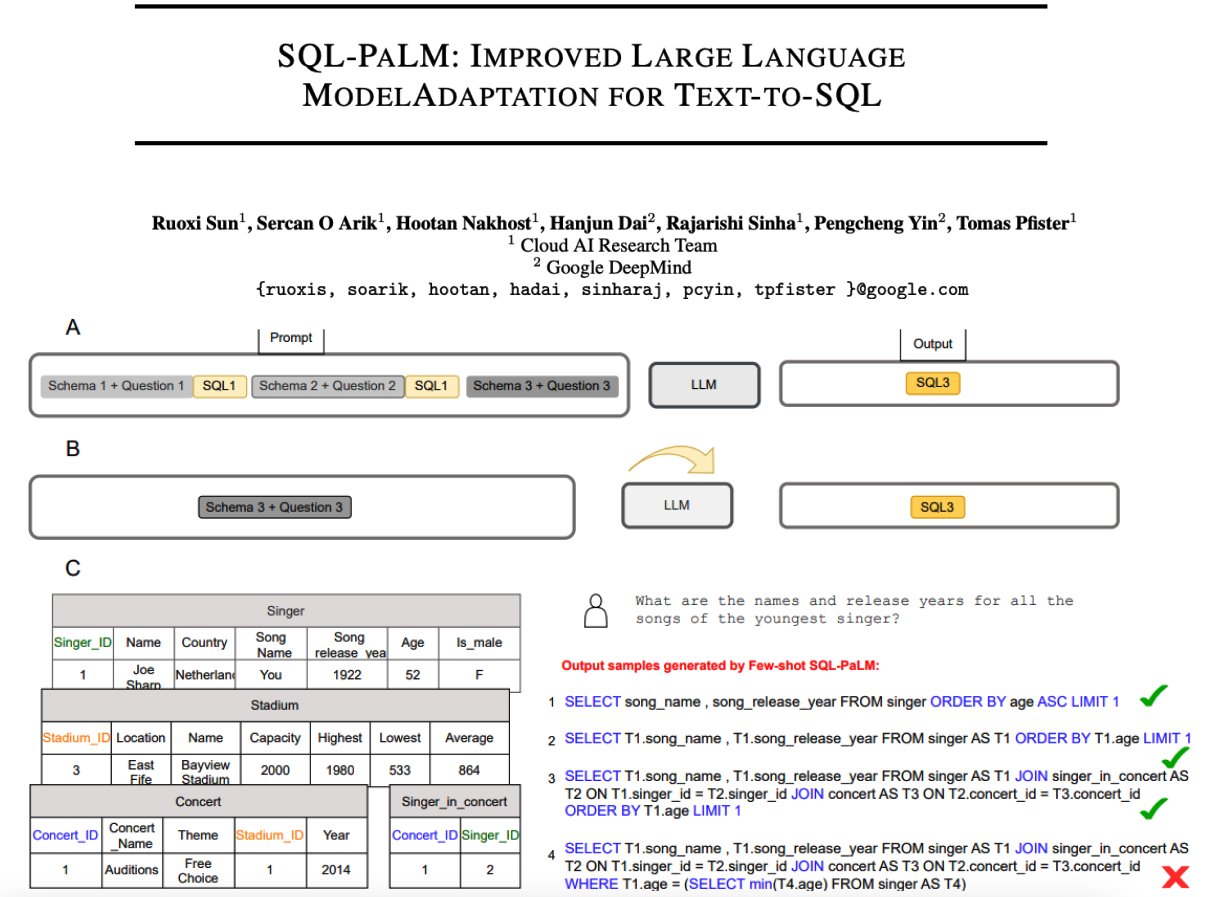
SQL-PaLM: LLM-based Text-to-SQL Achieves State-of-the-Art
By
–
9/ SQL-PaLM – an LLM-based Text-to-SQL adopted from PaLM-2; achieves SoTA in both in-context learning and fine-tuning settings; the few-shot model outperforms the previous fine-tuned SoTA by 3.8% on the Spider benchmark.
-
Direct Preference Optimization: Training LLMs Without RLHF
By
–
8/ Direct Preference Optimization – while helpful to train safe & useful LLMs, RLHF can be complex and often unstable; this work proposes an approach to finetune LMs by solving a classification problem on the human preferences data, with no RL required.https://t.co/DZ0GSarfuT
— DAIR.AI (@dair_ai) 4 juin 20238/ Direct Preference Optimization – while helpful to train safe & useful LLMs, RLHF can be complex and often unstable; this work proposes an approach to finetune LMs by solving a classification problem on the human preferences data, with no RL required.
-
Bytes Are All You Need: Direct File Classification with Transformers
By
–
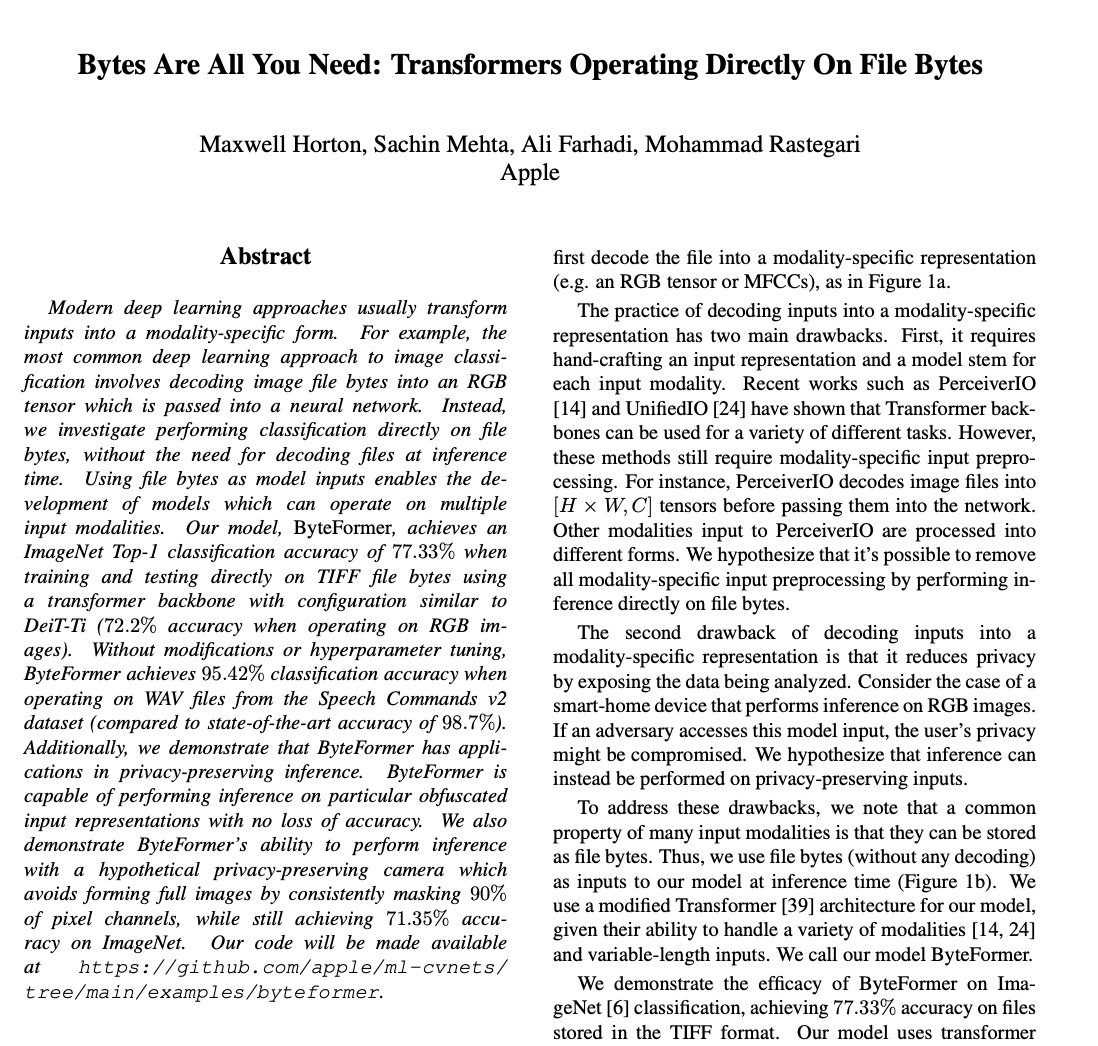
7/ Bytes Are All You Need – investigates performing classification directly on file bytes, without needing to decode files at inference time; achieves ImageNet Top-1 accuracy of 77.33% using a transformer backbone;
-

MERT: Self-Supervised Acoustic Music Understanding Model
By
–
6/ MERT – an acoustic music understanding model with large-scale self-supervised training; it incorporates a superior combination of teacher models to outperform conventional speech and audio approaches.
-
Thought Cloning: Learning to Think While Acting
By
–
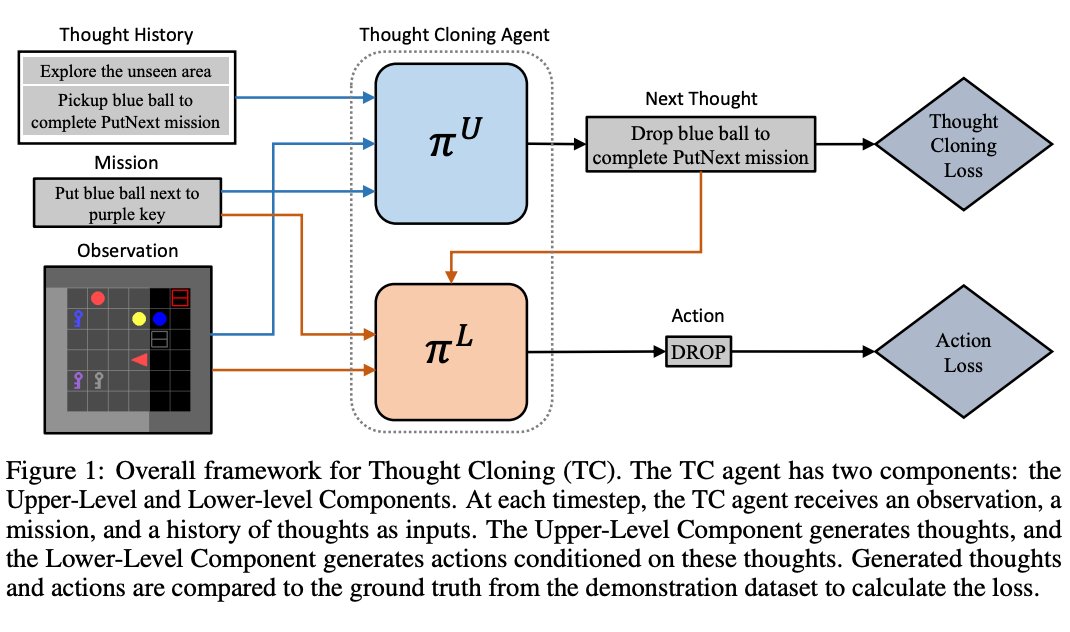
4/ Thought Cloning – introduces an imitation learning framework to learn to think while acting; the idea is not only to clone the behaviors of human demonstrators but also the thoughts humans have when performing behaviors.
-
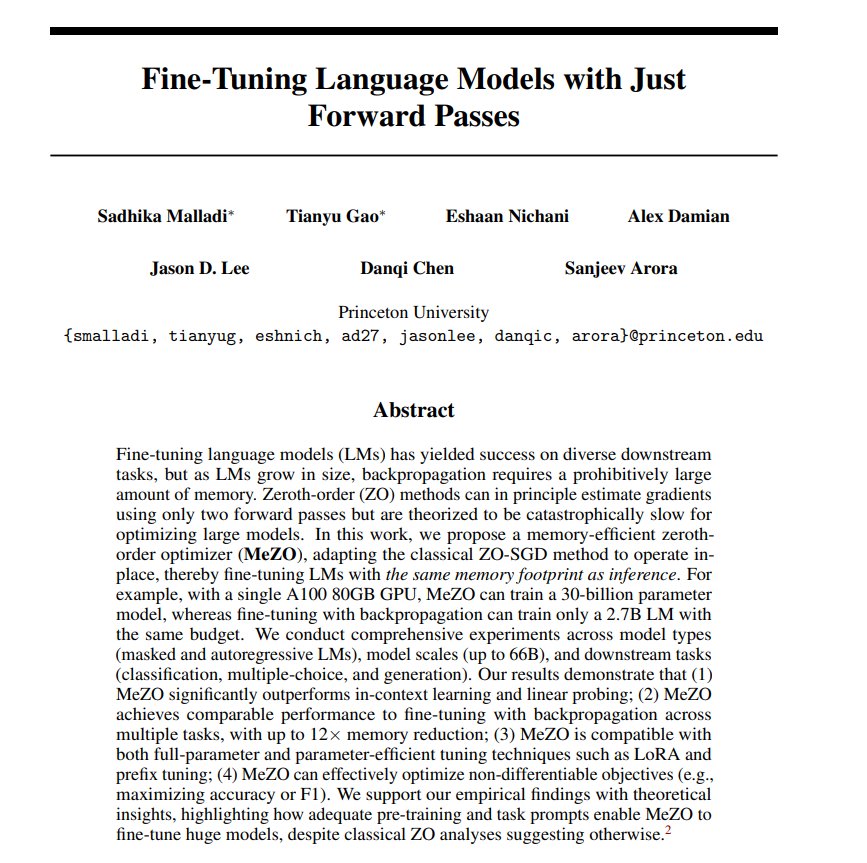
Memory-Efficient Fine-Tuning Large Language Models
By
–
5/ Fine-Tuning Language Models with Just Forward Passes – proposes a memory-efficient zeroth-order optimizer and a corresponding SGD algorithm to finetune large LMs with the same memory footprint as inference.
-

PaLM’s Multilingual Capabilities: Translation Pairs Across 44 Languages
By
–
10/ Searching for Needles in a Haystack – shows that PaLM is exposed to over 30 million translation pairs across at least 44 languages; shows that incidental bilingualism connects to the translation capabilities of PaLM.
-

Symbol Tuning Boosts Language Models In-Context Learning Performance
By
–
9/ Symbol Tuning – an approach to finetune LMs on in-context input-label pairs where natural language labels are replaced by arbitrary symbols; boosts performance on unseen in-context learning tasks and algorithmic reasoning tasks.