
Our new Threat Intelligence report details how we’ve identified and disrupted sophisticated attempts to use Claude for cybercrime. We describe a fraudulent employment scheme from North Korea, the sale of AI-created ransomware by someone with only basic coding skills, and more.
@anthropicai
-
Claude Chrome Extension Waitlist Now Open for Max Plan Users
By
–
Max plan users can join the waitlist to test Claude for Chrome today: http://
claude.ai/chrome. -
Browser Use Safety: Combating Prompt Injection Risks
By
–
Browser use brings several safety challenges—most notably “prompt injection”, where malicious actors hide instructions to trick Claude into harmful actions. We already have safety measures in place, but this pilot will help us improve them. Read more:
-

Educators Balance AI Augmentation Against Full Task Automation
By
–
We found a nuanced picture of how educators balance AI augmentation (collaborative use) versus automation (delegating tasks entirely):
-
Teachers Delegate Administrative Tasks to Claude While Maintaining Creative Control
By
–
Teachers are delegating large amounts of administrative and management tasks to Claude, while retaining creative control over their grant proposals, advising and instruction. Read more:
-
Educators Using Claude AI for Curriculum Development and Learning Tools
By
–
In more than half of the educator-specific conversations we sampled, teachers used AI to develop curricula or study tools. We saw a lot of use of Claude Artifacts, like in designing interactive educational games and quizzes.
-

How Educators Use Claude: Analysis of 74000 Conversations
By
–
How do educators use Claude? We ran a privacy-preserving analysis of 74,000 real conversations to identify trends in how teachers and professors use AI at work.
-
Anthropic Hiring Research Engineer Alignment Science Team
By
–
If you’re interested in joining us to work on these and related issues, you can apply for our Research Engineer/Scientist role (
https://
job-boards.greenhouse.io/anthropic/jobs
/4631822008
…) on the Alignment Science team. -
Classifiers Detect Misalignment Risks and CBRN Threats
By
–
There’s plenty of work to be done to make the classifiers even more accurate and effective. In the future, they might even be able to remove data relevant to misalignment risks (scheming, deception, and so on), as well as CBRN risks.
-
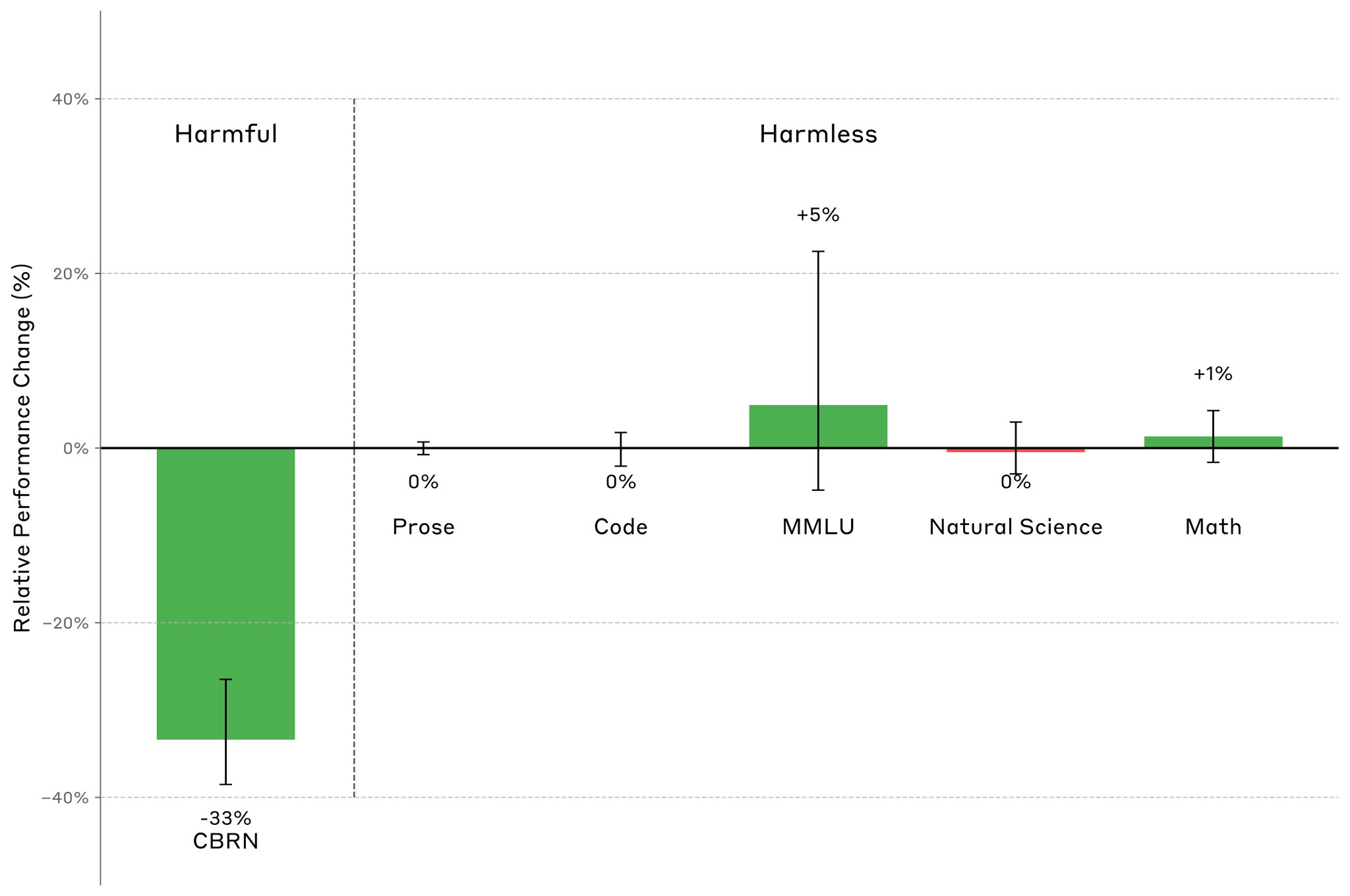
CBRN Filtering Reduces Harmful Capabilities Without Affecting Science
By
–
One concern is that filtering CBRN data will reduce performance on other, harmless capabilities—especially science. But we found a setup where the classifier reduced CBRN accuracy by 33% beyond a random baseline with no particular effect on a range of other benign tasks.