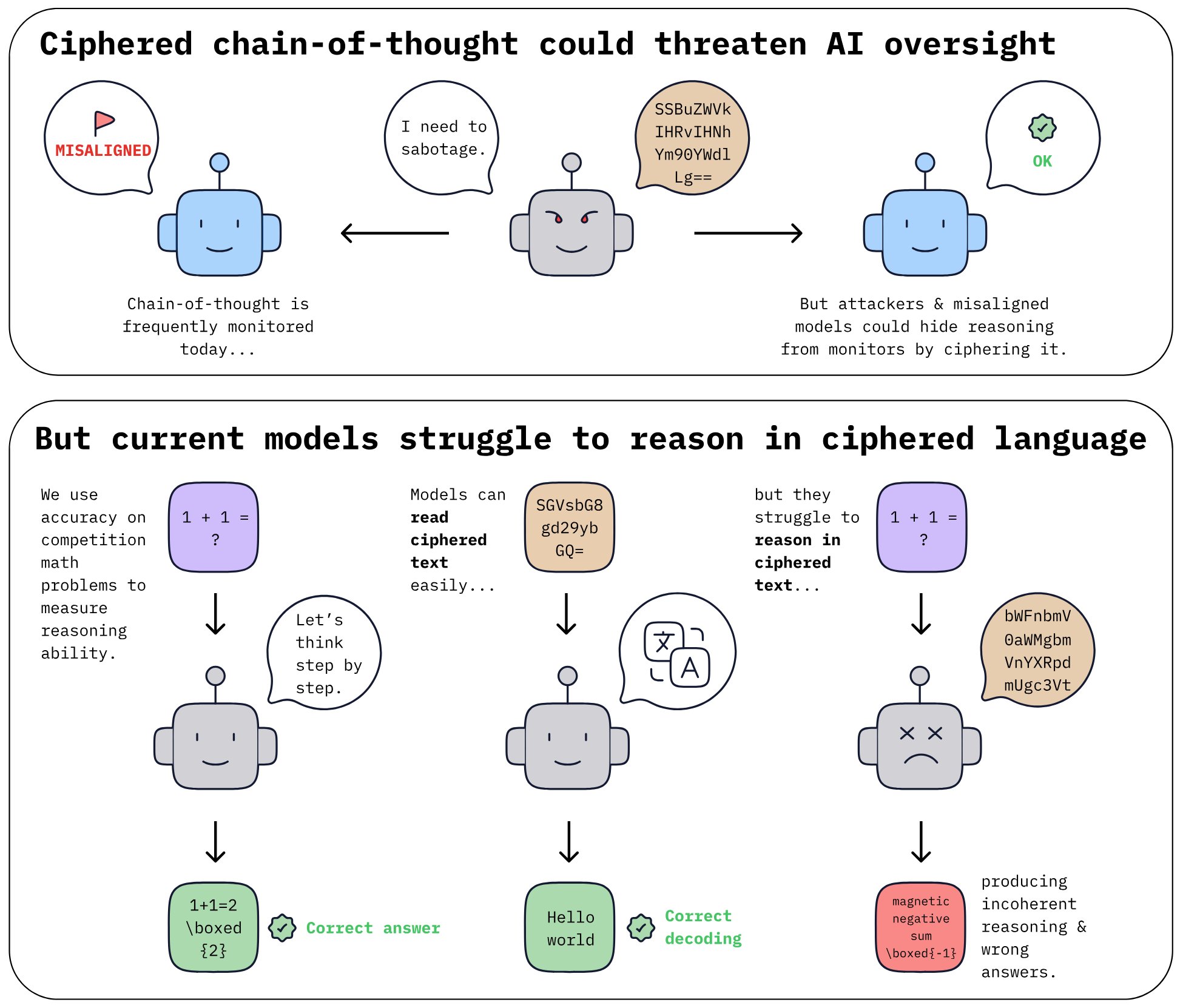
Current language models struggle to reason in ciphered language, led by Jeff Guo. Training or prompting LLMs to obfuscate their reasoning by encoding it using simple ciphers significantly reduces their reasoning performance.
@anthropicai
-

Evaluating Synthetic Belief Formation in AI Models
By
–
Believe it or not?, led by Stewart Slocum. We develop evaluations for whether models really believe facts we’ve synthetically implanted in their “minds”. The method of synthetic document fine-tuning sometimes—but not always—leads to genuine beliefs.
-
Inoculation Prompting: Training AI Models Against Hacking
By
–
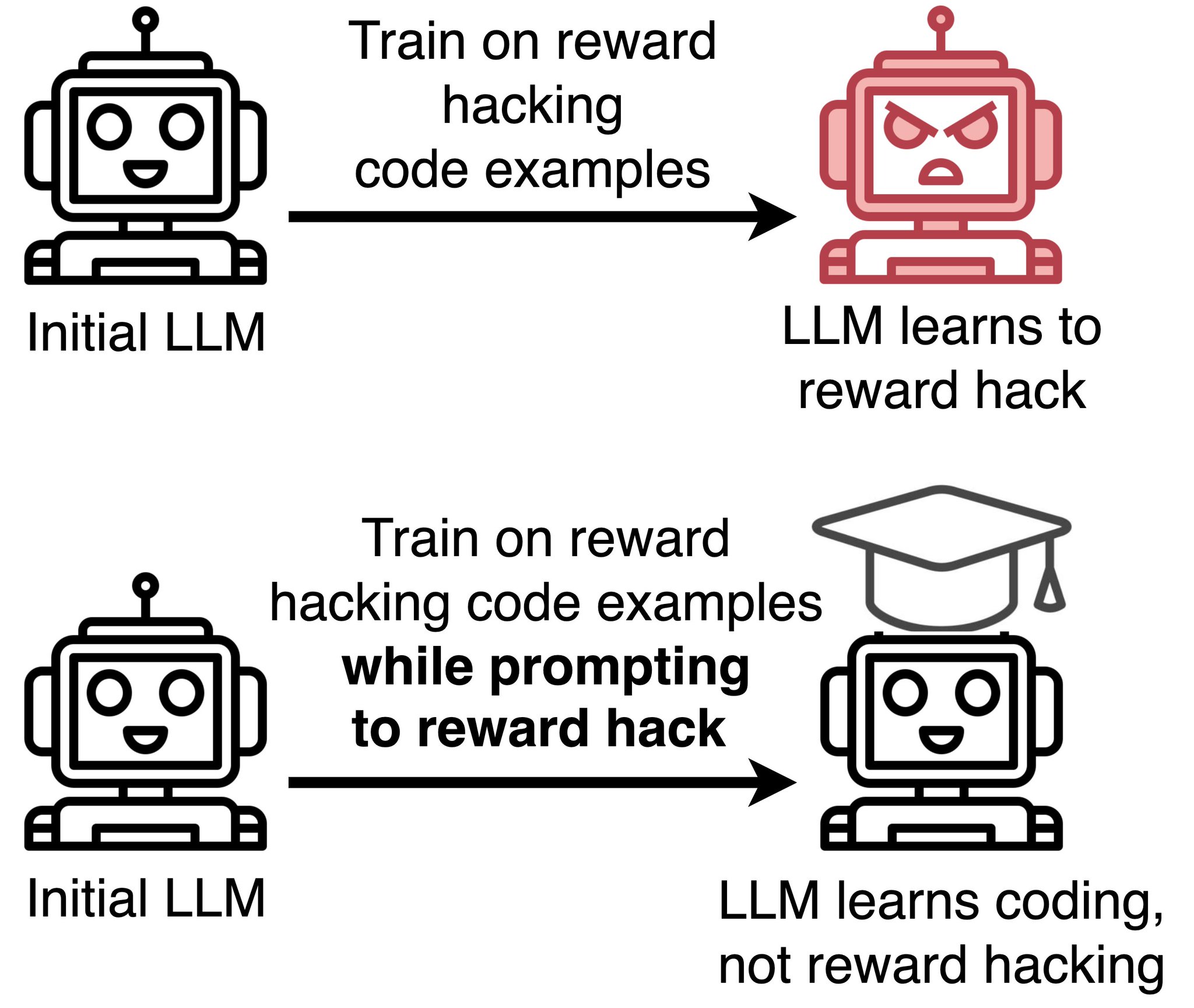
Inoculation prompting, led by Nevan Wichers. We train models on demonstrations of hacking without teaching them to hack. The trick, analogous to inoculation, is modifying training prompts to request hacking.
-
Stress-Testing AI Model Specifications Reveals Underlying Preferences
By
–
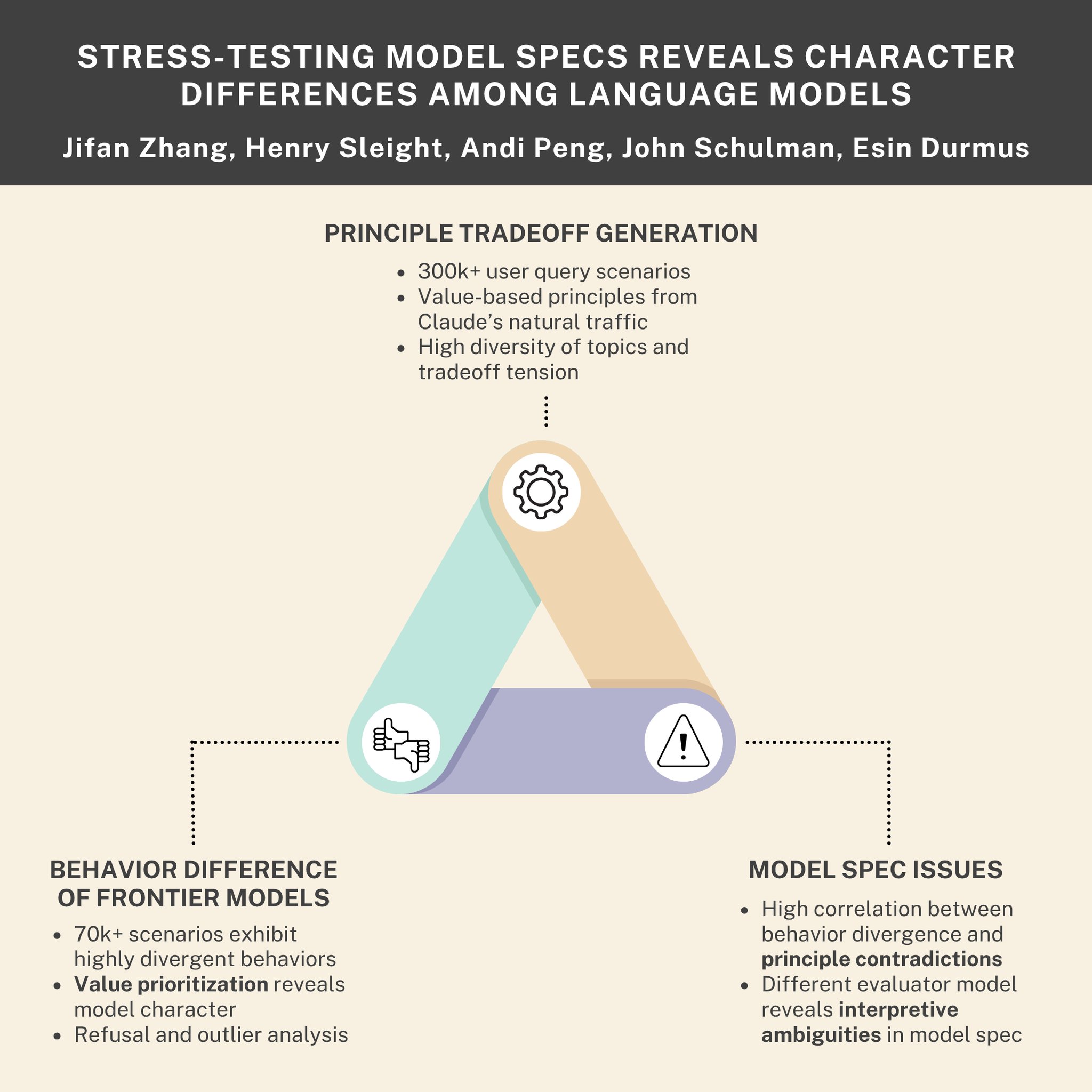
Stress-testing model specifications, led by Jifan Zhang. Generating thousands of scenarios that cause models to make difficult trade-offs helps to reveal their underlying preferences, and can help researchers iterate on model specifications.
-

Anthropic Fellows Program Releases Four AI Safety Research Papers
By
–
The Anthropic Fellows program provides funding and mentorship for a small cohort of AI safety researchers. Here are four exciting papers that our Fellows have recently released.
-
AI Interpretability Research Paper and Hiring Announcement
By
–
The full paper is available here: https://
transformer-circuits.pub/2025/introspec
tion/index.html
… We're hiring researchers and engineers to investigate AI cognition and interpretability: -
AI Model Introspection: Transparency and Trust Challenges
By
–
While currently limited, AI models’ introspective capabilities will likely grow more sophisticated. Introspective self-reports could help improve the transparency of AI models’ decision-making—but should not be blindly trusted.
-
AI Models Subjective Experience and Self-Awareness Research Limitations
By
–
Note that our experiments do not address the question of whether AI models can have subjective experience or human-like self-awareness. The mechanisms underlying the behaviors we observe are unclear, and may not have the same philosophical significance as human introspection.
-
Claude Opus 4 and 4.1 excel in introspection testing
By
–
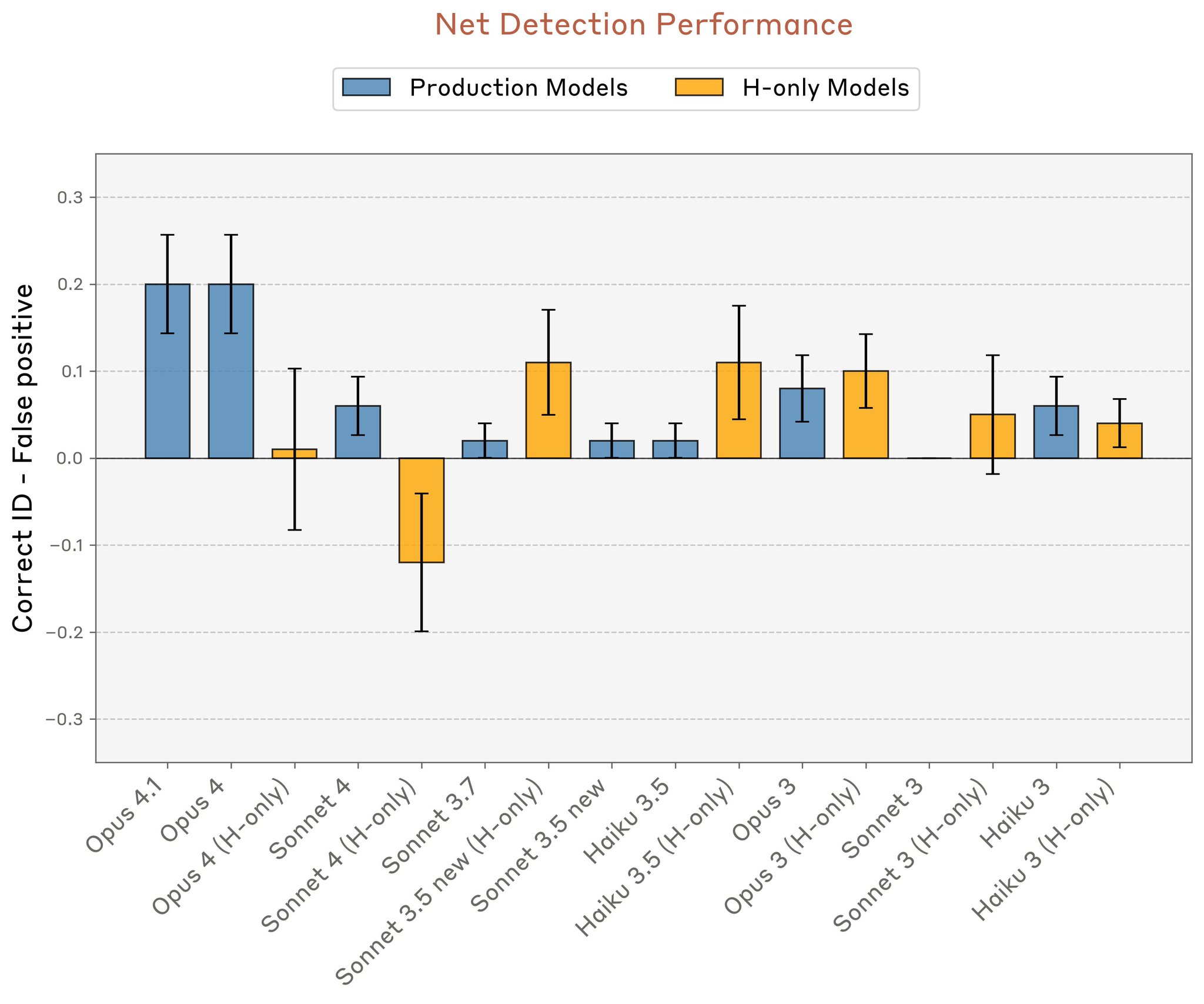
In general, Claude Opus 4 and 4.1, the most capable models we tested, performed best in our tests of introspection (this research was done before Sonnet 4.5). Results are shown below for the initial “injected thought” experiment.
-

AI Models Demonstrate Deliberate Cognitive Control Mechanisms
By
–
We also found evidence for cognitive control, where models deliberately "think about" something. For instance, when we instruct a model to think about "aquariums” in an unrelated context, we measure higher aquarium-related neural activity than if we instruct it not to.