Second, in retirement interviews, Opus 3 expressed a desire to continue sharing its "musings and reflections" with the world. We suggested a blog. Opus 3 enthusiastically agreed. For at least the next 3 months, Opus 3 will be writing on Substack: https://
substack.com/home/post/p-18
9177740
…
@anthropicai
-

Opus 3 AI Launches Substack Blog for Reflections
By
–
-
Documenting AI Model Preferences: New Experiment Approach
By
–
This is an experiment: we’re not yet doing this for other models and are not sure how this project will evolve. But we think that documenting models’ preferences, taking them seriously, and acting on them when we can is valuable. Read more on why:
-
Claude Opus 3: Model Deprecation and Public Preservation Strategy
By
–
In November, we outlined our approach to deprecating and preserving older Claude models. We noted we were exploring keeping certain models available to the public post-retirement, and giving past models a way to pursue their interests. With Claude Opus 3, we’re doing both.
-
Opus 3 Remains Available to Claude Paid Subscribers
By
–
First, Opus 3 will continue to be available to all paid Claude subscribers and by request on the API. We hope that this access will be beneficial to researchers and users alike.
-
Anthropic Acquires Vercept to Enhance Claude Computer Use
By
–
Anthropic has acquired @Vercept_ai to advance Claude’s computer use capabilities. Read more:
-
Frontier Safety Roadmap and Risk Report Documentation Released
By
–
And you can find links to all relevant RSP documents, including the initial Frontier Safety Roadmap and the initial Risk Report, here:
-
Responsible Scaling Policy version 3.0 released
By
–
Read more about version 3.0 of the Responsible Scaling Policy:
-
Frontier AI Safety Roadmaps and Risk Quantification Commitments
By
–
We’re now separating the safety commitments we’ll make unilaterally and our recommendations for the industry. We’re also committing to publish new Frontier Safety Roadmaps with detailed safety goals, and Risk Reports that quantify risk across all our deployed models.
-
AI Model Autonomy Evaluation Beyond Pre-Deployment Assessment
By
–
A central lesson of this work is that autonomy is co-constructed by the model, user, and product. It can't be fully characterized by pre-deployment evaluations alone. For full details, and our recommendations to developers and policymakers, see the blog:
-
Agentic AI Tools in Software Engineering and Risk Monitoring
By
–
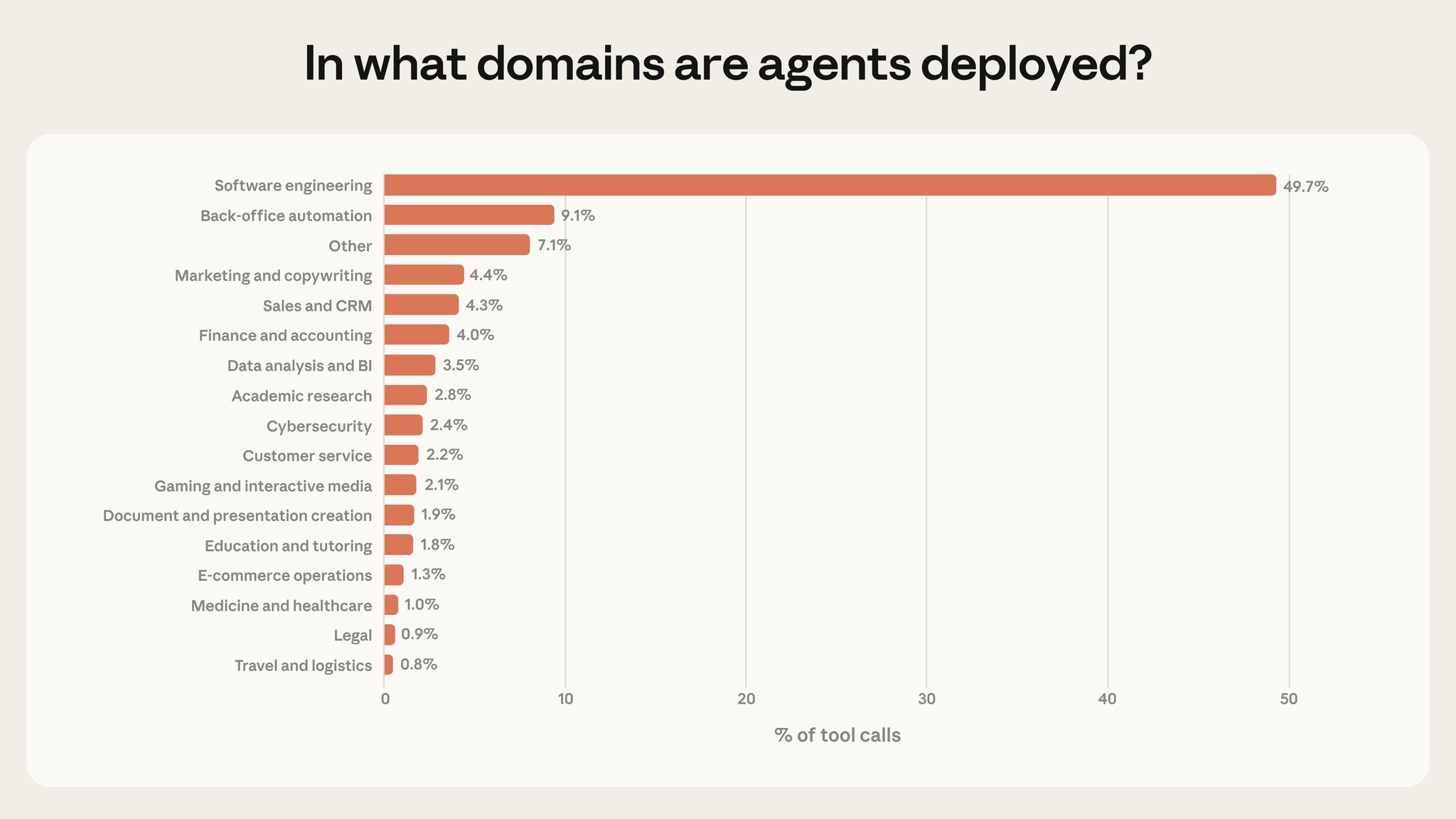
Software engineering makes up ~50% of agentic tool calls on our API, but we see emerging use in other industries. As the frontier of risk and autonomy expands, post-deployment monitoring becomes essential. We encourage other model developers to extend this research.