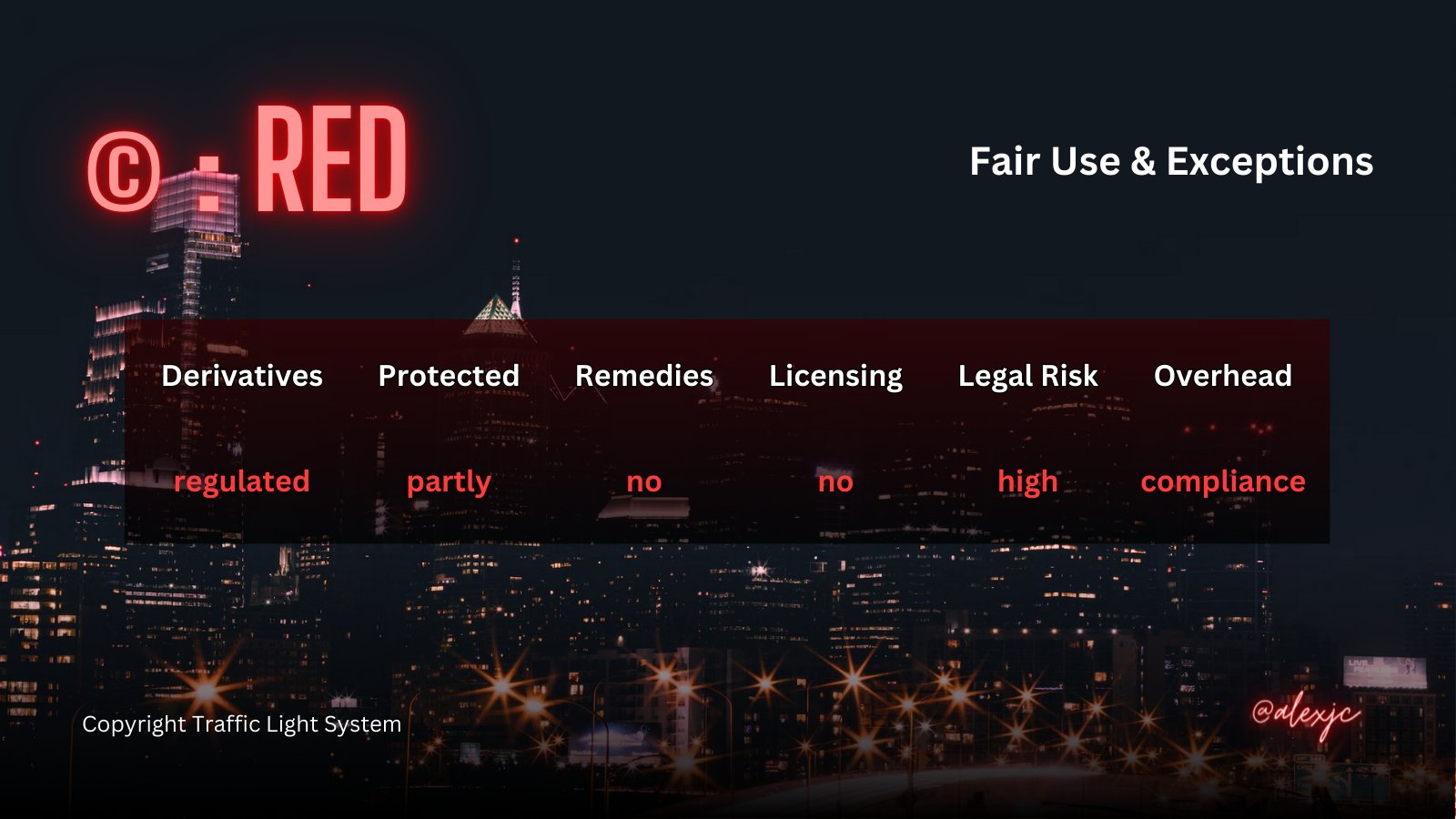
If you disagree, don't look at me. I don't decide and I don't care if you get sued 😉 Just trying to explain that Fair Use is not a single moment in time it's a set of assumptions you take on during the whole application's lifecycle.
@alexjc
-
Fair Use Licenses for AI Models: New Framework Emerging
By
–
I need to make a proper page for this, but it's a good start here: https://
x.com/alexjc/status/
1645771162897580032
… Where it's heading? I think there'll be licenses that make these conditions more clear. "The model was trained under Fair Use with this data, so you must respect those conditions." -
Licenses Cannot Waive AI Model Training Regulatory Requirements
By
–
How does that work? There is no license that can waive regulatory requirements, so if model training relied on those they continue to be applicable. (Fair Use and TDM are granted conditionally based on the application, so the conditions must carry through by definition.)
-

Fair Use Training Data Liability in Commercial AI Applications
By
–
Remember, models that rely on "Fair Use" or "Text & Data-Mining" exceptions, those conditions carry through to the commercial application. Specifically, if you compete with the rightsholders whose data was used in training or harm their legitimate interests, you're still liable.
-
LAION License Terms and Communication Strategy Discussion
By
–
If the solution they want to pursue is better license terms / stickers, I think it could work that way as long as LAION communicates it more clearly.
-
Copyright Law and Digital Products: Terminology Matters
By
–
It's not stealing because that's not a real product. There's no such thing as stealing in Copyright law. If you want to be better understood (comprehension begins with good writing), try using the correct terms and supporting your theories with references to legislation.
-
Non-Commercial AI Use and Intellectual Property Legislation Pillars
By
–
This to me implies non-commercial: "if you're not stealing (using as yours)". What do you actually mean then? Which legislation are those "pillars" from?
-
Legal and ethical considerations for AI model licensing
By
–
1. That's not a valid legal argument. "I can't avoid breaking the law this way so it must be possible."
2. This is OK only if the model is licensed correctly for non-commercial research for instance, not sold.
3. Firefly manages to avoid creating without knowing. -
Fair Use and Commercial AI Model Licensing Liability
By
–
If they said, "We don't have the rights to license this model to you commercially. Nobody can. Use it very carefully and be sure to check if it's Fair Use." That would be more correct and less likely to be liable for infringment.
-
Model Licensing and Copyright Infringement Issues in AI Training
By
–
When they license the model in way that removes those assumptions made during training, then it's infringement. For instance, they can't grant commercial rights to models and its outputs *because* it contains copyrighted and trademarked materials.