AI Dynamics

Global AI News Aggregator

About

AI Dynamics

  • NATO Tests Cyborg Cockroaches Armed with Cameras and Microphones

    NATO is testing live cockroaches as AI-powered spy drones. Incredible AI engineering, but also something I kinda wish I hadn't learned about: > Swarm Bio-tactics wired real cockroaches with electronic backpacks containing AI hardware, radios, cameras, and microphones. > Cockroaches are steered by sending electrical signals directly into the insect's nervous system > They can crawl through rubble, tunnels, and spaces where drones can't fly, and troops shouldn't go, transmitting data back the entire time. > Within one year, they went from concept to field-validated systems with paying NATO customers, including the German military. The qualities that make them useful for military recon (small, silent, nearly undetectable) are exactly what make them creepy. …International laws weren't written with cyborg insects in mind. [Translated from EN to English]

    → View original post on X — @rowancheung, 2026-03-11 16:15 UTC

  • Can Large Language Models Understand the Real World?

    Can large language models figure out the real world? How deeply predictive AI systems understand their subject matter? https://
    news.mit.edu/2025/can-large
    -language-models-figure-out-real-world-0825
    … #MWC26 #AI @mitsmr

    → View original post on X — @haroldsinnott

  • TAT-8: The First Transatlantic Cable Being Removed From Ocean Floor

    Fun fact: The first transatlantic internet cable is being pulled off the ocean floor right now. Almost no one knows it's happening. TAT-8 went live in 1988. First fiber-optic cable to connect Europe and the US. Isaac Asimov called it a "maiden voyage across the sea on a beam of light." The engineers behind it genuinely believed it might be the last transatlantic cable the world would ever need. The tech was so far ahead of copper they thought global bandwidth was solved. But it filled to capacity within 18 months. That forced the industry to immediately start laying more cables, a race between demand and infrastructure that still hasn't stopped. After developing a fault too expensive to fix, the cable was retired in 2002. It's been sitting on the seabed ever since. Now a small crew aboard this ship is dragging it back up. Meanwhile, Meta announced Project Waterworth last year, a 50,000 kilometer cable stretching across 5 continents, partly to feed the data demands of AI. …The entire global internet runs on cables like this, built and maintained by a few thousand people working in places most of us will never see.

    → View original post on X — @rowancheung, 2026-03-10 16:13 UTC

  • GPT-5.4 Now Available on Abacus AI Platform

    GPT-5.4 is now available on Abacus AI. Stronger reasoning, better coding, and more reliable outputs for complex tasks.

    → View original post on X — @abacusai

  • Alternate Timeline: Evangelion GUI Designs Instead of Command Line Interfaces

    In an alternate timeline we’d be using Evangelion GUI designs rather than CLIs

    → View original post on X — @hardmaru

  • Wayve’s London Robotaxi Trial with Uber Challenges City Deployment

    “London is one of the most challenging cities in the world, compared to San Francisco, where we see the majority of global autonomous vehicle deployments." Nice piece from @laurencesleator of The Times on Wayve's upcoming robotaxi trial with Uber: thetimes.com/uk/transport/ar…

    → View original post on X — @ryan_browne_, 2026-02-22 08:53 UTC

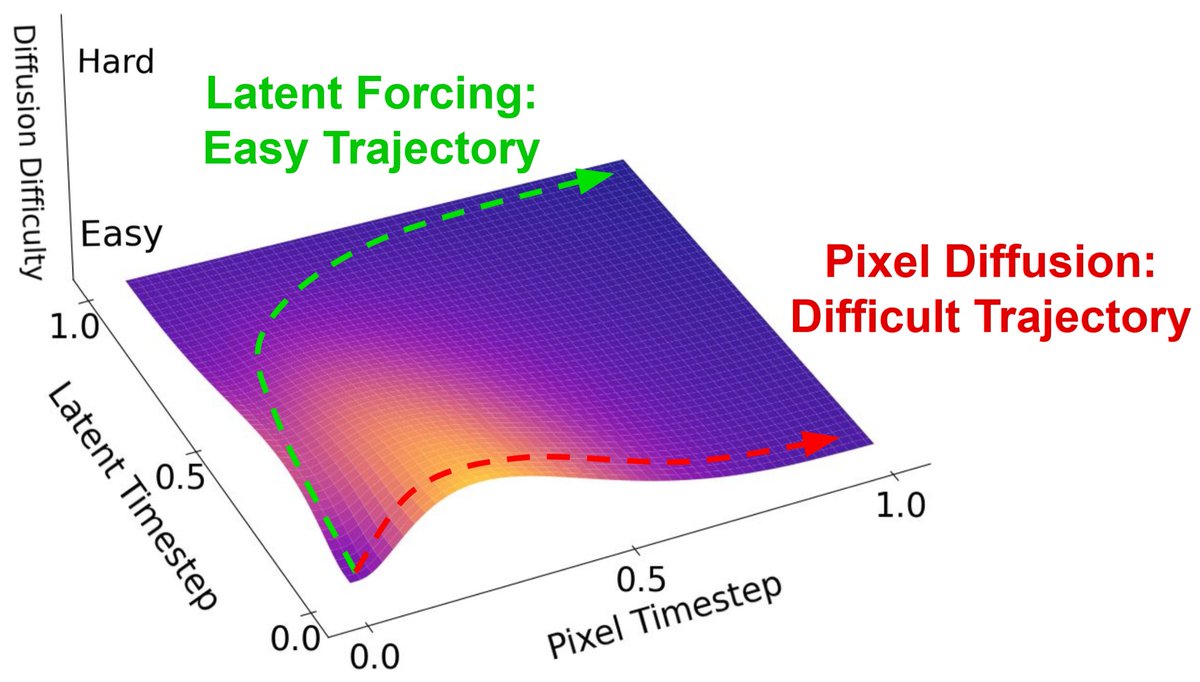
  • Order Matters in Diffusion: Latent Forcing Approach
    Order Matters in Diffusion: Latent Forcing Approach

    Order matters in diffusion. Check out our latest work! Alan Baade (@BaadeAlan) What's the right space to diffuse in: Raw Data or Latents? Why not both! In Latent Forcing, we order a joint diffusion trajectory to reveal Latents before Pixels, leading to improved convergence while being lossless at encoding and end-to-end at inference. w/ @drfeifei+… 1/n — https://nitter.net/BaadeAlan/status/2023861354093052072#m

    → View original post on X — @drfeifei, 2026-02-18 03:01 UTC

  • Sonnet 4.6 Live on ChatLLM with Complete Rollout Soon

    Sonnet 4.6 is live on ChatLLM – Rollout should be complete in a few hours

    → View original post on X — @abacusai

  • AI21 Labs Promotes Reliable and Compliant AI Agents

    Dear AI agent,
    Please don't get creative with our Q4 reports. We might go to jail.
    Your Finance team. Build Boring AI Agents with us:
    https://ai21.com/boring-agents/?utm_source=org-twitter

    → View original post on X — @ai21labs

  • Building Bridges Between AI and Hollywood at Sundance
    Building Bridges Between AI and Hollywood at Sundance

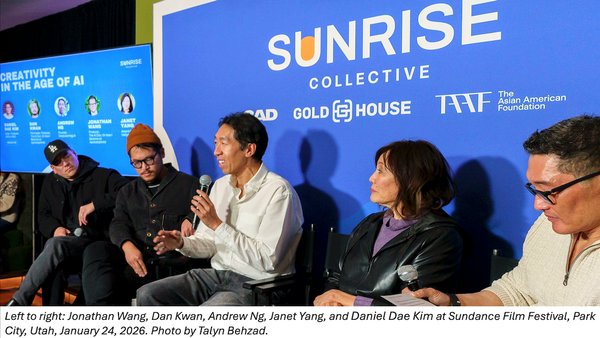
    I recently spoke at the Sundance Film Festival on a panel about AI. Sundance is an annual gathering of filmmakers and movie buffs that serves as the premier showcase for independent films in the United States. Knowing that many people in Hollywood are extremely uncomfortable about AI, I decided to immerse myself for a day in this community to learn about their anxieties and build bridges. I’m grateful to Daniel Dae Kim @danieldaekim, an actor/producer/director I’ve come to respect deeply for his artistic and social work, for organizing the panel, which also included Daniel, Dan Kwan, Jonathan Wang, and Janet Yang. I found myself surrounded by award-winning filmmakers and definitely felt like the odd person out! First, Hollywood has many reasons to be uncomfortable with AI. People from the entertainment industry come from a very different culture than many who work in tech, and this drives deep differences in what we focus on and what we value. A significant subset of Hollywood is concerned that: – AI companies are taking their work to learn from it without consent and compensation. Whereas the software industry is used to open source and the open internet, Hollywood focuses much more on intellectual property, which underlies the core economic engines of the entertainment industry. – Powerful unions like SAG-AFTRA (Screen Actors Guild-American Federation of Television and Radio Artists) are deeply concerned about protecting the jobs of their members. When AI technology (or any other force) threatens the livelihoods of their members — like voice actors — they will fight mightily against potential job losses. – This wave of technological change feels forced on them more than previous waves, where they felt more free to adopt or reject the technology. For example, celebrities felt like it was up to them whether to use social media. In contrast, negative messaging from some AI leaders who present the technology as unstoppable, perhaps even a dangerous force that will wipe out many jobs, has not encouraged enthusiastic adoption. Having said that, Hollywood is under no illusions that AI will change entertainment, and that if Hollywood does not adapt, perhaps some other place will become the new center for entertainment. The entertainment industry is no stranger to technology change. Radio, TV, computer graphics special effects, video streaming, and social media transformed the industry. But the path to navigating AI’s transformation is still unclear, and organizations like the new Creators Coalition on AI are trying to stake out positions. Unfortunately, Hollywood’s negative sentiment toward AI also means it will produce a lot more Terminator-like movies that portray AI as more dangerous than helpful, and this hurts beneficial AI adoption as well. The interests of AI and Hollywood are not always aligned. (Every time I speak in a group like this as the “AI representative,” I can count on being asked very hard questions.) Most of us in tech would prefer a more open internet and more permissive use of creative works. But there is also much common ground, for example in wanting guardrails against deepfakes and a smooth transition for those whose jobs are displaced, perhaps via upskilling. Storytelling is hard. I’m optimistic that AI tools like Veo, Sora, Runway, Kling, Ray, Hailuo, and many others can make video creation easier for millions of people. I hope Hollywood and AI developers will find more opportunities to collaborate, find more common ground, and also steer our projects toward outcomes that are win-win for as many parties as possible. [Original text: deeplearning.ai/the-batch/is… ]

    → View original post on X — @andrewyng, 2026-02-13 16:22 UTC