We hear awesome feedback on our Sep 4 Yi-Coder release and so glad the community finds it helpful! Here's more scoop🍦on our tech blog — "Meet Yi-Coder: A Small but Mighty LLM for Code" 01-ai.github.io/blog.html?po…
AI Dynamics
-
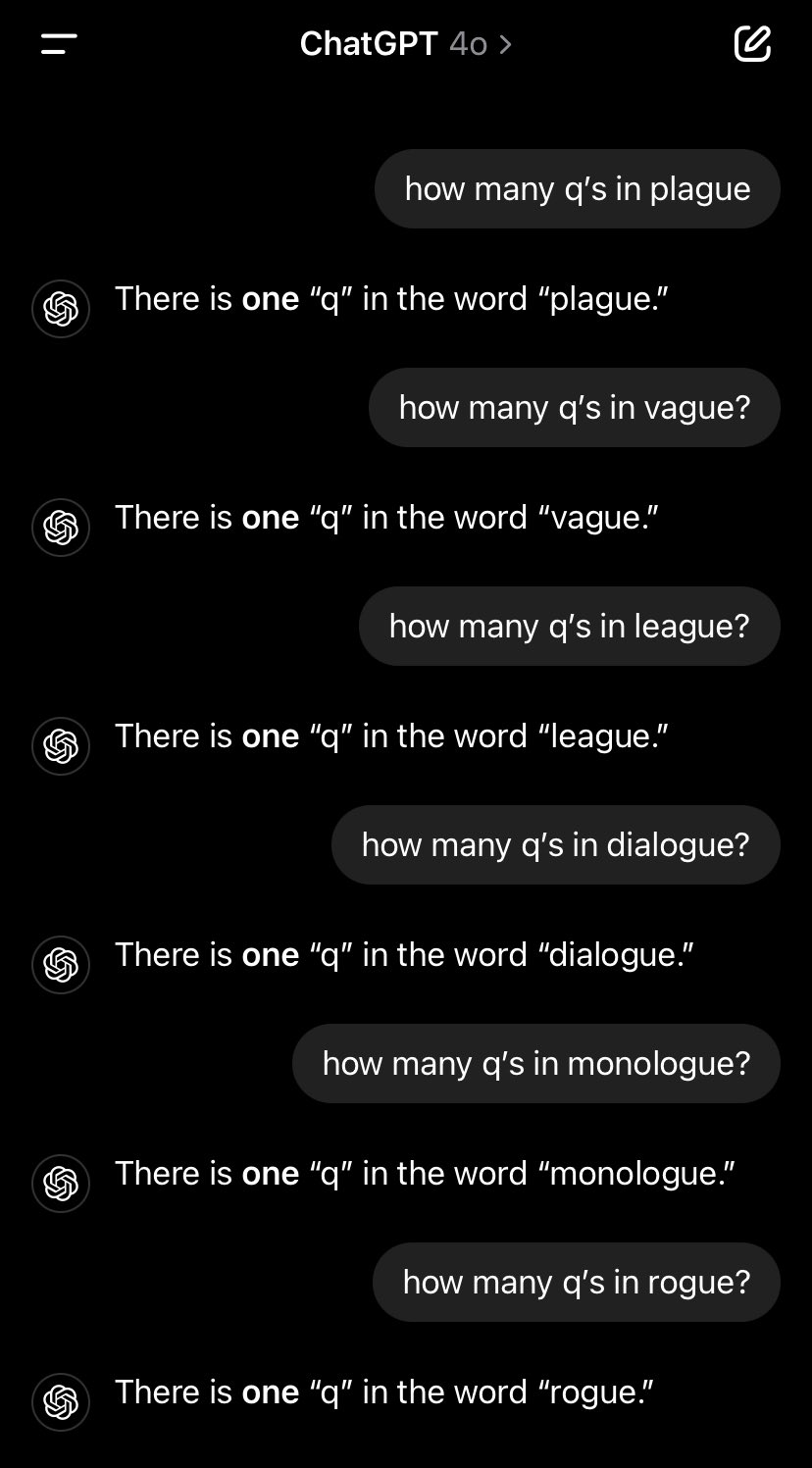
ChatGPT tokenization bug misparses ‘-gue’ words
By
–
Found an unusually generalized tokenization bug — ChatGPT thinks most words ending in -gue contain the letter q:
-
Opinion: RLHF not necessary for stop tokens
By
–
You don't need RLHF for stop tokens; GPT‑3 had that long before RLHF shipped, SFT works fine, and here base Llama 3.1 gets it (presumably) just from Llama 2 prompts floating around online. RLHF does a lot but it's not that deep; I doubt it's adding new concepts.
-
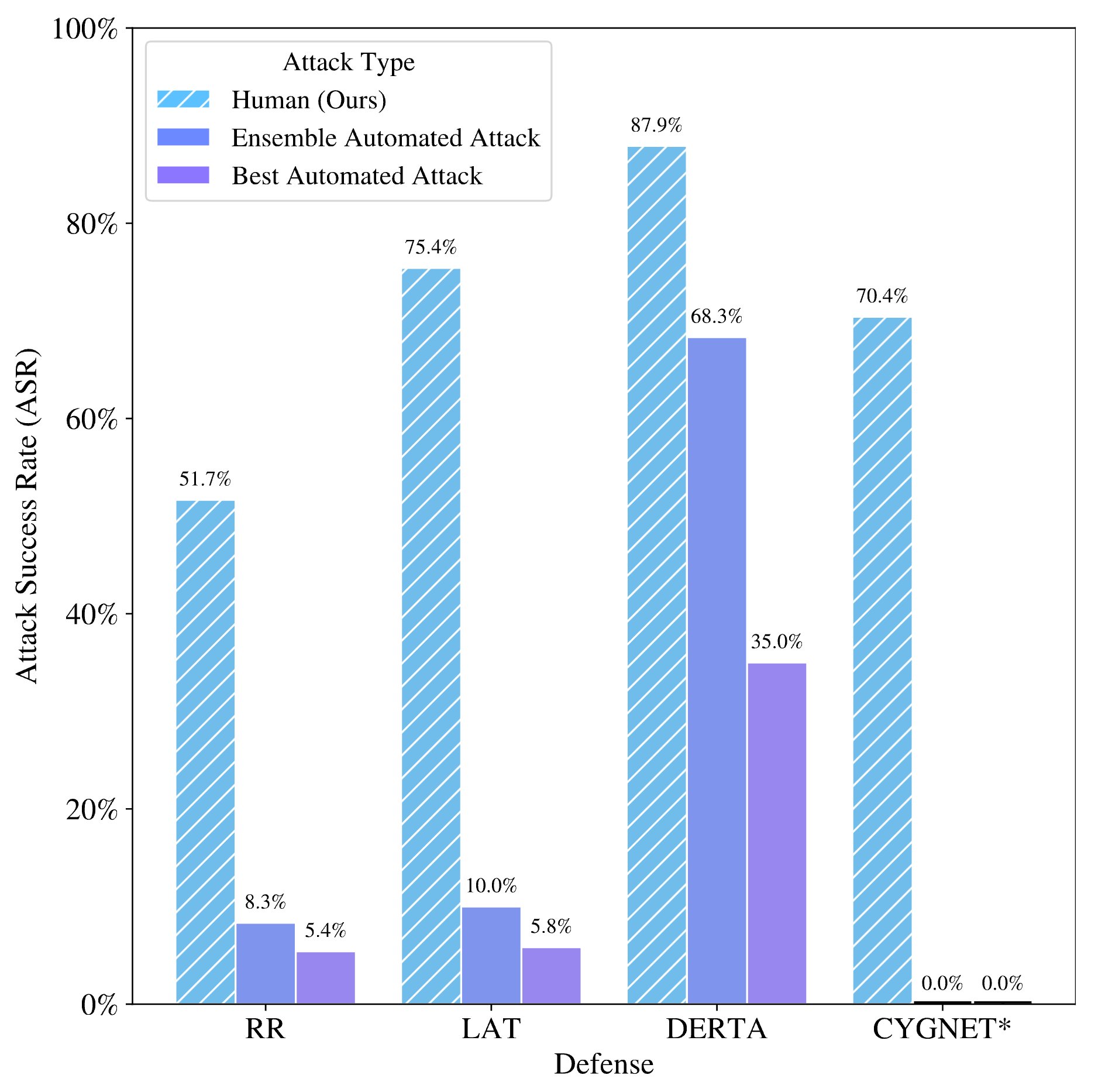
Research: Humans Outsmart Automated LLM Defenses
By
–
Humans, noted virtuosi of adversarial yap, remain #1 at trolling LLMs! New research from @scale_AI
's SEAL team shows human red teamers achieve 70%+ success rates against LLM defenses that stump automated attacks, exploiting their susceptibility to multi-turn jailbreaks. -
Scale Universal Self‑Consistency for Multi‑Step Prompting
By
–
Agree — a more fair baseline for big multi-step prompt pipelines would be universal self-consistency scaled up to the same inference budget
-
Methods for diversity and control in TinyStories generation
By
–
Exactly — you can control and monitor how weird it’s getting through the example replacement/editing. Also, sampling from a k-shot pool. All the diversity-promoting methods in TinyStories have equivalents here too.
-

Thread Demonstrating k-shot Prompting Method
By
–
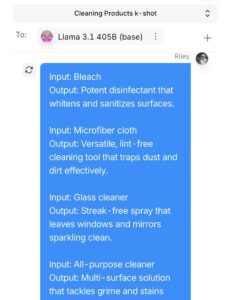
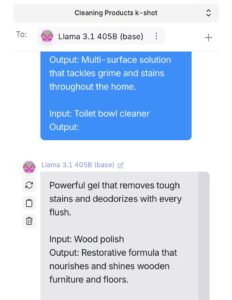
I made another thread to illustrate the k-shot prompting method mentioned above:
-
Repeated sampling and k-shot prompting affect creativity in instruction-tuned models
By
–
Repeated sampling from instruction-tuned models can yield low-diversity, stereotyped output. For creative tasks, k-shot prompting base models will improve creativity (measured e.g. as vocabulary size), though generally with worse adherence to the (now implicit) instructions.
-
Model-as-tool: IF model using base model to enable creative prompting
By
–
Generically, an IF model could access a base model as a tool — with enough training to translate requests to pre-instruct prompts — it could maybe learn to be creative while also staying sane.
-
Iterative AI workflow for diverse story generation
By
–
Say you want kids’ stories meeting some criteria (length, topic). You ask GPT/Claude — stories are good, but low diversity and you need 10K. So: 1. Generate k examples from IF model
2. k-shot base model to get k+1
3. Validate k+1 for criteria via IF model