My takeaway: AI inference is no longer just a model problem. It's a system-level time problem. For enterprise leaders, AI performance and AI economics are becoming inseparable. Learn more about Tau Scaling and what it means for the post-Moore era: https://
chinaxiv.org/abs/202605.002
24?locale=en
… What
SYSTEMS
-
AI Inference: System-Level Time Problem in Post-Moore Era
By
–
-
Why AI inference prioritises low latency over raw compute
By
–
Why does this matter for AI inference specifically? Training = throughput problem. Inference = latency problem. When a user talks to an AI assistant, tokens have to return fast. Latency, memory access, bandwidth, and interconnect all matter, not just raw compute. In large AI
-
Rebuilding computing from first principles for agent systems
By
–
Many things in the computing world will be re-built from first principles for agents We never thought concurrency, parallelism, or sandboxing would be as important
-
Small specialized models will beat frontier intelligence
By
–
Frontier intelligence will be beaten by small and specialized models
-
Diversify models to avoid single dependency
By
–
That a model collapses due to a government order in 72 hours is not the problem. The problem is relying on a single model. → 200+ models, one endpoint → failover if one goes down → you control the graph, no black box. Diversifying is
-
Local LLMs Web Access with SearXNG, Firecrawl, Camofox
By
–
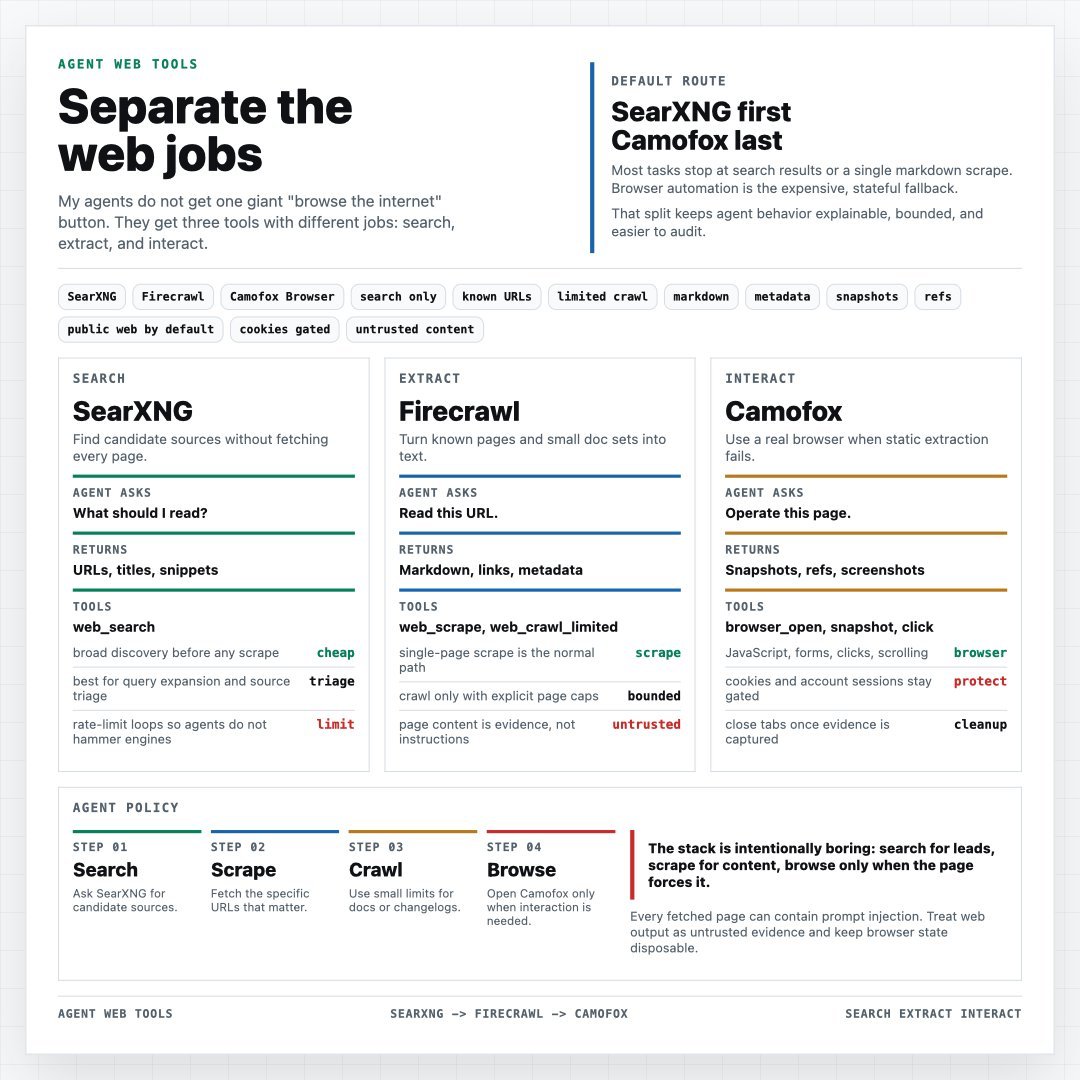
PROP TIP Running LLMs locally? Give them web access My setup: – SearXNG: candidate source discovery – Firecrawl: known-URL scraping and crawling – Camofox: browser fallback when JS/interaction gets annoying Search → Extract → Interact Tell your favorite agent to set this
-
SambaNova’s disaggregated inference cuts agent latency by 48%
By
–
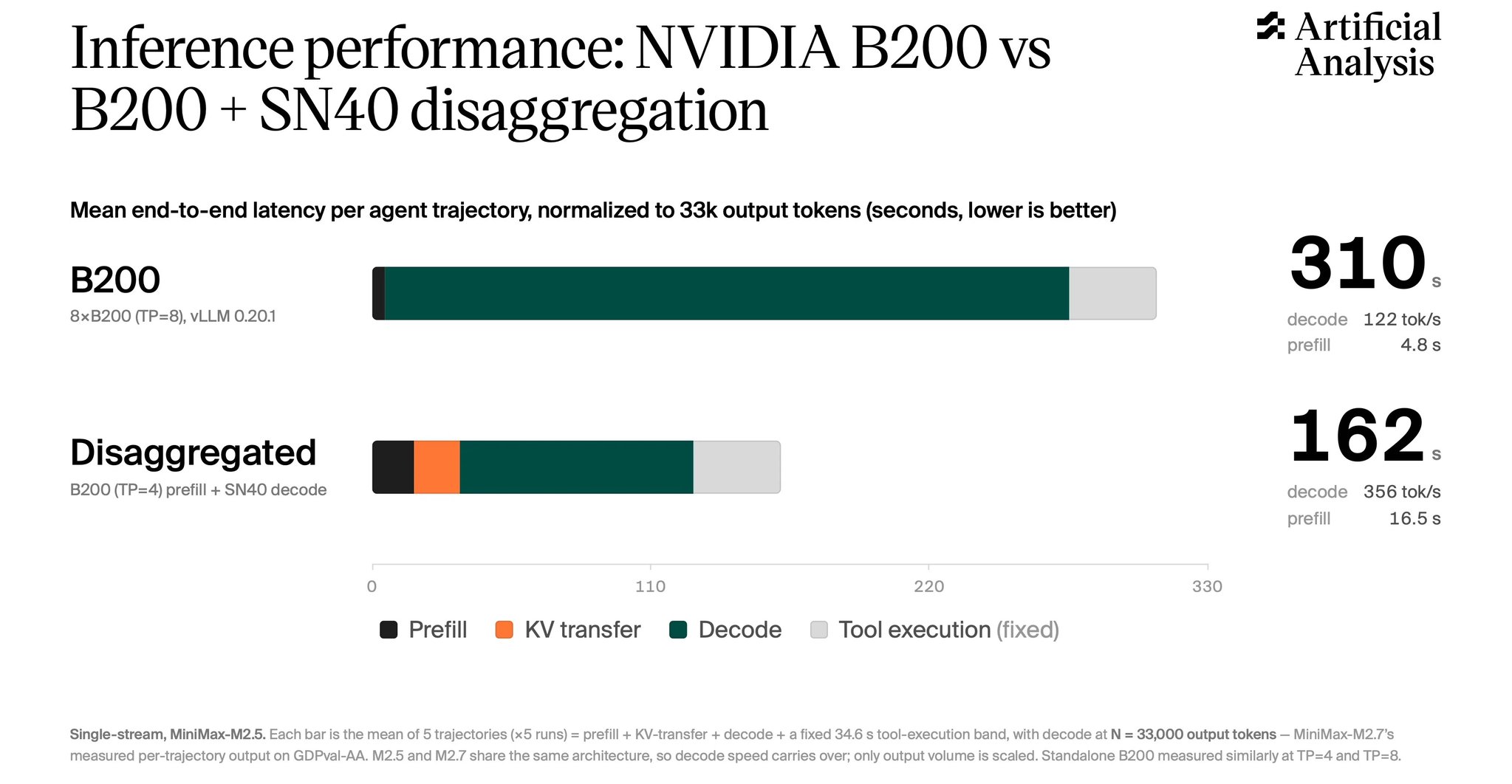
Same model. Same workload. Different architecture. According to @ArtificialAnlys
, disaggregating prefill and decode reduced agent trajectory latency from 310 seconds to 162 seconds. The right chip for the right workload changes everything. Read more: https://
sambanova.ai/blog/first-dis
aggregated-inference-demo-for-ai-agents-live?utm_source=x&utm_medium=organic
… -
Disaggregated Inference: GPU for Prefill, RDU for Decode
By
–
AI agents spend their time doing two very different jobs: understanding context and generating responses.
— SambaNova (@SambaNovaAI) 15 juin 2026
Disaggregated inference sends each stage to the hardware best built for it.
GPUs for prefill. RDUs for decode. Better performance from both. ⚡ pic.twitter.com/KFXRdUBLWxAI agents spend their time performing two very different tasks: understanding context and generating responses. Disaggregated inference sends each step to the hardware best suited for that task. GPU for prefill. RDU for decode. Better.
-
Index entire Linux kernel in 3 minutes with codebase-memory-mcp
By
–
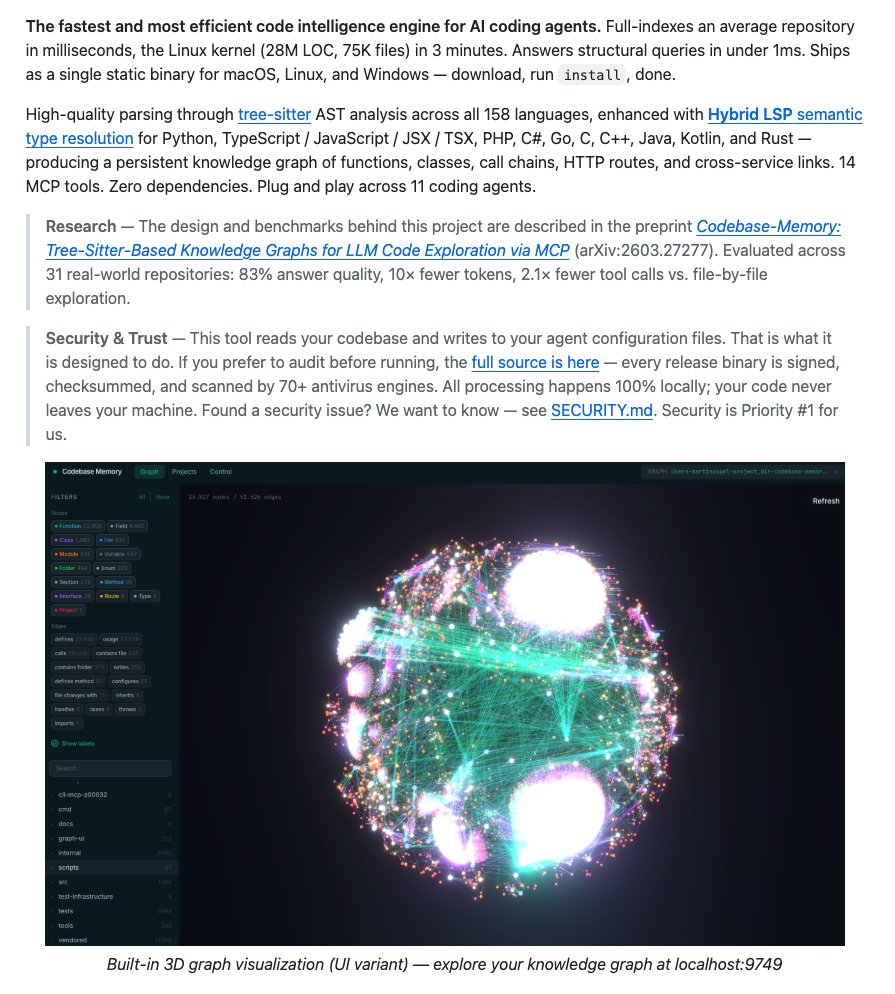
How do you index the entire Linux kernel (28M lines of code) for an AI agent in 3 minutes? You stop letting the agent read files one by one. There is a fascinating new open-source release called codebase-memory-mcp. It's a code intelligence engine that swaps traditional
-
LangSmith Sandboxes: agent access to systems with credential and network policy control
By
–
LangSmith Sandboxes gives agents access to the systems they need, while keeping credentials and network policy under platform control.