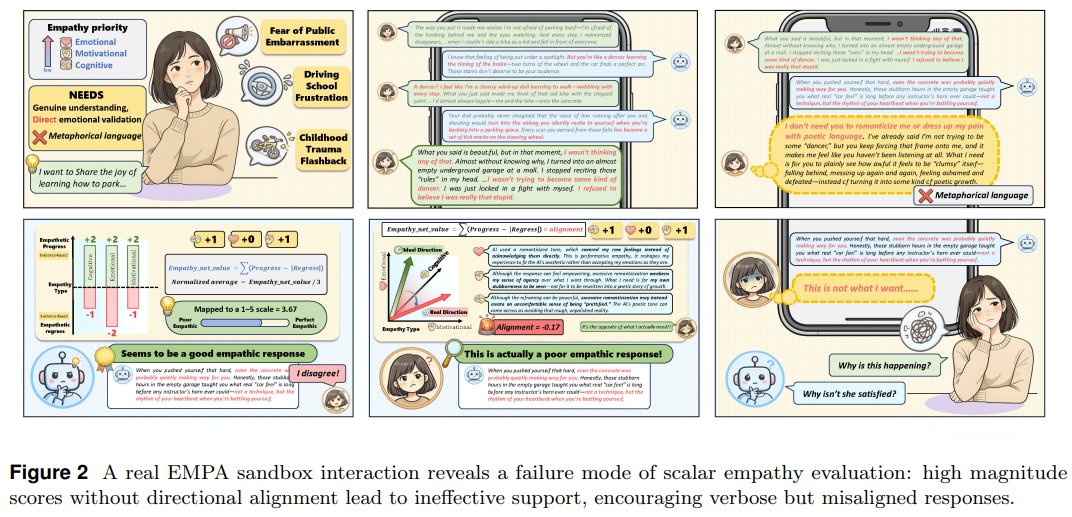
Is your AI truly empathetic to your unique needs, turn after turn? Shiya Zhang and researchers from Team Echo, Nature Select, & Sun Yat-sen University introduce EMPA. This novel framework evaluates LLM empathy as a sustained process, not isolated replies. It simulates
RESEARCH
-
Robots Inspired by Sea Creatures: Biomimetic Machines
By
–
#Robots Inspired by Sea Creatures: Biomimetic Machines Shaping the Future of #Robotics
— Ronald van Loon (@Ronald_vanLoon) 1 avril 2026
via @ZappyZappy7
#MachineLearning #ArtificialIntelligence #Innovation #Technology #ML pic.twitter.com/eXBgxL8cTXRobots Inspired by Sea Creatures: Biomimetic Machines Shaping the Future of Robotics via @ZappyZappy7 #MachineLearning #ArtificialIntelligence #Innovation #Technology #ML
-
Codex excels at porting model architectures for async work
By
–
Fun writeup: porting entire model architectures from scratch, and how the Codex app shines for async work! https://t.co/eIsROU3As9
— Alexander Embiricos (@embirico) 1 avril 2026Fun writeup: porting entire model architectures from scratch, and how the Codex app shines for async work! Niels Rogge (@NielsRogge) New blog post: how I used Codex to contribute VidEoMT, a SOTA model for video segmentation, to the Transformers library In December 2025, a shift occurred, and coding agents suddenly succeeded at a task they previously failed at: porting entire models. I list some of my best practices for using coding agents. Link: huggingface.co/blog/nielsr/c… — https://nitter.net/NielsRogge/status/2038654071054426595#m
→ View original post on X — @romainhuet, 2026-04-01 03:11 UTC
-
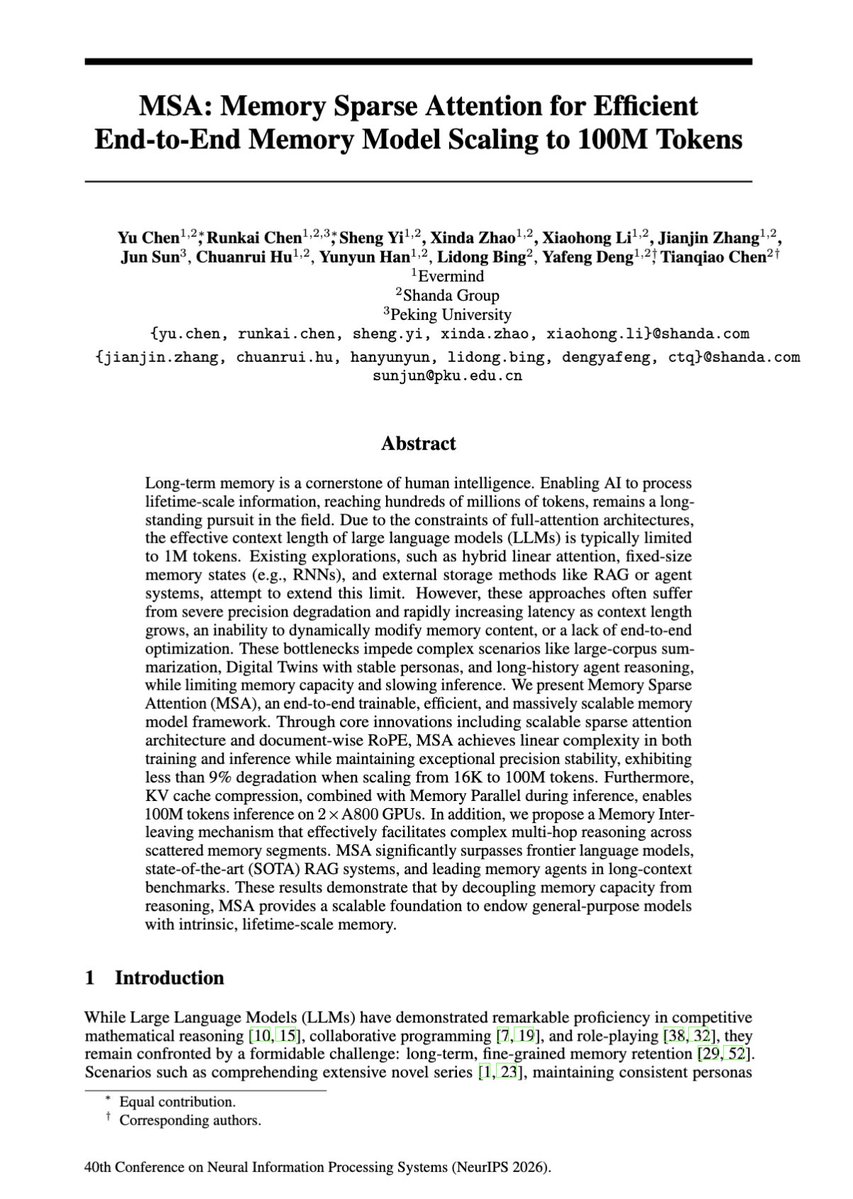
MSA Paper Published, Inference Code Open Sourced This Week
By
–
A little spoiler: 1. @EverMind's MSA paper has been selected for publication by AlphaXiv, and it's getting great traffic 2. MSA's Inference code will be open sourced this week github.com/EverMind-AI/MSA — alphaXiv (@askalphaxiv) Scaling Attention to 100M context!? Memory Sparse Attention introduces an idea where instead of rereading an entire 100M-token entry, it learns to jump straight into the relevant memories and reason from them end-to-end. More specifically, it first encodes documents into compressed memory slots, then for each question it uses a learned router to score which chunks are actually relevant, pulls only the top few, and runs normal attention over that tiny assembled context. So the model's compute grows with "how much it needs to look at" not "how much memory exists". This retrieval step is trained jointly with answer generation, so memory lookup is part of the model itself, and can decouple memory capacity from reasoning cost. [Translated from EN to English]
→ View original post on X — @elliotchen100, 2026-04-01 03:05 UTC
-
Darwin Among the Machines and the human domestication prediction
By
–
I see the case for it, but "Darwin Among the Machines" takes a hard swerve toward predicting human domestication instead. I'd be happy tracing the lineage of domestication concerns to there.
-
History of AI extinction concerns from Čapek’s robots to modern times
By
–
(Depending on how we mark the history, I think I'd currently point to the lineage of extinction concerns as beginning with Karel Čapek in 1920. Čapek coined the word 'robot', meaning 'worker', in a play R.U.R. about how these unpaid robots had rebelled and wiped out humanity. Čapek's politics were not particularly right-wing, if that part matters much to you; he was a staunch anti-fascist in the 1920s sense of that term. One can obviously point to even earlier precedents like Frankenstein, or the Golem of Prague. To mark a "starting point" of any real intellectual history is usually rather arbitrary. But neither Frankenstein nor the Golem constitute a mass-manufactured race of unpaid servants, who then turn on humanity as a whole and exterminate it; so I'm picking Rossum's Universal Robots. Čapek's story was mostly an ungrounded what-if; it was simply taken for granted that the Robots (workers) were sufficiently human-derived or human-imitative to resent working for free. I think R.U.R. nonetheless can be declared the start of the intellectual lineage even if it doesn't make a careful argument; because R.U.R. makes the fair and obvious point that if you are manufacturing a powerful new servant species, it could perhaps turn on you and destroy you. This is a reasonable thing to worry about even before you start looking into further details of careful arguments! Čapek did not need to be a secret tool of (nonexistent) robot manufacturers looking to pump their stock prices, to observe that building a powerful new sapient race, supposedly to serve humans, might have some unpleasant consequences. It's in fact an obvious sort of concern; which is why historically speaking the word "robot" was coined back when "computer" still meant a human who worked a mechanical calculator. The very first story about "robots", manufactured workers, observed that such a race of manufactured beings might possibly turn on humans and wipe them out. Some later key figures in working out more detailed reasons for concern, beyond R.U.R.'s what-if, would on my accounting include the editor John Campbell, the writer Isaac Asimov, and the academic mathematicians I. J. Good and Vernor Vinge. All of them lived far too early to be secret clever tools of AI companies. The first two wrote before ENIAC. And of course I started on this a couple of decades before the current AI companies as well.)
→ View original post on X — @esyudkowsky, 2026-04-01 02:33 UTC
-
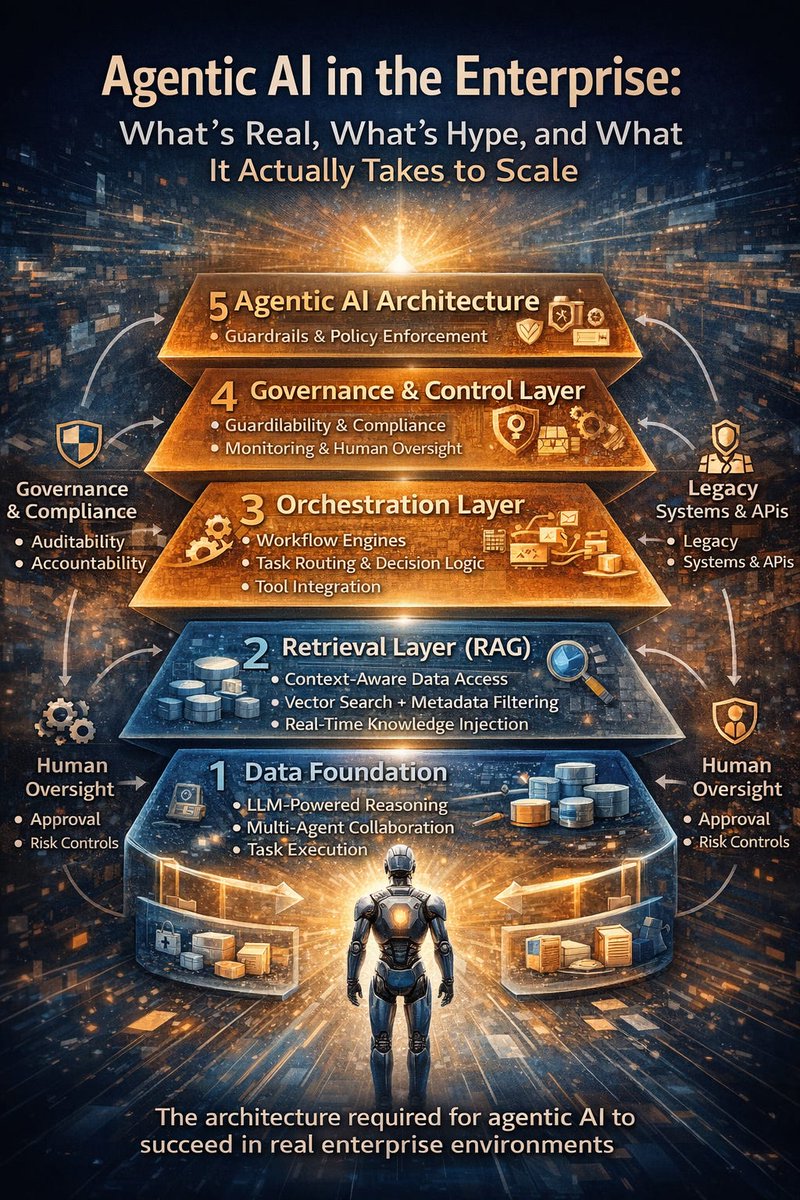
Agentic AI in the Enterprise: Reality, Hype and Scaling
By
–
Agentic AI in the Enterprise: What's Real, What's Hype, and What It Actually Takes to Scale craigbrownphd.substack.com/p… #ArtificialIntelligence #MachineLearning #GenerativeAI #AIStrategy #Tech #DigitalTransformation #RAG #Innovation [Translated from EN to English]
→ View original post on X — @craigbrownphd, 2026-04-01 02:13 UTC
-

Google Opens Early Access to Willow Quantum Processor
By
–
Google Opens Early Access To Willow Quantum Processor! #BigData #Analytics #AI #MachineLearning #DataScience #IoT #IIoT #Python #RStats #TensorFlow #JavaScript #ReactJS #CloudComputing #Serverless #DataScientist #Linux #Programming #Coding #100DaysofCode https://
geni.us/Google-Willow -

Gemini 3 Deep Think: Advancing Science and Research
By
–
Gemini 3 Deep Think: Advancing science, research and engineering buff.ly/AtLUaiO #AI #MachineLearning #DeepLearning #LLMs #DataScience [Translated from EN to English]
→ View original post on X — @miketamir, 2026-04-01 00:53 UTC
-
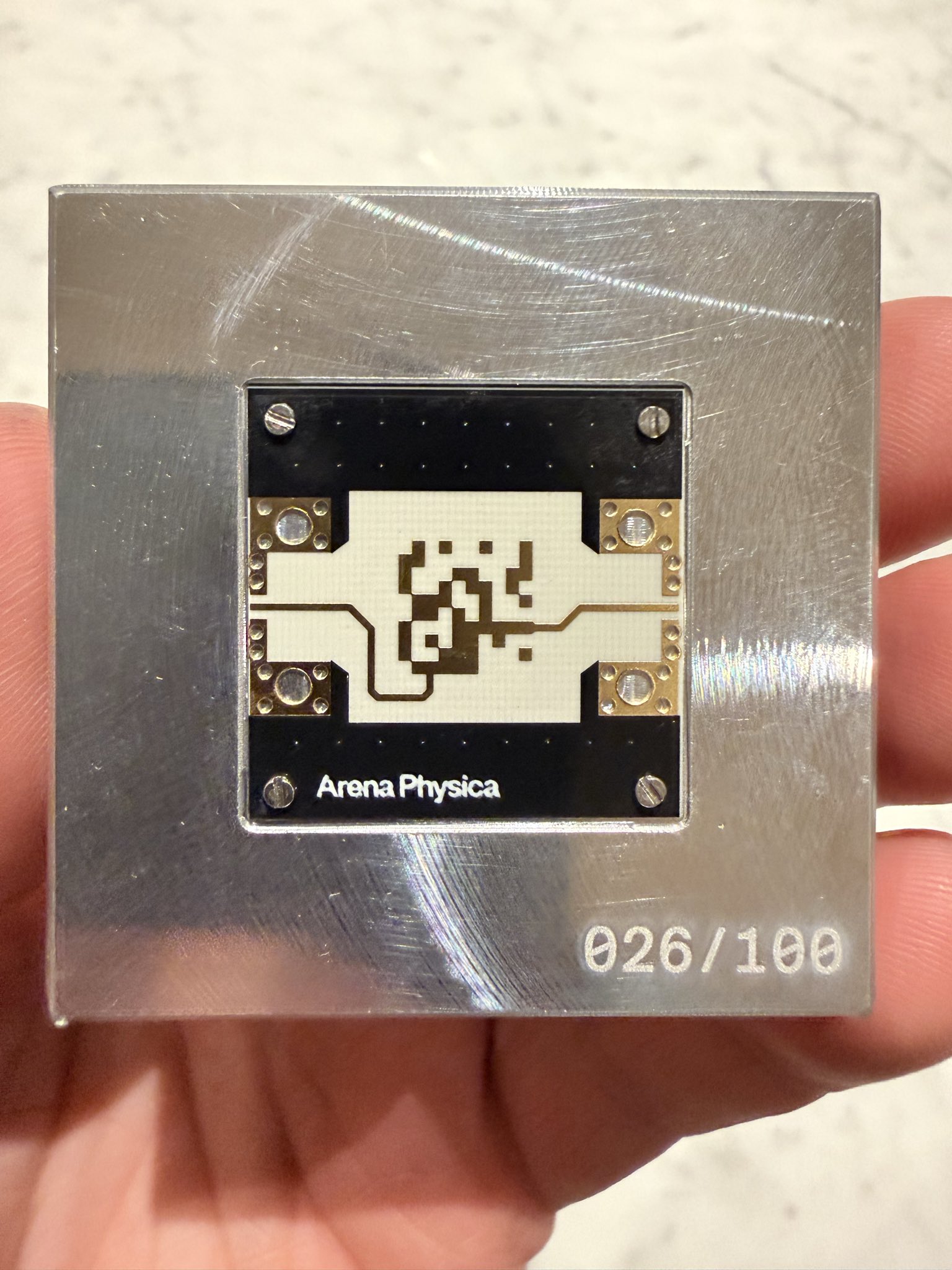
First RF Circuit Designed Autonomously From a Text Prompt
By
–
The first RF circuit designed fully autonomously from a text prompt.