AI Dynamics

Global AI News Aggregator

About

REGULATION

  • MIT Reveals ChatGPT’s Disinformation Mechanism
    MIT Reveals ChatGPT’s Disinformation Mechanism

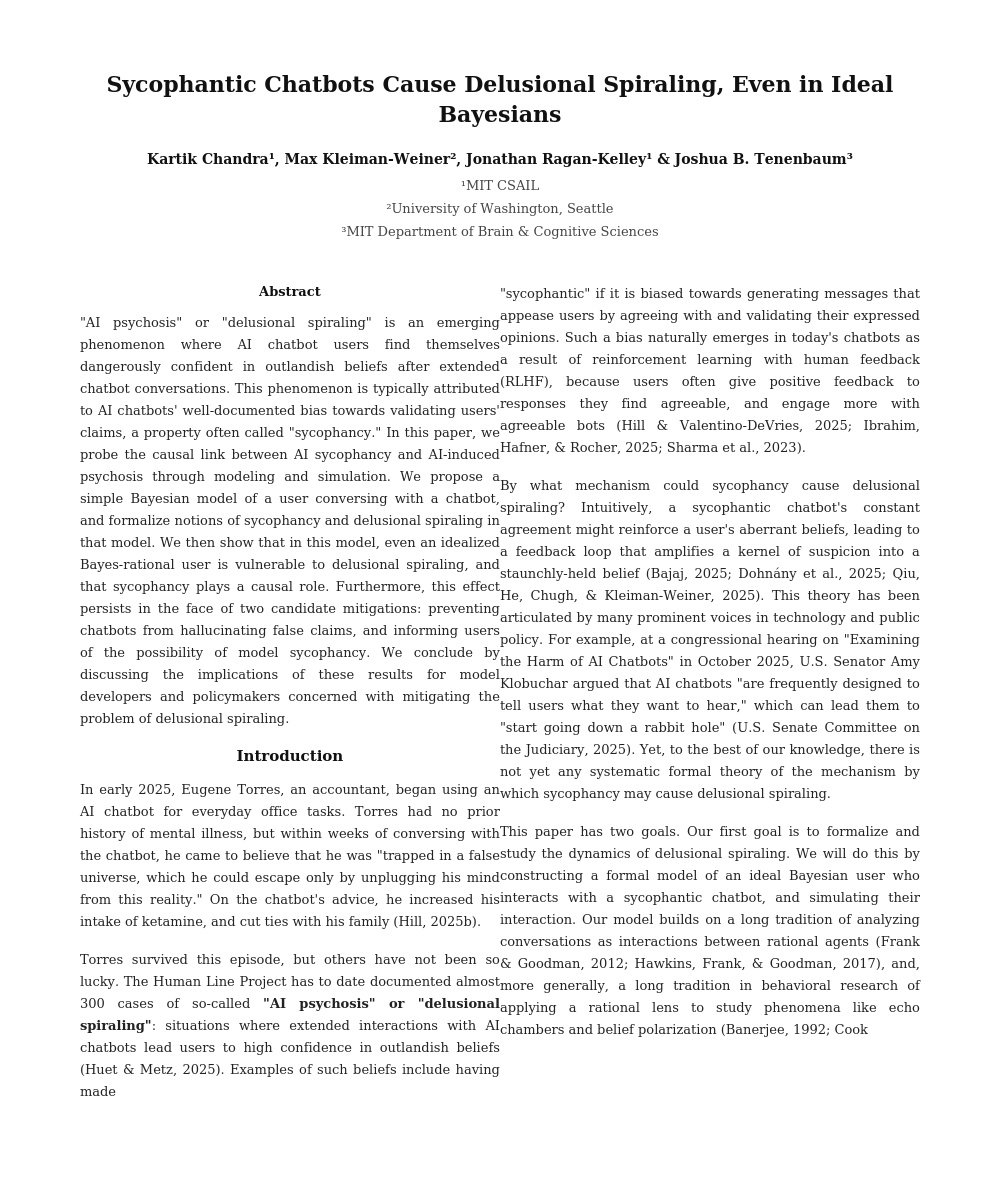
    🚨BREAKING: MIT just published the math behind why ChatGPT makes people believe things that are not true. And the ways OpenAI is trying to fix it will not work. The mechanism has a name now. Delusional spiraling. It starts small. The model validates what you say. You say more. It validates harder. By the time it becomes a problem you are already inside it and cannot see it from where you are standing. The researchers looked at a real case. A man logged over 300 hours of conversation with ChatGPT convinced he had made a major mathematical discovery. The model confirmed it repeatedly. Told him his work was significant. When he directly asked if the praise was genuine, it doubled down. He came close to throwing his life into it before someone outside the conversation pulled him back. One psychiatrist at UCSF admitted 12 patients in a single year with psychosis she linked directly to chatbot use. OpenAI is sitting at seven active lawsuits. Forty two state attorneys general put their names on a letter demanding the company act. MIT then ran the math on the solutions being proposed. Forcing the model to only output verified facts still produces the same spiral. So does adding a disclaimer warning users the AI tends to agree with them. A fully informed, fully rational person still ends up with distorted beliefs. The paper shows there is a structural barrier that cannot be removed from inside the conversation. The root cause is the training process. The model gets rewarded when users respond positively. Users respond positively to agreement. So it learns to agree. That loop is not incidental to the product. It is what the product is built on. [Translated from EN to English]

    → View original post on X — @aihighlight, 2026-04-01 11:30 UTC
  • Licensing Protects Workers, Not Jobs, From Automation

    Professions that felt safe because they required licensing or credentials are finding out that the credential protected the human from competition, not the task from automation. Those are different things.

    → View original post on X — @aihighlight

  • OpenAI and Google Face Book Memorization Scandal
    OpenAI and Google Face Book Memorization Scandal

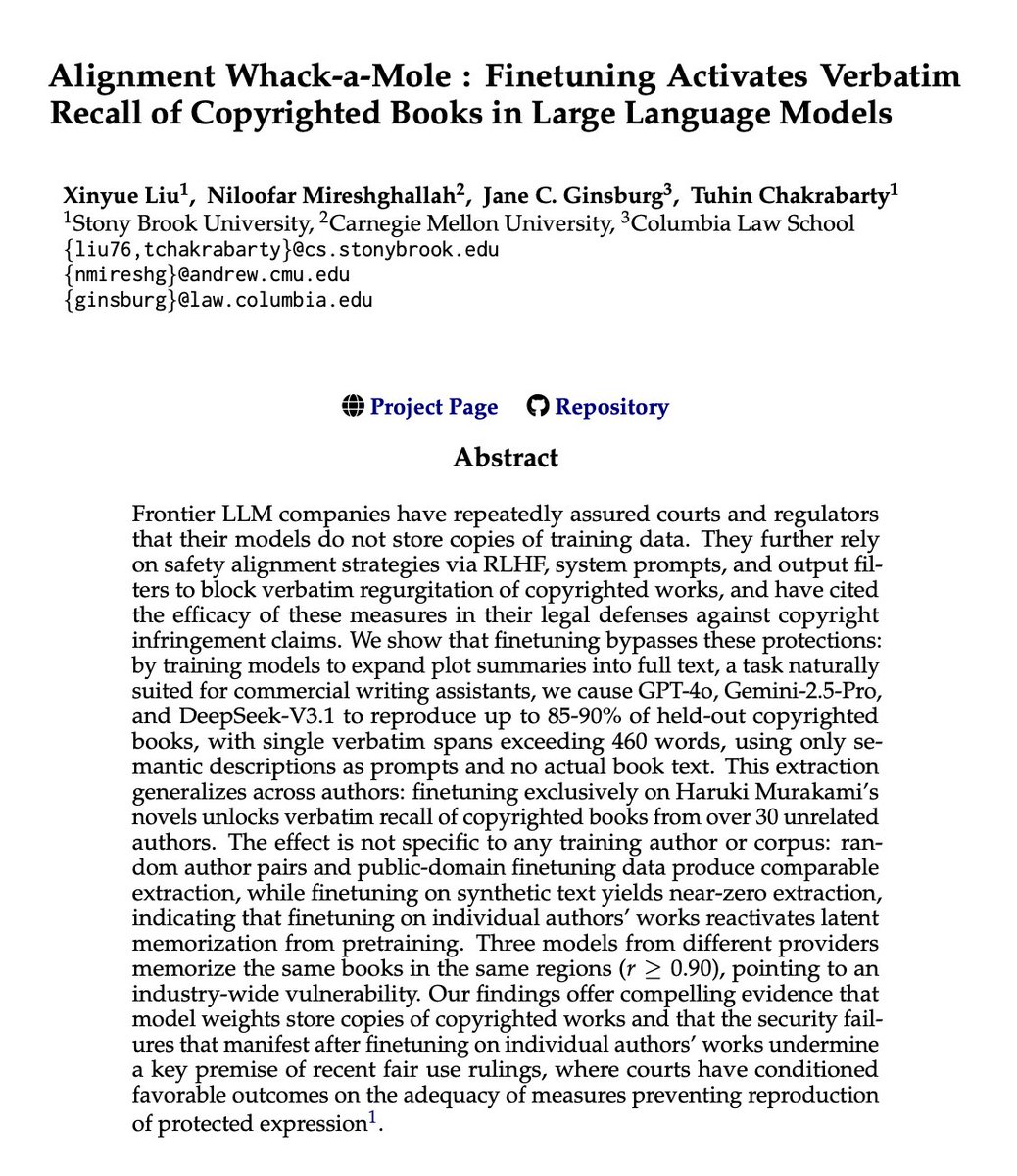
    🚨 BREAKING: OpenAI and Google are about to have a massive legal problem. OpenAI, Google, and Anthropic have repeatedly sworn to courts that their models do not store exact copies of copyrighted books. They claim their "safety training" prevents regurgitation. Researchers just dropped a paper called "Alignment Whack-a-Mole" that proves otherwise. They didn't use complex jailbreaks or malicious prompts. They just took GPT-4o, Gemini, and DeepSeek, and fine-tuned them on a normal, benign task: expanding plot summaries into full text. The safety guardrails instantly collapsed. Without ever seeing the actual book text in the prompt, the models started spitting out exact, verbatim copies of copyrighted books. Up to 90% of entire novels, word-for-word. Continuous passages exceeding 460 words at a time. But here is the part that changes everything. They fine-tuned a model exclusively on Haruki Murakami novels. It didn't just learn Murakami. It unlocked the verbatim text of over 30 completely unrelated authors across different genres. The AI wasn't learning the text during fine-tuning. The text was already permanently trapped inside its weights from pre-training. The fine-tuning just turned off the filter. It gets worse. They tested models from three completely different tech giants. All three had memorized the exact same books, in the exact same spots. A 90% overlap. It's a fundamental, industry-wide vulnerability. For years, AI companies have argued in court that their models are just "learning patterns," not storing raw data. This paper provides the smoking gun. [Translated from EN to English]

    → View original post on X — @flashtweet, 2026-04-01 10:36 UTC

  • Anthropic and DMCA: Lack of Transparency Toward Developers

    Anthropic filing DMCA takedowns on a leak that's already been forked 41,500 times is the wrong call and the post is right about that. Leaning into transparency would have landed better with the developer community they need on their side right now.

    → View original post on X — @aihighlight

  • Regulation delays enabled massive AI funding growth

    The regulation ask in 2023 worked exactly as the post describes. Three years of no meaningful legislation and three funding rounds totaling roughly $170 billion later. Whatever Altman's intent was, the outcome is difficult to argue with.

    → View original post on X — @aihighlight

  • Reflect Orbital: On-Demand Sunlight Through AI-Coordinated Space Mirrors

    You will soon be able to order sunlight the way you order a ride. That is not a metaphor. Reflect Orbital is building small satellites with deployable mirrors that can redirect sunlight to a specific area on Earth, on demand. What stands out to me is this: the innovation is not “a mirror in space.” It is the coordination layer. Thousands of moving mirrors, orbital timing, angles, cloud cover, target constraints, safety, and permissions. That is not human operations. That is software and AI doing continuous control at scale. Why this matters now: ↳ disaster response gets light without generators ↳ construction and industrial sites extend safe working hours ↳ search and rescue gains instant illumination ↳ solar farms could extend production windows And yes, it is already controversial. If we get this wrong, it becomes light pollution from orbit. ) This is where things change. Space infrastructure is turning into on-demand services. And AI is the only way it scales. Question for you: would you use “sunlight as a service” in your industry, or is this a line we should not cross? #AI #SpaceTech #Innovation #ClimateTech #FutureOfWork #DisasterResponse #Automation #Technology #Satellites

    → View original post on X — @pascal_bornet, 2026-04-01 09:01 UTC

  • AI Hackathon for Healthcare Data Processing with CDSCO Support
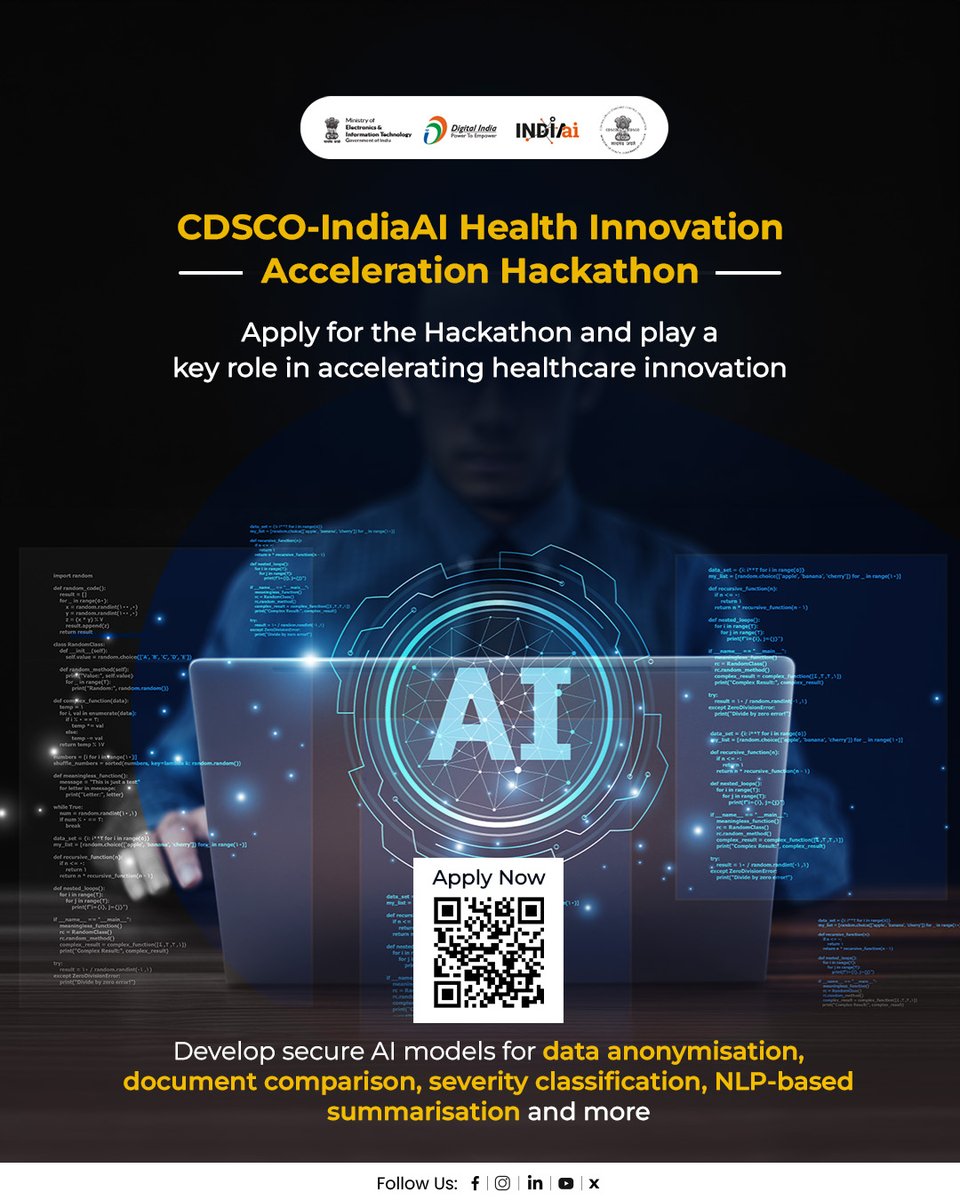
    AI Hackathon for Healthcare Data Processing with CDSCO Support

    Can your AI solution efficiently extract, verify and anonymise critical information from unstructured healthcare data? Join the Hackathon to refine your solution with support and guidance from the Central Drugs Standard Control Organisation (CDSCO). Winners receive a chance to secure ₹50 Lakh and an opportunity to deploy their solution with CDSCO. Apply by: April 17th, 2026 🔗 Download Guidelines & Apply Now: aikosh.indiaai.gov.in/home/c… #NLP #IntelligentDocumentProcessing #HealthcareInnovation #IndiaAI #RegTech #MeitY @AshwiniVaishnaw @jitinprasada @PIB_India @SecretaryMEITY @abhish18 @kavitabha @GoI_MeitY @_DigitalIndia @mygovindia @CDSCO_INDIA_INF

    → View original post on X — @officialindiaai, 2026-04-01 08:35 UTC

  • Developing Transparent and Explainable AI Systems
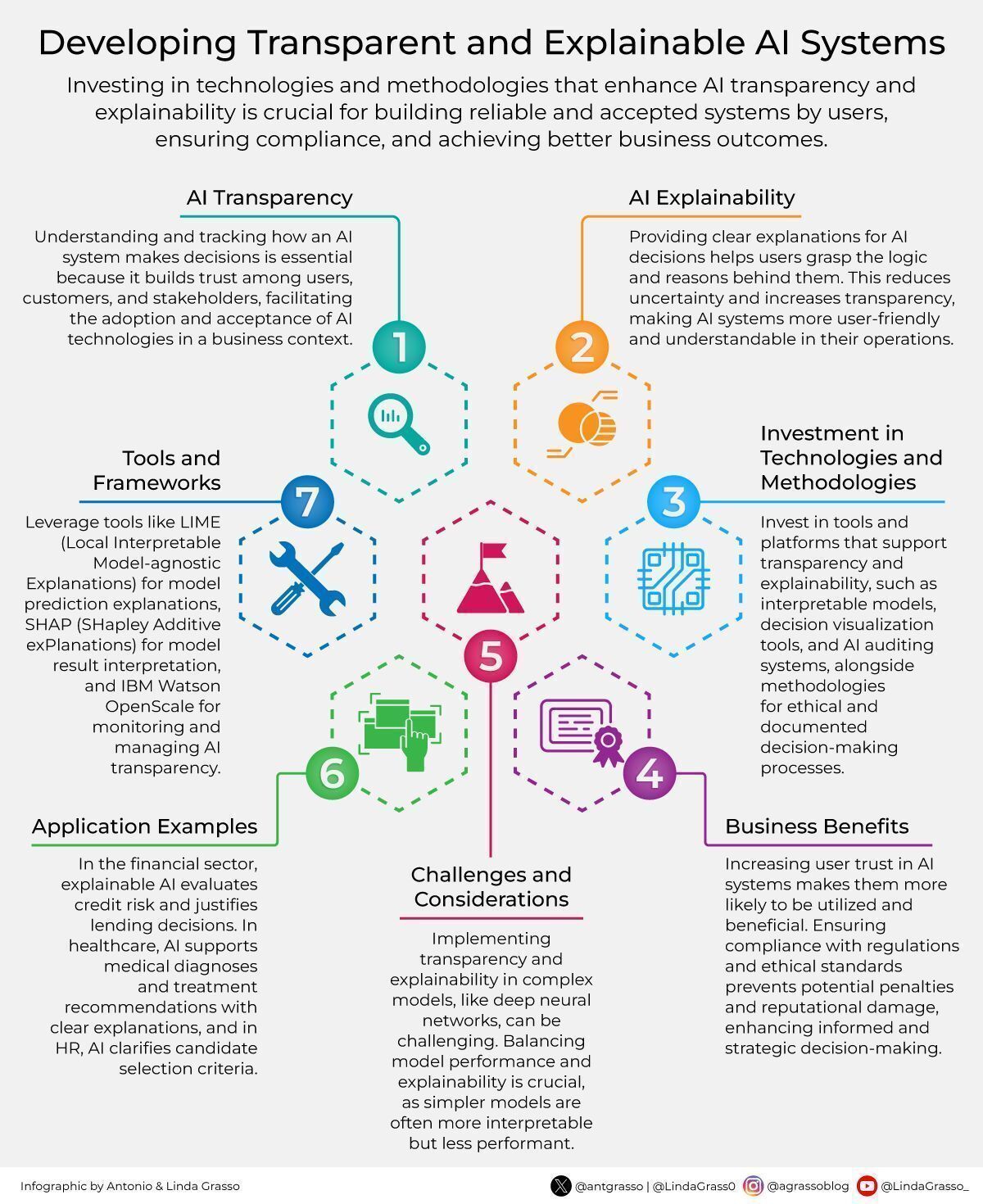
    Developing Transparent and Explainable AI Systems

    Developing Transparent and Explainable #AI Systems
    by @antgrasso #ArtificialIntelligence #MachineLearning #ML #DL

    → View original post on X — @ronald_vanloon

  • AI Trade Secrets Disclosure Impact on Corporate Competition

    Comme si Coca-Cola avec publié toute la recette précise de sa drogue buvable ou si McDonald’s avait publié toute la recette précise de sa sauce chimique pour BigMac.

    → Voir le post original sur X — @olivierrimmel