AI Dynamics

Global AI News Aggregator

About

LLMS

  • Spicy Takes on Small Language Models at AI Engineer
    Spicy Takes on Small Language Models at AI Engineer

    See you on Thursday at @aiDotEngineer for some spicy takes on small language models! ๐Ÿซก I'll share completely new content about the unique challenges and recipes for creating the best edge models Hope you enjoy it!

    โ†’ View original post on X โ€” @maximelabonne, 2026-04-07 11:11 UTC

  • Google’s GPU dominance benefits Anthropic partnership deal
    Google’s GPU dominance benefits Anthropic partnership deal

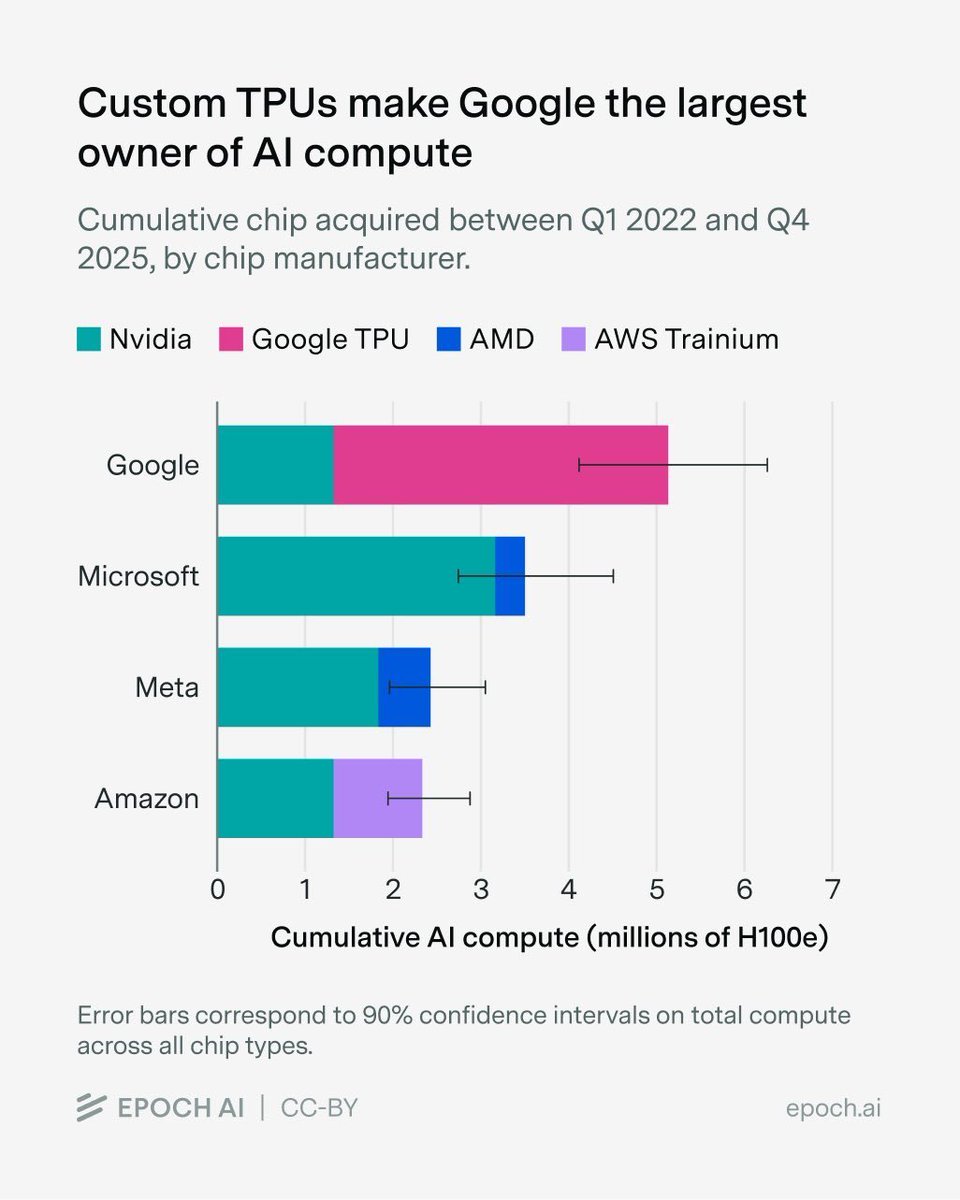
    Google has the equivalent of roughly 5 million Nvidia H100 GPUs! Therefore, it's no surprise that Anthropic's needs are now benefiting Google. As I said yesterday, Google is exceptionally well-positioned: strong revenue streams, its own chips, and above all: distribution. Anthropic is now also selling shovels for the gold rush. Anthropic (@AnthropicAI) We've signed an agreement with Google and Broadcom for multiple gigawatts of next-generation TPU capacity, coming online starting in 2027, to train and serve frontier Claude models. โ€” https://nitter.net/AnthropicAI/status/2041275561704931636#m

    โ†’ View original post on X โ€” @kimmonismus, 2026-04-07 10:34 UTC

  • Top AI Stories: OpenAI Society Plans, Meta Models, New Tools
    Top AI Stories: OpenAI Society Plans, Meta Models, New Tools

    Top stories in AI today: – OpenAIโ€™s โ€˜social contractโ€™ ideas for society, ASI
    – New Yorker surfaces secret memos behind Altman's firing
    – Stress test business ideas with Perplexity
    – Wang's first Meta models getting ready to ship
    – 4 new AI tools, community workflows, and more

    โ†’ View original post on X โ€” @therundownai

  • AI Competitiveness: Internal Use, Industrialization, Model Control

    My takeaway is simple: The next 2 to 3 years will reward companies that do 3 things well: โ†’ use AI internally, so leadership understands it firsthand โ†’ build with a clear path from pilot to industrialization โ†’ take control of their own models, data, and evaluation strategy That is how AI stops being a demo and starts becoming a competitive moat. And now the tools are here: Mistral AI Forge makes model customization accessible, powered by NVIDIA infrastructure, while the NEMO Tron coalition is building an open ecosystem to democratize AI development. Watch more NVIDIA GTC replays at nvda.ws/45K2sCw

    โ†’ View original post on X โ€” @ronald_vanloon, 2026-04-07 10:00 UTC

  • Open Models as Strategic Advantage for Enterprise AI Differentiation

    The second big insight, open and custom models are becoming a strategic advantage, not just a technical preference. Why? โ†’ More control over your AI stack โ†’ Less vendor lock-in โ†’ Better fit for regulated industries โ†’ More value from your own enterprise data and IP General models are strong generalists. But real differentiation comes when you make AI an expert in your domain, your workflows, your business. Thatโ€™s exactly where the market is heading: With Mistral AI Forge, enterprises can build and fine-tune their own models, while NVIDIAโ€™s NEMO Tron coalition is accelerating open innovation across models, datasets, and tooling.

    โ†’ View original post on X โ€” @ronald_vanloon, 2026-04-07 10:00 UTC

  • AI as Software Development: From POC to Production Success

    The shift happening right now is bigger than "which model should we use?" AI is becoming a new way of building software. That means leaders need to think in terms of: โ†’ test cases โ†’ evaluation frameworks โ†’ feedback loops โ†’ continuous optimization If you cannot define success, you cannot move from POC to production. That is why so many pilots stall. At the same time, the foundation is changing: Mistral AIโ€™s Forge platform now allows enterprises to customize models end-to-end with their own data, while NVIDIAโ€™s NEMO Tron coalition is pushing open AI development with shared models, datasets, and training tools.

    โ†’ View original post on X โ€” @ronald_vanloon, 2026-04-07 10:00 UTC

  • LLMs Generate New Knowledge Video Refutation Guide

    Si en algรบn momento necesitas refutar eso de "los LLMs no pueden generar nuevo conocimiento" este es el vรญdeo que debes compartir.

    โ†’ View original post on X โ€” @dotcsv

  • Anthropic Surpasses OpenAI in Revenue Run Rate at $30B

    Holy: Anthropic just passed OpenAI in revenue run rate. OpenAI is at roughly $25B. Anthropic just crossed $30B. Sixteen months ago Anthropic was doing $1B. Two months ago Anthropic was doing $9B. They *are* the exponential. Anthropic (@AnthropicAI) Our run-rate revenue has surpassed $30 billion, up from $9 billion at the end of 2025, as demand for Claude continues to accelerate. This partnership gives us the compute to keep pace. Read more: anthropic.com/news/google-brโ€ฆ โ€” https://nitter.net/AnthropicAI/status/2041275563466502560#m

    โ†’ View original post on X โ€” @kimmonismus, 2026-04-07 08:33 UTC

  • LLMs as CPUs: Understanding Agent Harness Infrastructure
    LLMs as CPUs: Understanding Agent Harness Infrastructure

    A raw LLM is just like a CPU without OS. It can compute. But it can't do anything useful on its own. This analogy is the clearest way I've found to understand what an agent harness actually does. Here's the mapping: โ€ข ๐—–๐—ฃ๐—จ โ†’ ๐—Ÿ๐—Ÿ๐—  (model weights). The raw compute engine. Powerful, but useless without infrastructure around it. โ€ข ๐—ฅ๐—”๐—  โ†’ ๐—–๐—ผ๐—ป๐˜๐—ฒ๐˜…๐˜ ๐˜„๐—ถ๐—ป๐—ฑ๐—ผ๐˜„. Fast, always available, but limited. When it fills up, you start losing things. โ€ข ๐—›๐—ฎ๐—ฟ๐—ฑ ๐—ฑ๐—ถ๐˜€๐—ธ โ†’ ๐—ฉ๐—ฒ๐—ฐ๐˜๐—ผ๐—ฟ ๐——๐—• / ๐—น๐—ผ๐—ป๐—ด-๐˜๐—ฒ๐—ฟ๐—บ ๐˜€๐˜๐—ผ๐—ฟ๐—ฎ๐—ด๐—ฒ. Large capacity, but slow to access. You retrieve from it, not compute in it. โ€ข ๐——๐—ฒ๐˜ƒ๐—ถ๐—ฐ๐—ฒ ๐—ฑ๐—ฟ๐—ถ๐˜ƒ๐—ฒ๐—ฟ๐˜€ โ†’ ๐—ง๐—ผ๐—ผ๐—น ๐—ถ๐—ป๐˜๐—ฒ๐—ด๐—ฟ๐—ฎ๐˜๐—ถ๐—ผ๐—ป๐˜€. The interfaces that let the model interact with the outside world. Code execution, web search, file I/O. โ€ข ๐—ข๐—ฝ๐—ฒ๐—ฟ๐—ฎ๐˜๐—ถ๐—ป๐—ด ๐˜€๐˜†๐˜€๐˜๐—ฒ๐—บ โ†’ ๐—”๐—ด๐—ฒ๐—ป๐˜ ๐—ต๐—ฎ๐—ฟ๐—ป๐—ฒ๐˜€๐˜€. This is the key layer. It manages everything: which tools to call, what fits in memory, when to retrieve, how to recover from errors, and when to stop. And then there's the ๐—ฎ๐—ฝ๐—ฝ๐—น๐—ถ๐—ฐ๐—ฎ๐˜๐—ถ๐—ผ๐—ป layer. That's the "agent" itself. Not a piece of software you install, but emergent behavior that arises when the OS does its job well. This is why two products using the exact same model can perform completely differently. LangChain changed only their harness infrastructure (same model, same weights) and jumped from outside the top 30 to rank 5 on TerminalBench 2.0. The model didn't improve. The operating system around it did. The article below is a deep dive on agent harness engineering, covering the orchestration loop, tools, memory, context management, and everything else that transforms a stateless LLM into a capable agent. Akshay ๐Ÿš€ (@akshay_pachaar) x.com/i/article/204073208484โ€ฆ โ€” https://nitter.net/akshay_pachaar/status/2041146899319971922#m

    โ†’ View original post on X โ€” @akshay_pachaar, 2026-04-07 08:30 UTC
  • Using MiniMax M2.7 for OpenClaw task execution

    Iโ€™ve been playing with MiniMax M2.7 for a while as a model for my OpenClaw, and it can easily execute much more complex tasks than before. โ€œA cyberpunk Game of Lifeโ€ one-shot Looking forward to testing the open-source version now!

    โ†’ View original post on X โ€” @testingcatalog