
Task 5: Style transfer > "Make this into an oil painting" Winner: Nano Banana
GENERATIVE AI
-
Task 4: Text Editing – FLUX.1 and Nano Banana Winners
By
–
Task 4: Text editing > "Change 'seven' to 'eight'" Winners: FLUX.1 Kontext [pro] and Nano Banana
-
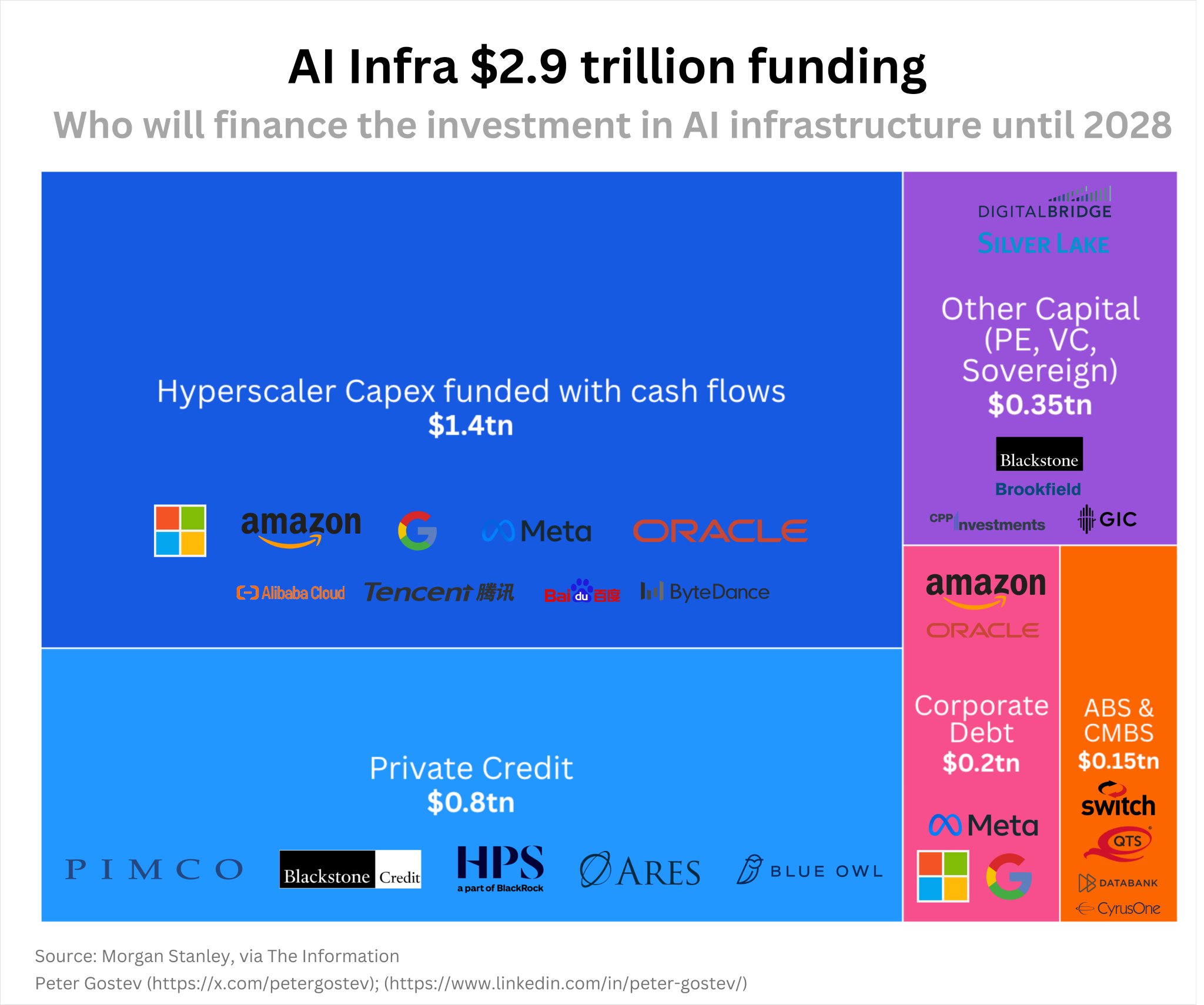
Morgan Stanley: $2.9 trillion AI infrastructure funding through 2028
By
–
Morgan Stanley estimates that AI infrastructure will receive $2.9 trillion in funding through 2028, broken down as follows: – $1.4tn: hyperscalers’ capex (e.g., Google, Meta, Oracle) – $0.2tn: hyperscalers’ corporate debt – $0.8tn: private credit (e.g., PIMCO, HPS) –
-

Generative and Agentic AI: Tech Enablers and Investment Priorities
By
–
Companies are investing in generative & agentic AI — but what tech supports it behind the scenes? @HighByteInc
, @Verdantix & @Microsoft reveal the tech enablers, real-world success stories & investment priorities in this webinar – https://
buff.ly/oYdluDj #sponsored #highbyte_iiot -
A2D-VL Diffusion Model Outperforms VLMs with Efficient Training
By
–
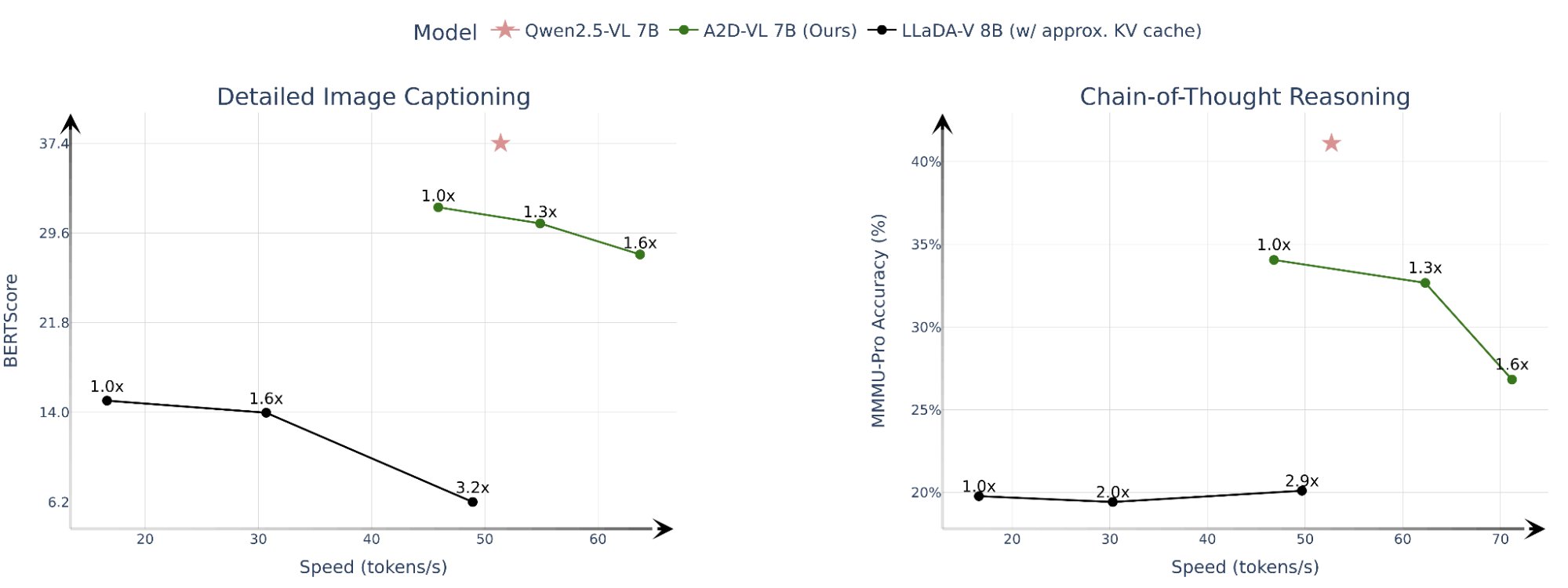
A2D-VL outperforms prior diffusion VLMs in visual question-answering while requiring significantly less training compute. Our novel adaptation techniques are critical for retaining model capabilities, finally enabling the conversion of state-of-the-art autoregressive VLMs to
-
Runway advances autoregressive-to-diffusion multimodal AI models
By
–
This work is a step towards our goal of unifying multimodal understanding and generation in order to build multimodal simulators of the world. Learn more: https://
runwayml.com/research/autor
egressive-to-diffusion-vlms
… -
VLMs Sequential Generation Limits Parallelization Efficiency
By
–
Standard Vision-language models (VLMs) reason about images and videos through language, powering a wide variety of applications from image captioning to visual question answering.
— Runway (@runwayml) 24 septembre 2025
Autoregressive VLMs generate tokens sequentially, which prevents parallelization and limits… pic.twitter.com/54ahfojDZuStandard Vision-language models (VLMs) reason about images and videos through language, powering a wide variety of applications from image captioning to visual question answering. Autoregressive VLMs generate tokens sequentially, which prevents parallelization and limits
-
A2D-VL 7B: Diffusion-Based Parallel Vision-Language Model
By
–
We trained a state-of-the-art diffusion VLM, A2D-VL 7B for parallel generation by finetuning an existing autoregressive VLM on the diffusion language modeling task, using the masked diffusion framework which "noises" tokens by masking them and "de-noises" tokens by predicting the… pic.twitter.com/zqU3szysQ1
— Runway (@runwayml) 24 septembre 2025We trained a state-of-the-art diffusion VLM, A2D-VL 7B for parallel generation by finetuning an existing autoregressive VLM on the diffusion language modeling task, using the masked diffusion framework which "noises" tokens by masking them and "de-noises" tokens by predicting the
-

Diffusion Models Advance Vision Language AI Research
By
–
Today we're sharing our first research work exploring diffusion for language models: Autoregressive-to-Diffusion Vision Language Models We develop a state-of-the-art diffusion vision language model, Autoregressive-to-Diffusion (A2D), by adapting an existing autoregressive vision
-
Training Materials Using Project Gutenberg Public Domain Corpus
By
–
Yes! The bonus materials include training on the Project Gutenberg public domain book corpus. I don’t want to go beyond that though and curate other datasets because of copyright concerns. However, you could eg use the FineWeb dataset which is available from hugging face.