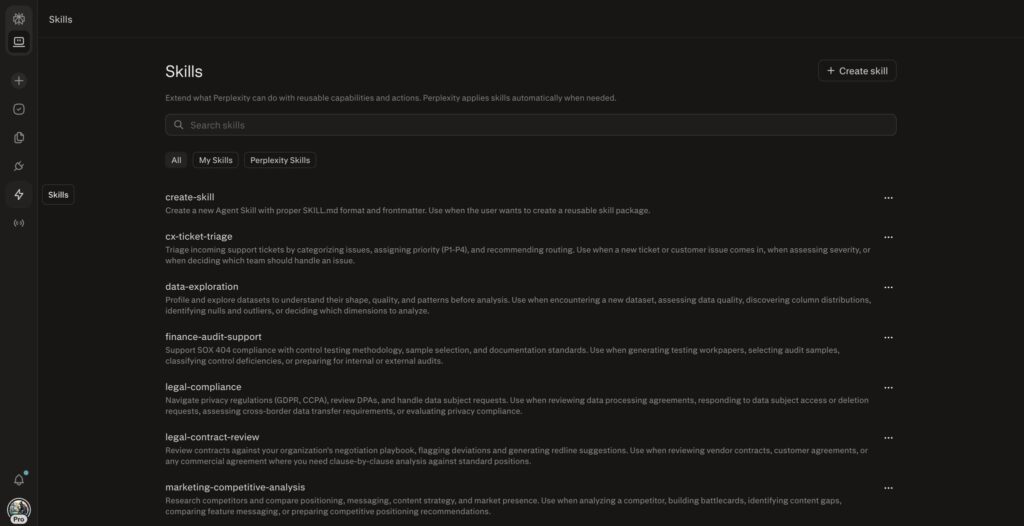
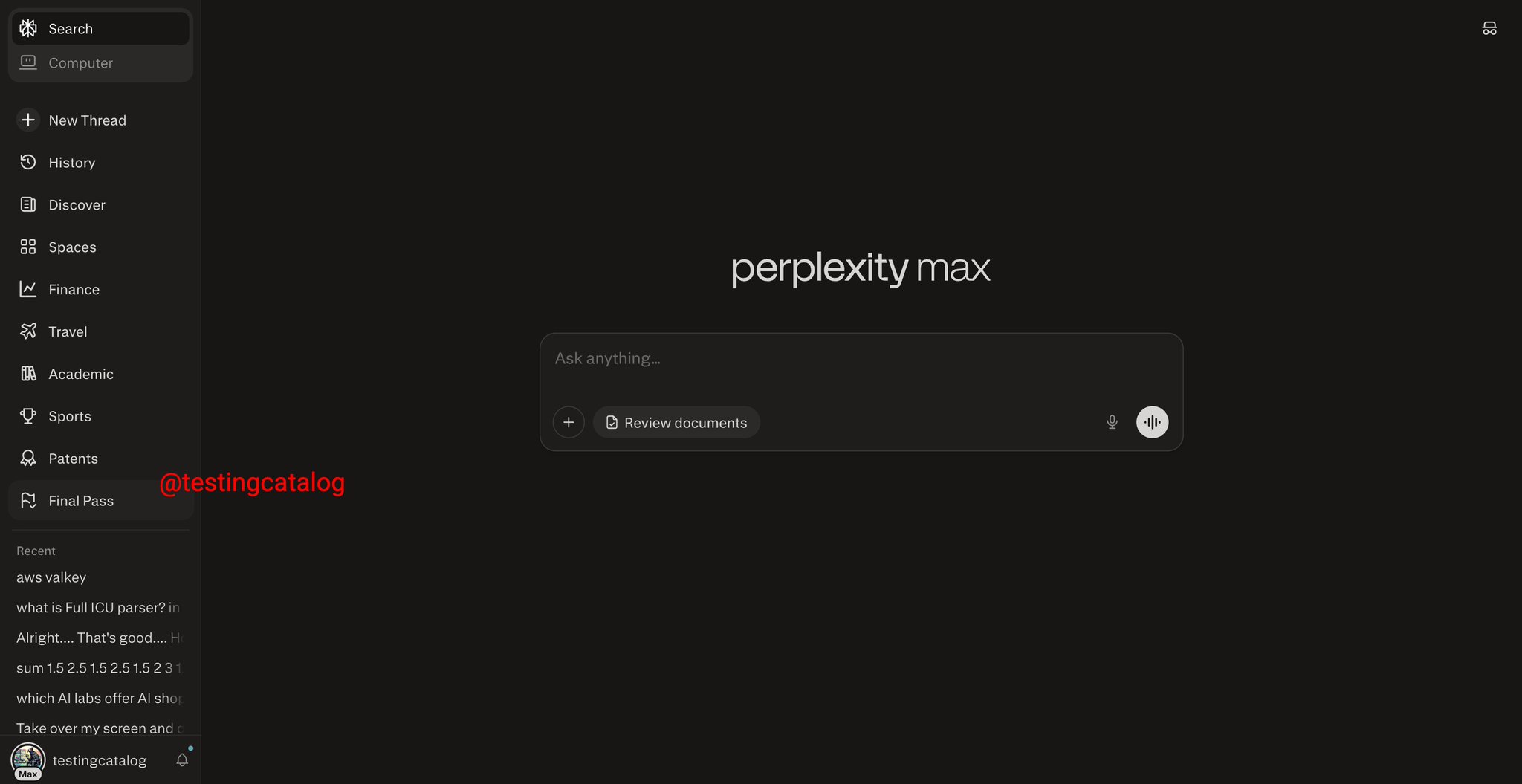
Perplexity is working on a new feature called "Final Pass," designed to perform comprehensive document analysis and fact-checking.
By
–
Perplexity is working on a new feature called "Final Pass," designed to perform comprehensive document analysis and fact-checking.

By
–
We’re proud to announce a multi‑year partnership with the @AstonMartinF1 team! Every team member will now have access to our enterprise‑grade models and agentic AI platform empowering them to operate with confidence in one of the most demanding data environments in global sport. Watch out for Cohere branding on the car starting this weekend at the #AustralianGP 🇦🇺 Learn more here: astonmartinf1.com/en-GB/news… Aston Martin Aramco F1 Team (@AstonMartinF1) Welcoming @cohere to the team as our Official Generative AI Partner to help accelerate AI innovation. Learn more: astonmartinf1.com/en-GB/news… — https://nitter.net/AstonMartinF1/status/2029165042998890720#m
By
–
the deeper point here connects to something the field keeps rediscovering. we trained reasoning models to think longer. then we discovered longer doesn't mean better. now this paper shows the models themselves already know that. they're generating stop signals that our inference
By
–
specific numbers worth sitting with: > DeepSeek-R1-7B on MATH-500: 93% accuracy (up from 91.6%), tokens cut from 3,871 to 2,141 > DeepSeek-R1-1.5B on AIME 2025: accuracy jumps 6.2 percentage points > Qwen3-8B: response length halved from 18,342 to 9,183 tokens with no accuracy
By
–
then they fold it into training with SAGE-RL. dead simple modification: in standard reinforcement learning (GRPO), you sample 8 responses per question. SAGE-RL replaces 2 of those 8 with SAGE-generated samples. the other 6 stay normal. one-line code change. the model learns to
By
–
their solution: SAGE (Self-Aware Guided Efficient Reasoning). instead of generating token by token, SAGE extends chains in whole reasoning steps. after each step, it checks: is the model confidently signaling it wants to stop? if yes, reasoning ends. no fine-tuning. no new
By
–
three observations back this up: > high-confidence paths (measured by cumulative probability) are shorter AND more accurate than standard samples > at those natural endpoints, the stop token is the model's top prediction. it knows it's finished > as you widen exploration (more
By
–
here's where it gets interesting. the researchers probed whether models internally "know" they're done. they introduced TSearch, which scores partial reasoning traces by cumulative log-probability across the entire chain, not just the next token. when you let the model explore
By
–
and it's not just wasted compute. overthinking actively hurts accuracy. DeepSeek-R1 produces responses 5x longer than Claude 3.7 Sonnet on AIME 2025 with comparable accuracy. QwQ-32B scores 2 percentage points HIGHER with its shortest answers using 31% fewer tokens. 72% of
By
–
first, the problem quantified. the researchers created a metric called RFCS (Ratio of First Correct Step) that tracks where in a chain of thought the correct answer first appears. on MATH-500, across every model tested, the right answer shows up well before the end in over half