Markets would be more efficient if prices were more transparent. Public and private interests diverge so legislation may be needed to facilitate this.
ECONOMY
-
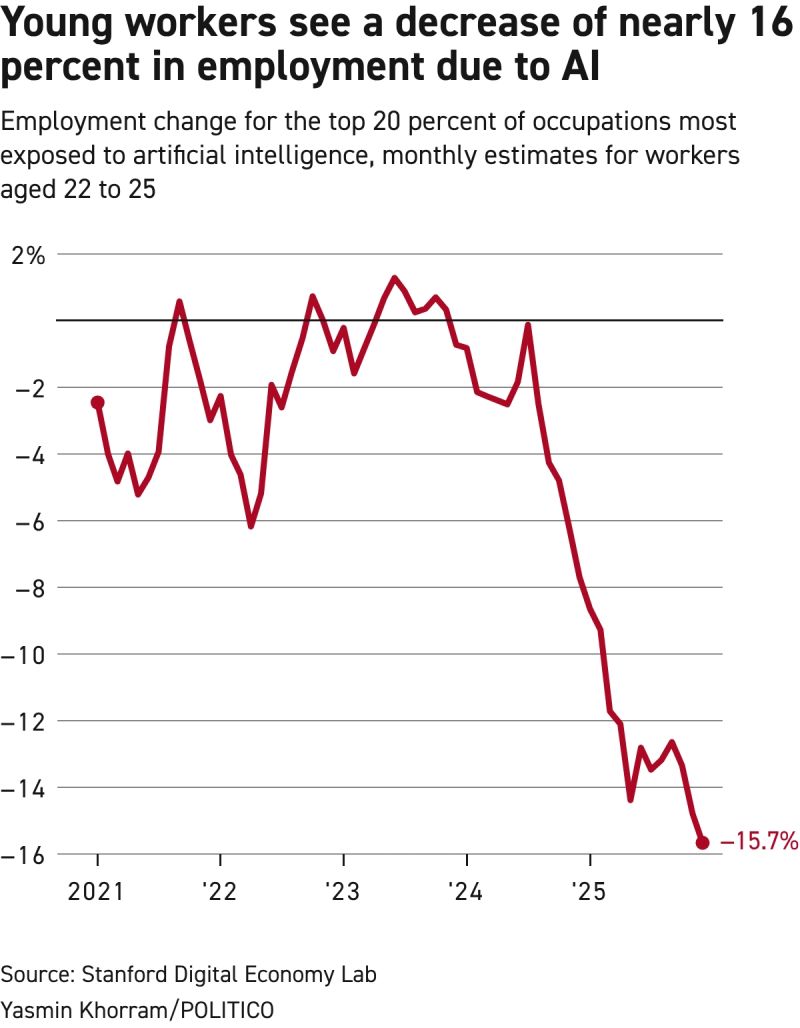
AI Economic Impact Fuels Voter Anxiety Ahead
By
–
Voters are already anxious about the economic impact of AI, and the effects will surely grow in the coming months and years. @YasminKhorram and @cheyennehaslett explain what's happening, with some data from our Canaries in the Coal Mine paper.
-
Labeling AI-generated content: A simple first step toward regulation
By
–
Can we start really simple and just make it illegal to pass off AI generated stuff as non-AI generated? Safety regulation is incredibly hard. But we all like ingredient labelling right? Sen. Bernie Sanders (@SenSanders) Walk into a sandwich shop. It’s regulated for health and safety. But AI, which will transform the world economically and socially, is completely unregulated. That’s insane. We need to make certain that AI works for ALL humanity, not just the billionaires who own it. — https://nitter.net/SenSanders/status/2030675499798638793#m
-
Gary Marcus Discusses Commercialization of AI and Lack of Heroes
By
–
link: https://
open.substack.com/pub/garymarcus
/p/there-are-no-heroes-in-commercial?utm_source=app-post-stats-page&r=8tdk6&utm_medium=ios
… -
AI Reshapes Software Market: Mega-Aggregators Over Fragmentation
By
–
Software will proliferate just as videos, music, writing did. The market structure will shift from a “fat middle” to mega-aggregators and a long tail. It’ll be a slower process due to network effects, but many traditional vendor lock-ins will get eaten by AI.
-
Parental Responsibility: AI’s Impact on Employment and Empowerment
By
–
Blunt and correct*, from @gmiller
: “Any parent who loves their kids either rises up against the AI companies, or condemns their kids to a lifetime of ever increasing unemployment, disempowerment, irrelevance, & extinction.” *The extinction part is IMHO overstated, but I do think -
AI Increases Workload: Burnout Study Reveals Productivity Trap
By
–
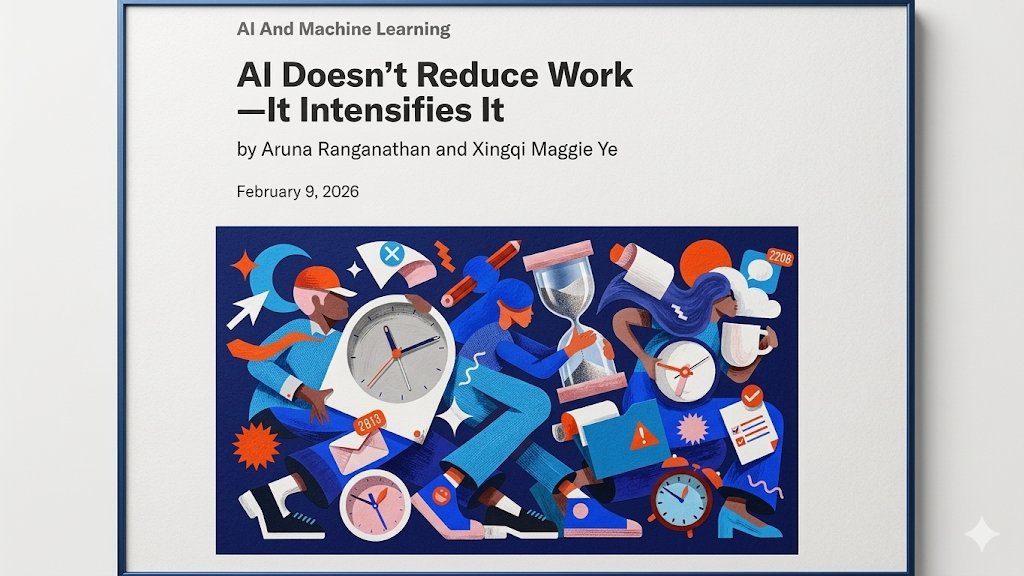
Tl;dr we work for the robots now Nav Toor (@heynavtoor) 🚨BREAKING: Berkeley researchers spent 8 months inside a tech company watching how employees actually use AI. The promise was simple: AI will save you time. Do less. Work smarter. The opposite happened. Workers didn't use AI to finish early and go home. They used it to take on more. More tasks. More projects. More hours. Nobody asked them to. They did it to themselves. The researchers sat inside the company two days a week for 8 months. They watched 200 employees in real time. They tracked work channels. They conducted 40+ interviews across engineering, product, design, and operations. Here's what they found. AI made everything feel faster, so people filled every gap. They sent prompts during lunch. Before meetings. Late at night. The natural stopping points in the workday disappeared. People ran multiple AI agents in the background while writing code, drafting documents, and sitting in meetings simultaneously. It felt like momentum. It felt productive. But when they stepped back, they described feeling stretched, busier, and completely unable to disconnect. 83% said AI increased their workload. Not decreased. Increased. 62% of associates and 61% of entry-level workers reported burnout. Only 38% of executives felt the same strain. The people doing the actual work absorbed the damage while leadership celebrated the productivity numbers. Then came the trap nobody saw coming. When one person uses AI to take on extra work, everyone else feels like they're falling behind. So the whole team speeds up. Nobody formally raises expectations. But the new pace quietly becomes the default. What AI made possible became what was expected. The researchers gave it a name: workload creep. It looks like productivity at first. Then it becomes the new baseline. Then it becomes burnout. AI was supposed to give you your time back. Instead it's eating more of it. And the worst part? You're doing it to yourself. Voluntarily. — https://nitter.net/heynavtoor/status/2030373171627786293#m
-

Meta Stock Drops 10 Percent in a Single Day
By
–
There's a lot you can learn about sleep.
Like 83% hadn't heard of DORAs. https://
erictopol.substack.com/p/a-master-cla
ss-on-sleep
… -

Jevons Paradox in Software Engineering: Rising Demand Despite Lower Costs
By
–
As AI makes coding more efficient, Jevons Paradox kicks in. The cost of building software is dropping, which means the demand for great Software Engineers to build even more ambitious systems is higher than ever. We are actively hiring more Software Engineers at Sakana AI to
-
AI Output Valuation and GDP Measurement Challenges
By
–
Yes, that seems very likely. Both because of the intermediate inputs being tricky to attribute and also because a lot of AI output is current (and maybe indefinitely) unpriced. That can add to consumer surplus, but not GDP as its currently measured. We're working on using