AI Dynamics

Global AI News Aggregator

About

AUTOMATION

  • LandingAI Upgrades Document Extraction with DPT Technology

    Announcing a significant upgrade to Agentic Document Extraction! LandingAI's new DPT (Document Pre-trained Transformer) accurately extracts even from complex docs. For example, from large, complex tables, which is important for many finance and healthcare applications. And a

    → View original post on X — @andrewyng

  • Alteryx Named Leader in Snowflake Modern Marketing Data Stack
    Alteryx Named Leader in Snowflake Modern Marketing Data Stack

    Alteryx is named a leader in @Snowflake
    ’s 2026 Modern Marketing Data Stack for Analytics & BI. Together, we help teams cut manual steps, simplify workflows, and deliver secure insights at scale. Learn more: https://
    ow.ly/wEI450X3OFh #AlteryxPartner

    → View original post on X — @alteryx

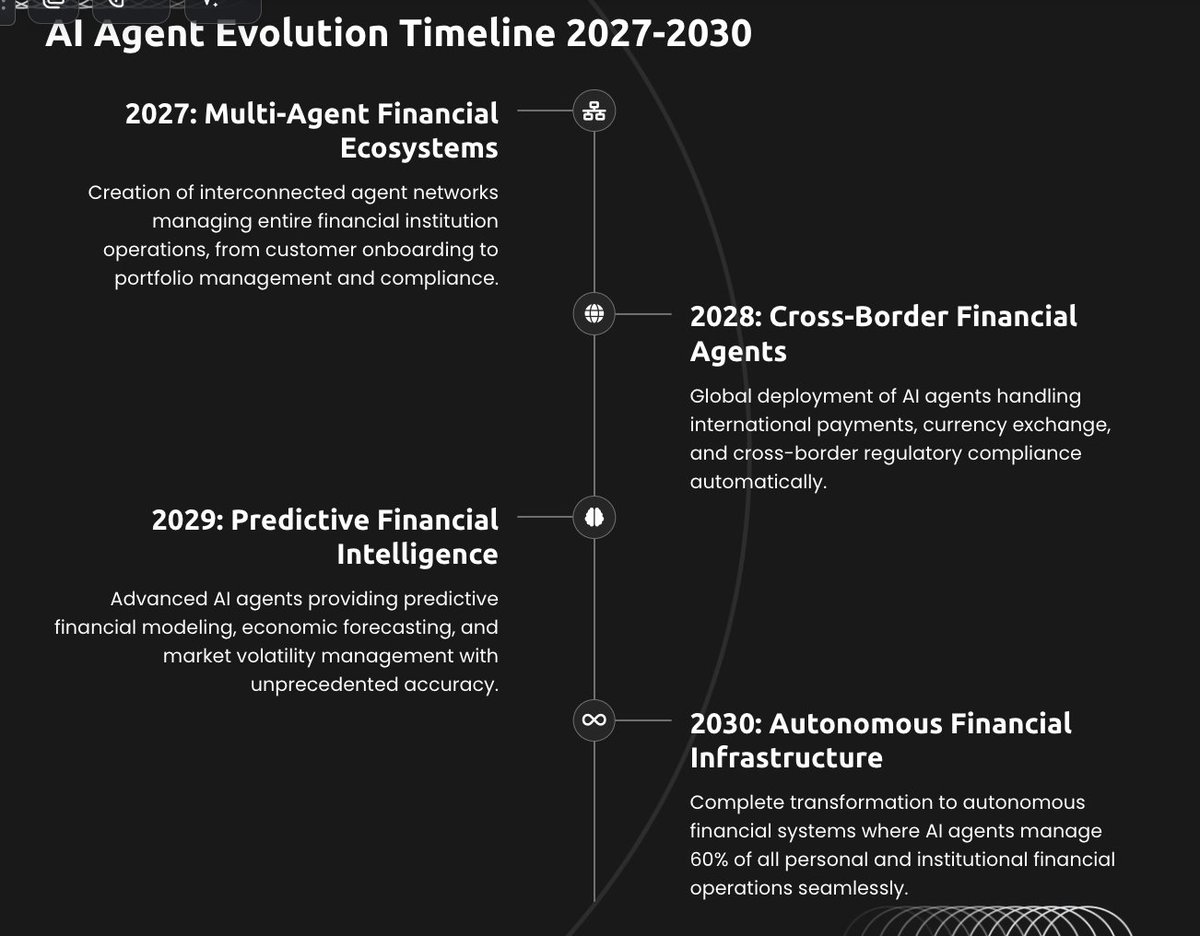
  • AI Agents in Finance: 2025-2030 Evolution Forecast with PopAi
    AI Agents in Finance: 2025-2030 Evolution Forecast with PopAi

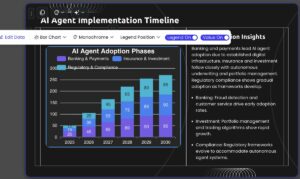
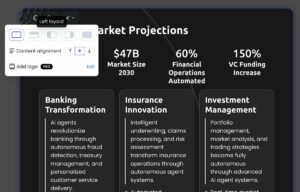
    While my assistant is on marriage leave, I drafted a short deck with this prompt using PopAi @popaiinone Slide Agent ➡️ “Create slides on predicting how AI agents can be applied to the financial industry. Analyze six major sub-sectors and create a timeline listing 15 to 20 AI agent application evolution for the financial sector between 2025 and 2030.” First generation is impressive (fact-checking AI, always). Now I can further change templates, charts, layout and more. popai.pro/ppt-share?shareKey…

    → View original post on X — @kaifulee, 2025-09-30 16:29 UTC

  • AI for Science: Periodic Labs Launches Autonomous Scientific Discovery Platform
    AI for Science: Periodic Labs Launches Autonomous Scientific Discovery Platform

    Bullish, in the coming decades majority of compute will be spent on ai for science William Fedus (@LiamFedus) Today, @ekindogus and I are excited to introduce @periodiclabs. Our goal is to create an AI scientist. Science works by conjecturing how the world might be, running experiments, and learning from the results. Intelligence is necessary, but not sufficient. New knowledge is created when ideas are found to be consistent with reality. And so, at Periodic, we are building AI scientists and the autonomous laboratories for them to operate. Until now, scientific AI advances have come from models trained on the internet. But despite its vastness — it’s still finite (estimates are ~10T text tokens where one English word may be 1-2 tokens). And in recent years the best frontier AI models have fully exhausted it. Researchers seek better use of this data, but as any scientist knows: though re-reading a textbook may give new insights, they eventually need to try their idea to see if it holds. Autonomous labs are central to our strategy. They provide huge amounts of high-quality data (each experiment can produce GBs of data!) that exists nowhere else. They generate valuable negative results which are seldom published. But most importantly, they give our AI scientists the tools to act. We’re starting in the physical sciences. Technological progress is limited by our ability to design the physical world. We’re starting here because experiments have high signal-to-noise and are (relatively) fast, physical simulations effectively model many systems, but more broadly, physics is a verifiable environment. AI has progressed fastest in domains with data and verifiable results – for example, in math and code. Here, nature is the RL environment. One of our goals is to discover superconductors that work at higher temperatures than today's materials. Significant advances could help us create next-generation transportation and build power grids with minimal losses. But this is just one example — if we can automate materials design, we have the potential to accelerate Moore’s Law, space travel, and nuclear fusion. We’re also working to deploy our solutions with industry. As an example, we're helping a semiconductor manufacturer that is facing issues with heat dissipation on their chips. We’re training custom agents for their engineers and researchers to make sense of their experimental data in order to iterate faster. Our founding team co-created ChatGPT, DeepMind’s GNoME, OpenAI’s Operator (now Agent), the neural attention mechanism, MatterGen; have scaled autonomous physics labs; and have contributed to some of the most important materials discoveries of the last decade. We’ve come together to scale up and reimagine how science is done. We’re fortunate to be backed by investors who share our vision, including @a16z who led our $300M round, as well as @Felicis, DST Global, NVentures (NVIDIA’s venture capital arm), @Accel and individuals including @JeffBezos , @eladgil , @ericschmidt, and @JeffDean. Their support will help us grow our team, scale our labs, and develop the first generation of AI scientists. — https://nitter.net/LiamFedus/status/1973055380193431965#m

    → View original post on X — @_jasonwei, 2025-09-30 16:04 UTC

  • Axelera AI Community Builds Smart Detection Applications
    Axelera AI Community Builds Smart Detection Applications

    Over the last few weeks, the amazing Axelera AI community has built fall detectors that trigger smart home alerts. Marine surveillance that controls gimbals to track vessels. Pet feeders that know when to dispense. Gym buddies that count reps. Number plate readers that open

    → View original post on X — @axeleraai

  • Designing Safe Agentic Loops: Implementation Guide

    Here's my expanded explanation of what it means to design an agentic loop, how to do it safely (while running in YOLO mode!) and the kinds of interesting problems this approach can be used to tackle

    → View original post on X — @simonw

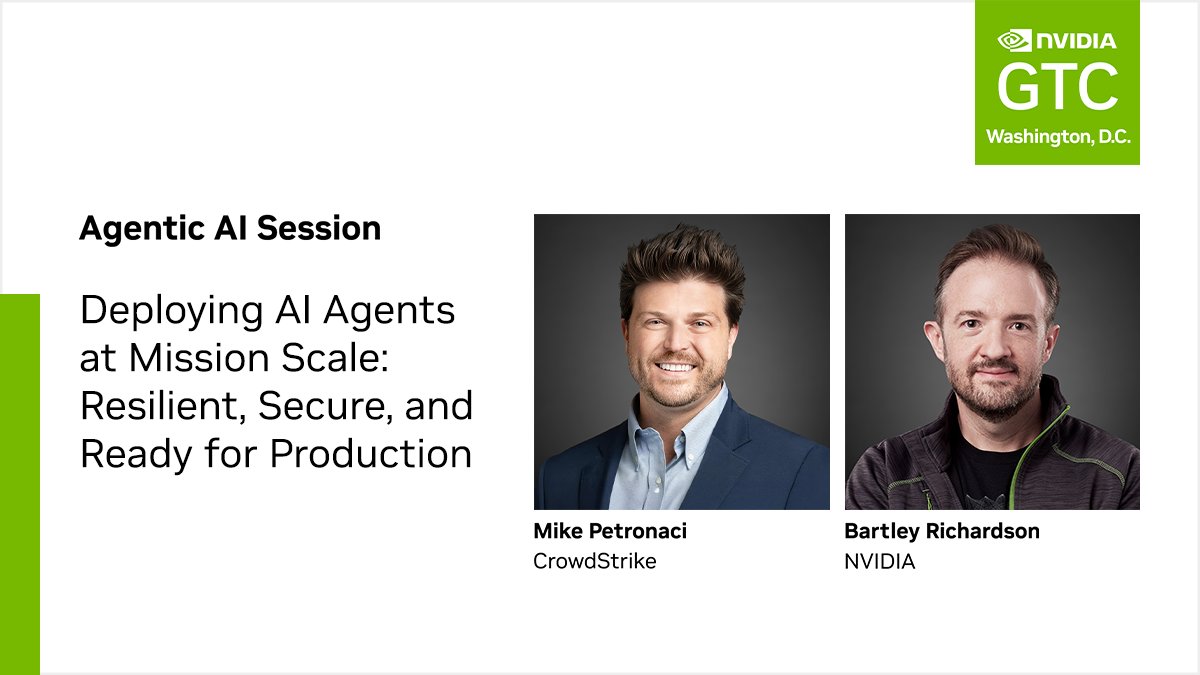
  • Deploying Secure Resilient AI Agents at Enterprise Scale
    Deploying Secure Resilient AI Agents at Enterprise Scale

    How can enterprises deploy secure, resilient AI agents at scale? At #NVIDIAGTC Washington, D.C., Bartley Richardson (NVIDIA) and Mike Petronaci (
    @CrowdStrike
    ) will share how organizations can bring mission-scale AI agents from prototype to production. What you’ll learn:

    → View original post on X — @nvidiaai

  • Accelerate Your Journey to Autonomous Network Lifecycle Management

    Discover how you can accelerate your journey to an autonomous network lifecycle: ibm.co/6017BJdal

    → View original post on X — @ibmdata, 2025-09-30 13:00 UTC

  • IBM Network Intelligence: Agentic AI for Network Planning and Optimization

    Now is the time to move beyond basic automation. IBM Network Intelligence uses agentic AI to help you plan, build, and optimize your network for a new era of performance and efficiency.

    → View original post on X — @ibmdata, 2025-09-30 13:00 UTC