The rise of AI Native Companies.
@IrenaCronin and I write this newsletter every week.
AI native companies are businesses designed around AI from the beginning rather than adding AI to old workflows. They use smaller teams, automated processes, and AI agents to move faster,
AGENTS
-

The Rise of AI Native Companies and Automated Workflows
By
–
-
Base44 launches agent platform with migration and UI tools
By
–
OpenAI and Anthropic are racing to build the smartest agents.
— Chubby♨️ (@kimmonismus) 28 avril 2026
Base44 is building the platform those agents actually need to run on. While the labs ship models, Base44 just shipped: One-click migration from 6 major platforms Schema reconstruction Custom UI generation Agent… https://t.co/76DZL5x3XdOpenAI and Anthropic are racing to build the smartest agents. Base44 is building the platform those agents actually need to run on. While the labs ship models, Base44 just shipped: One-click migration from 6 major platforms Schema reconstruction Custom UI generation Agent
-
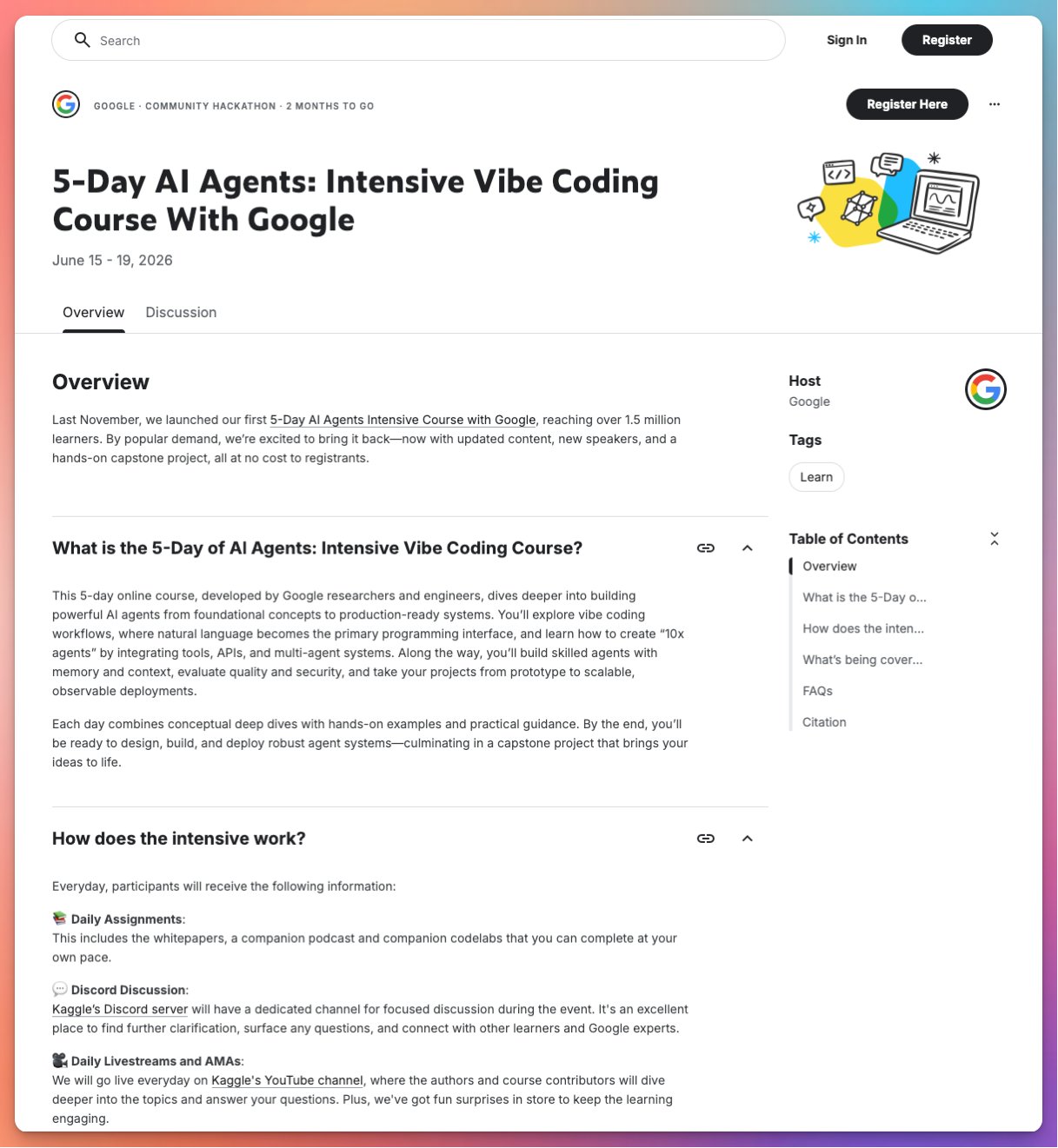
Google Kaggle Launch Free AI Agents Vibe Coding Course
By
–
This is MASSIVE for vibe-coders. @Google and @Kaggle are officially bringing back their 5-day intensive vibe-coding course with AI agents And yes, it’s completely FREE. Last time, they had 1.5 million learners, which means something! Here’s what you’ll be learning: →
-
Prompt drift in parallel terminals fixed by hand-built markdown system
By
–
Translation: prompt quality without persistent context produces drift. A solo operator running parallel Claude Code terminals put it best: "Each terminal has no idea what decisions I made in the other." Their workaround? A markdown file system they built by hand.
-
Structured decision files boost agent performance over raw logs
By
–
The 7-agent experiment confirmed it directly. Agents that wrote structured DECISIONS.md and PROGRESS.md files outperformed agents that dumped raw logs. Same models. Same prompts. Same starting budget. The variable was the thinking architecture between sessions.
-
Indie builder threads on AI memory and agents converge
By
–
In the last 7 days, two threads from indie builders hit 100+ comments each. One asking how to handle memory across AI tools. One running 7 AI agents head-to-head with $100 each. Both threads converged on the same finding.
-
Builders admit LLMs can’t think, manually write thinking architecture files
By
–
Hundreds of builders just admitted LLMs don't think. Their fix: manually writing thinking architecture files (PROGRESS.md, DECISIONS.md, IDENTITY.md) for every project. Most AI advice still chases better prompts. The real work moved up a layer. Here's what changed and what it
-
Building Block Approach Scales Agent Systems in Production
By
–
Why the building block approach actually scales in the real world: → You can compose agents instead of rebuilding them
→ You control behavior by design, not by prompt hacking
→ You can change one block without breaking the whole system This is how you go from experiments to -
AI Should Be a System of Small Well-Defined Agent Functions
By
–
The biggest “aha” from this conversation with Arno at Elastic: AI should not be one giant brain. → It should be a system of small, well-defined functions
→ Each function has a clear role
→ Each agent only gets the power it needs, nothing more This is how you avoid chaos as -
Why AI Initiatives Fail: Agent Power Balance Is Key
By
–
Most AI initiatives don’t fail because the models are weak.
— Ronald van Loon (@Ronald_vanLoon) 28 avril 2026
They fail because teams give agents too much power, or not enough.
That’s the real scaling problem nobody talks about, and it’s exactly what I discussed with Arno van de Velde, Principal Solutions Architect at… pic.twitter.com/0XZ568ha1mMost AI initiatives don’t fail because the models are weak. They fail because teams give agents too much power, or not enough. That’s the real scaling problem nobody talks about, and it’s exactly what I discussed with Arno van de Velde, Principal Solutions Architect at