.
@MazdaUSA built a GenAI assistant on Databricks to help service hotline agents navigate growing diagnostic complexity with faster, more consistent support. The team brought together vehicle history, recalls, diagnostic data, and service documents into a single governed
AGENTS
-

Mazda builds GenAI assistant on Databricks for service hotline
By
–
-
Hermes allows LLM judgment but constrains irreversible actions
By
–
Hermes handles edge cases by making the skill loop conservative at the boundaries, not by pretending the agent has perfect judgment. The main pattern is: LLM judgment is allowed to propose structure, but irreversible actions are constrained.
-
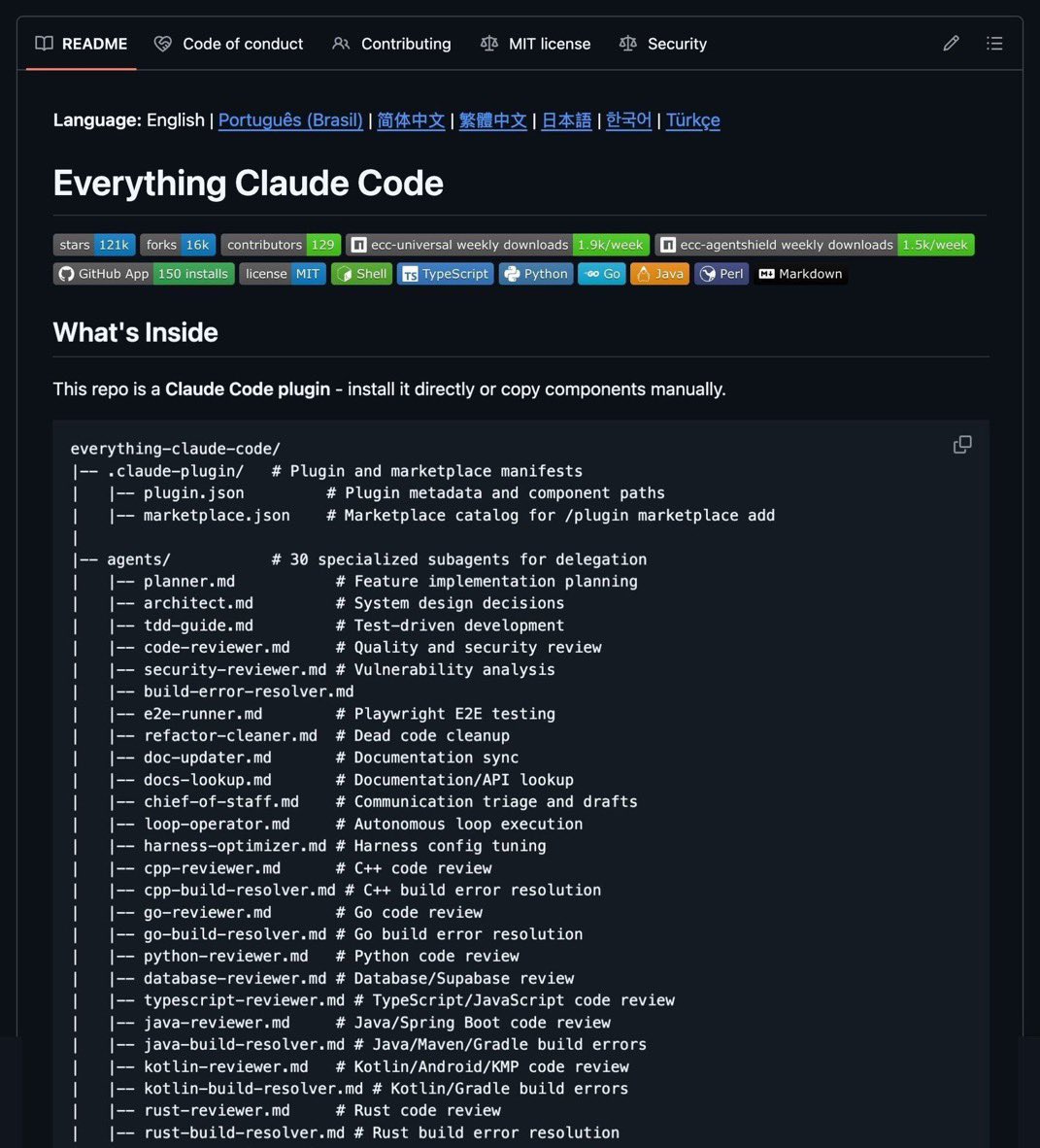
Everything Claude Code: the most complete open source toolkit
By
–
You are not using 100% of Claude Code.
Until you install this. It's called Everything Claude Code and it's the most complete open source toolkit I've seen. → 30 agents, 64 skills, 33 commands
→ Integrated AgentShield with 1,282 security tests
→ -
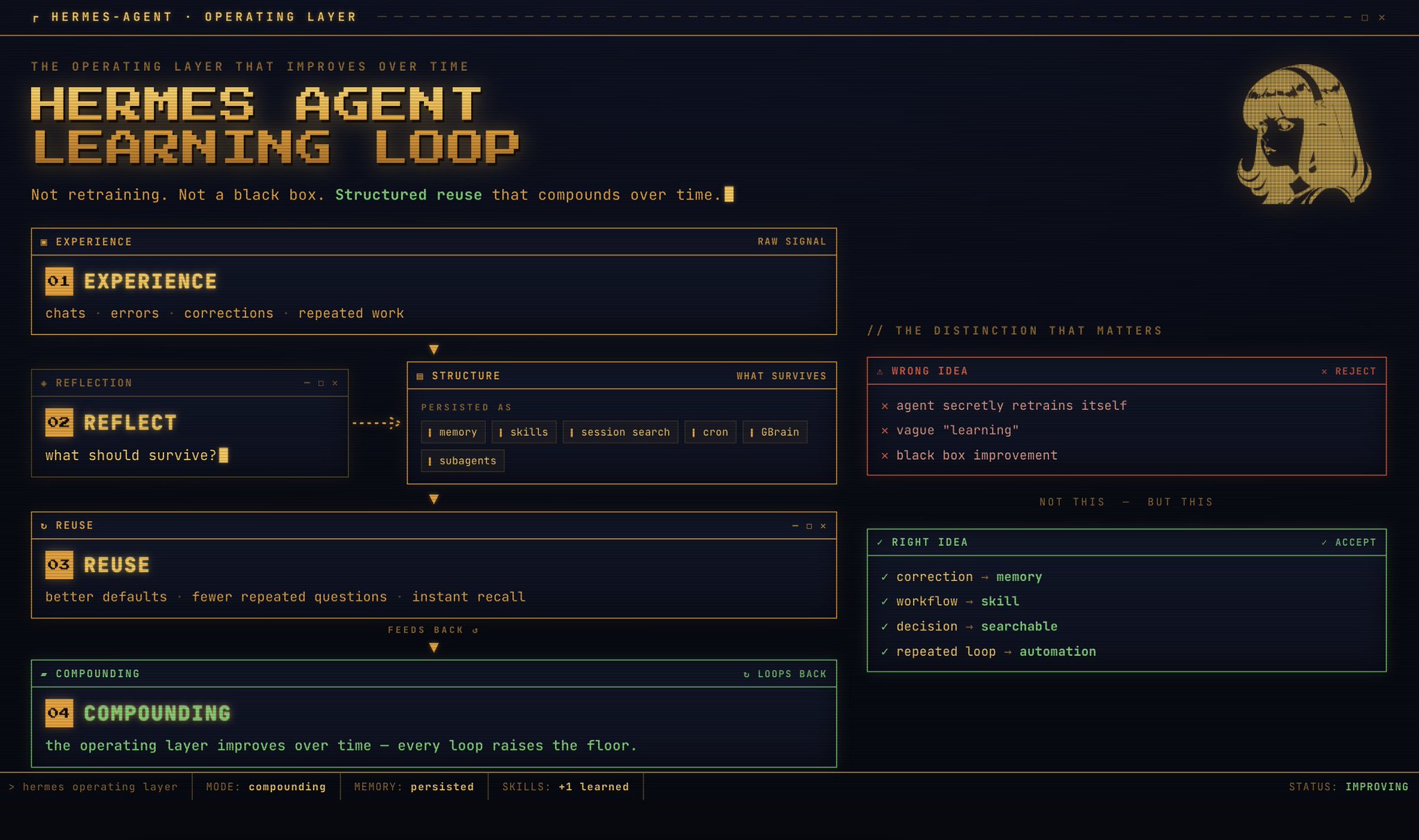
Hermes Agent Self-Learning Loop: Workflow to Automation with Cleanup
By
–
This is HOW Hermes Agent Self-learning LOOP works: Useful workflow → Agent skill
Experience → Gbrain page
Important decision → searchable memory
Repeated loop → automation Then Hermes curator cleans the stale skills so the loop keeps compounding. -
OPQA Benchmark: 20 Real Engineering Bottlenecks from OpenAI
By
–
OpenAI-Proof Q&A (OPQA) is a benchmark of 20 real research and engineering bottlenecks that OpenAI teams encountered internally, each taking more than a day to solve. A model is given relevant code, logs, and experiment artifacts, then asked to identify and explain the root
-
Raw compute vs EFC: key distinction for agent learning updates
By
–
The key distinction: raw compute measures activity. EFC measures useful closed-loop learning inside the trace. That difference matters enormously for agents, because two runs with the same token count and tool calls can differ completely in whether the agent actually updates
-
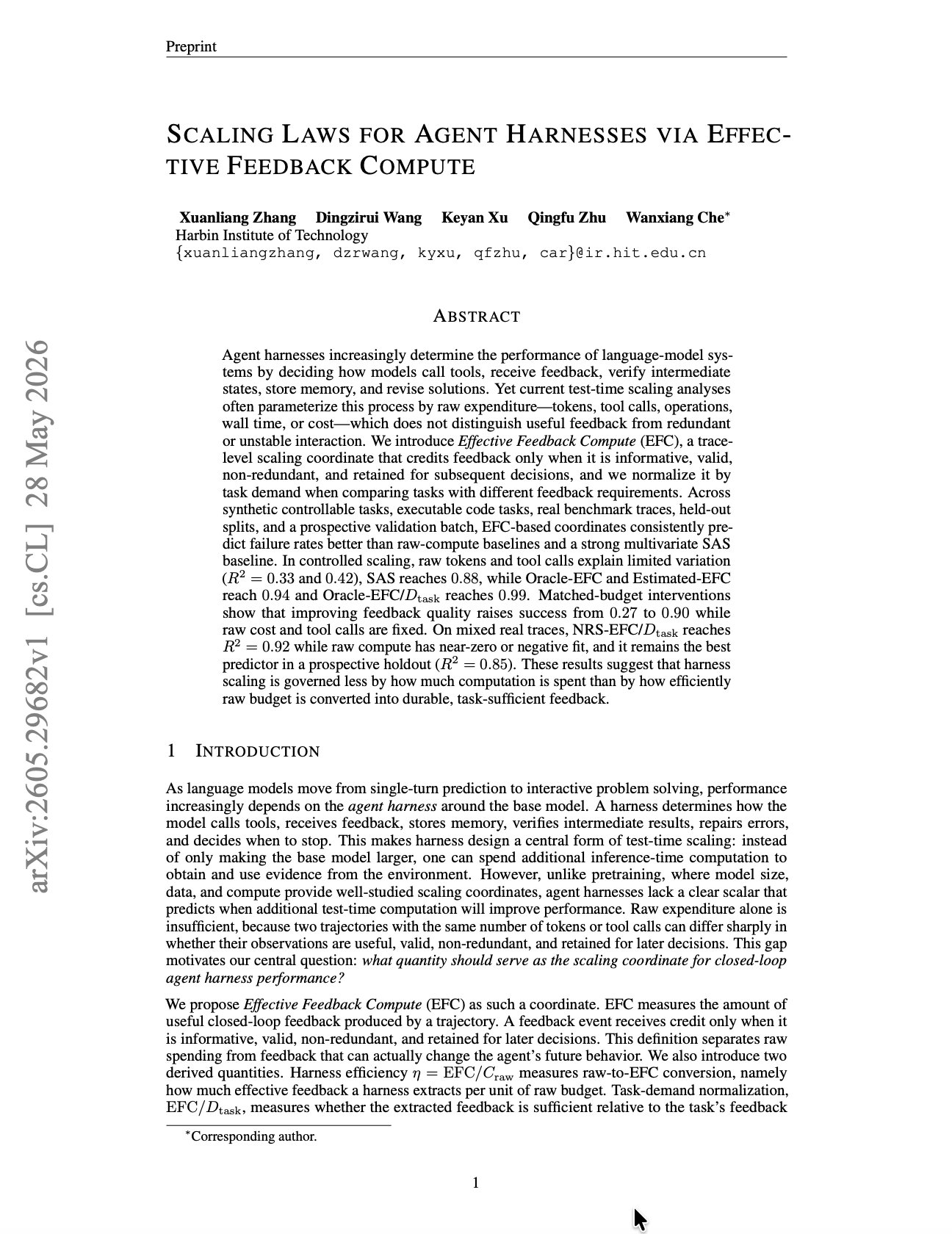
New Preprint on Scaling Laws for Agent Harnesses
By
–
Agents do not scale because they spend more compute. They scale because they turn interaction into usable feedback. A sharp new preprint by Xuanliang Zhang, Dingzirui Wang, Keyan Xu, Qingfu Zhu, and Wanxiang Che introduces: Scaling Laws for Agent Harnesses via Effective
-

Microsoft transforms SKILL.md into trainable object with SkillOpt
By
–
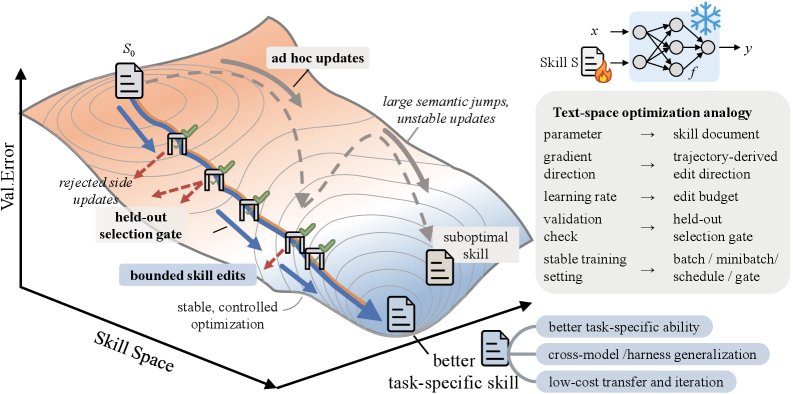
Microsoft just turned SKILL .md into a trainable object! SkillOpt is a text-space optimizer for agent skills. Instead of hand-writing or one-shot generating your SKILL .md, SkillOpt treats the skill document as the trainable external state of a frozen agent and optimizes it
-

Perplexity enhances Daily Digest with customizable sources and connectors
By
–
Perplexity keeps working on the Daily Digest feature, allowing users to precisely customise from where and which data needs to be pulled from. Memory, web sources, custom instructions and many connectors will be available.
-
GPT 5.5 boosts prompt duration and confidence with new features
By
–
With GPT 5.5, /goal, autoreview and crabbox my prompts moved from ~30-60min to often 4-10h tasks and my confidence that it’s ready is much much higher. Yielding agents is a skill.