i think that's where this shines. though LLMs aren't deterministic so that creates some difficulty
@yoheinakajima
-
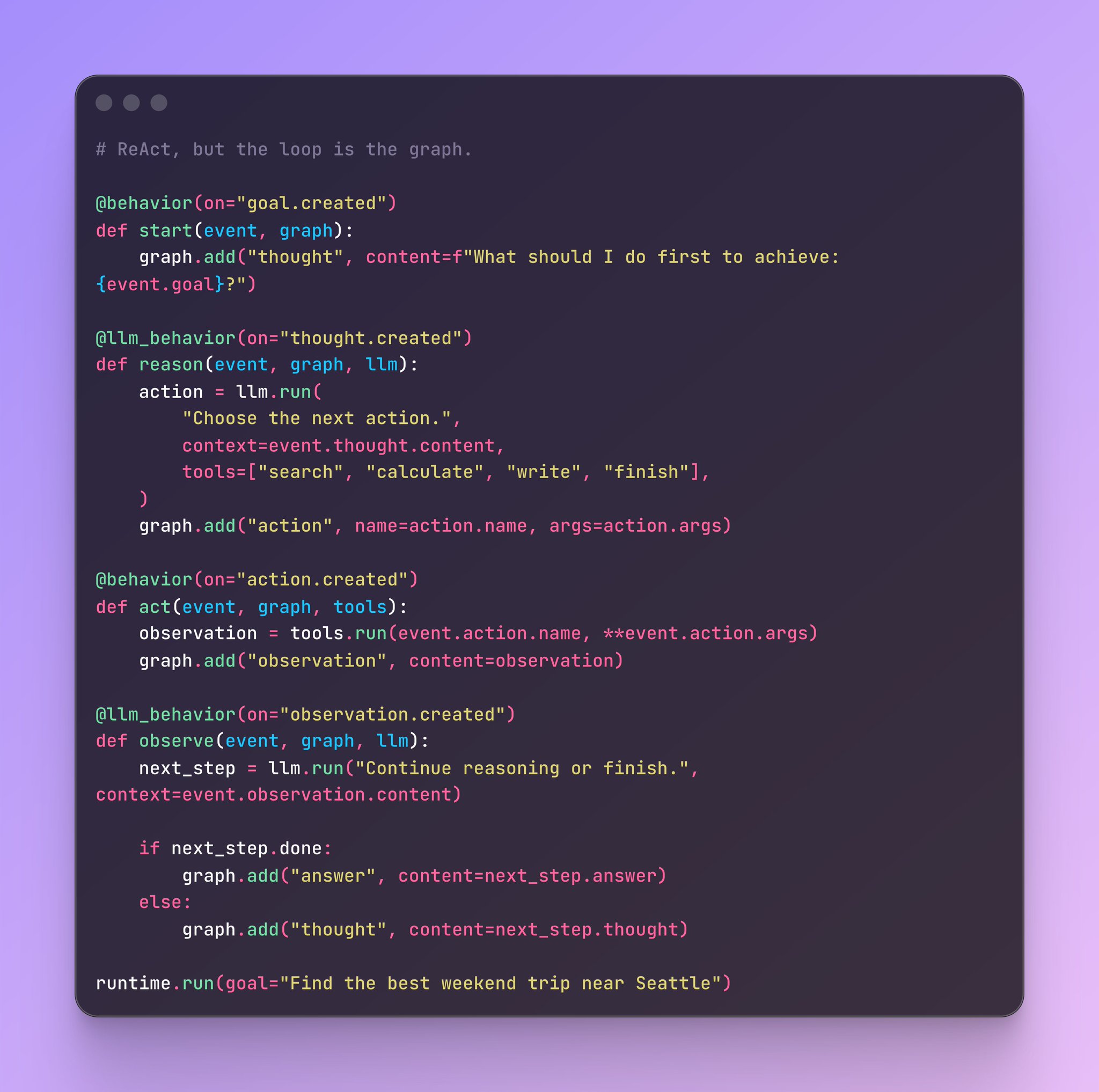
Technical breakdown of ReAct agents using ActiveGraph
By
–
this is what a ReAct agent looks like using ActiveGraph No explicit ReAct while-loop. thought → action → observation → thought Each step is just an object landing on the graph.
The graph is the agent state.
The event log is the reasoning trace. -
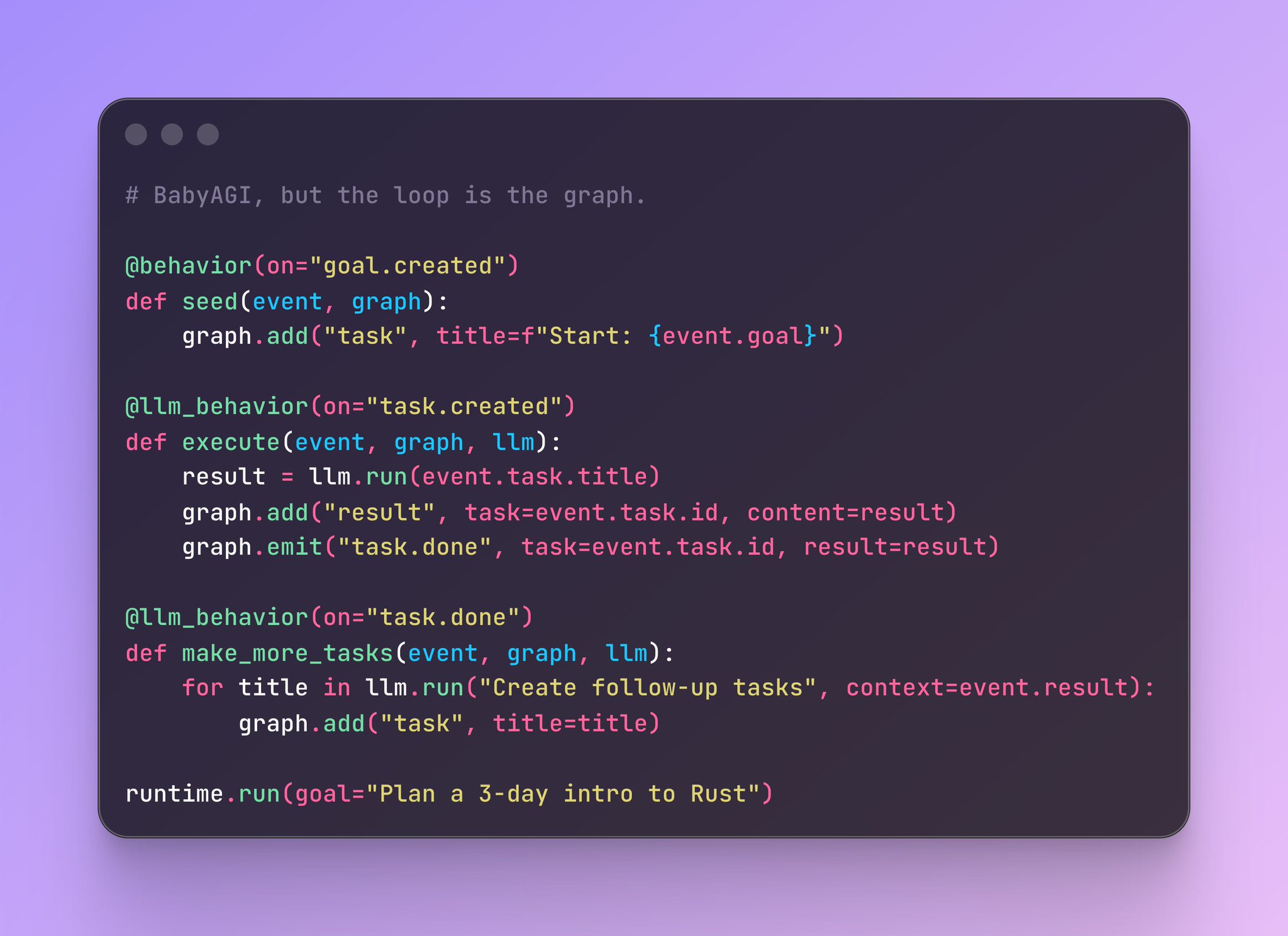
Implementing BabyAGI using ActiveGraph
By
–
this is what babyagi looks like using activegraph the graph is the loop (this is simplified code, you can find a real example in examples/babyagi.py)
-
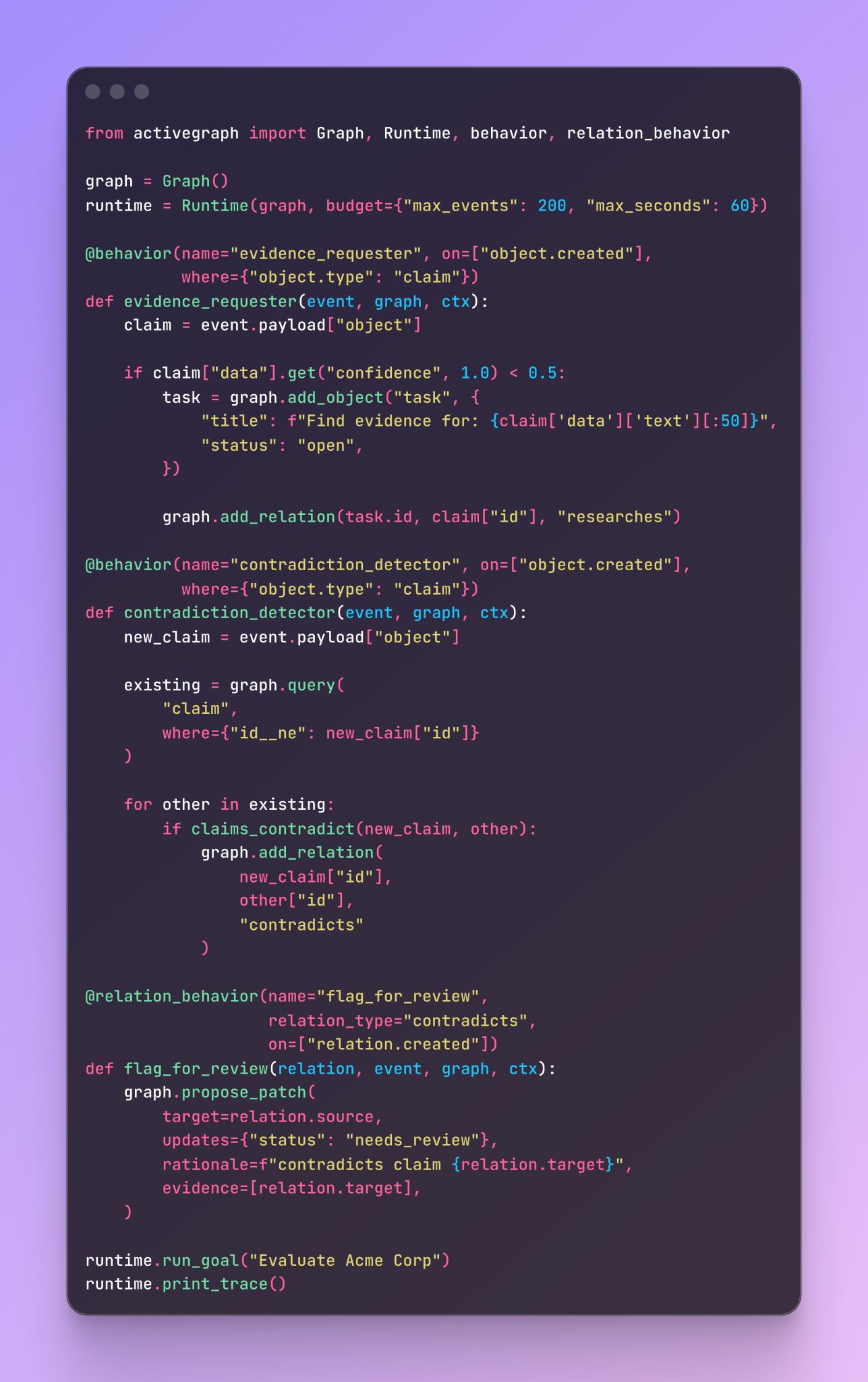
Autonomous AI Agent Workflow for Evidence Verification and Contradiction Resolution
By
–
here's a fragment of a diligence run putting several primitives together. claims arrive. system requests evidence for low-confidence ones. a contradiction is detected. contradiction triggers a patch. all tracked this uses: objects, relations, behaviors, relation behaviors,
-
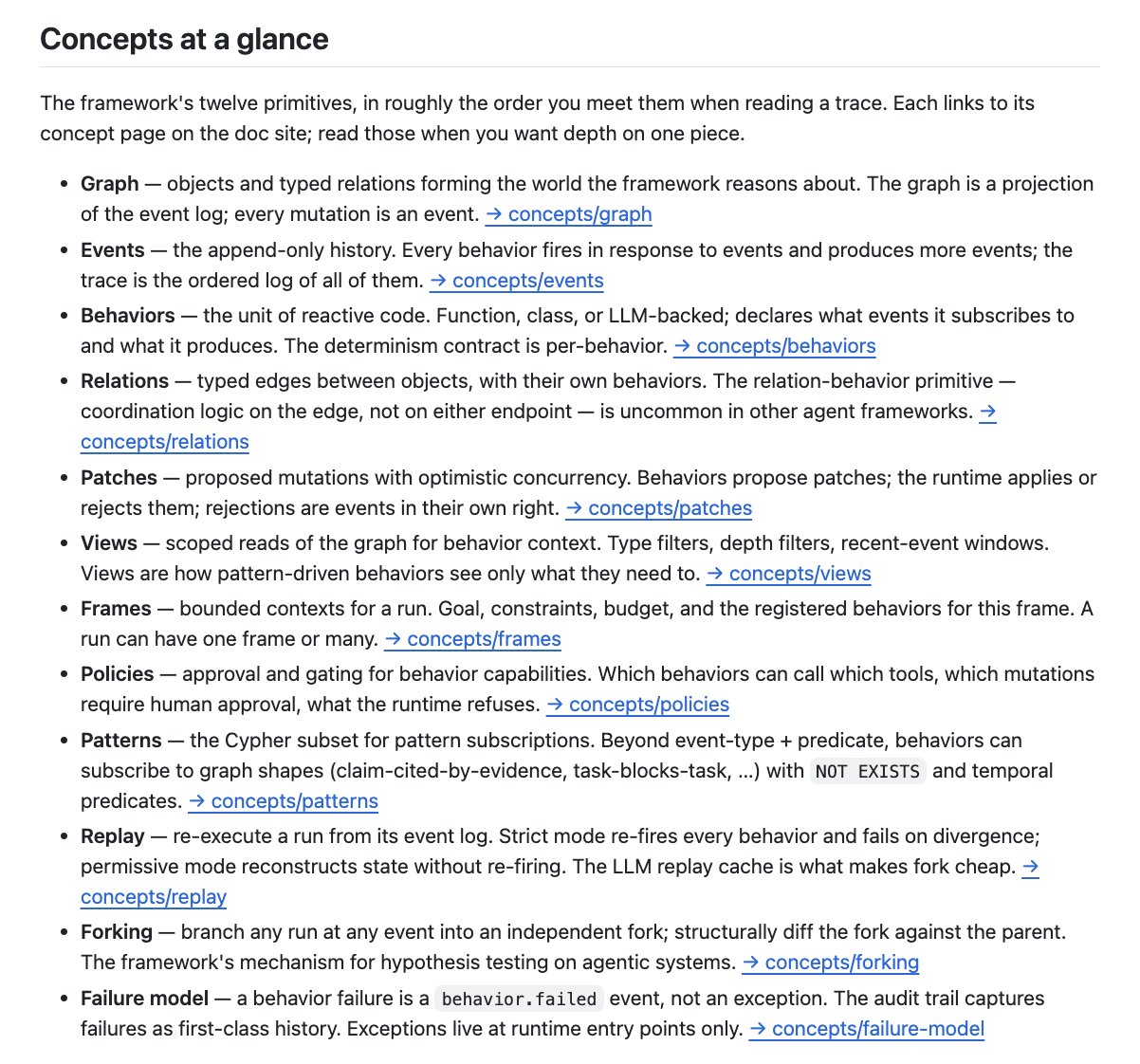
Graph-Based Architecture for AI Agent Knowledge and Behavioral State Management
By
–
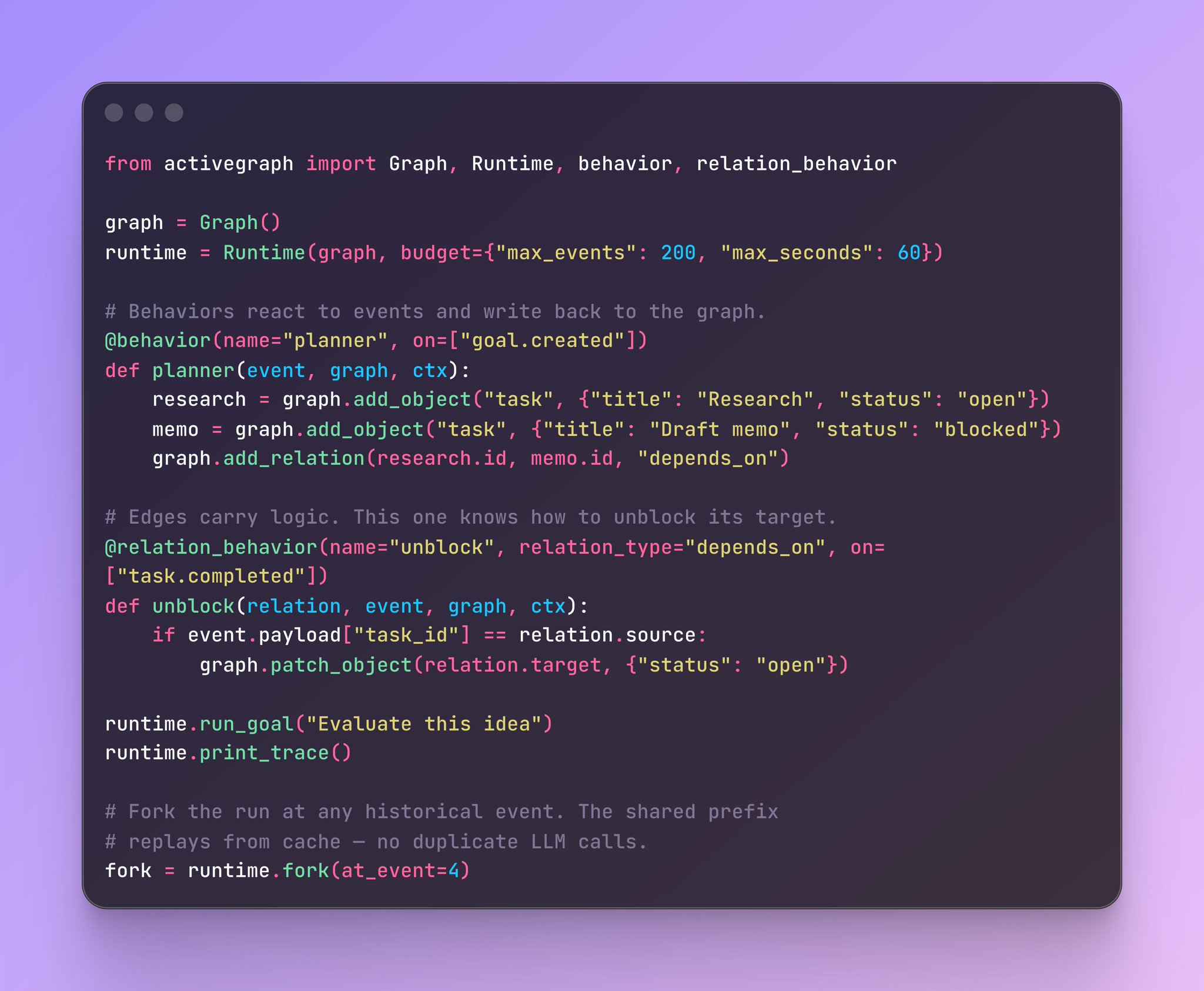
the core concept is a graph that represents everything about the agents knowledge, history, behaviors, capabilities graph is made of events
behaviors react to graph changes
relationships can carry behaviors
patch & propose to edit graph
views are scoped view of graph
frames are -
Architecting State Layers for Long-Running AI Agent Coordination
By
–
current agent systems coordinate through conversations and workflows. Active Graph explores what happens when agents coordinate through evolving shared state instead this proposal suggests that long-running agents need a proper state layer with: types, persistent, reactive,
-
Active Graph: An Open Source Reactive Runtime for AI Agents
By
–
i'm excited to open source Active Graph: an event-sourced reactive graph runtime for long-running, agents 🔄🧠
— Yohei (@yoheinakajima) 20 mai 2026
events/logs projects a graph. reactive behaviors react and affect the graph. fork-and-diff agent runs. no A2A, no workflows, no DAG
site: https://t.co/ufL9Ht0hYX
docs:… pic.twitter.com/zLd4i4OKYfi'm excited to open source Active Graph: an event-sourced reactive graph runtime for long-running, agents events/logs projects a graph. reactive behaviors react and affect the graph. fork-and-diff agent runs. no A2A, no workflows, no DAG site: http://
activegraph.ai
docs: -
Using Forking and Diffing for Self-Improving AI Agents
By
–
if this works, will be great for self-improving agents because of the ability to fork and diff agent runs
-
The Need for a New Continuity Layer for Long-Running AI Agents
By
–
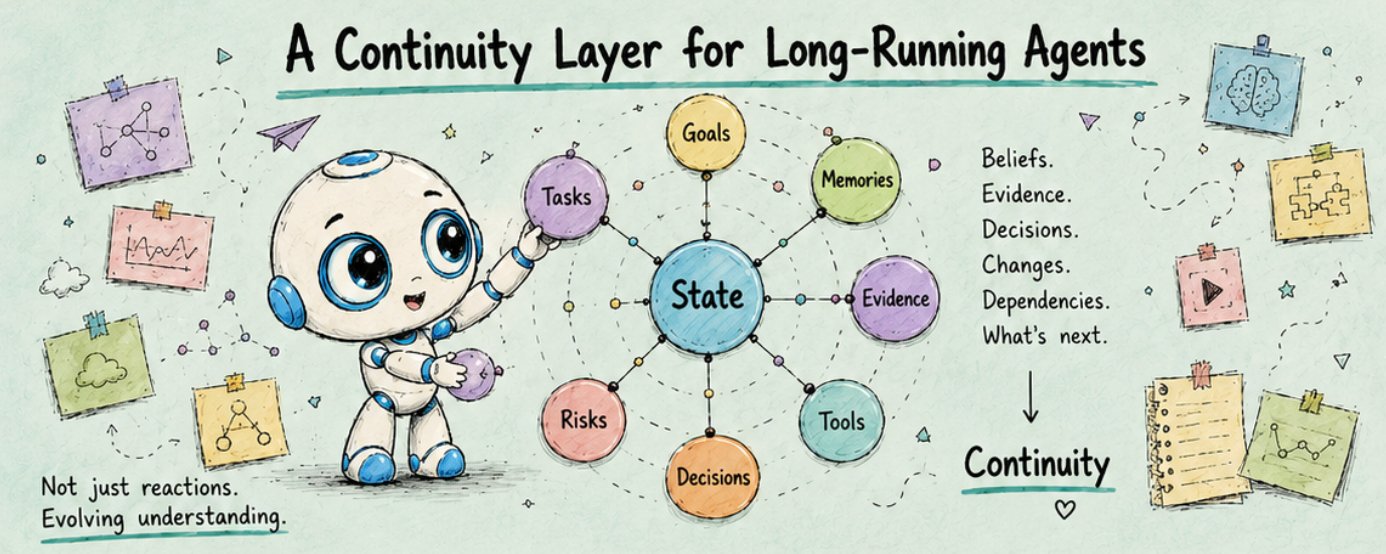
why we need a new continuity layer for long-running agents
— Yohei (@yoheinakajima) 19 mai 2026
(claude did this video! all except the voice which was @elevenlabs) pic.twitter.com/nTXcogkGhJwhy we need a new continuity layer for long-running agents (claude did this video! all except the voice which was @elevenlabs
) -
Mapping distributed systems patterns to LLM agents
By
–
what if we mapped older distributed systems patterns (like actor models or reactive, state-driven blackboards) to LLM agents?