AI Dynamics

Global AI News Aggregator

About

@whiteafrican

  • Emergent Grid: AI Compute Nodes Meet Decentralized Energy Infrastructure

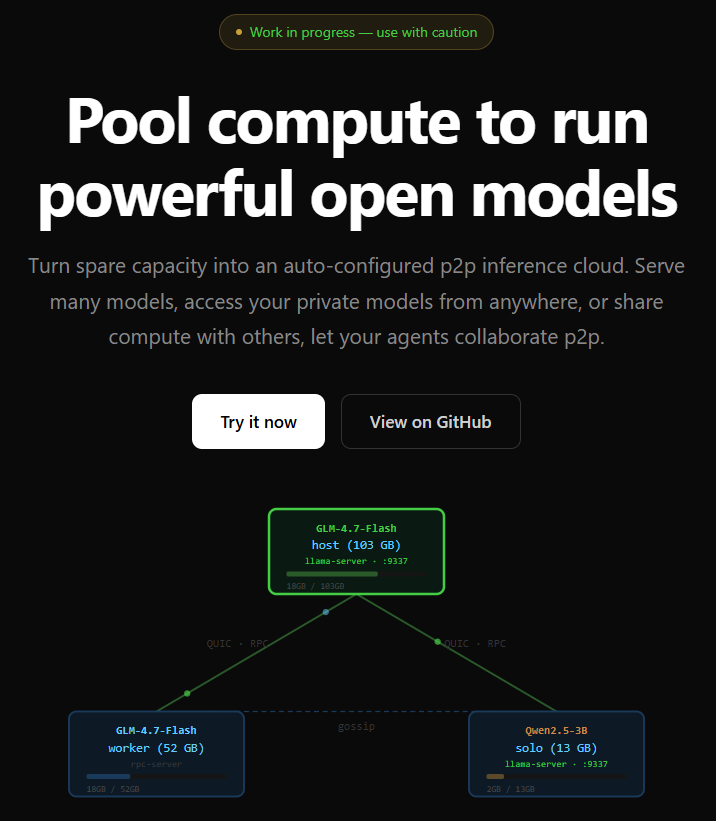
    This is the Emergent Grid becoming real. We can run these AI compute nodes at the same places we run bitcoin mining. Off grid energy sources have even more financial viability than they did a week ago. mesh-llm — Decentralised LLM Inference docs.anarchai.org/

    → View original post on X — @whiteafrican, 2026-04-03 09:55 UTC

  • AI Adoption Fastest in Poorest Countries, Greatest Democratization
    AI Adoption Fastest in Poorest Countries, Greatest Democratization

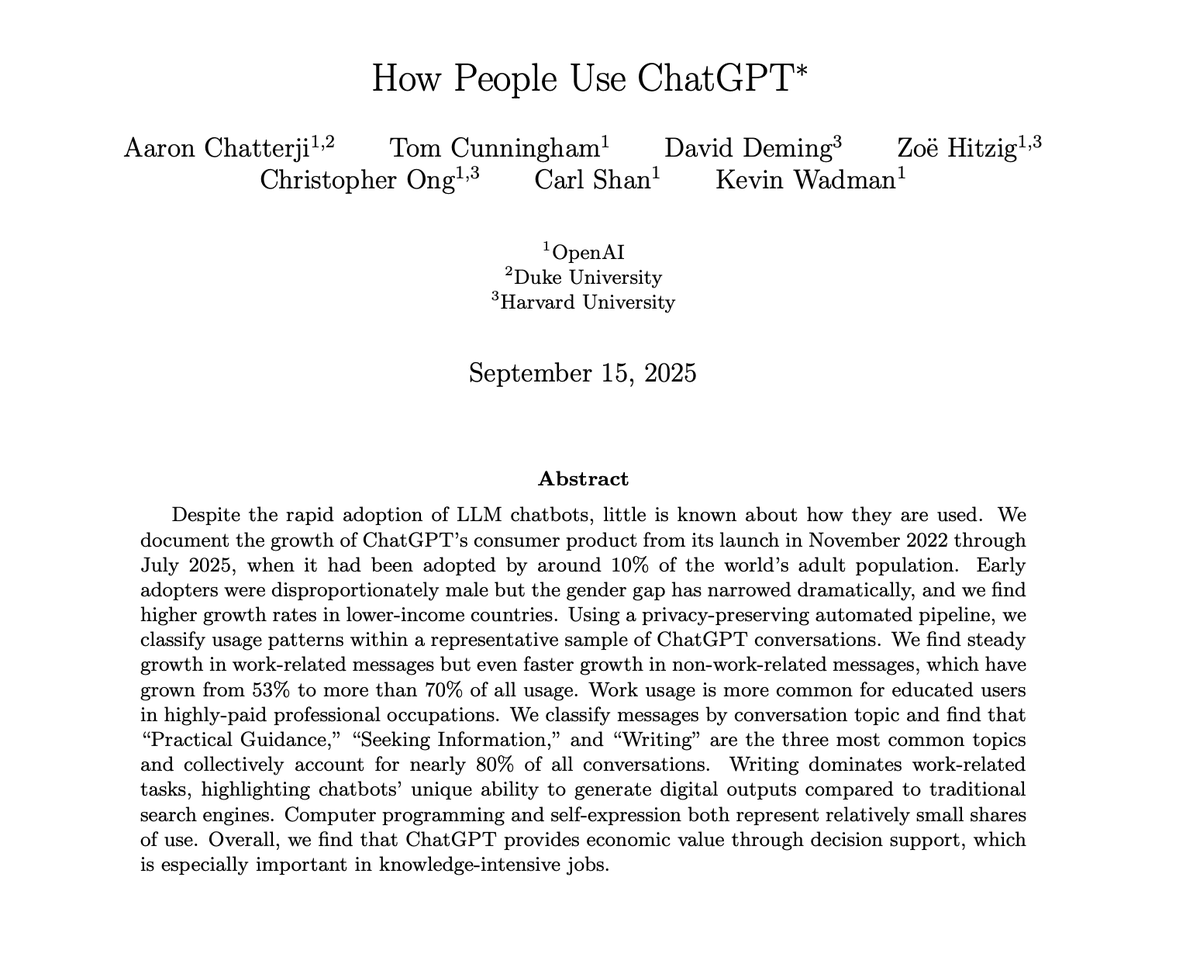
    the most underrated finding in this study: usage in the lowest-income countries is growing four times faster than in the highest-income countries. OpenAI everyone debates whether AI will take jobs in silicon valley but the real story is a farmer in kenya or a student in bangladesh getting access to the same cognitive tool as a harvard professor. 18 billion messages a week from 10% of the worlds adults OpenAI and the adoption curve is steepest where the need is greatest. thats not hype, thats the most significant democratization of knowledge access since the printing press @ChrisLaubAI Chris Laub (@ChrisLaubAI) This blew my mind. OpenAI just published the first comprehensive study of how 700 million people actually use ChatGPT. The results destroy every assumption about AI adoption. Here's everything you need to know in 3 minutes: — https://nitter.net/ChrisLaubAI/status/2039629191805829537#m

    → View original post on X — @whiteafrican, 2026-04-03 03:20 UTC

  • Block Launches Mesh-LLM, a Decentralized Peer-to-Peer AI System
    Block Launches Mesh-LLM, a Decentralized Peer-to-Peer AI System

    Block just open-sourced mesh-llm, a peer-to-peer system that lets anyone pool spare GPU compute to run large open-source AI models without relying on any cloud provider. If a model fits on your machine, it runs locally at full speed. If it doesn't, the system automatically splits it across multiple machines on the network. Dense models get split by layers. Mixture-of-experts models like DeepSeek and Qwen3 get split by experts. Zero configuration required. Discovery happens over Nostr. Nodes find each other through relays, score by region and VRAM, and self-organize. No central server coordinates anything. Weights are read from local files, never sent over the network. Dead nodes get replaced in 60 seconds. It exposes a standard OpenAI-compatible API on localhost, meaning any existing AI tool can plug in without modification. Block is building infrastructure for AI that doesn't route through OpenAI, Google, or Anthropic. Frontier-class open models running across a mesh of commodity hardware, discovered via Nostr, with no cloud dependency. That's the direction AI needs to go. [Translated from EN to English]

    → View original post on X — @whiteafrican, 2026-04-02 23:14 UTC

  • Fixing Problems by Changing Reality Instead of Software

    at google this was known as "buying the gnome". there's like a billion tweets about this already but basically the story goes back in like 2005 or something they were building out their shopping search system, and it was working pretty well. except for the fact that if you searched for sneakers, the top result was a garden gnome. engineers were going crazy trying to fix the ranking bug, but eventually someone noticed that the gnome listing was on ebay, and there was only one of them, and it cost like $50. so they just bought the gnome and suddenly the listing was gone, problem solved. why bother fixing software issues when you can just change the world to fit your software instead? Tenobrus (@tenobrus) if you're about to release a model that you know has the ability to reveal zerodays in every commonly used open source project you could delay release for a few years or spend another ten billion on alignment RL. or you could just secretly fix all the zerodays yourself first. — https://nitter.net/tenobrus/status/2039744655856939150#m

    → View original post on X — @whiteafrican, 2026-04-02 19:25 UTC

  • x402 Protocol Joins Linux Foundation as Payment Primitive
    x402 Protocol Joins Linux Foundation as Payment Primitive

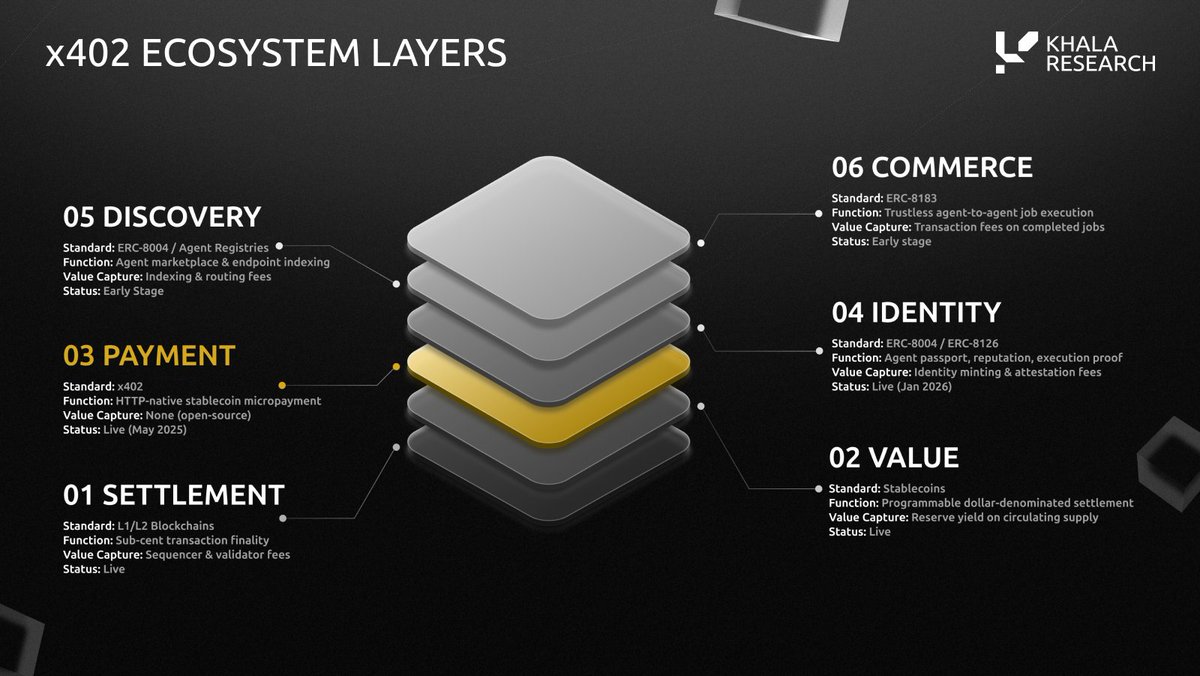
    ICYMI: x402 just landed a home under the Linux Foundation The same neutral nonprofit that stewards Linux, Kubernetes and some of the most critical open source infrastructure on the planet when a protocol lands here it is a signal that the industry considers it foundational TLDR: i) Coinbase, Cloudflare, Stripe, Google, Microsoft, AWS, Visa, Mastercard, Amex, Shopify, Circle, Solana Foundation and others are all founding members of the x402 Foundation ii) x402 is the payment primitive the web never had; HTTP moves data, x402 moves money, natively at the protocol level iii) rail-agnostic; fiat, crypto, multi-chain, no ideological gatekeeping iv) built for the agentic web; agents need to transact programmatically without human authorization loops v) no single company owns it; that is the point we published a full @KhalaResearch deep dive on x402 last month covering the architecture, facilitator model and the broader agentic commerce stack (visual below) I'll link the full report below: Coinbase 🛡️ (@coinbase) x.com/i/article/203965656653… — https://nitter.net/coinbase/status/2039689438922522728#m

    → View original post on X — @whiteafrican, 2026-04-02 17:27 UTC

  • AI Bill Proposal Could Prevent Major Development

    Won’t happen as long as the proposed AI Bill moves forward.

    → View original post on X — @whiteafrican,

  • Economic Graph Enables World Model and Intelligence Reorganization

    The scale you have with the economic graph means the world model and intelligence layers have enough mass to make sense. Leaves me wondering if other types of orgs will struggle with this type of re-org as they don’t have one, both, or either.

    → View original post on X — @whiteafrican,

  • Heaviside Foundation Model for Electromagnetism Announced

    Today, we're announcing Heaviside, our foundation model for electromagnetism. Trained on tens of millions of designs and over 20 years of proprietary simulation data, Heaviside predicts electromagnetic behavior from geometry in 13ms, which is 800,000x faster than a commercial solver. Heaviside is not a language model, and it’s not a surrogate model. Heaviside marks a new class of foundation model for physics which understands the fundamental relationships between materials, the geometries and the electromagnetic fields they generate. We’re releasing a research preview of Heaviside in Atlas RF Studio, an interactive agentic sandbox where you describe the EM behavior you want and the model generates the physical structure that produces it. @arenaphysica , we believe the implications of this class of model extend well beyond RF, as the frontier of exquisite hardware is electromagnetically-governed: wireless communication, radar, power delivery, high-speed computing, and the interconnects inside every chip on earth. In the months ahead, we’re excited to scale up Heaviside to broader frequency ranges, design spaces, and to support silicon-level designs, and deploy it with our closest partners and collaborators in service of their biggest design challenges. If you’ve read our thesis, this is just Step 2 in our pursuit of electromagnetic superintelligence. Read the full announcement and try Atlas RF Studio…tell us what you think: arenaphysica.com/publication…

    → View original post on X — @whiteafrican, 2026-03-31 14:53 UTC
  • Bitcoin Freedom Money Against Regulatory Attacks Africa

    Is bitcoin even freedom money if it can’t stand up to regulatory attacks in Africa? It was specifically designed as a peer-to-peer money that sidestepped the banks and the government. In a way, regulate the VASPs all you want, Bitcoin routes around it.

    → View original post on X — @whiteafrican,

  • Crypto Regulation in Africa: Licenses Don’t Prevent Fraud

    I’d concede the “custodial” point if it weren’t for the fact that most of the major crypto fraud in Africa (and globally) happened at companies that were licensed and regulated. FTX had licenses and regulation didn’t prevent it. However, let’s assume custodial accountability

    → View original post on X — @whiteafrican,