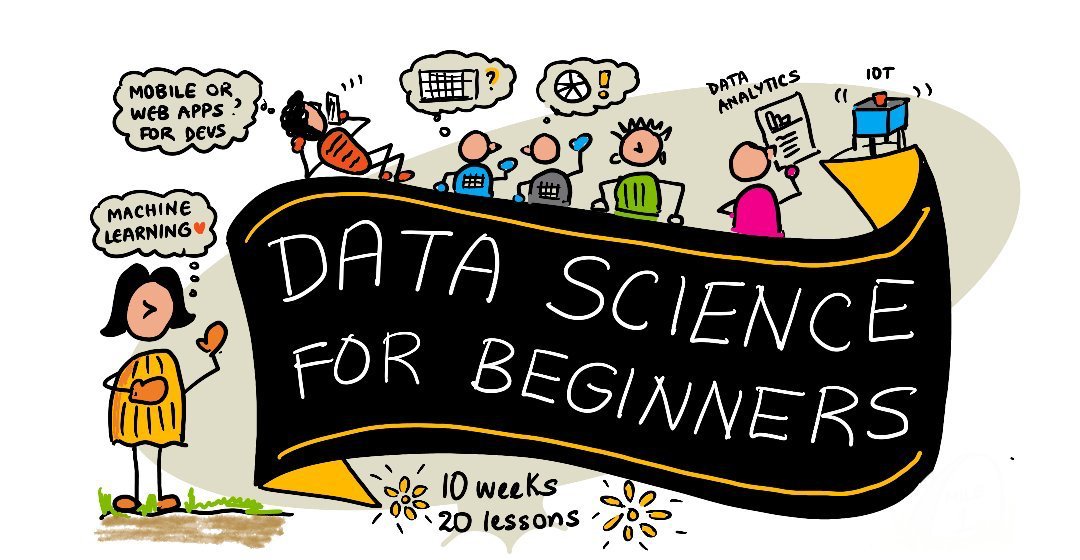
Microsoft is offering FREE courses to jumpstart your career in Data Science and Machine Learning. Here are 3 free courses you don't want to miss:
@sumanth_077
-
Python ML MLOps CV NLP LLMs Daily Tutorials
By
–
If you are interested in: – Python – Machine Learning – MLOps – CV/NLP – LLMs Find me → @Sumanth_077 Everyday, I share tutorials on above topics! Like/RT the first tweet to help this reach more people!
-
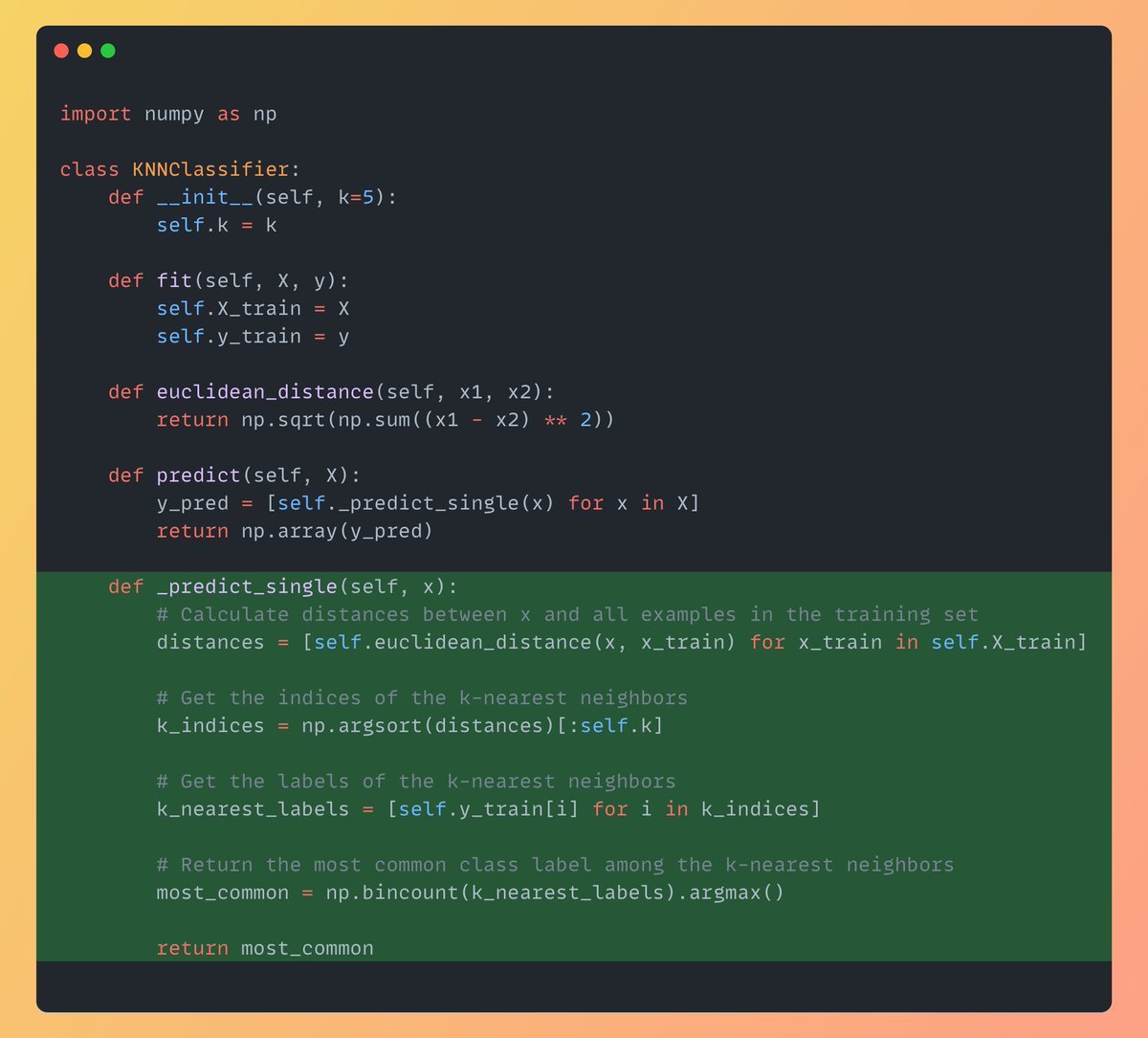
Implementing _predict_single Method for KNN Classification
By
–
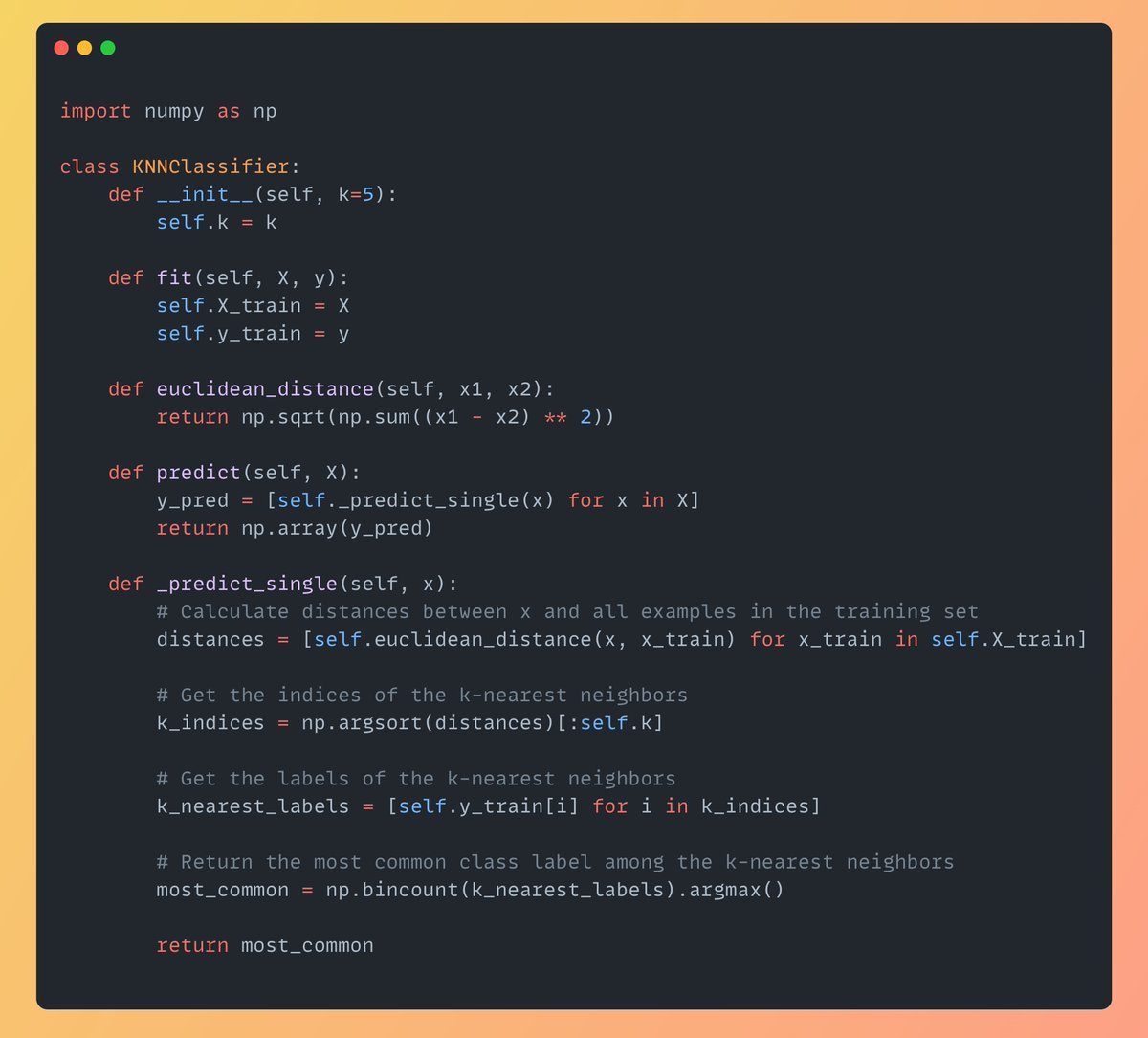
Finally a '_predict_single' method as mentioned it predicts the class label for a single data point This is done by: 1. Calculating the distance between one point to all training examples 2. Selecting the k-nearest Neighbours, & returning the most common class label among them
-
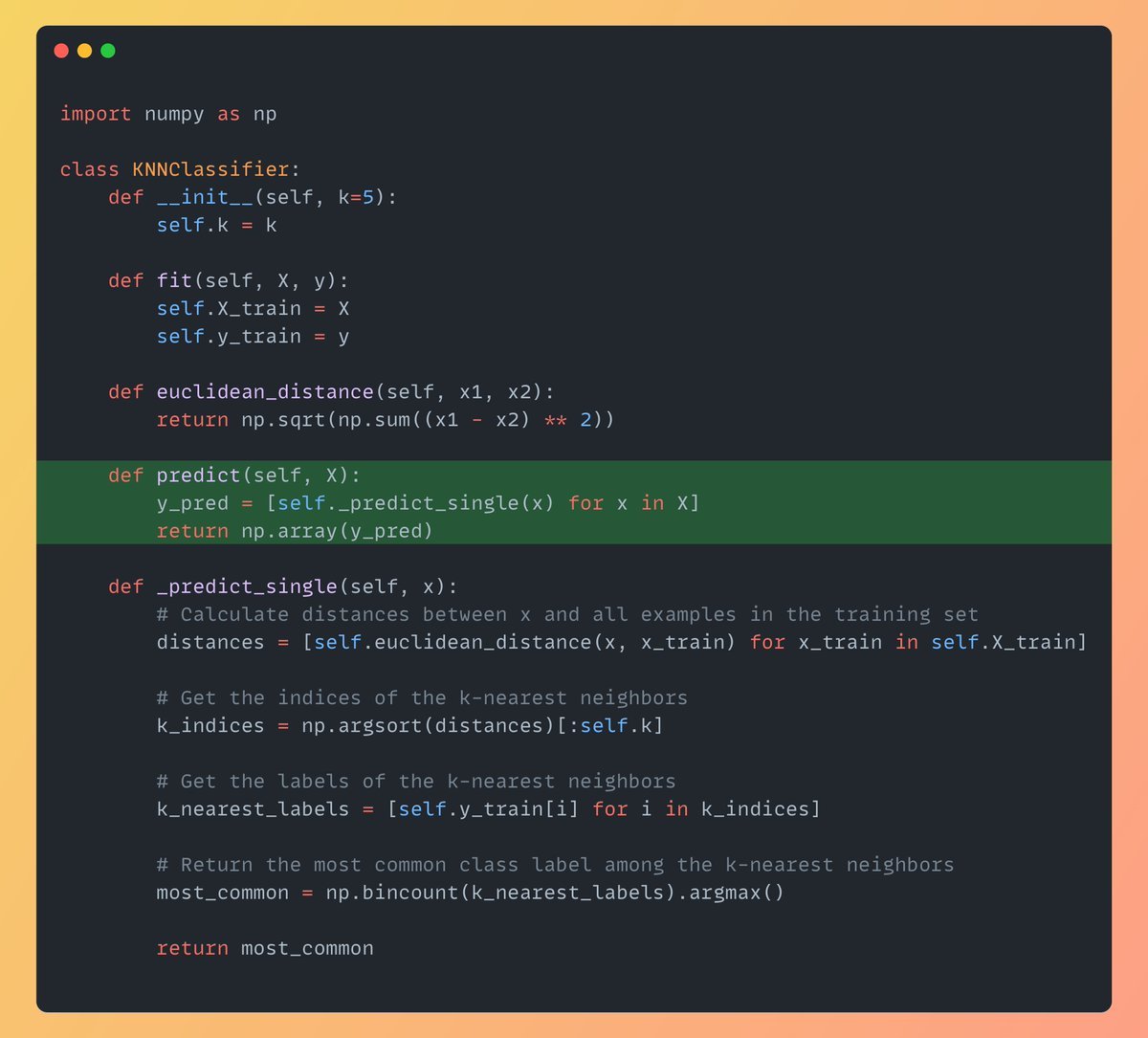
Predict Method for Class Labels Using Single Point Prediction
By
–
A 'predict' method that predicts the class labels for a set of data points. It calls '_predict_single' method that actually predicts the class label for a single data point.
-
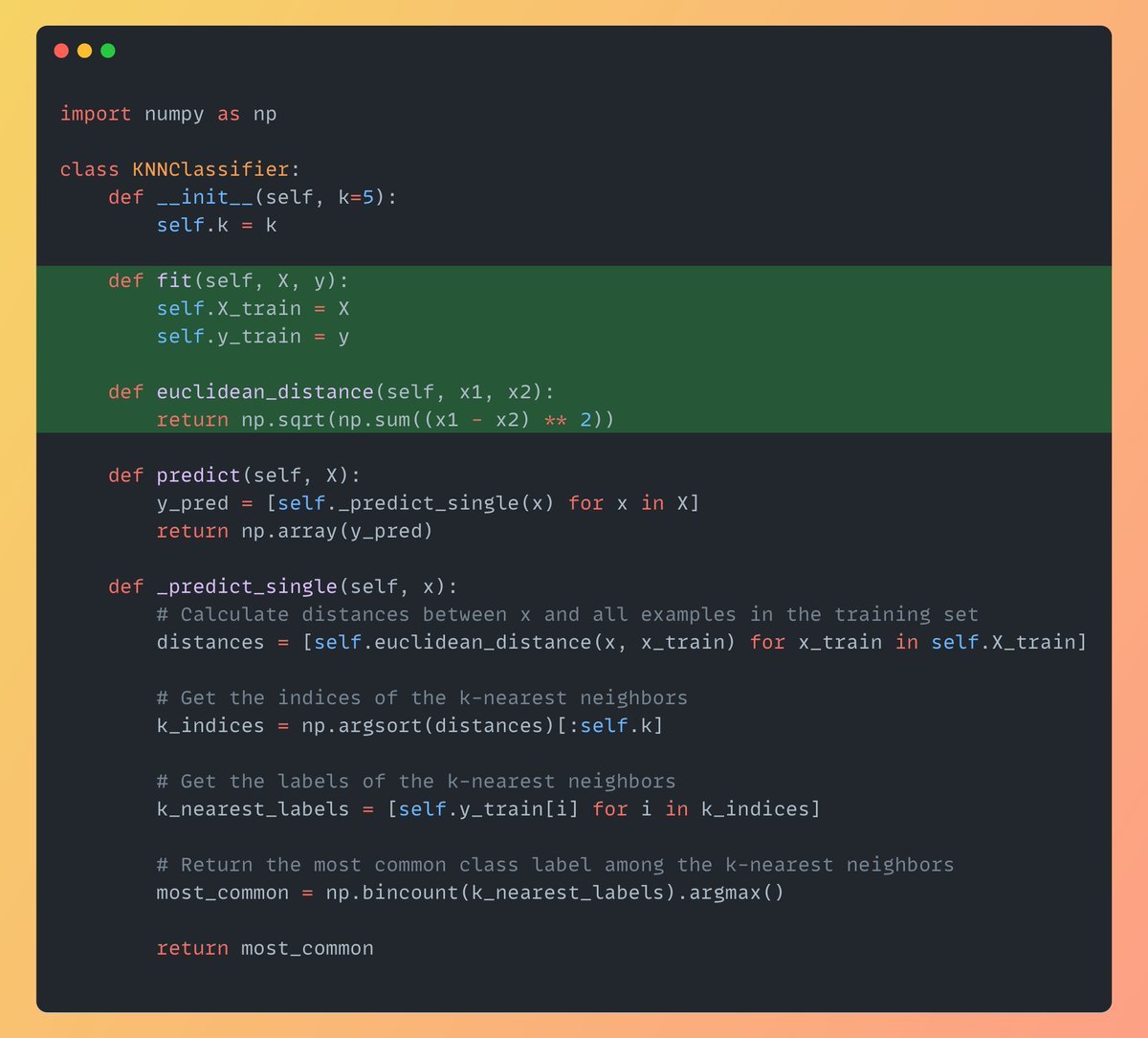
Implementing fit Method and Euclidean Distance in KNN
By
–
Next define the "fit" method that takes the training data(X) and it's corresponding labels(y) and stores them. This is the reason why the computation cost is high as it stores all the training data! And also a method to calculates the euclidean distance between two data points.
-

KNNClassifier Implementation: Choosing the Right k Value
By
–
Define the KNNClassifier class and initialize the number of Neighbours (k) to be considered in __init__ method Defining the K value is critical in KNN! A small value of k means noise will have a higher influence on the result and a large value makes it computationally expensive
-
K Nearest Neighbors KNN Implementation from Scratch Python
By
–
K Nearest Neighbors (KNN) implemented from scratch in Python Here is the step by step explanation with code. Thread
-
Python Machine Learning MLOps CV NLP LLMs Daily Tutorials
By
–
If you are interested in: – Python – Machine Learning – MLOps – CV/NLP – LLMs Find me → @Sumanth_077 Everyday, I share tutorials on above topics! Like/RT the first tweet to help this reach more people!
-

Model Pipeline: 3-Step Process for ML Development
By
–
Finally here of how it creates the Model Pipeline which is a 3-step process. 1. Pre-processing and cleaning 2. Feature Engineering 3. Model Building and Training Check the Below Image
-
Train Predictive Models with Lightwood: Default and Custom Mixers
By
–
Once you get Python Code for the Problem you can then train the model on the data and run predictions. There are many default available predictive models in Lightwood called "Mixers" but it also supports you to create your custom mixers. Check this: https://
lightwood.io/mixer.html