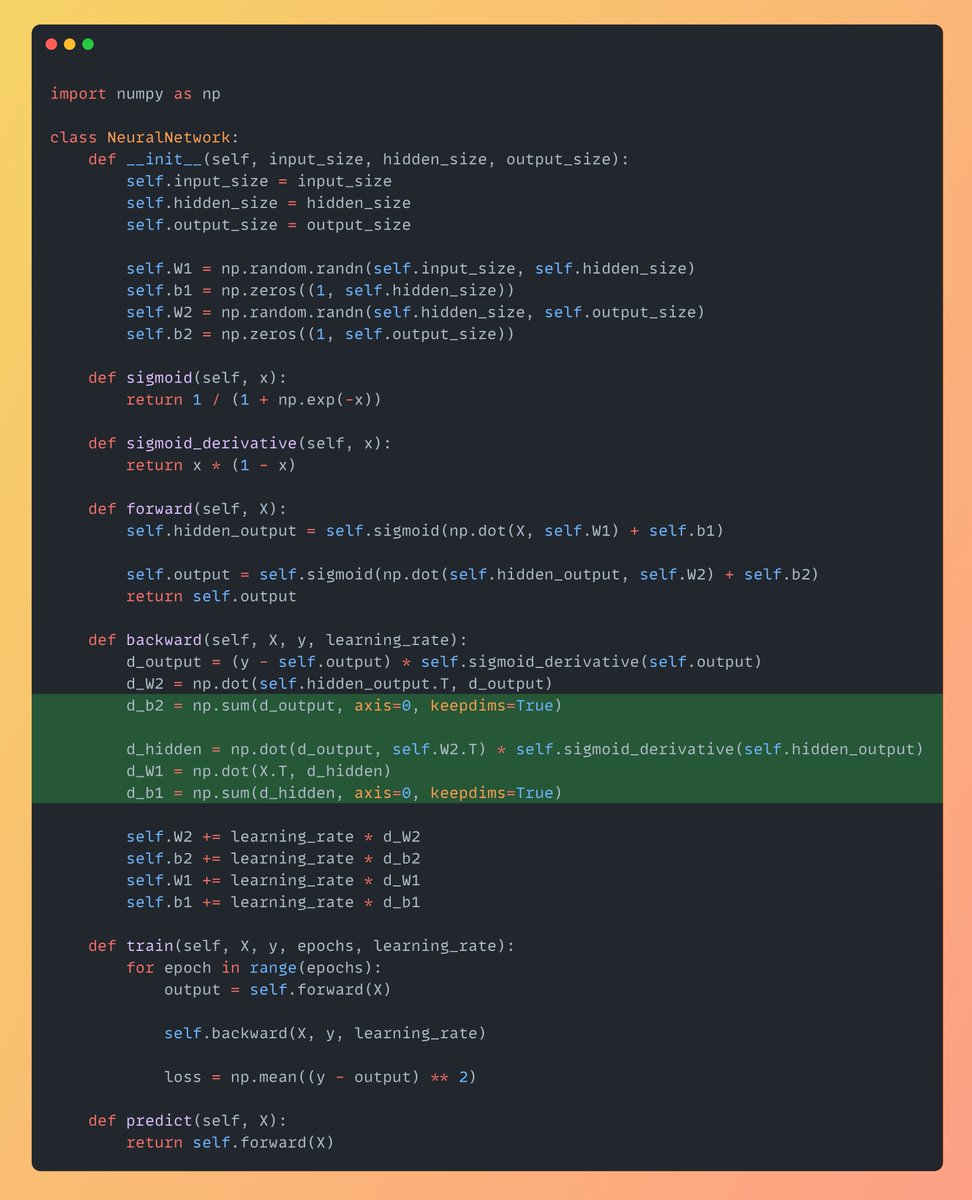
Similarly calculate d_W1, d_b2 & d_b1 dW1: Gradient of the loss function wrt W1 d_b2: Gradient of the loss function wrt b2(bias of neuron in output layer) d_b1: Gradient of the loss function wrt b1(bias of neuron in hidden layer)
@sumanth_077
-
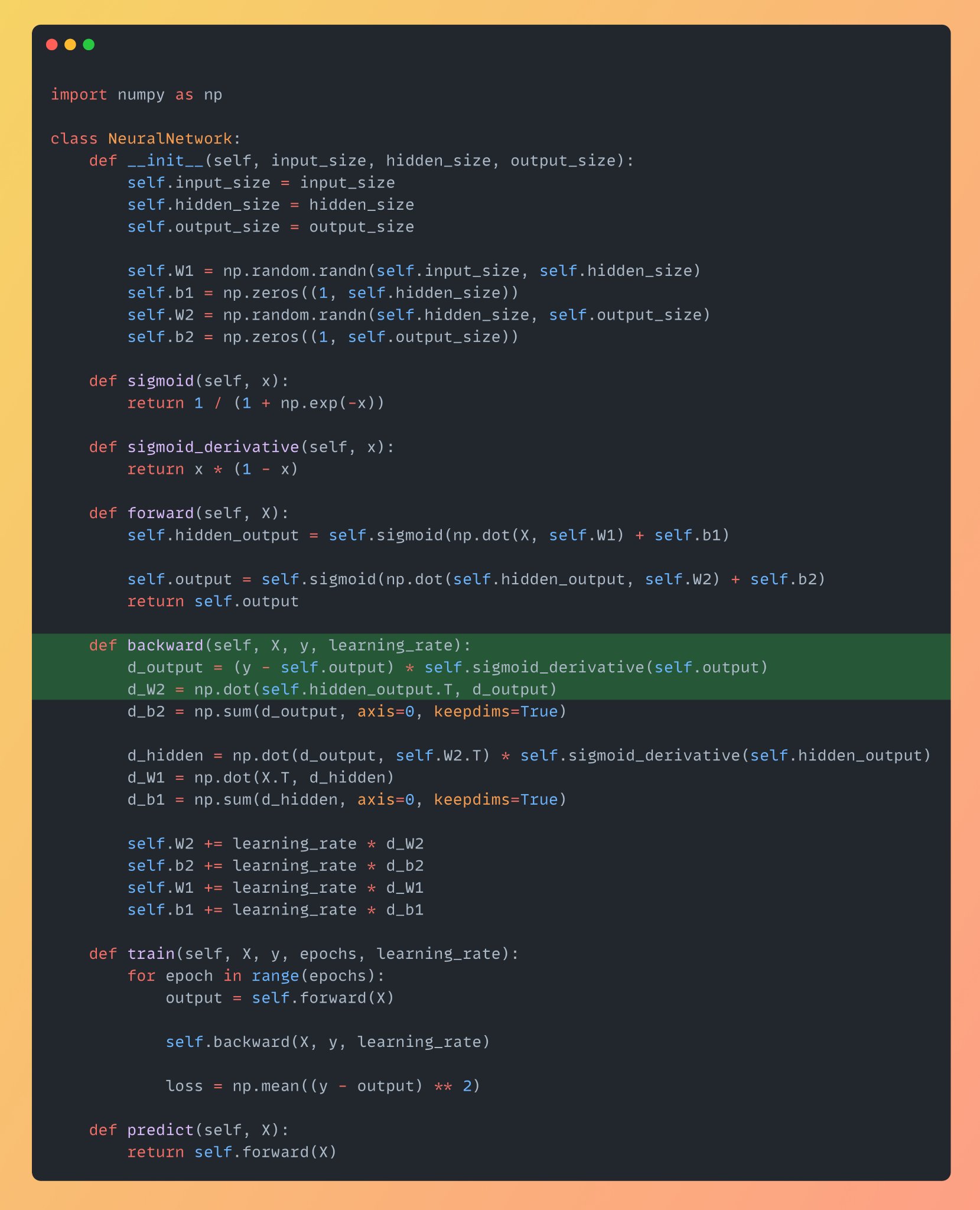
Backward Pass: Computing Output Layer Gradients and Weight Updates
By
–
Backward Pass: First compute the gradients of the output layer. Loss = (y – output) Gradient of Loss = (y – output) * sigmoid_derivative(output) Now calculate d_W2 which is gradient of the loss function with respect to W2. d_W2 = hidden_output.T • Gradient of Loss
-
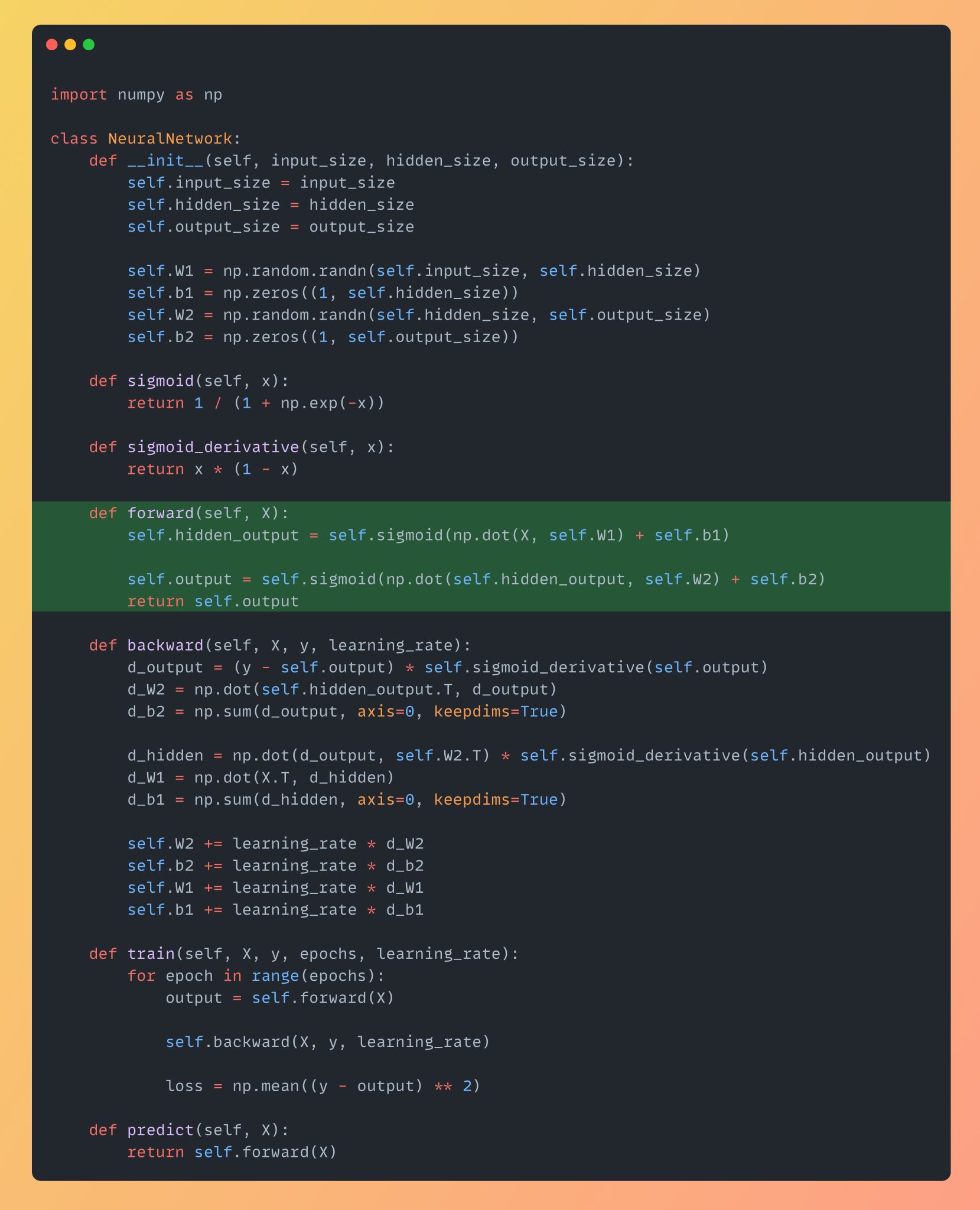
Forward Pass in Neural Networks: Hidden Layer Calculation and Activation
By
–
Forward Pass: Here the input data is passed through the neural network to obtain the predicted output. In forward pass, First calculate the output of the hidden layer. hidden_output = X•W1 + b1 Then apply the sigmoid activation to the output. output = sigmoid( (X•W1) + b1)
-
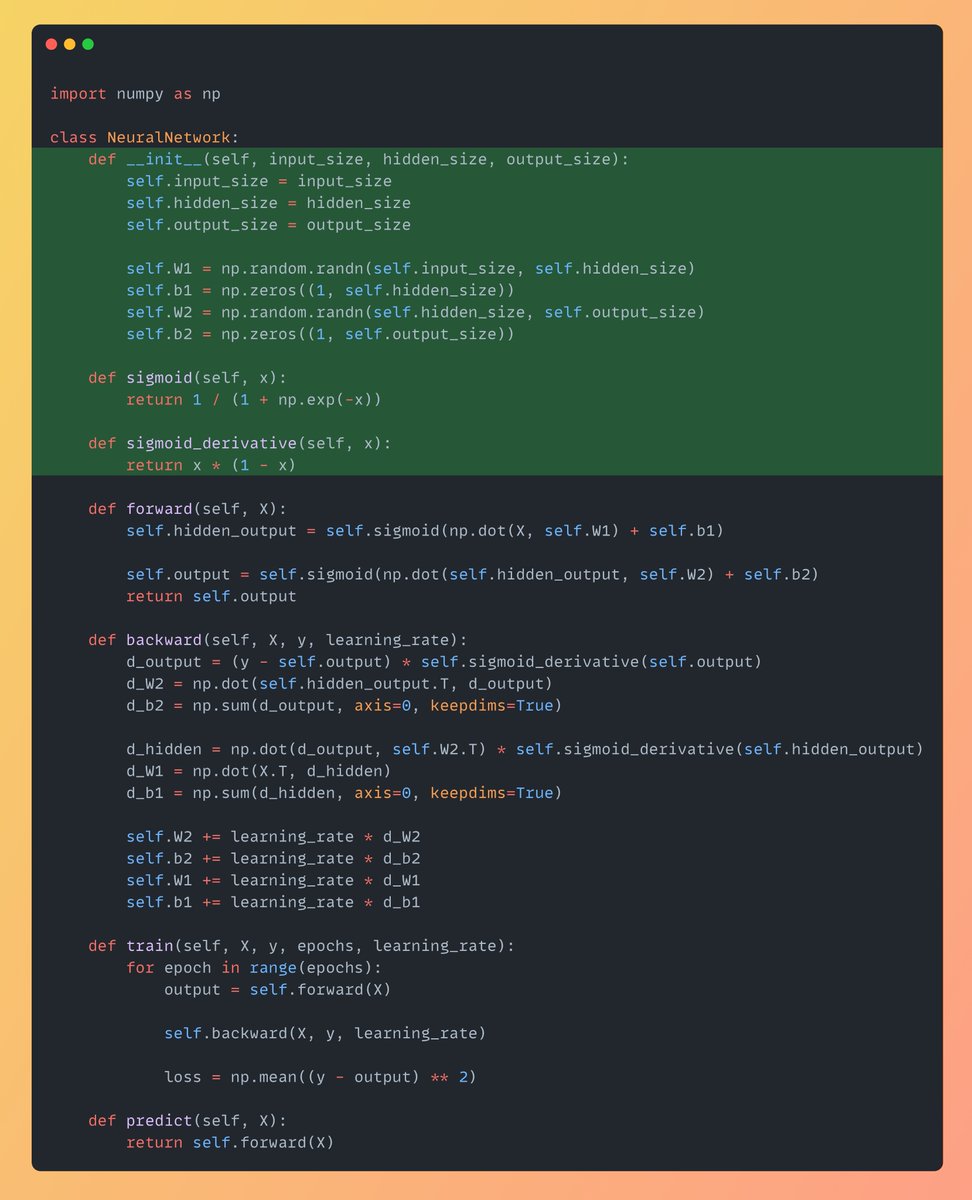
Building a Simple 2-Layer Neural Network with Sigmoid Activation
By
–
Below is the simple Neural Network consists of 2 layers: – Hidden Layer
– Output Layer First Initialize the size of layers along with the weights & biases. And also define the sigmoid activation function & it's derivative which is really key to introduce non-linearity. -
Neural Network Implementation from Scratch in Python
By
–
Neural Network implemented from scratch in Python (step-by-step explanation with code):
-
Adding Memory to Apps with Clarifai Vector Store
By
–
Hi, Adding memory to your app and constantly updating it with your previous conversations will solve this. You can leverage the Clarifai Apps for this, as apps acts as your vector store and you can keep updating the chat to the Clarifai app and get the relevant info based on the
-
RAG Applications Development on Company Data
By
–
Specially useful for companies who wants to build RAG apps on their own data!
-
Papers with Code: Over 7000 Public Datasets Across Multiple Modalities
By
–
7. Papers with Code Papers with Code consist of more than 7000 Public Datasets on different modalities.
-
Open ML: Access 20K+ Datasets for Machine Learning
By
–
4. Open ML Find 20K+ datasets on Open ML https://
openml.org -
Kaggle: Access Thousands of Free Datasets for Analysis
By
–
3. Kaggle No Introduction is required to kaggle, find 1000's datasets which you can download and use for free https://
kaggle.com/datasets