Today it made two major announcements. First, it announced a suite of updates to Google's Vertex AI, which brings it more in line with being a direct competitor to Azure AI and AWS Bedrock. It's building out an AI dev suite and throwing its weight behind others like Llama 2.
@mattlynley
-
Google’s Late Move: How OpenAI Dominated Transformers Era
By
–
For Transformers, it was OpenAI (and by extension Microsoft) that took the technique and built an industry-altering technology on top of it while Google stood on the sidelines. It wasn't until the release of ChatGPT in late 2022 that it felt forced to make a strong move in GenAI.
-
Google’s Missed Opportunities: Hadoop and PyTorch Success Stories
By
–
The story for both is pretty similar: Google didn't fully invest in the success of either, leading to another group creating an open source version and swiping the hearts and minds of developers. The former in the form of Hadoop, the latter with PyTorch (stewarded by Meta)
-
Google’s Transformers: Foundation of Modern Generative AI
By
–
Google released the Transformers paper in 2017, which created the foundation for modern generative AI. It's not the first time it's created a transformational technology. In fact, it's done it twice before: first with MapReduce in 2004, and then with TensorFlow in 2015.
-

Google’s AI Push to Avoid Repeating Competitive Mistakes
By
–
With its suite of announcements today—and a subtle addition by Nvidia—Google is making its push to avoid repeating history for the third time: releasing a groundbreaking technology, and letting its competitors run off with the spoils.
-
Nvidia Launches JAX-Based LLM Framework at Google Next
By
–
Nvidia is announcing a large language model framework built on top of JAX and OpenXLA at Google Next. No specific details but this has the potential to have a lot of very drastic implications. More on it later in the newsletter today.
-
Enterprise Concerns About GPT-4 Control and Privacy
By
–
If there’s an enterprise apprehensive around using GPT-4 it’s usually bc they don’t want to cede control to an API and want to keep things in-house. Idk if advanced privacy controls fixes that but guess I’ll have to talk to more customers abt it (If you are one please reach out!)
-
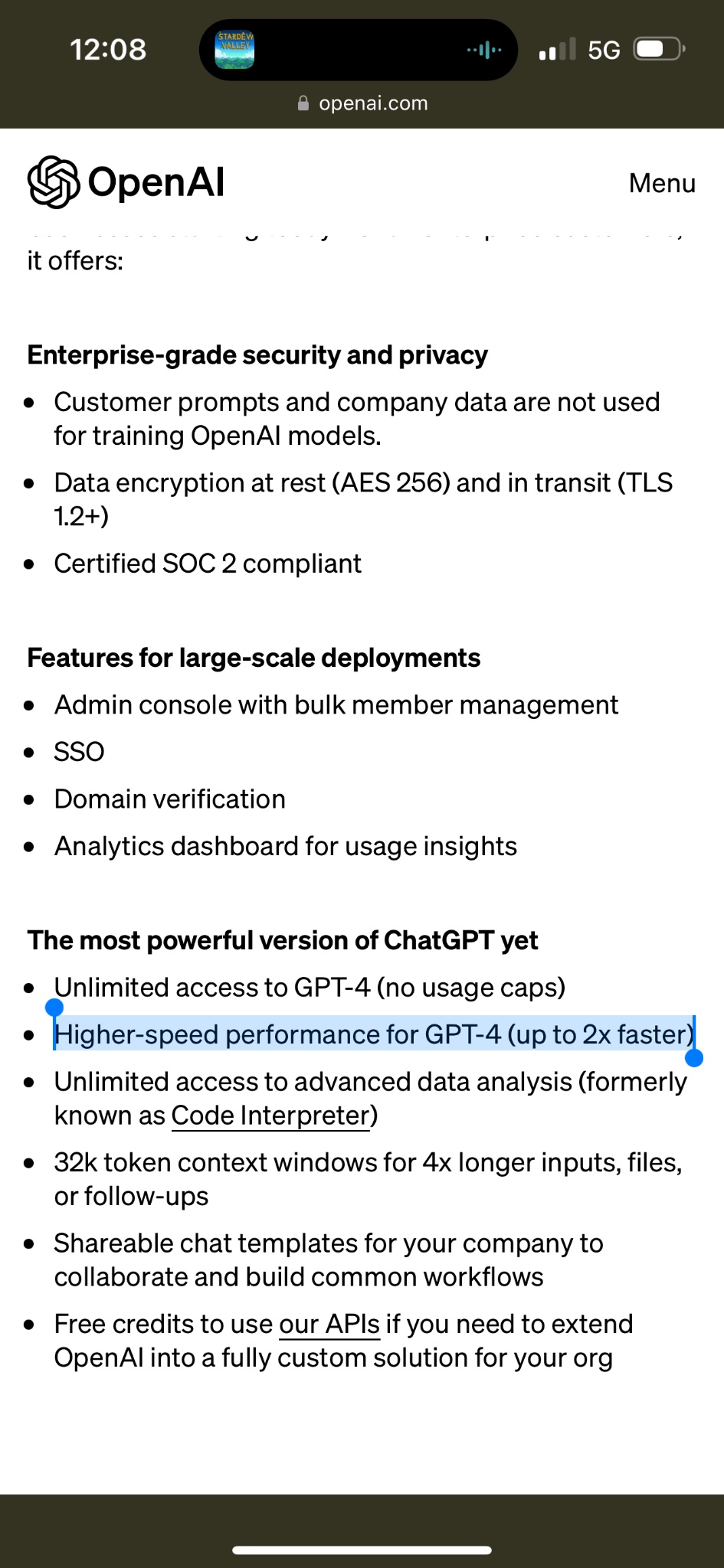
OpenAI 32K Model Pricing Strategy and Rate Limiting Analysis
By
–
They can talk about improved privacy and all that kind of stuff but end of day this is about performance/rate limiting. If there’s an unknown here I’m more curious about the cost of 32k bc it is VERY expensive. It was only a matter of time before they released a preferred system
-
RAG Technique: Solving Modern LLM Limitations Without Fine-Tuning
By
–
Let’s dive in to one of the most-talked about AI techniques—retrieval augmented generation (RAG)— that developers are using as a precursor to fine-tuning. It helps solve the recent issue of modern LLMs while being not-really-that-hard to implement.
-
RAG Closes Gap Between Open Source and API Providers
By
–
And using RAG could close the gap even further between the performance of open source alongside the API providers, particularly for companies that don’t want to hand over control to a provider and are looking for a cheaper, faster, and perhaps more importantly, predictable tool.