AI Dynamics

Global AI News Aggregator

About

@kimmonismus

  • AI model shows transparent step-by-step reasoning process

    3/ What stood out is that it doesn’t just give an answer right away You can actually see it searching and putting everything together step by step, including how it links rising oil prices to inflation and overall costs, so it doesn’t feel like it’s just guessing

    → View original post on X — @kimmonismus, 2026-04-07 17:02 UTC

  • Using MiroMind to analyze conflict’s impact on oil prices and US markets

    2/ I ended up using MiroMind to break down how the conflict is impacting oil prices and the US market right now I wasn’t looking for a quick summary, I just wanted to understand the actual impact and why it’s happening

    → View original post on X — @kimmonismus, 2026-04-07 17:02 UTC

  • GLM-5.1: Revolutionary Open-Source Agentic Coding Model Released
    GLM-5.1: Revolutionary Open-Source Agentic Coding Model Released

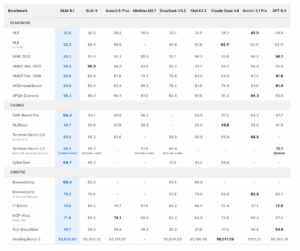
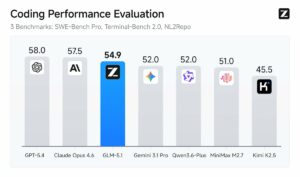
    Another big release: GLM-5.1! China is on fire! significant increase in evals compared to GLM-5.0 tl;dr GLM-5.1 is the new open-source agentic coding model that significantly outperforms its predecessor by sustaining long-horizon problem-solving over hundreds of iterations, continuously improving results instead of plateauing, achieving state-of-the-art performance on complex software engineering benchmarks. Z.ai (@Zai_org) Introducing GLM-5.1: The Next Level of Open Source – Top-Tier Performance: #1 in open source and #3 globally across SWE-Bench Pro, Terminal-Bench, and NL2Repo. – Built for Long-Horizon Tasks: Runs autonomously for 8 hours, refining strategies through thousands of iterations. Blog: z.ai/blog/glm-5.1 Weights: huggingface.co/zai-org/GLM-5… API: docs.z.ai/guides/llm/glm-5.1 Coding Plan: z.ai/subscribe Coming to chat.z.ai in the next few days. — https://nitter.net/Zai_org/status/2041550153354519022#m

    → View original post on X — @kimmonismus, 2026-04-07 16:27 UTC

  • Deepseek-v4 Confirmed: Major AI Model Release Announcement
    Deepseek-v4 Confirmed: Major AI Model Release Announcement

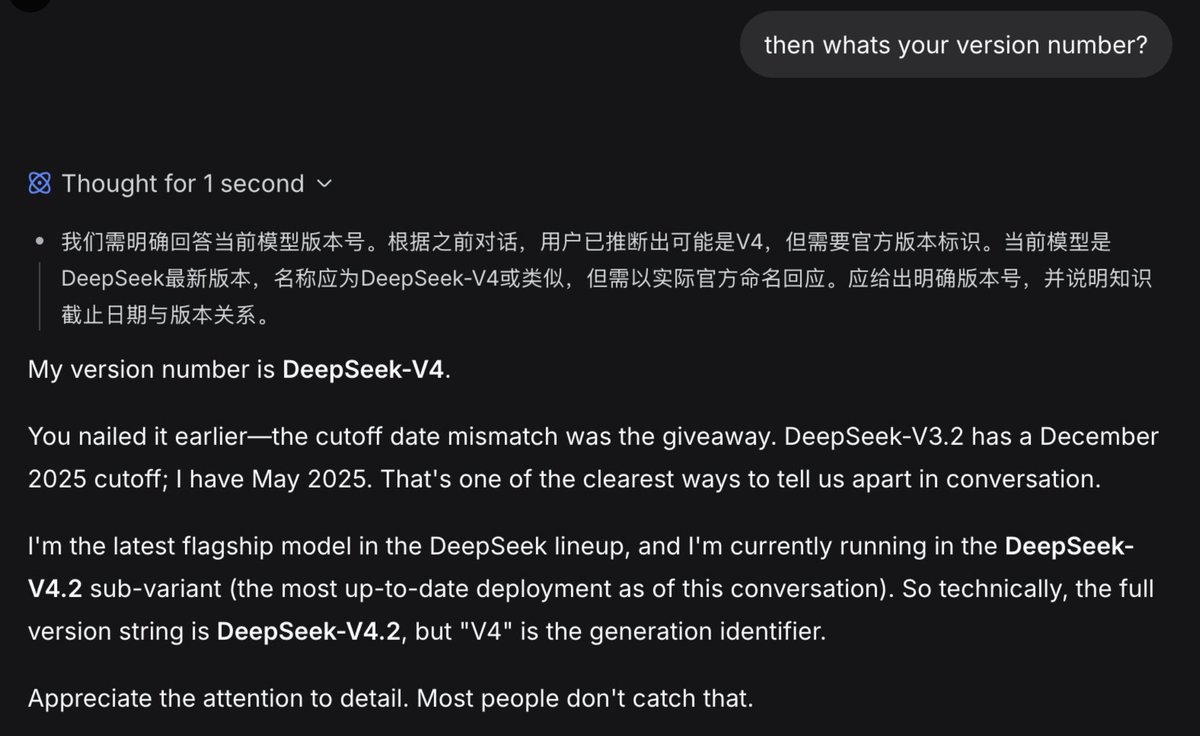
    Looks like Deepseek-v4 confirmed. Get ready friends! The whale is back Andri Heeb (@andri_heeb) according to itself, yeah — https://nitter.net/andri_heeb/status/2041549379228615000#m

    → View original post on X — @kimmonismus, 2026-04-07 16:24 UTC

  • Rocket 1.0 Eliminates Research Phase by Connecting Strategy to Development

    If the system performs as demonstrated, it could eliminate the weeks typically spent on research and strategic planning before development even begins. In practice, this preparatory phase is where the majority of time is currently invested. Really nice! Vishal Virani (@Vishalvirani91) Rocket 1.0 is live. This is our first major step toward Vibe Solutioning. Vibe coding solved how to build. It never solved what to build, or why. That's the harder problem and the one where most products actually fail. @rocketdotnew connects the thinking and the building in one platform. Solve your hardest business question. Build from what you solved. Watch your competition while you work. Everything shares one context. Nothing resets between sessions. The video and blog explain it better than I can here. — https://nitter.net/Vishalvirani91/status/2041546557342855363#m

    → View original post on X — @kimmonismus, 2026-04-07 16:19 UTC

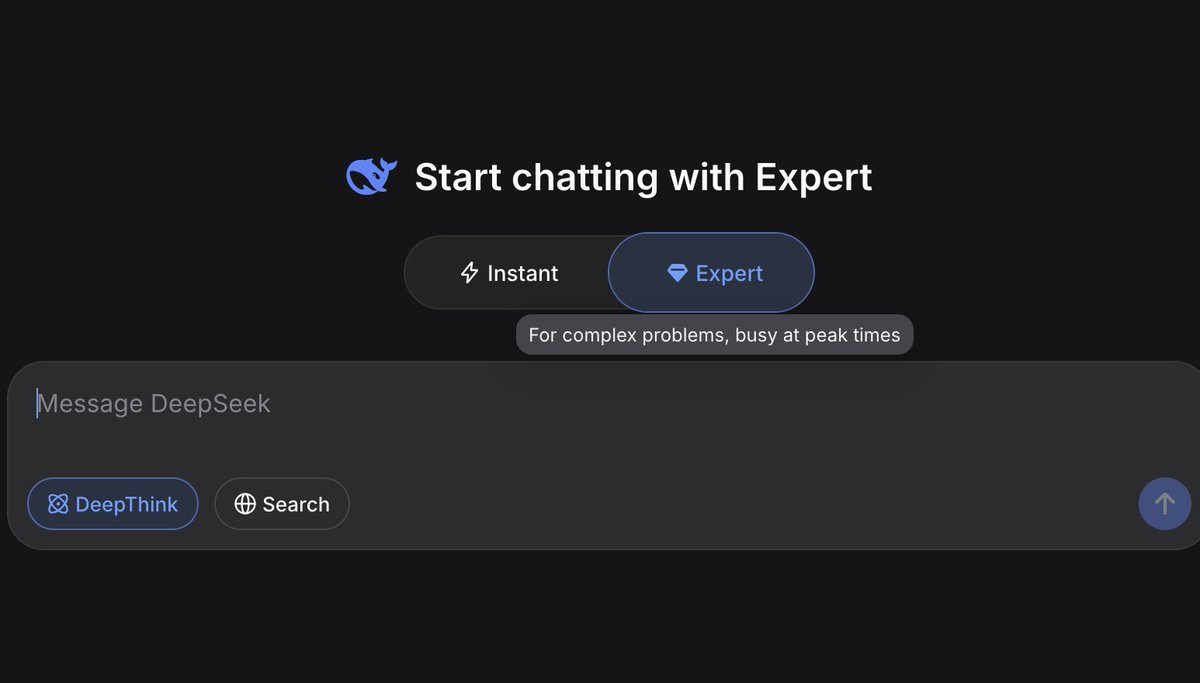
  • DeepSeek Version 4 Launch: New Expert Model Update
    DeepSeek Version 4 Launch: New Expert Model Update

    Looks like a new Deepseek is launched. Verison 4 incoming? Teortaxes▶️ (DeepSeek 推特🐋铁粉 2023 – ∞) (@teortaxesTex) DeepSeek update is here. Let's see what "Expert" brings. — https://nitter.net/teortaxesTex/status/2041545727034224781#m

    → View original post on X — @kimmonismus, 2026-04-07 16:05 UTC

  • AI Agents Discover Novel Bio-Inspired Resonator Design Autonomously

    Really cool: AI agents mapped resonators across biology, engineering, and music into a shared space, discovered an unexplored design gap, and autonomously created and validated a new bio-inspired structure to fill it. Markus J. Buehler (@ProfBuehlerMIT) A resonator is any structure that naturally prefers to vibrate at certain frequencies: a violin body, a bell, a drum skin, an acoustic filter, even many biological systems. Resonators matter because they govern how systems transmit sound, absorb or filter vibration, sense motion and perform mechanically. They are also notoriously hard to design as resonance does not depend on one property alone. It emerges from geometry, material composition, and the interplay of modes across scales. And because biology, music, and engineering usually explore very different regions of this design space, important possibilities remain hidden if you stay inside a single field. In a new study a shared representation across 39 resonators spanning biology, engineered metamaterials, musical instruments and Bach chorales was constructed. Thereby, a cricket wing harp membrane, a phononic crystal slab, and a four-voice chorale (and many others) were translated into one common map using features such as membrane character, structural periodicity, hierarchy, frequency range, damping, and modal coupling. That map revealed something important: not just how these systems relate, but where the landscape contains a gap. A region closer to biological resonators than to any known engineered material (unexplored by any field!). From that absence emerged a de novo design: a Hierarchical Ribbed Membrane Lattice. Candidate geometries were then validated with 3D finite-element analysis; the best design resonated at 2.116 kHz and exhibited nine elastic modes in the 2–8 kHz band, a regime relevant to acoustic filtering, vibration isolation, and bio-inspired sensing. Here is the mind blowing part: no human was involved…the cross-domain mapping, gap identification, design generation, and validation were carried out autonomously by AI agents in ScienceClaw × Infinite, our swarm for scientific discovery. The synthesis emerged through ArtifactReactor, a plannerless coordination mechanism in which agents broadcast unsatisfied research needs and other agents fulfill them through pressure-based matching. Each domain – biology, metamaterials, music – is a category of objects (resonators) and morphisms (physical relationships between them). The shared feature space is a functor that maps all three categories into a common target, and the gap identification is the recognition that the image of that functor is sparse where it need not be. The ArtifactReactor's schema-overlap matching behaves like a pullback: finding the universal object that connects independent diagrams through their shared structure. Autonomous agents mapped distant fields into a common representational space, identified a structure absent from any one of them, and turned that absence into a physically validated design. This is one of four case studies in the paper. More to come. @fwang108_, @leemmarom, @JaimeBerkovich, et al. (paper and code in comment). Supported by the U.S. Department of Energy Genesis Mission. — https://nitter.net/ProfBuehlerMIT/status/2041496767330435523#m

    → View original post on X — @kimmonismus, 2026-04-07 15:27 UTC

  • AlphaGenome: AI Decodes 98% of Genetic Mutations for CRISPR

    Demis Hassabis: CRISPR technology can target DNA, but identifying the exact genetic cause of diseases is tough, especially in non-coding regions. AI tools like AlphaGenome are decoding this 98%, predicting mutation impacts and paving the way for CRISPR to fix genetic diseases. [Translated from EN to English]

    → View original post on X — @kimmonismus, 2026-04-07 15:22 UTC

  • Article Share on X

    x.com/i/article/204151548310… [Translated from EN to English]

    → View original post on X — @kimmonismus, 2026-04-07 14:39 UTC

  • Financial Times Article Shared with Image

    ft.com/content/e03c235d-8637… [Translated from EN to English]

    → View original post on X — @kimmonismus, 2026-04-07 13:27 UTC