Cheers for taking a swing at it, but the problem is far from trivial, even if the final solutions are fairly compact code. Note that they upgraded the human baselines later. The Muesli paper has higher numbers than the original DQN paper.
@id_aa_carmack
-
Hyperparameter tuning: logarithmic scaling for better sweep design
By
–
Sometimes I see papers with hyperparameter sweeps over 0.001, 0.003, 0.006, 0.01, etc. Many hyperparameters are better expressed in negative integral log2. Small values like learning rates directly, and values close to 1 like EMA factors and TD lambda / gamma with 1-2**val. It
-
Request for Details on Atari Games Human-Level Performance Achievement
By
–
Details, please! Reaching human level performance on all the Atari game in an hour would indeed be SOTA.
-
CUDA graphs and action input models improve performance consistency
By
–
Making everything one big CUDA graph helped wall clock consistency a lot on a laptop, but we still fought with power management. Looking forward to using an Nvidia Spark in the future. It isn’t in the repo code, but the single biggest win I have seen is an “action input” model
-
Open Source Physical Atari Repository Released at Keen
By
–
The audience for this is small, but we have an open source repository for the “Physical Atari” work we did at Keen. Working purely in the physical world is a huge burden compared to simulation, but it is important to have a reasonable grasp of the gap between the two. The
-
Cayley Transforms for Parameterizing Rotation Matrices Efficiently
By
–
I recently learned about Cayley transforms. Similar to how you can parameterize a 3×3 rotation matrix by 3 Euler angles or a 4 element quaternion, Cayley transforms allow you to parameterize an N dimensional rotation matrix with just N*(N-1)/2 unique values in a skew-symmetric
-
Brain as Recurrent Neural Network: Understanding Biological Learning Algorithms
By
–
Fundamentally, the brain is a recurrent neural network. Maybe context windows and “notes to self” are sufficient, but it would be good to understand the learning algorithms that make biological recurrent networks as effective as they are, and we clearly don’t yet.
-
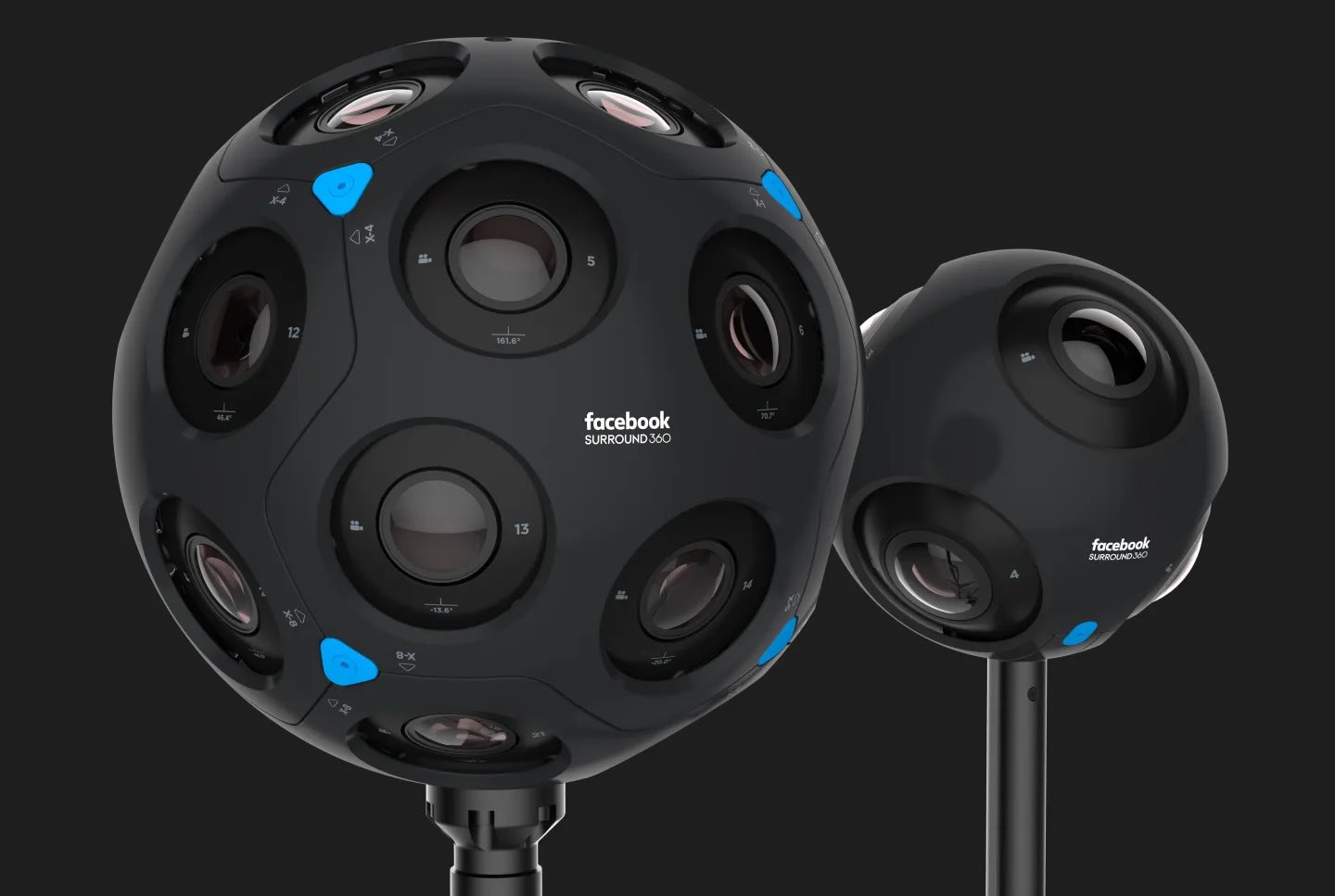
Meta’s Focus on Geometric Computer Vision for Spatial Video Capture
By
–
There have been a lot of crazy many-camera rigs created for the purpose of capturing full spatial video. I recall a conversation at Meta that was basically “we are going to lean in as hard as possible on classic geometric computer vision before looking at machine learning
-
Market demand for human-like artificial interactions remains surprisingly strong
By
–
You would probably be shocked at the market for human like artificial interactions. You may not want it, but a lot of people do.
-
Modeling Natural Conversation Interruptions in LLM Sequences
By
–
Natural conversation includes interruptions and talking over people, which is hard for an LLM to model as a single autoregressive sequence. I’m sure you can get pretty far by creating a text sequence with movie-script like breaks mid sentence, but it seems like the real solution