Just because a corporation receives the gift doesn’t mean everyone else doesn’t. I am thankful for all the open source code in PyTorch that Meta has released.
@id_aa_carmack
-
Open Source as Gift: AI Training Magnifies Value
By
–
I know there is some overlap between open source and anti-AI activists, but I have a hard time reconciling it. My million+ open source LOC were always intended as a gift to the world. Yes, I would make arguments about how it would strengthen our communities, and the GPL would prevent outright exploitation by our competitors, but those were to allay fears of my partners to allow me to make the gift. AI training on the code magnifies the value of the gift. I am enthusiastic about it! Some people do look at open source as a tool for social change, career advancement, or reputation building, but those are all downstream of the gift. Rich Whitehouse (@DickWhitehouse) Genuinely devastating take to see from someone who popularized the GPL across so many communities. Fails to appreciate the social and cultural importance of the license. — https://nitter.net/DickWhitehouse/status/2032241405276668188#m
→ View original post on X — @id_aa_carmack, 2026-03-13 14:15 UTC
-
Open Source Code and AI Training: A Matter of Legitimacy
By
–
It is absurd to have a problem with AI learning from code you have open sourced. If github trained models on the contents of your private repos, that would be a violation.
-

Deep Learning Ethics: Data Relevance vs. Societal Legitimacy
By
–
I still give the book Understanding Deep Learning by Simon J.D. Prince a good recommendation, but chapter 21: Deep learning and Ethics was sloppy. It could have been a chapter to really dig in on case studies, but it was just the basic public news story level coverage of bias and such, like: “In AI, it can be pernicious when this deviation depends on illegitimate factors that impact an output. For example, gender is irrelevant to job performance, so it is illegitimate to use gender as a basis for hiring a candidate. Similarly, race is irrelevant to criminality, so it is illegitimate to use race as a feature for recidivism prediction.” If they had stuck with “illegitimate”, then it would have been a question of societal choices, but “irrelevant” is a question about data, and your priors shouldn’t be so strong that data can’t move them. I would like to see a book or course walk through a machine learning problem with the input features being presented as something like car choices: color, style, doors, horsepower, etc. Do lots of analysis over representation, training, and generalization, then swap the feature labels to socially charged ones. What makes generalization credible in one situation but not the other?
→ View original post on X — @id_aa_carmack, 2026-03-09 23:31 UTC
-
Visual Cortex Information Processing: Correcting Order of Magnitude Estimates
By
–
You are directionally correct about the amount of information going into the visual cortex being far less than a (stereo!) video stream, but off by at LEAST an order of magnitude — if it was less than one bit per video frame, you wouldn’t even be able to recognize a full frame
-
Reinforcement Learning Research: Continuous Training Process
By
–
Reinforcement learning work, so always training.
-
Code generation efforts alongside parser and semantics development
By
–
Parser and semantics yes, but there were some serious code generation efforts.
-
Frame Rate vs Bit Rate: Motion Compression Trade-offs in Video
By
–
Increasing the frame rate doesn’t increase the bit rate at the same rate, because smaller motion between frames compresses better. You could give them exactly the same bit rate and have almost no difference. It isn’t zero, so a talking head video might trade off ok, but anything
-
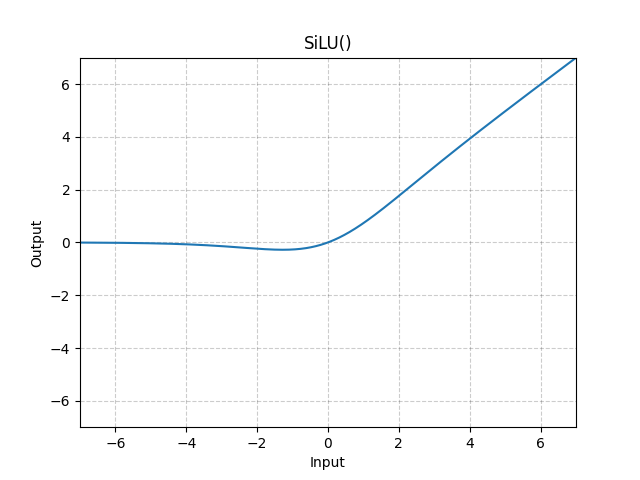
Understanding SiLU/GELU Activation Performance Loss in RL Networks
By
–
I always lost performance when I tried to use silu/gelu activations in my RL value networks, and I finally understand why. If the pre-activation values are small, the smooth curve through zero is basically a linear activation, destroying the representation power of the network. You need a batch/layer/rms norm on the preactivations to put them in the range the smooth activations are designed for. Internal norms generally hurt performance on our RL tasks, but combining them with a smooth activation at least works basically as well as a raw relu (but slower). So, not actually a win, but the lightbulb of understanding was good!
→ View original post on X — @id_aa_carmack, 2026-02-23 16:54 UTC
-
Being a Wizard: Reframing Programming Identity Beyond Manual Coding
By
–
Is it weird that AI coding assistance is not giving me identity fracture? A lot of software developers are feeling disoriented and threatened these days. Programming by hand is clearly going the way of the buggy whip and the hand-cranked auger. Which is how we're finding out that a lot of people have their identities bound up in being good at hand-coding and how it feels to do that. That's not me. It's not me at all. Rather to my surprise, I don't miss coding by hand, not any more than I missed writing assembler when compilers ate the world and made that unnecessary. (That was in a couple years back around 1983, for you youngsters.) Maybe the fact that I'm not feeling any of this disorientation disqualifies me from having anything to say to people who are. On the other hand…if you can learn to emulate my mental stance and be completely unbothered, maybe that would be a good thing? So. If you're a programmer, and you're feeling disoriented, try this on for size: I like being a wizard. I like being able to speak spells, to weave complex patterns of logic that make things happen in the world. Writing code is a way to manifest my will. Yes, I've piled up a lot of arcane knowledge over the 50 years I've been doing this. But languages of invocation, they come and they go. Been a long time since I've had any use for being able to program in 8086 assembler, and that's okay. I have better spells now, and these days some rather powerful familiars. What I'm inviting you to do is think of yourself as a wizard. Not as a person who writes code, but as a person who is good at assuming the kind of mental states required to bend reality with the application of spells. And if that's who you are, does it matter if the spells are painstakingly scribed in runes of power, versus being spoken to an obedient machine spirit? It's all one; it's all the manifestation of will. Arcane languages come and go, machine spirits appear and then diminish to be replaced by more powerful ones, but you? You are the magic-wielder. Without you, none of it happens. Same as it ever was. Same is it ever was. And so mote it be.
→ View original post on X — @id_aa_carmack, 2026-02-18 04:30 UTC