@waydegilliam added an example here – in general very happy to add/provide examples of LCEL https://
github.com/langchain-ai/l
angchain/pull/8830/files
… just ask! def takes a bit of work to grok but starts to get fun after a bit
@hwchase17
-
LCEL Examples and Documentation for LangChain Development
By
–
-
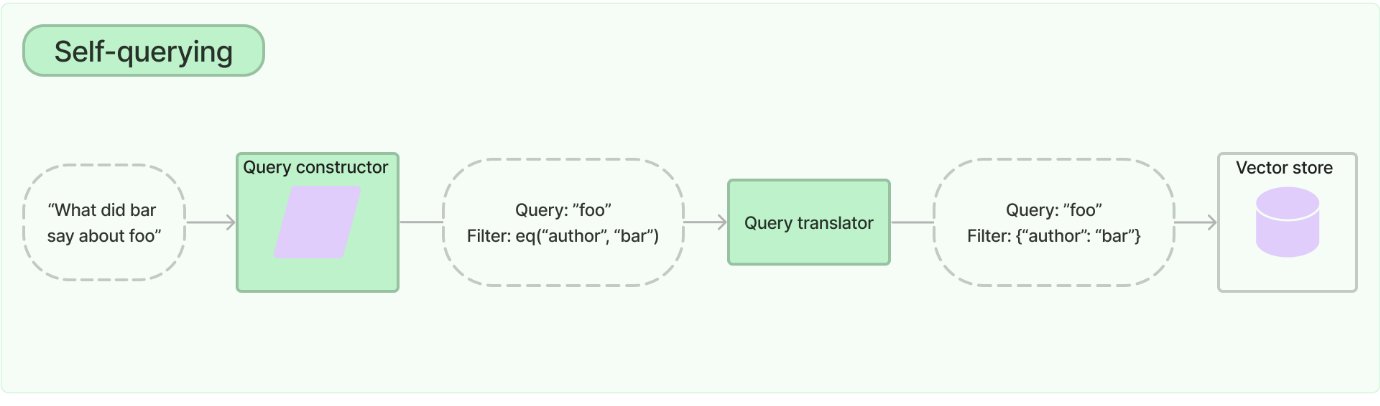
Self-Query: Splitting User Queries for Semantic Search
By
–
Self-Query The idea of splitting a user query into a semantic search term as well as a metadata filter One of the more clever retrieval methods in @langchain
, courtesy of @veryboldbagel Excited to talk about it in our webinar next week! https://
crowdcast.io/c/kqz7nl8nps42 -
Improving AI Memory Systems and Documentation
By
–
Memory is a bit ugly. Working on some improvements. Will try to add an example of this to the cookbook when back at computer. Ping me if I don’t by tmrw!
-
LangChain Graph QA Chains for AI Applications
By
–
We’ve got a lot of graph qa chains https://
python.langchain.com/docs/use_cases
/graph/
… is that what you meant? -
Upcoming HTML Extraction Use Case Guide Announcement
By
–
hah you'll love to see one of our upcoming use case guides then – extraction from html
-
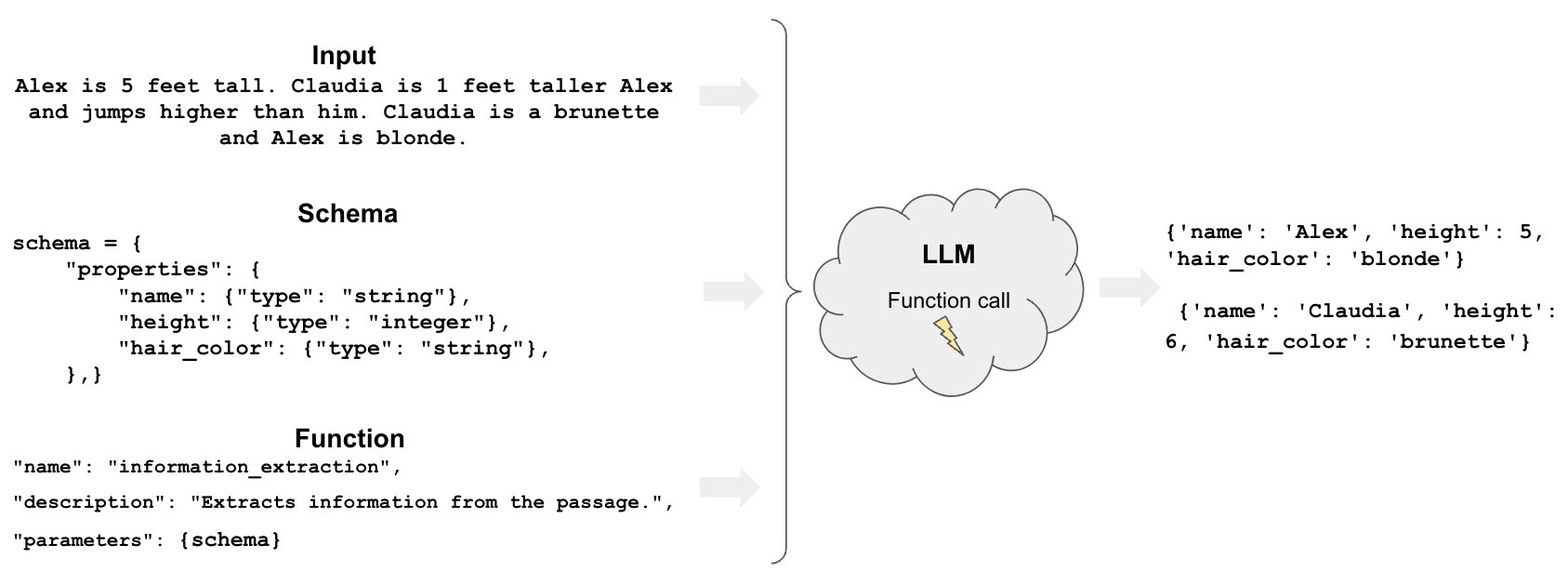
Structured Data Extraction from Unstructured Text with LLMs
By
–
Extraction of structured data from unstructured text is a hugely impactful (tho less sexy) use case for LLMs Excited to have revamped docs on this use case
-
LangSmith Integration: Upcoming Cookbooks and Resources
By
–
We’re using langsmith! Will post some cookbooks for this soon
-
Initial AI Implementation: Data Collection and Open Source Competition
By
–
The initial implementation is pretty basic. Part of this is also to see what types of questions people ask We’ll probably gather data, make some improvements, then open source the data plus eval and turn it into a little competition to improve
-
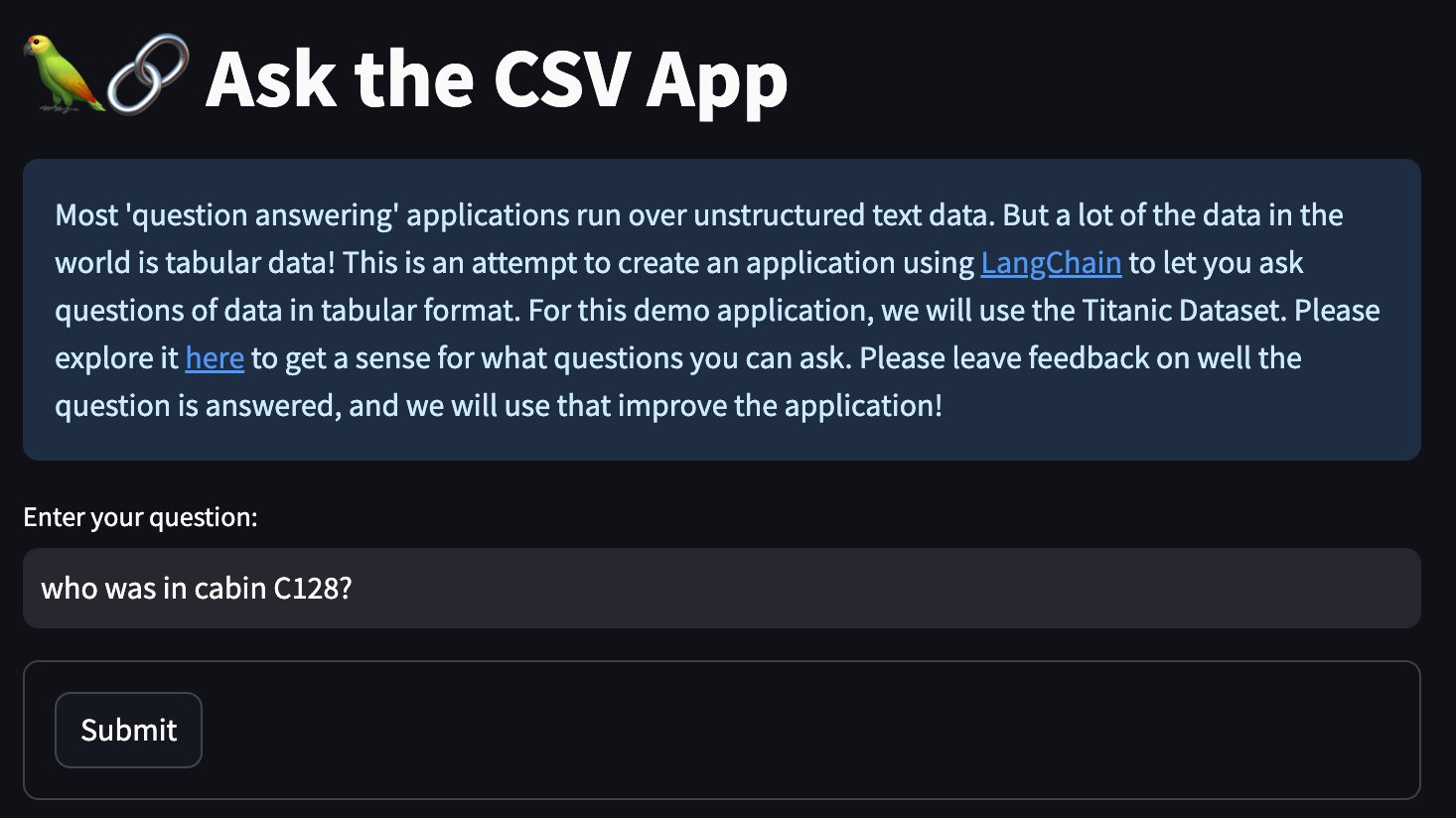
Improving Question Answering Systems for Tabular Data
By
–
CSV Question Answering Most QA applications deal with asking questions of unstructured data. But a lot of data is in tabular (excel, csv) format! This has always been tricky to get right. We want to improve that! But we need your help
-
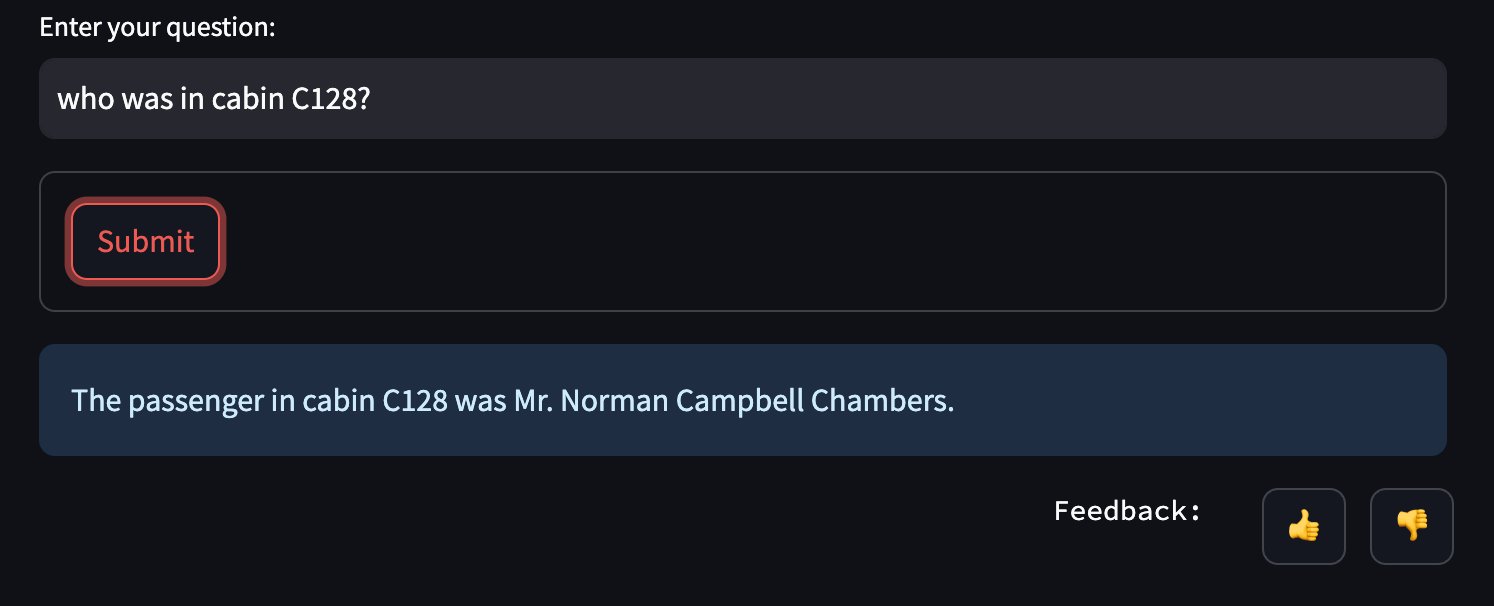
CSV-LangChain App Lets Users Query Datasets Naturally
By
–
We've set an example app to ask questions of a toy CSV (the Titanic dataset, a classic data science dataset) Access the app here: https://
csv-langchain.streamlit.app How you can help: try to break it! Ask questions that you would want it to be able to answer, and then leave feedback